Research on the fat harvest method comes from small lab studies, and the results are mixed. Some comparisons found the cells looked alike, and others found differences by device or by fluid. Every study here measured cells separated from the fat, so none settles what happens to banked tissue.
TLDR Nine small lab studies compared ways of collecting fat, then measured cells taken out of that fat. The results are mixed. Some found the cells looked alike, and others reported differences. None measured banked tissue. No method is recommended here, and banking adipose tissue does not guarantee any future use.
Important Disclaimer: Save My Fat does not provide FDA-approved treatments or cures for any disease. Banking adipose tissue today does not guarantee eligibility, access, or clinical benefit from any future therapy, clinical trial, or medical program. All content is for educational purposes only and does not constitute medical advice. Patients must consult their own licensed healthcare professionals regarding all medical decisions.
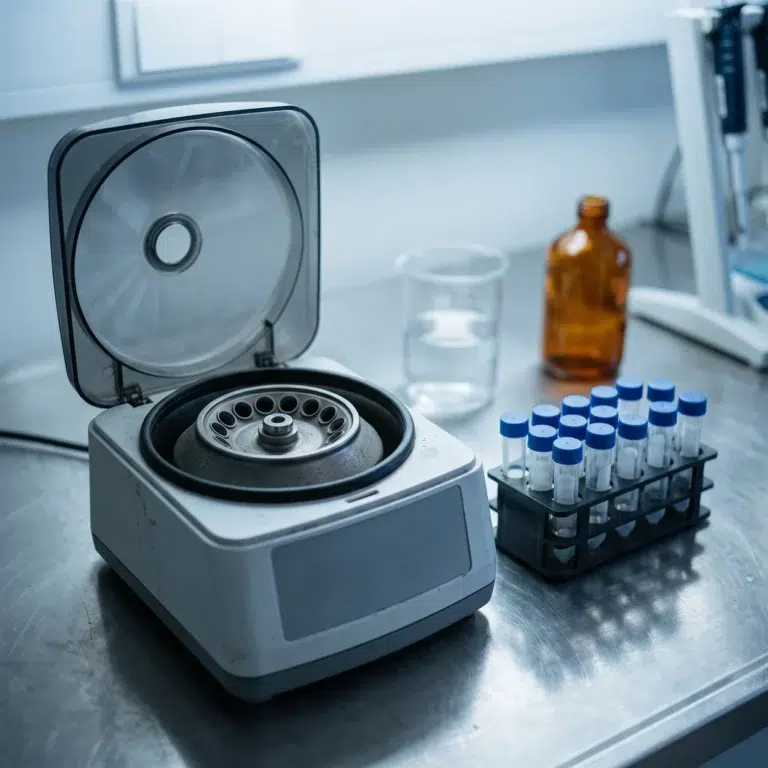
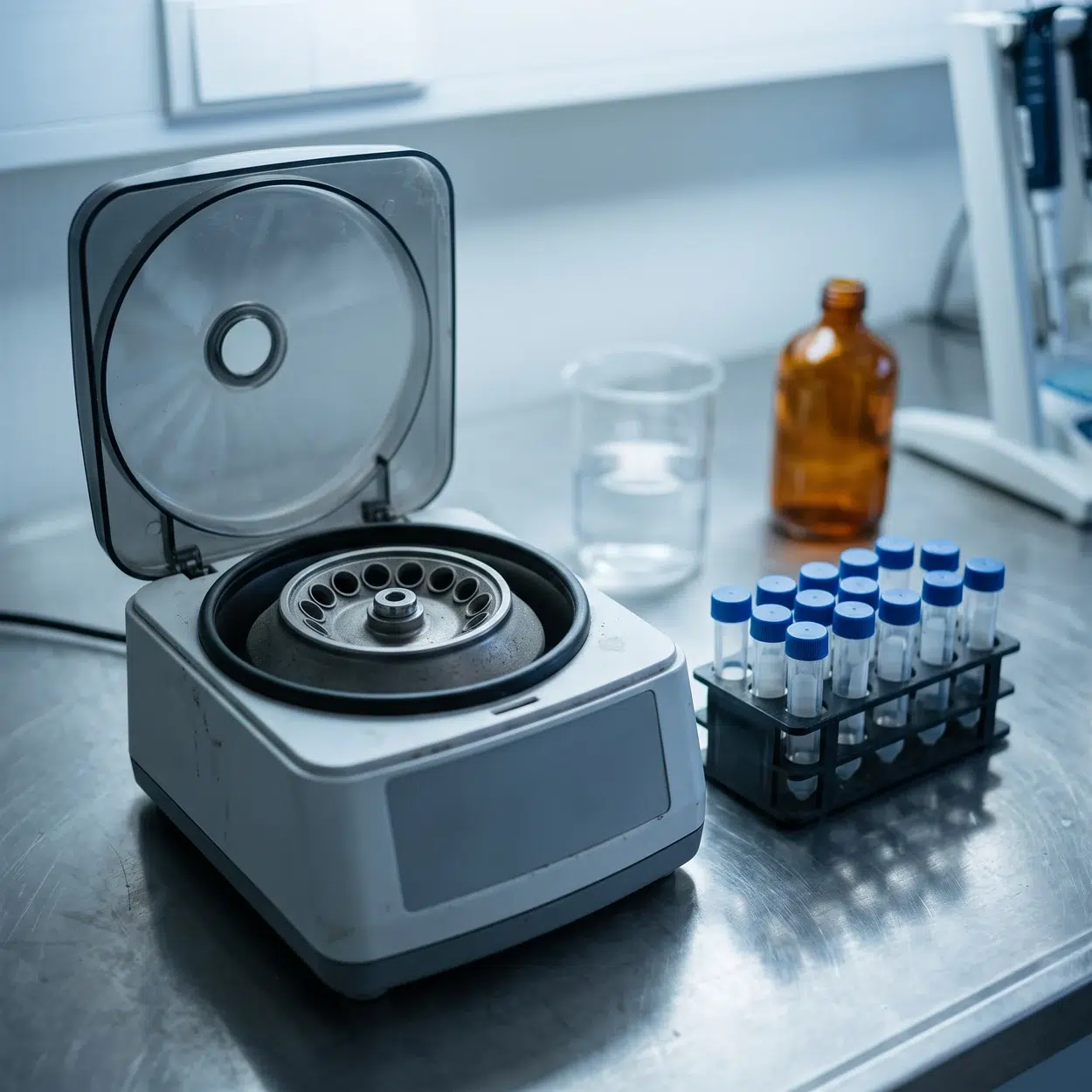
Here is what has been studied: fat collected in different ways, with cells then taken out of each sample and measured in a lab. Here is what the nine studies in this post did not measure: the tissue itself after banking, or how any patient did.
So does the liposuction method change the fat that gets banked? Nobody can honestly say yet. Look at what each study counted and where it runs out.
What Does the Term Fat Harvest Method Mean?
It means how the fat is taken out of the body, and it covers two choices. One is the fluid that goes in first. The other is the device that does the suction.
Start with the fluid. The StatPearls chapter on liposuction says a wetting solution is “composed of lidocaine and epinephrine diluted in crystalloid” and is “infiltrated into the target fat before liposuction is performed.” It adds, “The 4 wetting techniques recognized include dry, wet, superwet, and tumescent.” So tumescent names a wetting technique, and the other three words in the title name devices.
Now the devices. The same chapter says “Traditional suction-assisted liposuction (SAL) remains the most widely used method”. Power-assisted liposuction “Uses a motorized cannula that oscillates back and forth”. Ultrasound-assisted liposuction, or UAL, “Employs an ultrasound cannula to break down adipose cells”. Laser-assisted liposuction “Utilizes a laser-equipped cannula to disrupt fat tissue”. Water-jet-assisted liposuction, the last name in the title, appears in one study below. The cannula is the suction tool.
Do Studies Show the Liposuction Device Changes the Cells in Fat?
Sometimes, in a lab dish, and the answer varied by device and by study. So what does the science actually say? Nine studies separated cells from human fat and measured them. Six compared removal methods, and three looked at the fluid.
An FDA guidance says the cellular components taken out of fat are “commonly referred to as stromal vascular fraction”, or SVF. ASC stands for adipose stromal cells, one cell type counted in that fraction. Viability means how many cells are alive, and apoptosis is a form of cell death.
The table shows what each study compared and reported. Quotes are the authors’ own words. Read the last column first.
| Study | Compared | Measured and reported | Limits |
|---|---|---|---|
| Oedayrajsingh-Varma et al., 2006 | Resection, tumescent liposuction, ultrasound-assisted | Viable SVF cell number not affected by procedure type; ultrasound gave “a lower frequency of proliferating ASC” and a longer doubling time than resection | Abstract only; donors not given; older ultrasound device |
| Duscher et al., 2016 | Third-generation ultrasound versus suction, paired | Samples from the two methods “demonstrated equivalent ASC yield and viability”, with comparable expression of most genes tested | Three women; suction done first at the same site |
| Duscher et al., 2017 | Two ultrasound devices | “Both UAL samples demonstrated equivalent ASC yield and viability.” | Abstract only; donors not given; no non-ultrasound group |
| Chung et al., 2013 | Laser versus suction | Cell yield, viability, proliferation and ASC frequency “were all significantly less with laser-assisted liposuction in vitro” | Abstract only; donors, device and settings not given |
| Bony et al., 2015 | Manual syringe versus water-jet, paired | Dead cell percentage, colony counts and cell phenotype “were identical” | Eight women; one water-jet device |
| Leong et al., 2005 | Suction pump versus syringe | Pump cells “are viable, have comparable metabolic activity and adipogenic potential” | Abstract only; donors not given |
| Muscari et al., 2013 | Wet (lidocaine and adrenaline solution) versus dry, same women | Fewer cells counted with wet; no differences in growth rate or cell death | Abstract only; donors not given; authors point to dilution |
| Grambow et al., 2020 | Tumescent fluid with lidocaine versus without, paired | “Lidocaine had no influence on the relative distribution, cell number, or viability of ASCs” and three other cell types | Eleven women; authors cite “small sample size” |
| Wang et al., 2014 | Local versus tumescent anesthesia | More adherent ASCs in the tumescent group; more apoptosis in cells exposed to lidocaine than in controls | Abstract only; seven samples per group; cultured cells |
Among the six device rows, three comparisons came out alike, two reported a difference, and one only compared ultrasound with ultrasound. That is a mixed record from small studies, and most rows rest on the abstract alone.
Two things are left out. Some papers also ran mouse experiments, and a mouse result is not a human result. Some authors said which method they would prefer, and those are lab opinions with no patient outcome behind them.
These are lab measurements on cells. No product made from fat has FDA approval to treat any disease, the evidence is small and early, and questions about your own procedure belong with your licensed provider.
Does the Fluid Used Before Liposuction Change the Cells?
The studies disagree. One counted fewer cells with wet fluid than with dry, and the two that tested lidocaine conflict. They are the last three rows of the table.
A 2020 study found no lidocaine effect on cell number or viability in eleven women. A 2014 study found more apoptosis in cells exposed to lidocaine. Those do not line up.
The authors of the wet versus dry study put part of the lower count down to dilution by the fluid. Okay, fair enough. The lidocaine question is still open.
None of this is advice about anesthesia or your procedure. It is early lab evidence, and nothing made from fat has FDA approval to treat any disease. Your licensed provider is the person to ask.
Do These Lab Results Apply to Fat That Gets Banked?
Not directly, and this is the limit that matters most. All nine studies measured cells separated from the fat. None measured whole tissue that had been banked.
If the cells looked alike in a dish, the stored tissue must be alike too, right? None of these studies took that step.
FDA does not treat that separation step as minor. Its July 2020 guidance gives the example of a manufacturer that processes adipose tissue “to isolate cellular components”, and says the result “generally is considered more than minimally manipulated”. Our post on enzymatic versus mechanical isolation covers how that separation is done in research.
Save My Fat is a connector. A partner provider collects the tissue, and a U.S.-based tissue bank processes and cryopreserves it, as our page on the banking process shows. No product made from fat has FDA approval to treat any disease, and banking does not guarantee any future use.
Which Fat Harvest Method Should You Ask Your Provider About?
Ask about the one your provider plans to use, because nothing in these studies picks a fat harvest method for banking. I am not recommending one, and which one a Save My Fat partner provider uses is a question for that provider.
Here are the questions I would bring. Which wetting technique and which device do you use? What study are you relying on, and did it measure banked tissue or cells in a dish? How many donors were in it?
Providers reading along can start with our plastic surgeon guide. For patients, the choice of method is a medical decision for you and your licensed provider.
Frequently Asked Questions
Does the lidocaine in tumescent fluid affect the cells in fat?
The studies conflict. One study of eleven women reported that lidocaine had “no influence” on cell number or viability, and another reported more apoptosis in cells exposed to lidocaine. Both were small, and neither measured banked tissue. Ask your licensed provider about your own procedure.
Is laser-assisted liposuction worse for fat that will be banked?
These studies do not show that either way. One lab study reported lower cell yield and viability with laser than with suction. Its abstract gave no donor number or laser settings, and it measured separated cells.
Has power-assisted liposuction been compared with other methods?
We do not have a power-assisted comparison to report, so the table has none. That gap says nothing about the device.
Which liposuction method do Save My Fat providers use?
Save My Fat does not collect tissue. A partner provider does, so ask that provider which wetting technique and device they use.
Key Takeaways
The research on fat harvest method is small and mixed, and all of it comes from labs. Device comparisons went both ways, and the two lidocaine studies conflict. The table has no power-assisted comparison. Every study measured cells separated from the fat, so none shows what happens to banked tissue. No method is recommended here. Take the method question to your own licensed provider. Banking does not guarantee any future use.
Save My Fat connects patients and providers with a U.S.-based tissue bank. It is not a tissue bank, a laboratory, a medical practice, or a treatment provider. Stem cell and regenerative medicine regulations vary by state, including specific informed-consent and disclosure requirements in Florida, Utah, California, Georgia, and Tennessee governing tissue and stem cell services. Banking adipose tissue does not connect patients to any treatment pathway, and any future use depends on FDA regulatory status, physician guidance, and the availability of approved or investigational pathways at that time.
Anyone thinking about adipose tissue banking for potential future use can check the pricing page or send a question through the contact page.
Save My Fat works with a U.S.-based tissue bank for laboratory processing and storage.
This article is for educational purposes only and does not constitute medical or legal advice. Please consult your own licensed healthcare provider before making any decisions about treatment or research participation.
About the author: Oscar Tellez is the founder and CEO of Save My Fat. He holds a Bachelor of Science in Exercise Science and Health Promotion from Florida Atlantic University. He has spent a decade in the regenerative medicine industry across product distribution, laboratory and vendor relationships, and provider training. He is not a licensed clinician, and this article is educational, not medical advice.
Related guide: stem cell science glossary.