Laboratories separate cells from fat in two ways. Enzymatic isolation of adipose stem cells uses collagenase to digest the tissue matrix. Mechanical isolation of adipose tissue uses shaking, shearing, and spinning instead. The two approaches produce very different cell counts, and they sit in very different places under federal tissue regulation. Here is what the published data shows, and why the method decides the legal category of what comes out.
TLDR: Enzymatic isolation uses collagenase to break down the connective tissue matrix and free the stromal vascular fraction. Mechanical isolation uses physical force. Published data from Aronowitz and colleagues show enzymatic methods recover more nucleated cells and more progenitors per volume, but overall viability tends to be unaffected by processing method. Enzymatic digestion is also the classic minimal manipulation problem under federal law. Save My Fat connects patients with a U.S.-based tissue bank that banks adipose tissue and does not isolate cells. Banking does not guarantee eligibility, access, or clinical benefit, and adipose-derived cells are not FDA approved.
Important Disclaimer: Save My Fat is a tissue preservation service that does not provide FDA-approved treatments or cures, and it does not guarantee eligibility, access, or clinical benefit. Nothing here describes a Save My Fat service. Enzymatic and mechanical isolation are laboratory and clinical research procedures, and no adipose-derived stromal vascular fraction product is FDA approved for any condition. This article is written for educational purposes only, and readers should consult their own licensed healthcare professionals before any decision about banking, processing, or research participation.
Adipose tissue is not a bag of loose cells. It is a structured tissue: fat cells held inside a scaffold of collagen, threaded with small blood vessels and a mixed population of stromal and progenitor cells. Anyone asking how stem cells are isolated from fat is really asking a narrower question. How does that scaffold come apart?
There are only two answers. Dissolve it chemically with an enzyme, or break it apart with force. Every commercial system is a variation on one of those ideas, and the choice changes yield, cost, and federal classification. That last point is the one most articles skip. Isolation is where a tissue product can quietly stop being a tissue product.
Enzymatic Isolation of Adipose Stem Cells: What Collagenase Does
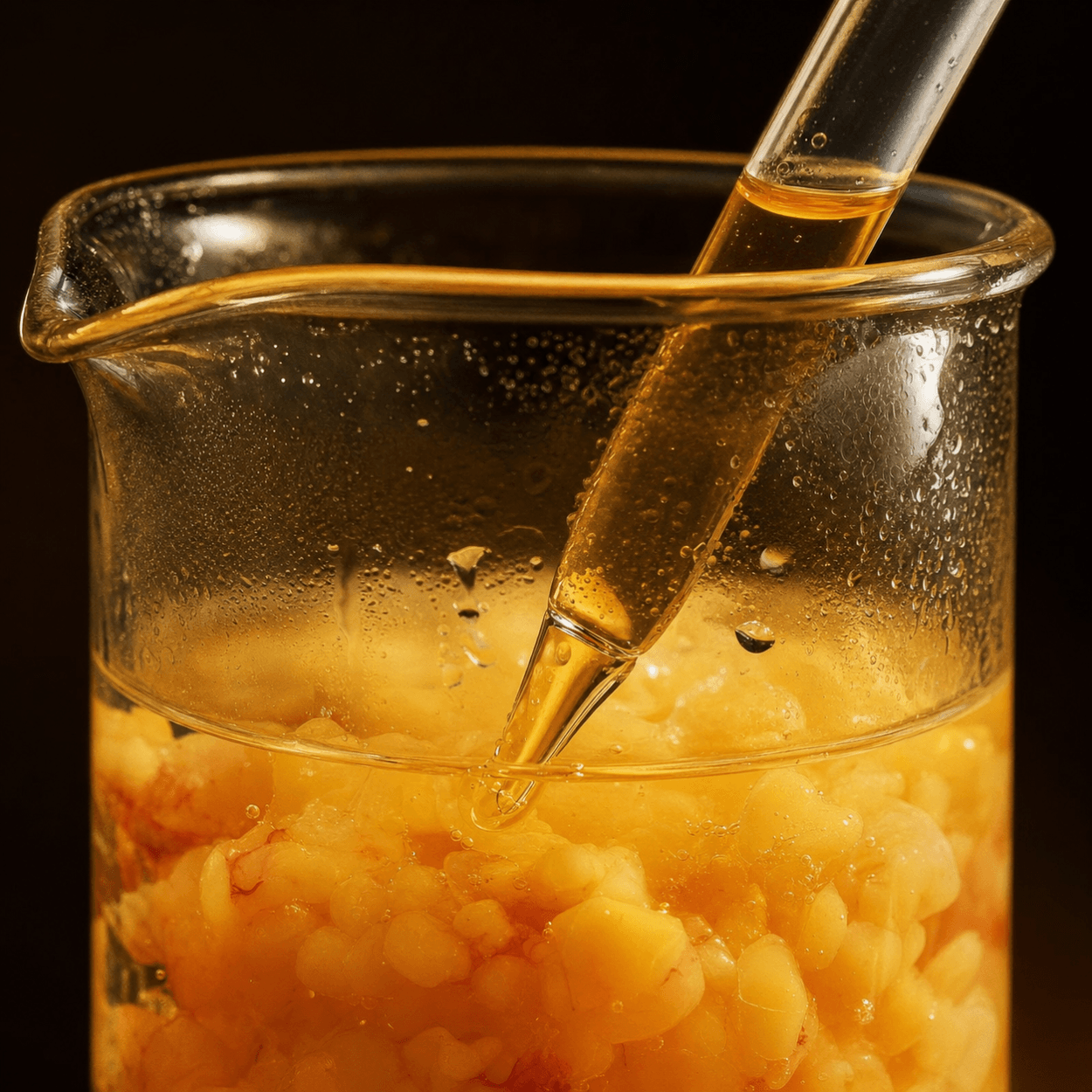
Collagenase is an enzyme that cuts collagen. In collagenase digestion of adipose tissue, washed lipoaspirate is incubated with the enzyme at controlled temperature, agitated, then centrifuged. Mature adipocytes float. The pellet at the bottom is the stromal vascular fraction, a mixed population of stromal cells, pericytes, endothelial cells, and blood cells.
The efficiency is real. In the review by Aronowitz and colleagues in SpringerPlus, the most efficient enzymatic methods isolate about 500,000 to 1,000,000 cells per gram of lipoaspirate with greater than 80 percent viability. The same review reports collagenase-isolated cells reaching 80 to 90 percent confluence in 6 days versus 13 days, at a digestion cost of roughly 2 to 5 dollars per gram of tissue.
None of that makes the output an approved product. No adipose-derived stromal vascular fraction preparation is FDA approved, the evidence is preliminary, and any clinical use sits inside investigational pathways supervised by a licensed provider.
Mechanical Isolation of Adipose Tissue: Force Instead of Enzymes
Mechanical methods skip the enzyme. They combine washing, vibration, shearing between connected syringes, filtration, and centrifugation to strip away oil, blood, and fluid without adding a chemical agent.
The tradeoff appears immediately in the counts. Aronowitz and colleagues report mechanical yields from 10,000 nucleated cells per cc of lipoaspirate at the low end to 240,000 per cc at the high end. That ceiling sits near the floor of the enzymatic range. Mechanical processing also leaves more tissue architecture intact, which matters for the regulatory analysis and is worth reading alongside the harvest procedure steps.
What the Published Numbers Actually Show
Device-level data makes the gap concrete. The table below pulls the named systems from the Aronowitz review and sorts them by method type. General enzymatic efficiency is reported per gram while device yields are reported per cc, so the units differ.
| Device or method | Type | Reported yield | Reported viability | Progenitor content |
|---|---|---|---|---|
| Celution, automated collagenase | Enzymatic | 240,000 to 360,000 nucleated cells per cc | 84 to 93 percent | Over 15 percent progenitors |
| GID SVF | Enzymatic | 719,000 cells per cc | 83 percent | Not reported |
| Icellator | Enzymatic | 702,000 cells per cc | 80.7 percent | Not reported |
| Sepax, automated enzymatic | Enzymatic | 260,000 cells per cc | Over 90 percent | About 14 percent CFU-F |
| Manual enzymatic | Enzymatic | 160,000 cells per cc | Over 90 percent | About 11 percent CFU-F |
| Centrifugation only | Mechanical | About 10,000 cells per cc | Not reported | Not reported |
| Lipokit | Mechanical | About 35,000 cells per cc | Not reported | 1.7 percent ASC |
On yield, the enzymatic systems cluster far above the mechanical ones. Their viability, however, sits in an ordinary 80 to 93 percent band, which sets up the point most summaries get wrong.
The Viability Myth That Will Not Die
Here is the most common error in this topic, stated plainly. Enzymatic collagenase digestion does not produce higher viability.
The review’s own conclusion is direct: enzymatic methods for the isolation of stromal vascular fraction cells from adipose tissue yield more nucleated cells with a higher number of progenitor cells per volume of lipoaspirate processed, but overall viability tends to be unaffected by processing method. Collagenase wins on yield and on progenitor purity. It does not win on the percentage of cells that are alive.
Progenitor content is a separate measurement, usually colony forming unit fibroblast frequency. The IFATS and ISCT joint statement anticipates CFU-F above 1 percent for stromal vascular fraction and above 5 percent for culture expanded adipose stromal cells.
Why Isolation Method Decides the Regulatory Category
Under 21 CFR 1271.3(f), minimal manipulation for structural tissue means processing that does not alter the original relevant characteristics of the tissue relating to the tissue’s utility for reconstruction, repair, or replacement. Adipose tissue is structural tissue. Collagenase dissolves the very matrix that gives it those characteristics.
That is why enzymatic digestion is the classic minimal manipulation tripwire, and why the minimal manipulation standard is the first thing a regulator examines. It is not the only criterion. 21 CFR 1271.10(a) requires all four at once, and the homologous use criterion fails just as easily when a product is advertised for an unrelated condition. FDA addressed both in its final guidance on minimal manipulation and homologous use, issued July 2020.
The enforcement record shows what failure looks like. The warning letter to Dynamic Stem Cell Therapy, issued February 11, 2026, cited an umbilical cord derived product as more than minimally manipulated and used non-homologously for cardiovascular disease and arthritis. The warning letter to Innate Healthcare Institute, issued August 15, 2025, cited an umbilical cord mesenchymal stromal cell product for the same two failures, including intended use for autism. Neither involved adipose tissue, but both criteria apply to it.
Where Banked Tissue Sits in All of This
Save My Fat does not isolate cells. It is a connector linking patients and providers to a United States tissue bank, and what gets preserved is adipose tissue, stored as tissue. It is not digested with collagenase and not separated into a stromal vascular fraction. Everything above happens in laboratories and research settings.
Hold onto that distinction when reading anyone else’s marketing. Understanding how adipose banking works means understanding that preserving tissue and processing tissue are different activities with different regulatory profiles.
Frequently Asked Questions
What is the difference between enzymatic and mechanical isolation of adipose cells?
Enzymatic isolation uses collagenase to digest the collagen scaffold holding fat together, releasing the stromal vascular fraction as a cell suspension. Mechanical isolation uses physical force: shaking, shearing, filtering, and centrifugation. Enzymatic methods report higher cell counts per volume. Mechanical methods add no enzyme, which changes the regulatory analysis.
Why does enzymatic digestion trigger stricter FDA regulatory requirements?
Because adipose tissue is structural tissue. The minimal manipulation definition asks whether processing alters the original relevant characteristics of the tissue. Collagenase dissolves that matrix and turns tissue into a cell suspension. A product failing minimal manipulation is generally regulated as a drug or biological product requiring FDA approval.
Does Save My Fat perform cell isolation on banked tissue?
No. Save My Fat is a connector linking patients and providers to a United States tissue bank. Adipose tissue collected by a licensed physician is preserved as tissue, not digested with collagenase and not separated into a stromal vascular fraction. Isolation is a laboratory activity, not a Save My Fat service.
What isolation method keeps a product classified under Section 361?
No method is automatically safe. Section 361 status requires all four criteria of 21 CFR 1271.10(a) at once, including minimal manipulation and homologous use only. Minimally handled tissue has a stronger argument than digested cells, but intended use carries equal weight. A product advertised for an unrelated condition still fails.
What does collagenase actually do to fat tissue?
Collagenase cuts collagen, the protein scaffold holding adipose tissue together. Washed lipoaspirate is incubated with the enzyme, agitated, then centrifuged. Mature fat cells float and the pellet at the bottom is the stromal vascular fraction. The tissue no longer exists as tissue afterward, which is why the step raises a regulatory question.
Does enzymatic isolation produce more viable cells than mechanical isolation?
No, and this is the most common error in the topic. Aronowitz and colleagues concluded that enzymatic methods yield more nucleated cells with a higher number of progenitor cells per volume of lipoaspirate processed, but overall viability tends to be unaffected by processing method. Enzymatic isolation wins on yield, not on the share of live cells.
Key Takeaways
The two isolation families answer the same question differently. Enzymatic methods dissolve the collagen scaffold and recover far more nucleated cells per volume, with device yields reported as high as 719,000 cells per cc, while mechanical methods use force alone and report 10,000 to 240,000 nucleated cells per cc. What separates them is yield and progenitor content, not viability.
The published conclusion is that overall viability tends to be unaffected by processing method, and any article claiming collagenase produces more viable cells has misread the source. Because adipose tissue is structural tissue, enzymatic digestion alters the original relevant characteristics the minimal manipulation definition protects, which is a large part of why so many FDA warning letters turn on this single step. None of these preparations is FDA approved, the evidence remains preliminary, and every decision belongs with a licensed provider.
Save My Fat connects patients and providers with a U.S.-based tissue bank. It is not a tissue bank, a laboratory, a medical practice, or a treatment provider. Stem cell and regenerative medicine regulations vary by state, including specific informed-consent and disclosure requirements in Florida, Utah, California, Georgia, and Tennessee governing tissue and stem cell services. Banking adipose tissue does not connect patients to any treatment pathway, and any future use depends on FDA regulatory status, physician guidance, and the availability of approved or investigational pathways at that time.
Patients and providers comparing programs can review current pricing or reach the team through contact us with questions about collection and storage.
Save My Fat works with a U.S.-based tissue bank for laboratory processing and storage.
This article is for educational purposes only and does not constitute medical or legal advice. Please consult your own licensed healthcare provider before making any decisions about banking, treatment, or research participation.
About the author: Oscar Tellez is the founder and CEO of Save My Fat. He holds a Bachelor of Science in Exercise Science and Health Promotion from Florida Atlantic University. He has spent a decade in the regenerative medicine industry across product distribution, laboratory and vendor relationships, and provider training. He is not a licensed clinician, and this article is educational, not medical advice.
Related guide: the stem cell science glossary.