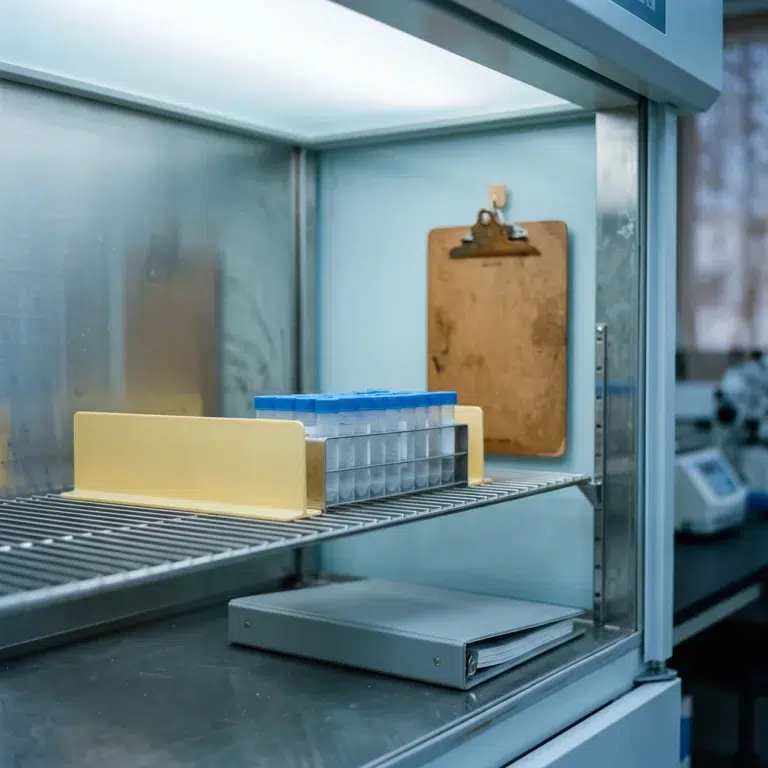
One person banks. Under certain guidelines, eligible relatives may be considered in the future.
Eligibility is not guaranteed, and banking is preservation, not treatment.
This page explains how adipose (fat) tissue banking relates to families. When you bank your own tissue, under certain legal and medical guidelines eligible first-degree blood relatives may be considered for future use. SaveMyFat connects you and your provider with a U.S.-based tissue bank; it does not collect, process, or store tissue itself. Banking is preservation, not treatment, and family eligibility is never guaranteed.
Key takeaways:
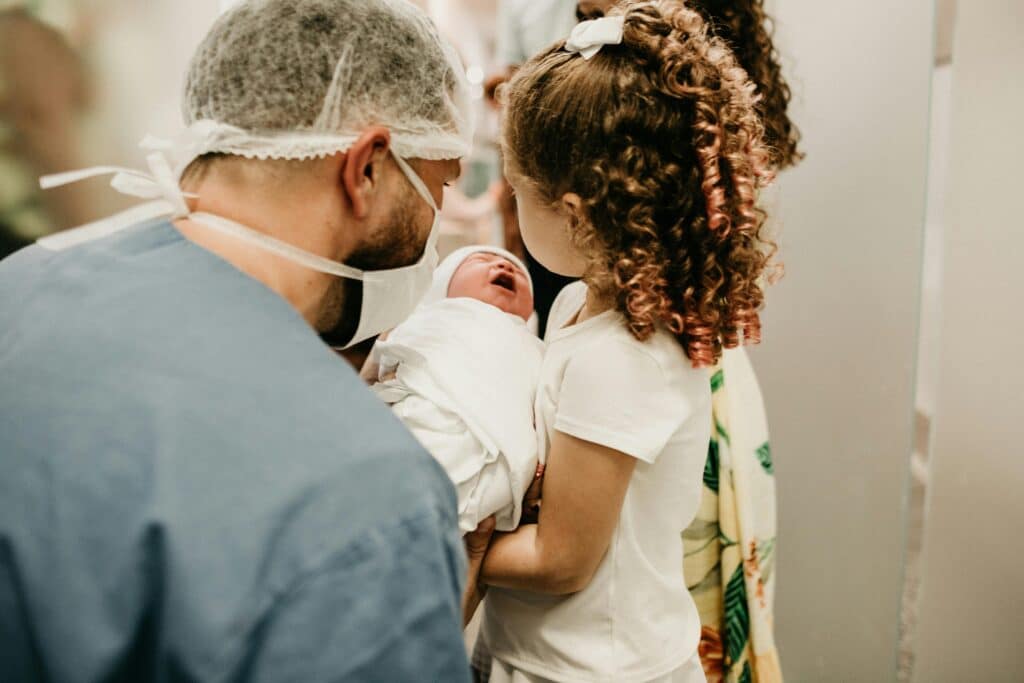
When you bank your own adipose tissue, you preserve your biological material for the long term. Under certain legal and medical guidelines, eligible first-degree blood relatives may be considered for use of your banked tissue in the future. Eligibility is not guaranteed and depends on the pathway, the relationship, and the regulations in place at that time. SaveMyFat connects you and your provider with a U.S.-based tissue bank; it does not collect, process, or store tissue itself, and banking is preservation, not treatment.
Because banked tissue is your own, it avoids the donor-matching questions associated with tissue from other people. Under certain legal and medical guidelines, eligible first-degree blood relatives, such as parents and children and in some protocols a sibling, may be considered for future use of your banked tissue. This is about eligibility, not a promise. Any future use would be investigational or run through an FDA-regulated pathway and would be decided by a licensed physician. Adipose-derived cell uses are not FDA-approved to diagnose, treat, cure, or prevent any disease.
A single collection is a short in-office procedure that can yield many cryopreserved vials of your own tissue. Storing more now preserves more options later. Any future use, for you or an eligible relative, always depends on evolving science, FDA decisions, and a physician’s guidance. Banking does not guarantee that any future use will be possible or appropriate.
Families think ahead for many reasons. Banking lets you preserve your own tissue now, while the science is still developing. It is important to be clear about what that does and does not mean: banking is not a treatment, it does not guarantee that stored tissue can ever be used for a specific condition, and any future use would be investigational or run through an FDA-regulated pathway decided by a licensed physician.
Any use by a relative would be decided by the treating physician at that time, including compatibility and any required donor screening, within federal tissue rules; state law may add consent and disclosure duties, so see our overview of state stem cell laws and our guide to longevity and tissue banking.
For you, banked tissue is your own (autologous), which avoids the donor-matching questions that come with tissue from other people. For a relative, any future use would be a different situation: it would be investigational or governed by an FDA-regulated pathway, and matching, eligibility, and safety would all be evaluated by a licensed physician. Banking does not remove those questions or guarantee that family use is possible. No option is risk-free.
Family banking starts with one person preserving their own adipose tissue. A partner provider collects it, a U.S.-based tissue bank processes and cryopreserves it, and SaveMyFat connects you with that bank. The idea is that, under certain future guidelines, eligible first-degree blood relatives may be considered for use of that stored tissue.
It is not a guarantee, and it is not a treatment. Whether a relative could ever use your banked tissue depends on the science, FDA decisions, matching, eligibility rules, and a physician’s judgment at that time. Adipose-derived cell products that are more than minimally manipulated are regulated as biologics under 21 CFR Part 1271 and are not FDA-approved to treat any disease. The FDA’s consumer alert on regenerative medicine products explains this further. Banking does not enroll you or your family in any treatment.
Under certain legal and medical guidelines, eligible first-degree blood relatives (parents and children, and in some protocols siblings) may be considered for future use of your banked tissue. Eligibility is not guaranteed and depends on the pathway, the relationship, and the regulations in place at that time. Your provider can explain what may apply.
A spouse does not share your DNA, so spousal use is more limited and depends entirely on the specific protocol, the regulations, and a physician’s evaluation. It may not be possible. We do not promise spousal eligibility.
Your children share part of your genetic material, so under some future protocols they may be considered. This is not a guarantee. Any use would be investigational or run through an FDA-regulated pathway and decided by a licensed physician.
You inherited genetic material from each parent, so under some future protocols a parent may be considered. Eligibility is case by case and not guaranteed, and any use would be evaluated by a physician within a lawful pathway.
Full siblings are first-degree relatives and share about half of your genetic material, the same as a parent or child. Federal tissue rules (21 CFR 1271.10) refer to first- or second-degree blood relatives. Compatibility and any required screening are not assessed at collection; they would be determined by the treating physician at the time of any future use, within a lawful pathway, and nothing is guaranteed.
Our network includes providers and laboratory partners with decades of combined experience in regenerative medicine, surgery, and tissue processing. Their involvement reflects our focus on U.S.-based, standards-driven handling of your tissue. Any future medical decision should be made with your own licensed provider.
Board-Certified Orthopedic Surgeon
Founder of Regeneveda and Professor of Clinical Surgery, University of Illinois Chicago
Board-Certified General, Vascular & Cosmetic Surgeon
Whether you want to bank your own adipose tissue or offer banking in your practice, the next step is a conversation. We will walk you through the process, the costs, and the limits, so you can make an informed decision with your provider.
Bring compliant, U.S.-based adipose tissue banking to your organization.
Informed planning starts with one conversation.
Add a powerful service to your practice.
Ready to find a provider near you?
Tell us where you are and when you’re hoping to bank.
A member of the Save My Fat team will answer your questions about the process and cost and, if you’d like, connect you with a provider in our network.
Our team can help you understand how adipose tissue banking works and what family eligibility does and does not mean. We do not provide medical advice; any medical decision is between you and a licensed physician.
Oscar Tellez is the founder and CEO of SaveMyFat. He holds a Bachelor of Science in Exercise Science and Health Promotion from Florida Atlantic University. Oscar has spent a decade working across the regenerative medicine industry, including product distribution, laboratory and vendor relationships, and provider training. He founded SaveMyFat to connect patients and providers with compliant adipose tissue banking and to simplify the process. This article is educational, reflects current FDA guidance, and is not medical advice or a substitute for consultation with a licensed clinician.
Sources and further reading: U.S. FDA, Consumer Alert on Regenerative Medicine Products; FDA, Patient Information on Regenerative Medicine Therapies; 21 CFR Part 1271 (HCT/Ps); FDA Expanded Access; ClinicalTrials.gov.
Last reviewed: July 2026.