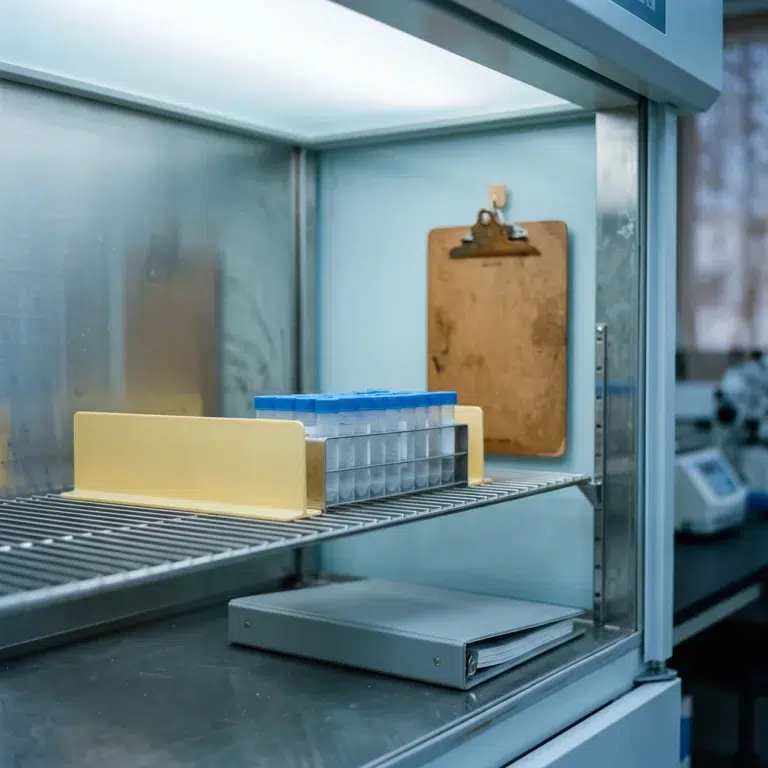
Preserve your own adipose (fat) tissue now, so it stays documented and available if you and a licensed physician ever explore a future FDA-regulated pathway.
Banking is preservation, not treatment.
This page explains, in plain language, how adipose (fat) tissue banking works for people thinking about joint and orthopedic health: how a partner provider collects your tissue, how a U.S.-based tissue bank processes and cryopreserves it, what the research does and does not show, and what banking cannot do. SaveMyFat’s role is to connect you and your provider with that bank. Banking is a way to preserve your own tissue now for potential future use. It is not a treatment for arthritis, joint pain, or any orthopedic condition.
Key takeaways:
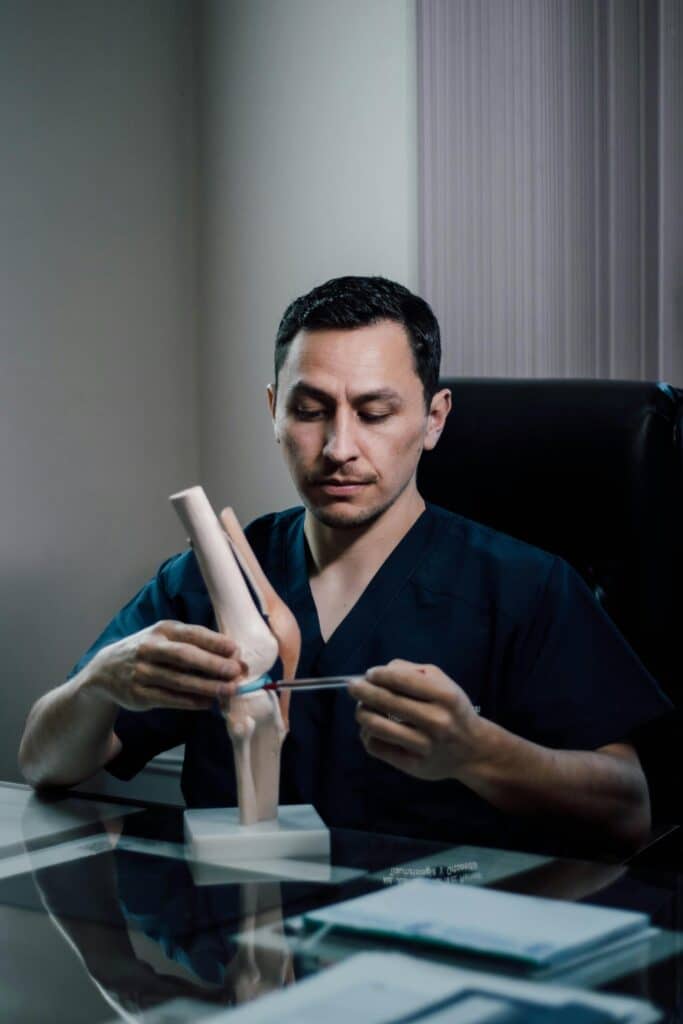
Adipose tissue banking is a way to preserve your own fat tissue, and the cells within it, through cryopreservation (long-term storage at very low temperatures). It is a preservation service, not a therapy. SaveMyFat’s role is to connect you and your provider with a U.S.-based tissue bank that processes and stores the tissue; SaveMyFat does not collect, process, or store it. Whether stored tissue could ever be used in your own care depends on future FDA decisions, the pathway available at the time, and your physician’s judgment. Today, adipose-derived cell products used for orthopedic conditions are considered investigational and are not FDA-approved to diagnose, treat, cure, or prevent any disease.
Fat (adipose) tissue is a rich, accessible source of cells that scientists study, including mesenchymal stromal cells. In a short in-office procedure, a provider collects a small amount of your adipose tissue. A U.S.-based laboratory then processes and cryopreserves it. Storing your tissue now simply keeps your own biological material available. It does not diagnose or treat any condition, and it does not guarantee that any future use will be possible or appropriate for you.
Some clinics collect and use cells on the same day, outside FDA-regulated pathways. SaveMyFat takes a more conservative route: we connect you with a bank that preserves your own tissue for the long term, so it is documented and available if a lawful, FDA-regulated option ever becomes relevant to you. Banking does not enroll you in any treatment, and any future use would be decided with a licensed physician, not with SaveMyFat.
There is no guarantee that stored tissue can be used to address a joint condition. Most adipose-derived cell uses for orthopedics are investigational and are not FDA-approved. If lawful options ever apply to you, they run through tightly controlled channels: a registered clinical trial, the FDA’s Expanded Access program for serious conditions, or a therapy that has completed the full FDA approval process. Registration of a trial is not proof of safety, effectiveness, or approval. Any decision would be made by you and a licensed physician.
Fat tissue is an abundant, accessible source of cells that researchers study, and collecting it is less invasive than a bone marrow draw. A typical collection is a short outpatient procedure. Because the tissue is your own (autologous), banking it avoids the donor-matching questions that come with tissue from other people. Like any procedure, collection carries risks such as bruising, bleeding, or infection, which you should discuss with your provider.
Adipose tissue banking is a preservation service. A partner provider collects a small amount of your own fat tissue, a U.S.-based tissue bank processes and cryopreserves it, and it is stored for the long term. SaveMyFat’s role is to connect you and your provider with that bank and coordinate the process, not to collect, process, or store tissue itself. The goal is to keep your own biological material available in case lawful, FDA-regulated options become relevant to you in the future.
It is not a therapy for your joints. SaveMyFat is a facilitator, not a treatment provider or a laboratory. It does not diagnose conditions and does not promise that banked tissue will treat, cure, or prevent arthritis, cartilage damage, sports injuries, or any other condition. The U.S. Food and Drug Administration regulates human cells and tissues under 21 CFR Part 1271. Tissue that is minimally manipulated and used for the same basic function it serves in the body faces fewer requirements, while cells that are more than minimally manipulated, or used for a different function such as an orthopedic injection, are regulated as biologics that require FDA approval before they may be marketed to treat disease. The FDA’s consumer alert on regenerative medicine products explains this in more detail.
Under some legal and medical guidelines, eligible first-degree blood relatives may be able to use your banked tissue in the future. Eligibility is not guaranteed. It depends on the pathway, your relationship, and the regulations in place at that time. Your provider can explain what may apply to your family.
Once cryopreserved, tissue is stored at very low temperatures and documented for the long term. Storing tissue does not treat anything and does not guarantee that any future use will be possible or appropriate. Any future use would depend on FDA decisions and your physician’s guidance.
No. Banking is preservation, not treatment. Adipose-derived cell uses for orthopedic conditions are investigational and are not FDA-approved to diagnose, treat, cure, or prevent any disease. Stored tissue is not a ready-to-use therapy, and having it banked does not make you eligible for any treatment.
Your tissue is processed and cryopreserved in the United States by a U.S.-based tissue bank under 21 CFR Part 1271 tissue-handling standards. There is no overseas shipping and no unregulated foreign labs. SaveMyFat connects you and your provider with this bank; it does not collect, process, or store tissue itself.
Yes. Banked tissue comes from your own body, which avoids the donor-matching questions associated with tissue from other people. Autologous tissue is not risk-free, and collection carries normal procedure risks. Your provider can explain what this does and does not mean for you.
Banking is a preservation service, not a medical product that the FDA approves or disapproves. Separately, most adipose-derived cell products that are more than minimally manipulated are regulated as biologics and are not FDA-approved to treat any disease, including joint and orthopedic conditions. Storing tissue does not change that.
Adipose-derived and mesenchymal stromal cells are being studied in registered clinical trials for orthopedic applications such as osteoarthritis. This research is early and ongoing, results vary, and listing a trial on ClinicalTrials.gov is not the same as proof of safety, effectiveness, or FDA approval. More study is needed before any conclusions can be drawn.
Adipose collection is a medical procedure and carries risks such as bruising, bleeding, or infection. Long-term storage outcomes depend on many factors and cannot be guaranteed. Discuss all risks with a licensed healthcare provider before deciding.
Adipose-derived and mesenchymal stromal cells are an active area of study for orthopedic applications, including knee osteoarthritis. Researchers are running registered clinical trials to understand safety and possible effects. You can browse these studies directly on the government registry: adipose-derived stem cell trials for osteoarthritis on ClinicalTrials.gov.
It is important to read that research honestly. Much of it is early stage, involves small numbers of patients, and reports mixed or preliminary results. Listing a trial on ClinicalTrials.gov means the study is registered, not that the approach is proven, safe, effective, or FDA-approved. As the FDA notes in its patient information on regenerative medicine therapies, most such products have not been shown to be safe or effective for the conditions they are marketed for. Banking your tissue does not enroll you in any trial, and it does not change any of this. We keep an overview of where the science is heading on our emerging research and research areas pages.
For a directory of the studies we track, see our adipose stem cell clinical trials guide.
Our network includes providers and laboratory partners with decades of combined experience in regenerative medicine, surgery, and tissue processing. Their involvement reflects our focus on U.S.-based, standards-driven handling of your tissue. Physician involvement is part of responsible banking, and any future medical decision should be made with your own licensed provider.
Board-Certified Orthopedic Surgeon
Founder of Regeneveda and Professor of Clinical Surgery, University of Illinois Chicago
Board-Certified General, Vascular & Cosmetic Surgeon
Whether you want to bank your own adipose tissue or offer banking in your practice, the next step is a conversation. We will walk you through the process, the costs, and the limits, so you can make an informed decision with your provider.
Bring compliant, U.S.-based adipose tissue banking to your organization.
Informed planning starts with one conversation.
Add a powerful service to your practice.
Ready to find a provider near you?
Tell us where you are and when you’re hoping to bank.
A member of the Save My Fat team will answer your questions about the process and cost and, if you’d like, connect you with a provider in our network.
Oscar Tellez is the founder and CEO of SaveMyFat. He holds a Bachelor of Science in Exercise Science and Health Promotion from Florida Atlantic University. Oscar has spent a decade working across the regenerative medicine industry, including product distribution, laboratory and vendor relationships, and provider training. He founded SaveMyFat to connect patients and providers with compliant adipose tissue banking and to simplify the process. This article is educational, reflects current FDA guidance, and is not medical advice or a substitute for consultation with a licensed clinician.
Sources and further reading: U.S. FDA, Consumer Alert on Regenerative Medicine Products; FDA, Patient Information on Regenerative Medicine Therapies; 21 CFR Part 1271 (HCT/Ps); FDA Expanded Access; ClinicalTrials.gov (adipose-derived cell trials for osteoarthritis).
Last reviewed: July 2026.