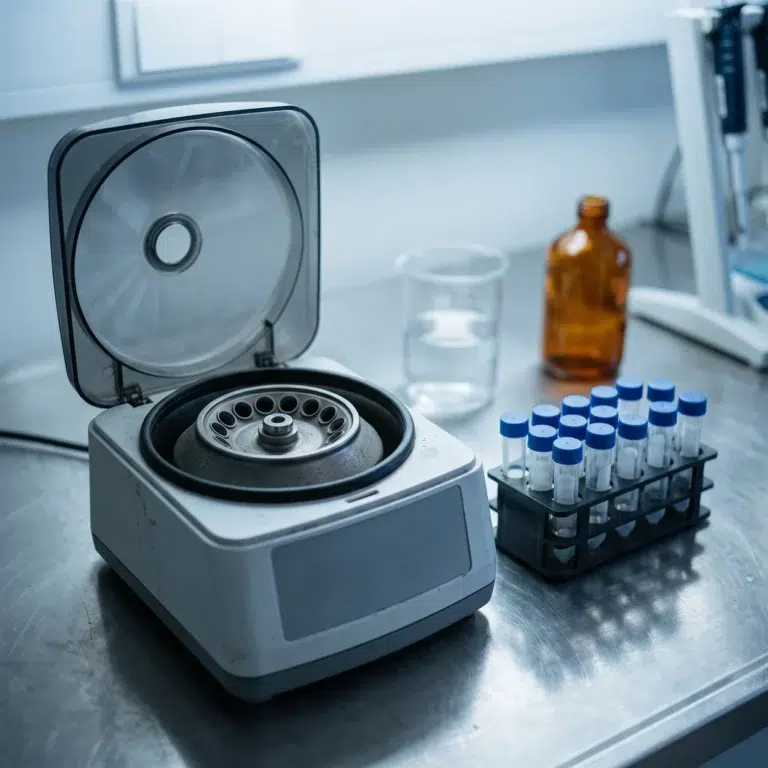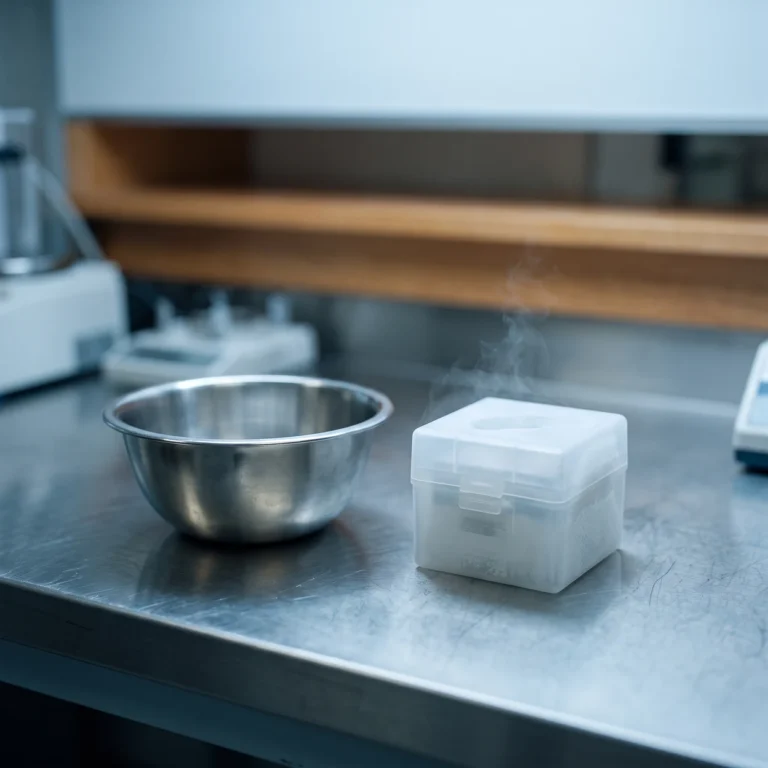
To start fat banking, you fill out the form on the Contact Us page or on any of the patient pages. That is all a patient has to do to start. After that, the site describes a conversation and then four steps: consult, harvest, process and store. This post takes them in order and gives you a question to ask at each one.
TLDR You begin by filling out the form on the Contact Us page or any patient page. The site says the next step is a conversation, followed by four published steps: consult, harvest, process and store. No timeline is published, so ask about timing. Save My Fat is a connector and does not collect, process or store tissue. Banking adipose tissue does not guarantee any future use.
Important Disclaimer: Save My Fat does not provide FDA-approved treatments or cures for any disease. Banking adipose tissue today does not guarantee eligibility, access, or clinical benefit from any future therapy, clinical trial, or medical program. All content is for educational purposes only and does not constitute medical advice. Patients must consult their own licensed healthcare professionals regarding all medical decisions.
Let’s say you have been reading about fat banking for a few weeks, and tonight the contact form is open on your screen. Your name is typed in and your cursor is on the button. So what happens after you send it?
Part of the answer is short. You send the form, and the next step is a conversation. The rest is four published steps and a few federal tissue rules.
Let’s define the term first. Fat banking, also called adipose tissue banking, means a partner provider collects a small amount of your fat and a U.S.-based tissue bank processes and cryopreserves it. Save My Fat connects you and your provider with that bank.
How Do You Start Fat Banking?
You fill out one form. It sits on the Contact Us page and on any of the patient pages, including the patients page, and filling it out is all a patient has to do to start fat banking.
The form asks for your first name, last name, phone, email, city and state. Then it asks two questions: “When are you hoping to bank?” and “How can we help?” The button reads “Send My Request”.
There are also two checkboxes. One begins “By checking this box, I agree to receive text messages and calls”. The other begins “By checking this box, I consent to receive emails from Save My Fat LLC”. Read each one to the end before you check it. Consent to a procedure is a separate matter, and this post comes back to it at the consult.
Use the “How can we help?” box to put your first questions in writing.
What Happens After You Send the Form?
A conversation. The Contact Us page says the team “is ready to walk you through the process, discuss your options, and answer any questions you have”. The patients page says “the next step is a conversation.”
How soon will you hear back? Ask us, and do not plan around a date until you have the answer. Bring your other questions too. Who will you be talking to? How do you get from this conversation to a partner provider? Ask what has to happen between this conversation and the consult, and what you should have ready when you get there.
The steps themselves are on the page that explains how banking works: Consult, Harvest, Process and Store.
What Happens at the Consult?
You meet with a partner provider and talk before anything is collected. The site says: “Meet with a Save My Fat partner provider to discuss your goals, review the process and its limits, and see whether adipose tissue banking fits your planning.” Then it adds: “This is an educational conversation, not a medical recommendation.”
So your part is to bring your goals and your questions, and the provider’s part is to go over the limits. They should, but do they? If the limits have not come up by the end of the visit, ask for them directly.
The consult is also the place to ask about consent. The four published steps do not list it as its own step, so raise it yourself. Ask what you will sign and when, and read our post on informed consent before you go. Rules on consent and disclosure vary by state, so ask which apply where you live.
What Happens During the Collection?
A provider collects a small amount of your fat in the office. The site calls this step Harvest: “A short, in-office procedure collects a small amount of adipose (fat) tissue, usually in under 30 minutes.” The patients page adds: “The procedure typically uses local anesthesia and takes under 30 minutes.”
It is still a procedure, and the site says so: “Like any procedure it carries risks such as bruising or infection, which you should discuss with your provider.” So discuss them. Ask what the risks are for you and what to expect afterward. Questions about your medications go to your provider. Our banking day guide covers the visit in more detail.
How Does Your Sample Get to the Tissue Bank?
It ships. The third step, Process, reads: “Your sample ships to the tissue bank’s U.S.-based laboratory, where the adipose tissue is processed and cryopreserved.” Ask how the sample ships and how long the trip takes.
Processing is the step you do not see, so it helps to know the federal tissue rules that apply to it. Start with the label. Tissue stored for the person it came from is called autologous, and 21 CFR 1271.90(c) requires a label saying it is for autologous use only.
The same section has a detail people miss. Under section 1271.90(a)(1), the rules do not require donor screening or testing for tissue stored for autologous use. Unless all the applicable screening and testing has been performed, the label must also say the tissue was not evaluated for infectious substances. So ask whether your sample will be tested and what its label will say.
Then the trip. For tissue shipped “between establishments (e.g., procurer to processor)” before it is available for distribution, 21 CFR 1271.265(b) says the shipper “must first determine and document whether pre-established criteria designed to prevent communicable disease transmission have been met” and must ship it in quarantine.
Arrival is its own checkpoint. Under 21 CFR 1271.265(a), the establishment receiving the tissue must “inspect for damage and contamination” and decide whether to “accept, reject, or place in quarantine” what comes in. So acceptance is a decision, and it can go the other way. Ask what happens, and who tells you, if a sample is not accepted.
What Happens Once Your Tissue Is Stored?
It is stored in the United States and documented. The fourth step, Store, reads: “Your cryopreserved samples are stored in the United States.” The FAQ on the same page adds: “Once cryopreserved, your samples are stored and documented.”
Documented how? The tracking rule, 21 CFR 1271.290, requires a system that can follow tissue from the donor to where it ends up, and back again. With autologous storage, the donor is you. The rule also requires a “distinct identification code” that ties the tissue to the donor and its records, and that code “may not include an individual’s name, social security number, or medical record number.”
Do not assume you will receive a code or a certificate. Ask what record you get and who holds the rest.
Storage is also where the costs after the collection come in. Typical fees include a storage fee and, if vials are ever released, a vial release fee. Ask in your first conversation which fees apply to you and when each one is due.
Storage is also where people start to assume things. The site is direct about it: “Banking your tissue today does not guarantee eligibility, access, or clinical benefit from any future therapy or clinical trial.”
Frequently Asked Questions
How long does it take to start fat banking after you send the form?
The site gives no timeline for the reply, the consult, the shipment or the storage. The one length of time it publishes is for the collection, which it says is “usually in under 30 minutes”. Ask about timing in your first conversation.
Does Save My Fat collect or store the tissue?
No. A partner provider collects your tissue and a U.S.-based tissue bank processes and cryopreserves it. Save My Fat connects you and your provider with that bank.
Is there a consent form to sign before the collection?
That is a question for your provider. The site’s four steps do not list consent as a separate step, and rules on consent and disclosure vary by state. Ask what you will sign and when you will see it.
Is fat banking a treatment?
No. It is storage of your own tissue. The site says banking does not guarantee eligibility, access, or clinical benefit from any future therapy or clinical trial. No adipose-derived product has FDA approval to treat any disease. Take any treatment question to your own licensed provider.
Key Takeaways
To start fat banking, you fill out the form on the Contact Us page or any patient page, and the site says the next step is a conversation. Four published steps follow: consult, harvest, process and store. Federal tissue rules cover the label, the shipment, the check on arrival and the tracking records, so ask about each one. Typical fees after the collection include storage and, if vials are released, a vial release fee. Banking does not guarantee any future use.
Save My Fat connects patients and providers with a U.S.-based tissue bank. It is not a tissue bank, a laboratory, a medical practice, or a treatment provider. Stem cell and regenerative medicine regulations vary by state, including specific informed-consent and disclosure requirements in Florida, Utah, California, Georgia, and Tennessee governing tissue and stem cell services. Banking adipose tissue does not connect patients to any treatment pathway, and any future use depends on FDA regulatory status, physician guidance, and the availability of approved or investigational pathways at that time.
Readers weighing adipose tissue banking for potential future use can review current pricing or send the form on the contact page.
Save My Fat works with a U.S.-based tissue bank for laboratory processing and storage.
This article is for educational purposes only and does not constitute medical or legal advice. Please consult your own licensed healthcare provider before making any decisions about treatment or research participation.
About the author: Oscar Tellez is the founder and CEO of Save My Fat. He holds a Bachelor of Science in Exercise Science and Health Promotion from Florida Atlantic University. He has spent a decade in the regenerative medicine industry across product distribution, laboratory and vendor relationships, and provider training. He is not a licensed clinician, and this article is educational, not medical advice.
Related guide: FDA adipose tissue regulation.