
Patients researching adipose banking want to understand what the price covers before they commit. Transparent, itemized pricing is one of the clearest signs of a legitimate banking service, and understanding the components helps a patient evaluate any offer. This guide breaks down what the price covers across the harvest, lab processing, storage, and future access, without quoting figures that should be confirmed on the current pricing page.
TLDR: Adipose banking pricing generally covers four components: the harvest procedure performed by a provider, laboratory processing by a U.S.-based tissue bank, initial cryopreservation storage, and the basis for future retrieval. Transparent, itemized pricing that clearly states what is included is a mark of a legitimate service, while hidden or vague pricing is a warning sign. Current figures should always be confirmed on the official pricing page rather than assumed. Banking adipose tissue preserves a person’s own tissue under 21 CFR Part 1271; it is not a treatment, and it does not guarantee eligibility, access, or clinical benefit.
Important Disclaimer: Save My Fat does not provide FDA-approved treatments or cures for any disease or condition. Banking adipose tissue today does not guarantee eligibility, access, or clinical benefit from any future therapy, clinical trial, or medical program. All content is for educational purposes only and does not constitute medical advice. Patients must consult their own licensed healthcare professionals regarding all medical decisions.
Understanding the components of pricing helps a patient know exactly what they are paying for. For current figures, a patient should consult the official pricing page at pricing page, since pricing can change and should be confirmed at the source.
What the Price Actually Includes
Adipose banking pricing generally reflects four components: the harvest procedure, laboratory processing, initial storage, and the framework for future access. A transparent service explains what each component covers, so a patient understands the full cost of banking rather than encountering surprises later. The overview of how to think about cost provides a framework for evaluating the value of banking.
The most important principle is transparency. A legitimate service states clearly what the initial price includes, what ongoing storage costs, and what future retrieval would involve. For current pricing specific to Save My Fat, a patient should consult pricing page, because figures should be confirmed at the source rather than assumed from any third-party description.
The Harvest Procedure: What You Pay For at the Provider
The harvest is the procedure that collects the adipose tissue, performed by a provider. This component of the cost covers the procedure itself, typically a minimally invasive outpatient collection performed under local anesthesia. The overview of your banking day describes what the procedure involves.
What a patient pays for at the provider is the collection of the tissue under proper conditions. A transparent service explains this provider component clearly, including what the procedure includes. Specific figures for the harvest should be confirmed on the current pricing page, since they are set by the service rather than assumed.
Lab Processing: What the tissue bank Does With Your Fee
Laboratory processing is performed by a U.S.-based tissue bank, the laboratory partner. This component of the cost covers the work of preparing the tissue for preservation, including characterization and the steps required to ready the tissue for cryopreservation, performed under 21 CFR Part 1271. The overview of the tissue bank’s process describes how tissue is handled after transfer.
What a patient pays for here is the laboratory work that prepares and preserves the tissue under federal tissue regulations, with documentation and quality controls. As with the other components, specific figures should be confirmed on the current pricing page rather than assumed from a general description.
Storage: What Cryopreservation Costs Cover
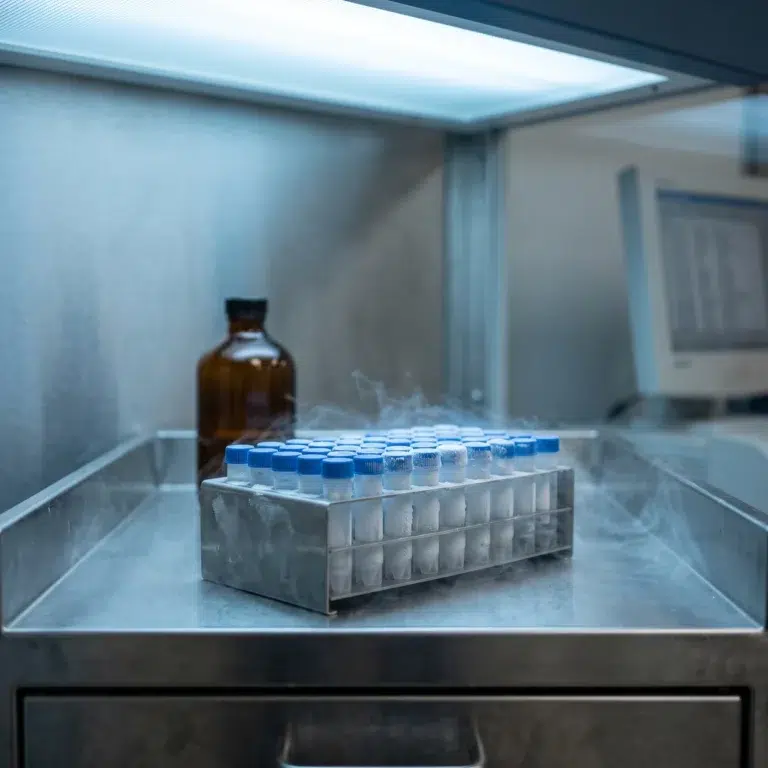
Storage covers the ongoing preservation of the tissue at cryogenic temperatures, typically billed as a recurring cost. This component pays for maintaining the tissue under controlled conditions, including the temperature monitoring, alarm systems, and backup systems that protect stored samples over time. Storage is what makes long-term preservation possible.
What a patient pays for in storage is continuity: the secure maintenance of the tissue for as long as it is banked. A transparent service explains the ongoing storage cost clearly so a patient can plan for it. Current storage figures should be confirmed on the pricing page, since these are set by the service.
Future Access: What Retrieval Looks Like
Future access refers to what happens if banked tissue is ever requested for use in an FDA-regulated clinical pathway. Retrieval involves confirming identity and chain-of-custody, thawing the tissue under a controlled protocol, and assessing it before release. This is the framework that makes the preserved tissue usable in an appropriate future context.
It is essential to be clear about what access does and does not secure. Banking preserves tissue, but it does not guarantee access to any treatment, trial, or program, and any future use depends on FDA regulatory status and the science at that time. Any costs associated with future retrieval should be confirmed on the current pricing page, so a patient understands the full lifecycle of the service.
How Save My Fat Pricing Compares to What to Expect Elsewhere
When comparing banking services, the most useful comparison is not the headline number but the transparency of what is included. A legitimate service provides clear, itemized pricing covering the harvest, processing, storage, and future access, while a questionable one may use vague pricing, hidden fees, or pressure to commit quickly. Transparent pricing is itself a sign of a service worth considering.
Rather than relying on any third-party comparison of figures, a patient should evaluate whether a service clearly explains what its price covers and confirm current Save My Fat figures at pricing page. The honest framing is that a patient should understand exactly what is being purchased before signing, and that transparent pricing reflects a service operating responsibly.
Frequently Asked Questions
What does the adipose banking price cover?
It generally covers four components: the harvest procedure performed by a provider, laboratory processing by a U.S.-based tissue bank, initial cryopreservation storage, and the framework for future retrieval. A transparent service explains each component, and current figures should be confirmed at pricing page.
Why does this guide not list specific prices?
Pricing can change and should be confirmed at the source. A patient should consult the official pricing page at pricing page for current figures rather than relying on any third-party description, which may be outdated.
Is adipose banking covered by insurance?
Banking is generally not covered by insurance, so a patient should plan for it as an out-of-pocket expense and confirm current costs on the pricing page.
What makes pricing trustworthy?
Transparent, itemized pricing that clearly states what the initial cost, ongoing storage, and future retrieval involve. Vague pricing, hidden fees, or pressure to commit quickly are warning signs.
How is adipose tissue banking regulated?
Banked adipose tissue is handled under 21 CFR Part 1271, the federal framework governing screening, processing, and storage of human cells and tissues.
Key Takeaways
For patients evaluating pricing, understanding the components matters more than any single number. Adipose banking pricing generally covers the harvest procedure performed by a provider, laboratory processing by a U.S.-based tissue bank, initial cryopreservation storage, and the framework for future retrieval, and a transparent service explains each clearly. Transparent, itemized pricing is a mark of a legitimate service, while vague or hidden pricing is a warning sign, and current figures should always be confirmed on the official pricing page rather than assumed. A patient should understand exactly what is being purchased before signing. Above all, banking adipose tissue is a preservation service for potential future use; it is not a treatment, and it does not guarantee eligibility, access, or clinical benefit.
Save My Fat connects patients and providers with a U.S.-based tissue bank. It is not a tissue bank, a laboratory, a medical practice, or a treatment provider. Stem cell and regenerative medicine regulations vary by state, including specific informed-consent and disclosure requirements in Florida, Utah, California, Georgia, and Tennessee governing tissue and stem cell services. Banking adipose tissue does not connect patients to any treatment pathway, and any future use depends on FDA regulatory status, physician guidance, and the availability of approved or investigational pathways at that time.
Patients evaluating cost can confirm current pricing at pricing page and contact the team with questions.
Save My Fat partners with a U.S.-based tissue bank for laboratory processing and storage.
This article is for educational purposes only and does not constitute medical or legal advice. Please consult your physician before making any decisions about banking, treatment, or research participation.
About the author: Oscar Tellez is the founder and CEO of Save My Fat. He holds a Bachelor of Science in Exercise Science and Health Promotion from Florida Atlantic University. He has spent a decade in the regenerative medicine industry across product distribution, laboratory and vendor relationships, and provider training. He is not a licensed clinician, and this article is educational, not medical advice.
Related guide: compliant marketing standards.