Wound care and hyperbaric medicine physicians have a specific stake in the regenerative-medicine conversation, because wound care is one of three areas named in Florida’s stem cell law. That has prompted interest in whether banking a patient’s own tissue fits a wound care practice. This guide reads the law accurately, separates banking from therapy, and lays out the research, logistics, and documentation that responsible integration requires.
TLDR: Florida SB 1768 names wound care as one of three areas where physicians may administer non-FDA-approved stem cell therapy, but administering therapy and banking a patient’s own tissue for preservation are different activities, and the statute governs the former. The law requires accredited-facility sourcing, and credible analyses read its permitted sources as excluding adipose-derived cells, which any practice must confirm with counsel. The adipose-derived wound repair research is early, and no adipose-derived product holds FDA approval for any wound indication. Banking preserves a patient’s own tissue under 21 CFR Part 1271; it is not a wound treatment and guarantees no eligibility, access, or clinical benefit.
Important Disclaimer: Save My Fat does not provide FDA-approved treatments or cures for any disease, including chronic wounds. No adipose-derived stem cell product currently has FDA approval for any wound indication. Banking adipose tissue today does not guarantee eligibility, access, or clinical benefit from any future therapy, clinical trial, or medical program. All content is for educational purposes only and does not constitute medical advice. Patients must consult their own licensed healthcare professionals regarding all medical decisions.
Wound care patients often have complex, longstanding conditions, which makes accurate communication important. The sections below explain where wound care sits in the law, what the research shows, and how a preservation service can be handled without implying outcomes that are not established.
Why Wound Care Is One of Three FL SB 1768 Authorized Conditions
Florida Statutes Section 458.3245, effective July 1, 2025, permits a physician to administer non-FDA-approved stem cell therapy when the use is within the physician’s scope and relates to one of three areas: orthopedics, wound care, or pain management. Wound care is therefore named in the statute, which is the source of much of the interest among wound care physicians.
Two qualifications are essential. First, the law governs administering therapy, not banking. Banking is the preservation of a patient’s own tissue for potential future use, and it is a separate activity that the statute does not convert into a therapy pathway. Second, the law requires that any cells used in therapy come from an FDA-registered facility accredited by a recognized body, with a post-thaw viability report, and credible legal and industry analyses read the statute as excluding adipose-derived mesenchymal stem cells as a permitted therapy source. That reading is consequential for any wound care practice considering adipose-related therapy and must be confirmed with qualified counsel. For the statute’s provider obligations, the SB 1768 checklist provides detail. Being named in the law does not mean adipose-derived therapy is permitted under it, and it does not mean banking is authorized by it.
The ADSC Wound Repair Research Pipeline: Active Studies
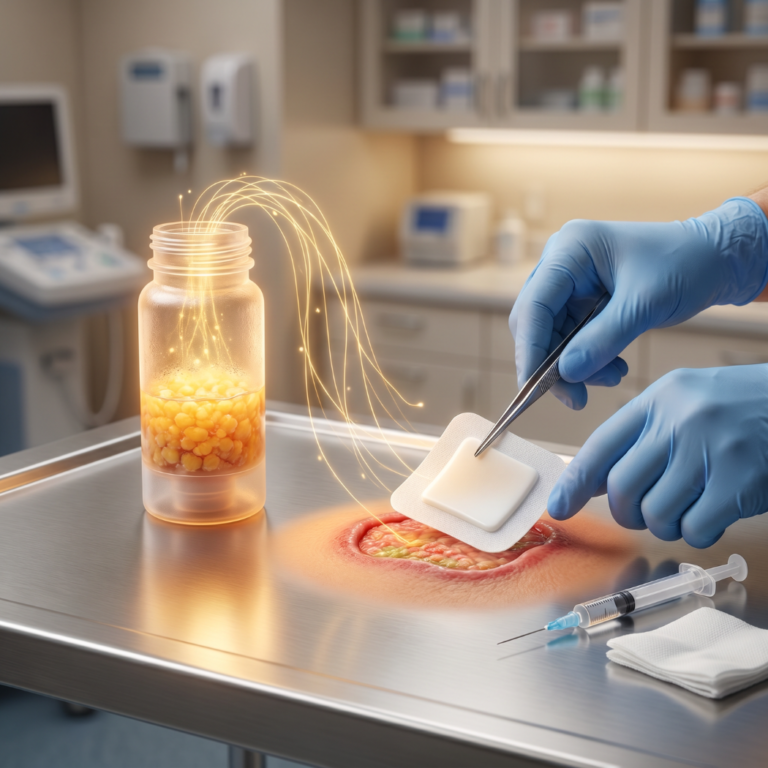
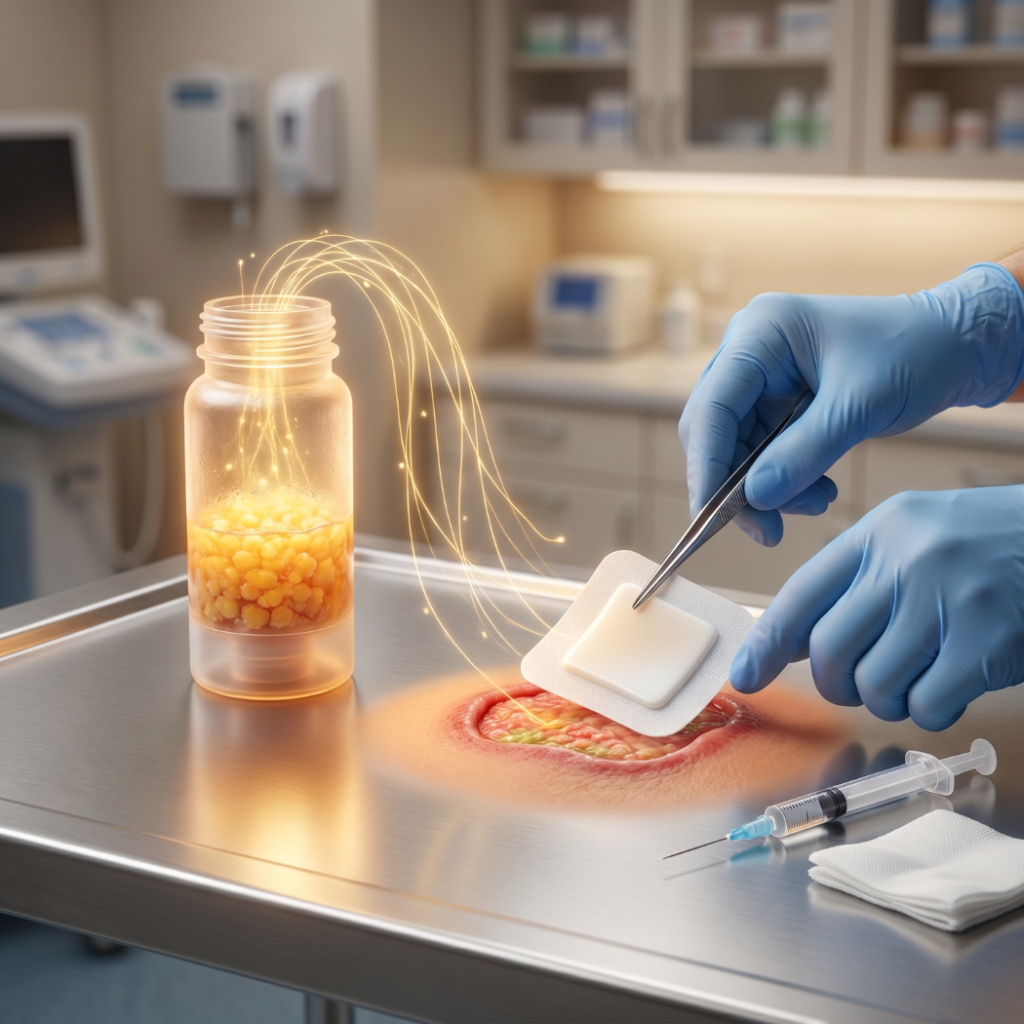
The adipose-derived research relevant to wounds is early, and an accurate read distinguishes between cell sources and trial status. A study of adipose-derived stromal cells in pressure ulcers, registered as NCT02375802, is enrolling by invitation at an academic center. A study of an allogeneic adipose-derived stromal cell patch for diabetic foot ulcers and venous leg ulcers, NCT07048054, is recruiting, and a separate diabetic foot ulcer study using adipose-derived regenerative cells, NCT02866565, is registered but not yet recruiting. Adipose-derived cells are being studied for chronic wounds, as covered in the overview of wound and tissue research.
Two cautions belong with these references. First, the trials use varied cell sources, including donor cells, and these are early-phase studies rather than registration programs. Second, registration does not establish an approved therapy, and no adipose-derived product holds FDA approval for any wound indication. The broader active clinical trials overview shows where these sit.
Harvest Logistics in a Wound Care Practice
Many wound care practices do not routinely perform fat harvesting, so a banking collection is typically coordinated through an appropriate procedural workflow rather than added to a clinic visit. The harvest for banking is a collection step whose purpose is preservation, handled under proper conditions and documented carefully.
The provider-facing overview of the harvest procedure outlines collection, handling, and transfer. The practical requirements are arranging the collection in a suitable setting, maintaining sterile technique, and transferring the tissue to the processing and storage partner under documented chain-of-custody. None of this involves administering a therapy, and a wound care practice should keep that boundary explicit. The overview of why physicians add banking describes how the service fits a practice as preservation.
Patient Conversation Framing for Wound Care Patients
The patient conversation in a wound care practice carries weight, because patients with chronic wounds are understandably motivated to hear about anything new. The honest framing is that banking is a preservation decision made under uncertainty, that it is not a wound treatment, and that it does not guarantee access to any future therapy or trial. Setting that expectation protects the patient and the practice.
It also helps to be candid about the evidence. A physician can explain that adipose-derived wound research is early, that the studies use varied and often donor cell sources, and that no adipose-derived product is FDA-approved for any wound indication. Banking does not create eligibility for any study, and it should never be presented as a treatment for a wound.
Consent and Documentation Requirements
Banking requires its own separate, specific informed consent, distinct from consent for any wound care procedure the patient undergoes. The consent should state that banking is preservation, not treatment, and that it guarantees no future access or benefit. The requirements are summarized in the overview of informed consent for tissue banking.
The service operates under 21 CFR Part 1271, the federal framework governing screening, handling, and storage of human cells and tissues. Documentation should record that the patient was counseled that banking is not a treatment, retain the banking partner’s regulatory status, and keep banking records separate from wound care records.
Physician Action Checklist
A condensed action list for a wound care practice:
- Confirm with counsel how SB 1768 applies, including that banking is distinct from administering therapy and that the adipose permitted-source question is resolved.
- Implement separate, specific banking consent that disclaims treatment and any guarantee of benefit.
- Arrange a documented harvest and chain-of-custody workflow through an appropriate procedural setup.
- Verify and retain the banking partner’s 21 CFR Part 1271 regulatory status.
- Audit patient-facing language so it never implies banking treats or closes a wound.
Frequently Asked Questions
Wound care is named in SB 1768, so does that authorize adipose banking?
No. The statute names wound care as an area where physicians may administer non-FDA-approved therapy, but it governs administering therapy, not banking, which is a separate preservation activity. Credible analyses also read the law as excluding adipose-derived cells as a permitted therapy source, which counsel should confirm.
Is there an FDA-approved adipose stem cell therapy for wounds?
No. Adipose-derived cells are being studied in early wound research using varied cell sources, but no adipose-derived product holds FDA approval for any wound indication.
Does banking treat or close a wound?
No. Banking is collection and preservation of a patient’s own tissue for potential future use. It is not a wound treatment and should not be presented as one.
Does a wound care practice need to administer therapy to offer banking?
No. Banking involves collection and preservation only. The harvest is coordinated through an appropriate procedural workflow, and the tissue is transferred to a processing and storage partner. No therapy administration is involved.
How is adipose tissue banking regulated?
Banked adipose tissue is handled under 21 CFR Part 1271, the federal framework governing screening, processing, and storage of human cells and tissues.
Key Takeaways
For wound care physicians, the law’s mention of wound care is real but narrow, and it should not be read as more than it is. Florida SB 1768 names wound care as one of three areas where physicians may administer non-FDA-approved stem cell therapy, but administering therapy and banking a patient’s own tissue are different activities, and the statute governs the former while requiring accredited sourcing and, on credible readings, excluding adipose-derived cells as a permitted source. The adipose-derived wound research is early and uses varied cell sources, and no adipose-derived product holds FDA approval for any wound indication. A harvest can be coordinated through a proper procedural workflow, but only with separate banking consent, documented chain-of-custody, and a verified partner operating under 21 CFR Part 1271. Above all, banking adipose tissue is a preservation service for potential future use; it is not a wound treatment, and it does not guarantee eligibility, access, or clinical benefit.
Save My Fat operates as a tissue preservation service, not a medical practice or treatment provider. Stem cell and regenerative medicine regulations vary by state, including specific informed-consent and disclosure requirements in Florida, Utah, and Nevada governing tissue and stem cell services. Banking adipose tissue does not connect patients to any treatment pathway, and any future use depends on FDA regulatory status, physician guidance, and the availability of approved or investigational pathways at that time.
Wound care practices evaluating whether to add a preservation service can review the service model and contact the team to discuss integration and documentation requirements.
Save My Fat partners with L2 Bio for laboratory processing and storage.
This article is for educational purposes only and does not constitute medical or legal advice. Legal and medical review including wound care input is required before publication. Please consult your wound care physician before making any decisions about treatment or research participation.