
Adipose tissue banking is a compliant, cash-pay service that allows patients to preserve their own fat-derived stem cells today for potential future use in FDA-regulated pathways. For physicians, it represents a turnkey addition to an existing practice: a 30-minute harvest procedure, a fully managed lab partnership, and a patient referral model that brings qualified patients directly to the provider. This guide covers the complete model, what banking is, how the service is structured, what the regulatory framework requires, and what physicians need to know before deciding whether it belongs in their practice.
TLDR: Adipose tissue banking lets patients preserve fat-derived stem cells under FDA Section 361 HCT/P regulations for potential future use in clinical trials, expanded access programs, or approved therapies. For providers, the model is structured as a 30-minute harvest, with a U.S.-based tissue bank handling all lab processing and storage, and Save My Fat routing patients to the provider network. It is 100% cash-pay, requires no new equipment, and creates long-term recurring patient relationships.
Important Disclaimer: Save My Fat does not provide FDA-approved treatments or cures for any disease. Banking adipose tissue does not guarantee eligibility, access, or clinical benefit from any future therapy, clinical trial, or medical program. All content is for educational purposes only and does not constitute medical advice. Physicians should conduct independent due diligence and consult applicable state licensing and regulatory requirements before offering any new service.
You have probably arrived at this page for one of a few reasons. A patient asked about stem cell banking and you realized your answer was not as specific as you wanted it to be. A colleague mentioned they have started offering it and you want to understand the model before you dismiss it or pursue it. Or you have watched the regenerative medicine market grow over the past two years and want to know what the banking piece of that market actually is before your competitors figure it out first. Whichever door you came through, the question on the table is the same. What is this, and is it something a reputable physician can offer?
The timing of the question matters. Independent market research firms project the adipose-derived stem cell market to grow at double-digit annual rates through 2033. The FDA approved the first mesenchymal stem cell product in December 2024. More than 450 ADSC clinical trials have been registered on ClinicalTrials.gov, roughly 80 to 150 of them currently active. The early-mover window in local markets is real, and it is closing in metropolitan areas faster than most physicians realize. The physician who understands the model now is positioned to make an informed decision. The one who waits is positioned to follow.
This guide covers the complete model from patient consultation to long-term storage: the regulatory framework that makes banking compliant, the exact roles of the provider and the lab partner, the revenue structure, and the criteria for evaluating whether banking fits a specific practice. No hype, no vague promises, just the full picture.
What Adipose Tissue Banking Actually Is
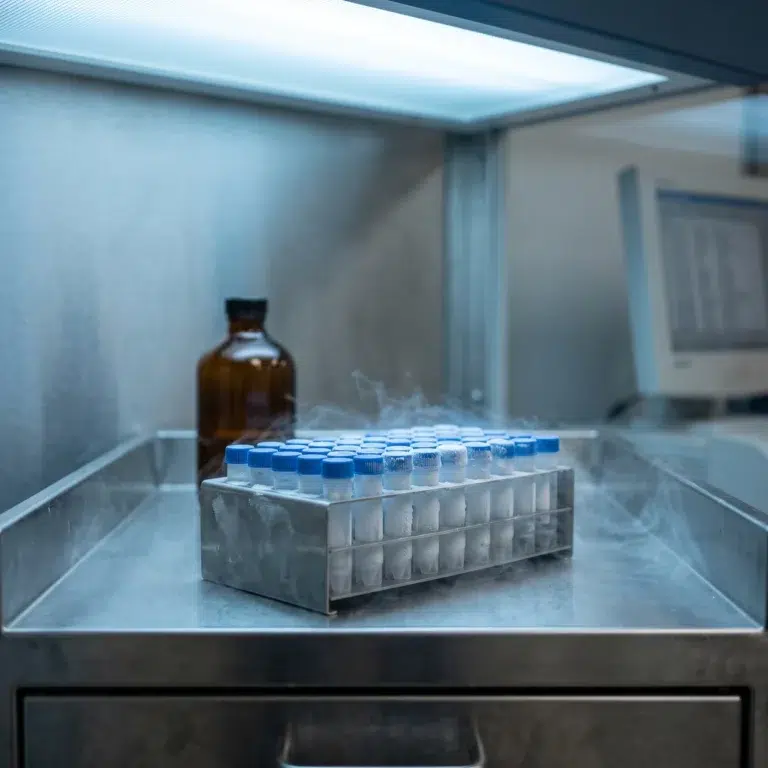
Adipose tissue banking is the process of collecting a small amount of a patient’s own subcutaneous fat tissue through a minimally invasive harvest, processing it under validated laboratory protocols, and cryopreserving the resulting material in long-term storage for potential future use in FDA-regulated clinical research, expanded access programs, or approved regenerative medicine therapies as those pathways become available.
It is important to state what banking is not. Banking is not a treatment or therapy. It is not an FDA-approved medical procedure for any disease. It is not the same as the unregulated stem cell injection clinics the FDA has issued warning letters and permanent injunctions against. It does not guarantee future access to any specific therapy or clinical trial. Those distinctions matter for compliance, and they matter for how the service is presented to patients. The Save My Fat comparison of banking vs. stem cell treatment clinics is a useful patient-facing resource for physicians who want a reference to share during consultations, and the patient-facing overview of adipose-derived stem cells is a good companion piece.
Why Adipose Tissue Is the Source
Adipose tissue is among the richest accessible sources of mesenchymal stem cells in the human body. The landmark 2002 Zuk et al. paper in Molecular Biology of the Cell identified adipose tissue as a rich source of multipotent stem cells, and later reviews (Fraser et al., 2006) estimated that one gram of adipose tissue yields roughly 100 to 500 times more stem cells than one gram of bone marrow aspirate, which is the clinical comparator most physicians are familiar with. That yield advantage is the reason adipose has become the preferred source tissue for autologous preservation.
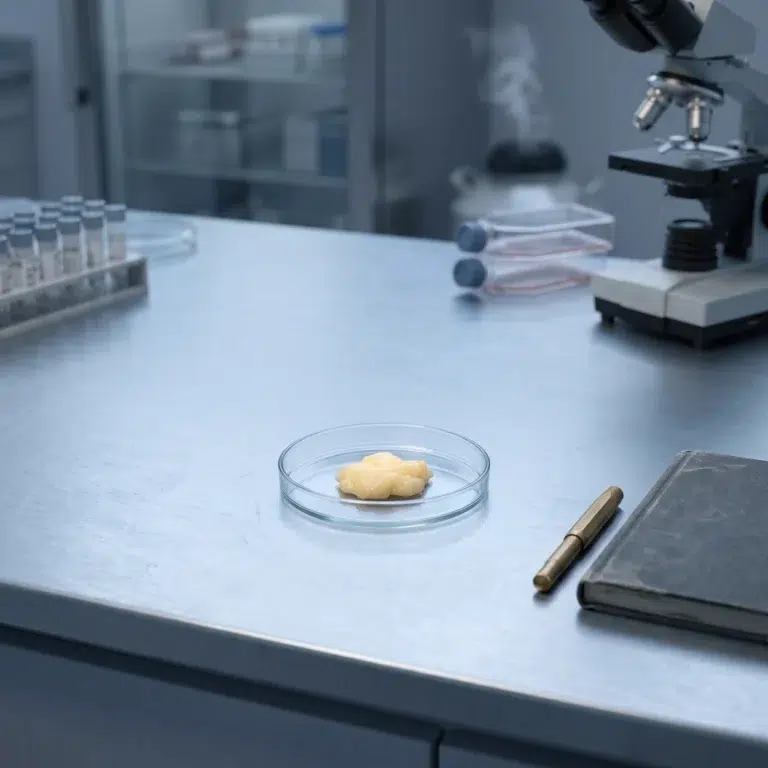
The harvest is a mini-lipoaspiration: approximately 20 cc of subcutaneous fat collected under local anesthesia in a 30-minute outpatient procedure. Recovery is minimal and patient tolerance is high. For physicians already performing aesthetic procedures, the technique is familiar and requires no new equipment beyond what an aesthetic or minor surgical practice already has on hand. The Save My Fat overview on why fat is more than storage walks through the biology in more depth.
What the Cells Are and Why They Matter
Adipose-derived stem cells (ADSCs) are mesenchymal stromal cells with documented capacity for differentiation into adipogenic, osteogenic, and chondrogenic lineages, as well as immunomodulatory and paracrine signaling functions. The International Society for Cellular Therapy minimal criteria published by Dominici and colleagues in 2006 remain the reference standard for defining mesenchymal stromal cells, and the 2019 MSC biology review from Pittenger and colleagues in npj Regenerative Medicine summarizes the current understanding of how these cells function in research and early clinical applications.
The patient-facing value proposition is simple. Cells banked today are preserved at their current biological quality. As research advances and therapies reach clinical availability, a patient with banked autologous cells has a biological asset ready to deploy. Banking does not guarantee access or benefit. It preserves the option.
The Three-Party Model: Provider, a U.S.-based tissue bank, and Save My Fat
The banking model is a three-party partnership with clearly divided responsibilities. The table below summarizes how the roles split.
| Party | Role |
|---|---|
| Provider (the physician) | Performs the 30-minute harvest, conducts patient consultation, handles informed consent and procedure documentation |
| A U.S.-based tissue bank | Receives the tissue, performs processing under validated protocols, cryopreserves in an FDA-registered facility, issues viability certificates, manages long-term storage |
| Save My Fat | Patient referral and matching to local providers, patient education, provider training and protocol documentation, ongoing support |
What the Provider Does
The provider’s role is the harvest and the patient relationship. The harvest is a minimally invasive mini-lipoaspiration: local anesthesia, approximately 20 cc of subcutaneous fat, packaged and shipped to a U.S.-based tissue bank via Save My Fat’s specimen transport protocol. The full clinical workflow is documented in the Save My Fat overview of how banking works.
No laboratory infrastructure is required. No cell processing is performed on-site. The physician focuses entirely on patient consultation and the collection procedure. For a practice already performing liposuction or minor in-office surgical procedures, adding banking is a workflow extension, not a new operational category.
What the tissue bank Does
The tissue bank is the US-based laboratory partner that handles everything after the specimen leaves the provider’s office. That includes cell isolation and characterization from the harvested adipose tissue, viability testing and cell counting, cryopreservation using validated controlled-rate freezing protocols, long-term liquid nitrogen storage in an FDA-registered facility, viability certificates issued to the patient, and chain-of-custody documentation throughout. The Save My Fat explanations of what happens after banking and cryopreservation viability cover the lab side in patient-appropriate detail.
Each patient receives a documented vial count from a single harvest, typically in the range of 200 to 400 vials depending on the banking package selected.
What Save My Fat Does
Save My Fat connects patients searching for stem cell banking in a geographic area to partner providers in that area. The provider does not need to build a patient acquisition funnel for banking from scratch. The referral model is built into the partnership, and the partner sign-up page is where onboarding begins.
Save My Fat also provides provider training on the harvest procedure and patient consultation framework, protocol documentation, patient education materials for the practice, and ongoing clinical and compliance support through the provider program.
The Regulatory Framework: What Makes This Compliant
This section is the one a physician doing due diligence needs to read carefully. Compliance is not a marketing claim. It is a specific set of criteria under federal regulation, and the banking model meets them in a way the unregulated injection clinics the FDA has warned against do not.
Section 361 vs. Section 351: The Classification That Matters
The FDA regulates human cells, tissues, and cellular and tissue-based products (HCT/Ps) under two primary frameworks. Section 361 applies to minimally manipulated HCT/Ps used homologously. Section 351 applies to products that are more than minimally manipulated, used non-homologously, or function through systemic metabolic activity. Section 351 products are regulated as biologics and require an investigational new drug (IND) application, clinical trials, and a Biologics License Application (BLA) before any clinical use. The operational difference between the two frameworks is substantial, and it is the single most important regulatory distinction in this space. Background on FDA tissue products and the full text of 21 CFR Part 1271 are the primary sources. Save My Fat’s plain-language summaries on FDA regulations for adipose tissue and on 21 CFR Part 1271 cover the material in physician-appropriate depth.
The Four Criteria for Section 361 Compliance
To qualify under Section 361, a tissue product must meet all four of the following criteria.
- Minimal manipulation. Processing does not alter the relevant biological characteristics of the cells. Cryopreservation using validated protocols is considered minimal manipulation under established FDA guidance. Enzymatic digestion of adipose tissue into a cell suspension for immediate injection is typically considered more than minimal manipulation, which is a key part of why the FDA has taken enforcement action against clinics performing that procedure.
- Homologous use. The tissue performs the same basic function in the recipient as in the donor. Preserving a patient’s own adipose-derived cells for potential future autologous use satisfies this criterion.
- Not combined with another article, with limited exceptions for preservation solutions and similar necessary handling materials.
- Either no systemic effect, or autologous use (the patient’s own cells), or use in a first-degree or second-degree blood relative under certain conditions.
Autologous adipose tissue banking, collecting and preserving a patient’s own cells using validated cryopreservation protocols, satisfies all four criteria. The lab carries the FDA facility registration obligation as the processing establishment. The provider’s regulatory obligations are procedural: the harvest procedure itself, documented informed consent, and proper chain-of-custody documentation. The Save My Fat overview of informed consent in regenerative medicine describes the consent framework partner providers use.
Why the FDA Has Warned Against Certain Clinics, and Why Banking Is Different
The FDA has issued multiple warning letters and secured federal court injunctions against clinics performing enzymatically processed cell injections and cultured cell injections marketed as treatments for specific diseases including arthritis, autism, COPD, and Parkinson’s disease. The FDA’s consumer alert on regenerative medicine products explains the enforcement rationale in consumer-facing terms.
These products fail Section 361 for two reasons. Enzymatic digestion of adipose tissue into an injectable cell suspension is considered more than minimal manipulation. Using adipose-derived cells to treat conditions such as arthritis is non-homologous, because adipose tissue does not naturally perform the structural or biological function of joint cartilage. Products that fail these criteria fall under Section 351 and require IND authorization, clinical trial data, and BLA approval before they can be legally marketed for those indications.
Banking is not injection therapy. Banking is preservation of minimally manipulated autologous tissue for potential future use within compliant pathways. The distinction is fundamental, not cosmetic. The Save My Fat guide on fake stem cell clinic red flags walks physicians through the specific signals that separate the two.
The Revenue and Practice Model
Cash-Pay, No Insurance Complexity
Adipose tissue banking is 100% cash-pay. No insurance billing, no prior authorization, no reimbursement disputes. The patient pays for a preservation service, not a covered medical procedure. The all-in cost to the patient typically falls in the range of $8,000 to $15,000 depending on the banking package, covering harvest, lab processing, initial cryopreservation, long-term storage, and the documented vial count. That cost profile is comparable to other cash-pay concierge and aesthetic service lines physicians in adjacent specialties are already familiar with.
The Recurring Revenue Logic
Each banked patient generates a documented vial inventory typically in the range of 200 to 400 vials. Each future vial use, whether for a clinical trial, an expanded access program, or an eventual approved therapy, is a return visit to the same provider. A single banking patient creates a long-term clinical relationship, not a one-time transaction.
This matters for practice economics beyond the immediate revenue. Cash-pay ancillary service lines of this type tend to add measurably to practice EBITDA multiples at valuation, according to practice valuation reporting on 2025 and 2026 trends. For any physician considering practice sale or partnership in the next five to ten years, recurring cash-pay revenue streams are among the highest-value additions to a practice’s financial profile.
Family Eligibility Extends the Reach
Under the Section 361 HCT/P criteria, a patient’s banked autologous cells may be used by first-degree or second-degree blood relatives in certain clinical contexts, subject to the full Section 361 criteria remaining satisfied at the time of use. This is a structural feature of the regulatory framework, not a marketing claim. One banking patient can potentially extend the value of the banking relationship to a spouse’s children, the patient’s own children, parents, and siblings. All of whom become prospective patients in the provider’s practice. The Save My Fat explanation of family eligibility covers the regulatory basis in more depth.
Who Is Offering This Today
Several specialties are naturally positioned for banking, and the early adopter profile is concentrated in practices that already have cash-pay patient relationships and familiarity with the underlying procedure.
Plastic surgeons are the closest fit by procedure, since they already perform liposuction and the harvest is a familiar technique. Their patient base is cash-pay and aesthetics-motivated, with high receptiveness to biological preservation as a service category.
Dermatologists and aesthetic medicine providers have established cash-pay relationships and a patient demographic that aligns with proactive health investment, making banking a natural conversation to have during routine aesthetic consultations.
Orthopedic surgeons and sports medicine physicians see patients actively researching regenerative options for joint and soft tissue conditions. The ADSC clinical trial pipeline is particularly active in orthopedic indications, which makes banking a relevant conversation for any patient contemplating joint disease progression over a long horizon.
Functional medicine and longevity physicians work with patients who are, by definition, oriented toward proactive health planning. Banking fits naturally alongside other biological preservation and optimization services these practices already offer.
Pain management physicians see patients with chronic degenerative conditions who may benefit from having autologous cells banked for future access to relevant pathways as those pathways develop. For patients with progressive joint or musculoskeletal disease, banking is a long-horizon option preservation strategy. Practices across all of these specialties can review the provider program for specialty-specific onboarding details.
The Market Context for This Decision
The data a physician needs to evaluate this market is publicly available and worth reviewing before making a partnership decision. Independent market research firms project the adipose-derived stem cell market to grow at double-digit annual rates through 2033. More than 450 registered ADSC trials are actively recruiting in the US per ClinicalTrials.gov, spanning orthopedic, neurologic, aesthetic, autoimmune, and cardiovascular indications.
In December 2024, the FDA added Ryoncil (remestemcel-L-rknd) to its list of approved cellular and gene therapy products, making it the first mesenchymal stem cell product ever approved in the United States, indicated for steroid-refractory acute graft-versus-host disease in pediatric patients. That approval does not extend to any adipose-derived product, but it establishes that the broader MSC category has now crossed the full FDA approval pathway at least once. The International Federation for Adipose Therapeutics and Science and the International Society for Cellular Therapy have published joint consensus criteria defining the surface marker phenotype and functional characteristics required for adipose-derived stromal and stem cells, which remains the reference standard for characterization in both research and clinical settings.
Taken together, these signals, a defined and growing market, an active trial pipeline, a first FDA approval in the cell class, and established characterization standards, are the four pillars a physician should want to see before concluding that banking is legitimate and worth evaluating for a practice.
Frequently Asked Questions
Is adipose tissue banking itself FDA-approved?
Banking, defined as the collection, processing, and cryopreservation of a patient’s own minimally manipulated tissue, is regulated under FDA Section 361 HCT/P guidelines at 21 CFR Part 1271 rather than requiring premarket approval. Section 361 applies when the tissue meets all four classification criteria. The lab performing processing must be registered with the FDA as a tissue establishment. Any future use of banked cells in a specific medical treatment or clinical trial is subject to whatever FDA requirements apply to that product or protocol at that time. Save My Fat’s overview of FDA regulations for adipose tissue walks through the framework in physician-appropriate depth.
What training does a provider need before performing the harvest?
Save My Fat provides training on the harvest procedure, patient consultation framework, protocol documentation, and informed consent requirements before a provider sees their first banking patient. No prior regenerative medicine training is required for physicians already familiar with small-volume lipoaspiration techniques. Specialty-specific onboarding details are available through the provider program.
What are the provider’s regulatory obligations?
The provider’s obligations are procedural. Performing the harvest according to protocol, obtaining and documenting informed consent, completing chain-of-custody documentation for specimen transport, and following adverse event reporting requirements under 21 CFR Part 1271. The FDA facility registration obligation belongs to a U.S.-based tissue bank as the processing laboratory, not the harvesting provider. The Save My Fat guide on informed consent in regenerative medicine outlines the consent framework partner providers use, and the FDA’s expanded access guidance for physicians is the relevant reference for downstream pathway considerations.
How does Save My Fat send patients to partner providers?
Patients searching for stem cell banking in a geographic area are matched to local partner providers through Save My Fat’s referral system. Providers are listed in the network upon completing onboarding via the partner sign-up page. The referral flow is designed to bring qualified, already-educated patients to the provider rather than requiring the practice to build a new patient acquisition funnel from scratch.
Can any physician join the provider network?
The harvest must be performed by a licensed physician. Save My Fat’s training and protocol documentation are provided to all partner providers prior to their first patient. Physicians in any specialty who are comfortable performing a small-volume lipoaspiration under local anesthesia are eligible to join through the provider program.
What happens to a patient’s cells if they want to use them?
When a patient and their physician decide to access banked material, for a clinical trial, an expanded access pathway, or an approved therapy as those become available, the vials are shipped on dry ice directly from a U.S.-based tissue bank to the treating provider. The Save My Fat explanation of what happens after banking covers the logistics in patient-appropriate detail.
How does banking protect patients from the unregulated clinic problem the FDA has warned about?
Banking is a different category of activity from injection therapy. Banking preserves minimally manipulated autologous tissue for potential future use within compliant pathways. The unregulated clinics the FDA has taken action against were marketing enzymatically processed or cultured cell injections as treatments for specific diseases, which is a Section 351 regulatory question that requires IND authorization, clinical trial data, and BLA approval. Save My Fat’s comparison of banking vs. stem cell treatment clinics lays the distinction out for patients, and the guide on fake stem cell clinic red flags describes the specific signals that separate compliant services from enforcement targets.
Key Takeaways
Adipose tissue banking is a compliant, cash-pay, 30-minute harvest service regulated under FDA Section 361 HCT/P guidelines. It is not an injection therapy, and it is categorically different from the unregulated stem cell clinics the FDA has issued warning letters and injunctions against.
The three-party model divides responsibilities cleanly. The provider performs the harvest and owns the patient relationship. A U.S.-based tissue bank handles all lab processing, cryopreservation, and long-term storage under validated protocols and FDA facility registration. Save My Fat handles patient referrals, provider training, and ongoing support.
The four Section 361 criteria, minimal manipulation, homologous use, not combined with another article, and autologous or related-donor use, are all met by autologous adipose banking using validated cryopreservation. This is the regulatory framework that makes the service compliant, and it is the framework that fails in the enforcement cases the FDA has pursued against injection clinics.
The practice economics favor sustained engagement rather than one-off transactions. Each banked patient generates a documented vial inventory in the 200 to 400 range and a long-term recurring clinical relationship. Cash-pay ancillary service lines of this type add measurably to practice EBITDA at valuation, which matters for any physician considering practice sale or partnership in the coming decade.
Family eligibility under the Section 361 criteria extends the practical reach of one banking relationship to first-degree and second-degree blood relatives, which broadens the prospective patient base the practice is building.
The external signals support the business case. Independent research firms project double-digit annual growth in the ADSC market. More than 450 registered ADSC trials are actively recruiting. The first FDA-approved MSC product was cleared in December 2024. The IFATS and ISCT have published consensus characterization criteria. These are the four pillars a physician doing due diligence should want in place before concluding that banking is a legitimate practice addition.
Ready to See How This Fits Your Practice?
Before contacting Save My Fat: adipose tissue banking is a preservation service for potential future use in FDA-regulated pathways, not a treatment or a guarantee of access to any specific clinical trial, therapy, or product. No adipose-derived product is FDA-approved for general disease treatment, and banking cannot be represented to patients as one. Physicians considering partnership should independently verify applicable state licensing and informed-consent requirements, particularly in Florida, Utah, California, Georgia, and Tennessee, which have stem cell-specific statutes.
The model is straightforward. You perform a 30-minute harvest. A U.S.-based tissue bank handles the lab. Save My Fat sends you qualified patients and supports you from day one. What you are adding is a compliant cash-pay service line backed by a growing scientific pipeline, a clear regulatory framework, and a patient referral infrastructure already in place.
Save My Fat partner providers receive full training on the harvest procedure and patient consultation framework, protocol documentation and informed consent templates, patient education materials ready to use in the practice, geographic patient referral matching, and ongoing support from a team with decades of regenerative medicine experience.
To review the full program structure, visit the provider program overview. To begin onboarding as a partner, visit the partner sign-up page.
Save My Fat works with a U.S.-based tissue bank for laboratory processing and storage. Save My Fat does not provide medical treatments, clinical trial enrollment, or Expanded Access services.
This article is for educational purposes only and does not constitute medical or legal advice. Please consult your own licensed healthcare provider before making any decisions about treatment or research participation.
About the author: Oscar Tellez is the founder and CEO of Save My Fat. He holds a Bachelor of Science in Exercise Science and Health Promotion from Florida Atlantic University. He has spent a decade in the regenerative medicine industry across product distribution, laboratory and vendor relationships, and provider training. He is not a licensed clinician, and this article is educational, not medical advice.
Related guide: the physician resource center.