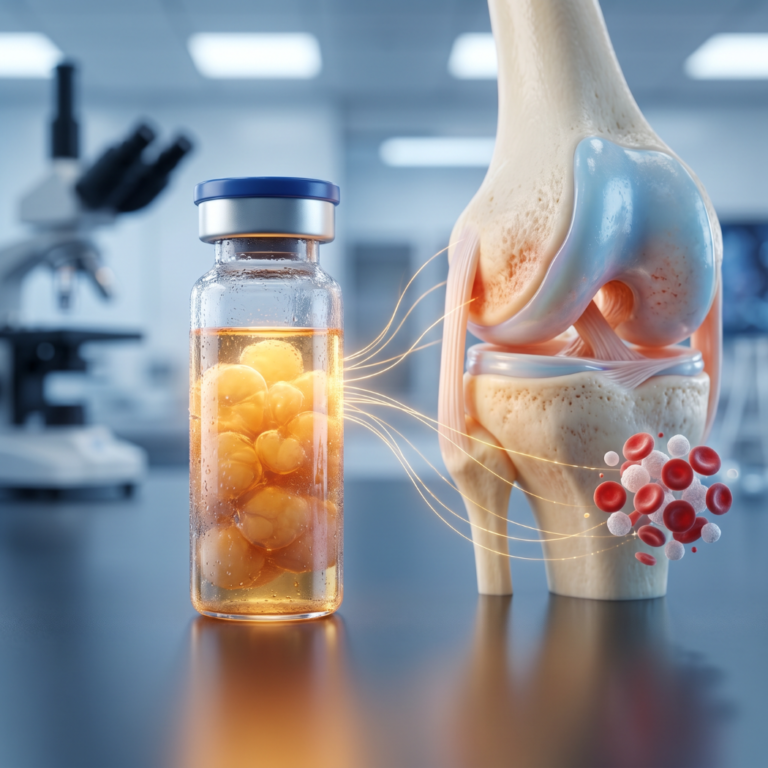
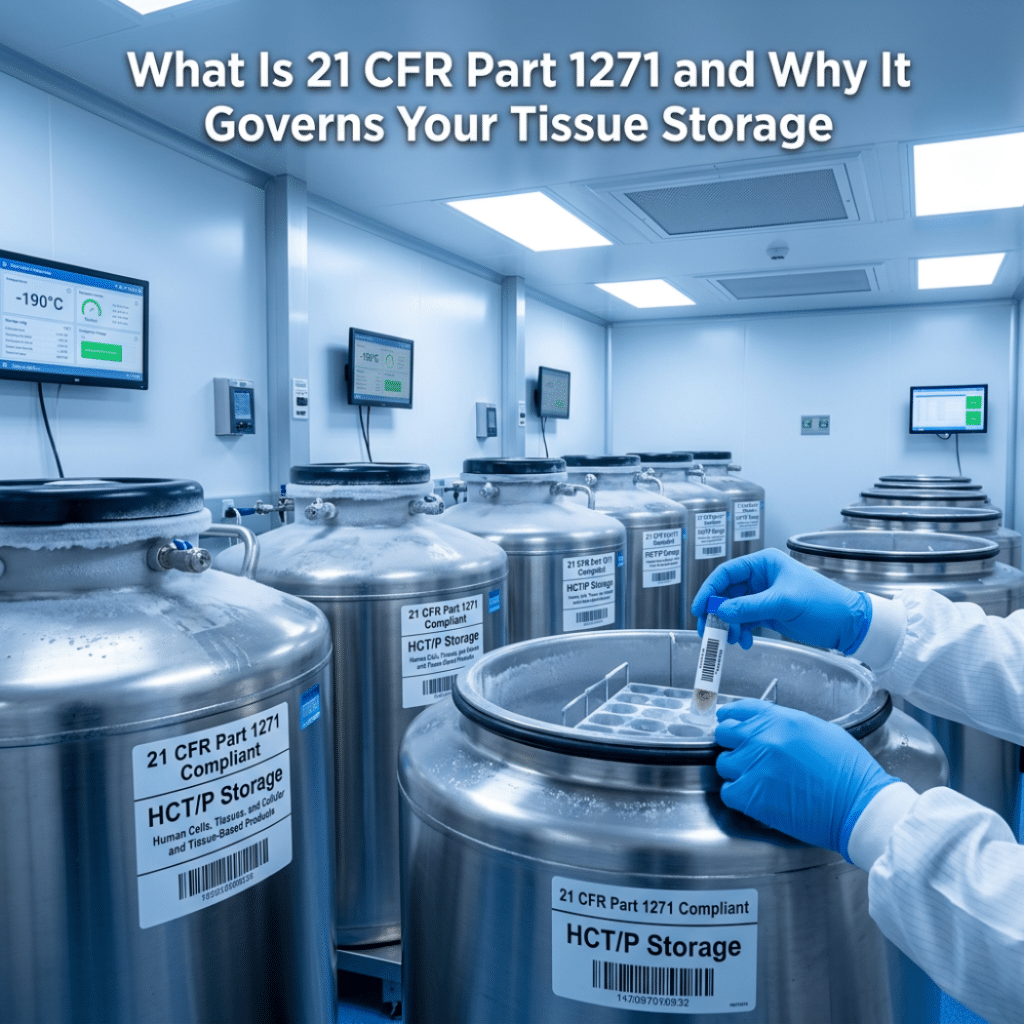
Twenty-one CFR Part 1271 is the core FDA regulation that establishes safety and quality rules for human cells, tissues, and cellular and tissue-based products, a category that includes banked adipose tissue. The citation looks like legal code, and in a technical sense it is, but its requirements have very real consequences for how tissue is collected, screened, processed, stored, labeled, and eventually used. If you are considering tissue banking, or have already banked your tissue, understanding what this regulation actually requires is one of the most practical things you can do.
TLDR: 21 CFR Part 1271 defines what counts as a human cell, tissue, or cellular and tissue-based product (HCT/P) and sets the rules for donor eligibility, current good tissue practice, and establishment registration. It also lays out the four criteria that determine whether a tissue product is regulated under the simpler Section 361 pathway or the more demanding Section 351 pathway, which requires premarket approval. Understanding this framework helps you evaluate whether a tissue bank is actually operating within FDA rules and what protections that provides.
Important Disclaimer: Save My Fat does not provide FDA-approved treatments or cures for any disease or medical condition. Banking adipose tissue does not guarantee eligibility, access, or clinical benefit from any future therapy, clinical trial, or medical program. Information about 21 CFR Part 1271 provided here is for educational purposes only and does not constitute legal advice or medical advice. Patients must consult their own licensed healthcare professionals and, when appropriate, qualified legal counsel for decisions about treatment options and regulatory compliance.
If you have ever read the fine print on a tissue banking consent form, you have probably encountered the phrase “regulated under 21 CFR Part 1271” without a clear explanation of what it means. The same phrase appears on websites, in marketing materials, and in agreements that ask for your signature. It sounds significant, but most patients have no idea whether it is meaningful or just boilerplate.
Behind that citation is a regulatory system the FDA designed specifically to protect people from the risks that come with human tissue products: communicable disease transmission, contaminated processing, inadequate storage, and falsified records. When you see a banking service claim compliance with 21 CFR Part 1271, the next reasonable question is: what does compliance actually require, and how would you know whether a facility meets it?
This guide answers those questions in plain language. It covers what HCT/Ps are, how the regulation is structured, the difference between the 361 and 351 regulatory pathways, what “minimal manipulation” and “homologous use” mean for adipose tissue specifically, how donor eligibility screening protects you and your family, and what practical questions you should ask before signing any banking agreement.
What 21 CFR Part 1271 Covers
HCT/Ps in Plain Terms
HCT/P stands for human cells, tissues, and cellular and tissue-based products. The term covers a broad range of biological materials that come from human donors and are intended to be implanted, transplanted, infused, or transferred into a human recipient. Bone, skin, corneas, tendons, heart valves, reproductive cells, hematopoietic stem cells, and adipose tissue all fall within this category, each subject to the requirements of 21 CFR Part 1271 depending on how they are processed and used.
The FDA created this regulatory category because human tissues are categorically different from conventional pharmaceuticals. They are not synthesized in a lab under fully controlled conditions. They come from people, they carry biological variability, and they can transmit diseases. The 1271 framework addresses those risks directly, establishing minimum standards that every establishment handling these products must meet.
You can read the full text of the regulation at the eCFR, or review the structured breakdown at Cornell Law School’s LII. The FDA’s Tissue and Tissue Products overview page also provides accessible context on the regulatory program.
The Six Subparts of 21 CFR 1271
The regulation is organized into six subparts, each addressing a distinct aspect of how human tissue products must be handled. Understanding what each subpart covers gives you a map for evaluating whether a tissue bank has actually addressed all the relevant requirements.
| Subpart | Focus | Why Patients Should Care |
|---|---|---|
| Subpart A | General provisions, definitions, scope | Clarifies whether a product qualifies as an HCT/P and what rules apply |
| Subpart B | Registration and listing | Requires facilities to notify FDA of their existence and the products they handle |
| Subpart C | Donor eligibility | Sets rules for communicable disease screening, testing, and documentation |
| Subpart D | Current good tissue practice (CGTP) | Establishes the quality system governing processing, storage, and recordkeeping |
| Subpart E | Additional requirements for 361 HCT/Ps | Applies labeling, storage, and other standards to qualifying products |
| Subpart F | Inspection and enforcement | Gives FDA legal authority to inspect facilities and act against non-compliance |
Each subpart represents a substantive requirement, not a checkbox. A facility that is registered (Subpart B) but has no meaningful donor eligibility process (Subpart C) is not in full compliance. A facility with adequate donor screening but inadequate storage documentation (Subpart D) is not fully compliant either.
Section 361 vs. Section 351: The Four Key Criteria
The Four Criteria That Determine Regulatory Pathway
The most consequential question in the 21 CFR 1271 framework is whether a specific tissue product is regulated solely under Section 361 of the Public Health Service Act and Part 1271, or whether it also requires premarket approval as a biologic under Section 351. The answer depends on whether the product satisfies four criteria drawn from 21 CFR 1271.10(a), as explained in detail in the FDA’s guidance on minimal manipulation and homologous use.
The four criteria are as follows. First, the product must be only minimally manipulated. Second, it must be intended solely for homologous use, meaning it performs the same basic function in the recipient that it did in the donor. Third, it must not be combined with a drug or device (with limited exceptions for certain processing agents). Fourth, it must either have no systemic effect and not depend on the metabolic activity of living cells, or if it does have such effects, it must be intended for autologous use, for use in a first- or second-degree relative, or for reproductive use.
When an HCT/P meets all four criteria, it can be regulated solely under the 361 pathway, which requires compliance with 21 CFR Part 1271 but does not require premarket clinical trials or FDA approval before marketing. When an HCT/P does not meet all four criteria, it is regulated as a drug, device, and/or biologic under Section 351, which typically requires an Investigational New Drug application for clinical research and a Biologics License Application for marketing. The peer-reviewed overview published in PMC provides a detailed academic analysis of how these four criteria have been applied and litigated.
Why This Matters Specifically for Adipose Tissue
Intact adipose tissue, collected through a standard collection procedure and preserved through cryopreservation without enzymatic digestion, may potentially qualify as a 361 HCT/P if all four criteria are met and the intended use is homologous. This is the regulatory rationale for intact tissue banking as a compliance posture.
However, when adipose tissue is enzymatically digested to isolate stromal vascular fraction (SVF), that process is generally considered more than minimal manipulation by the FDA, because it breaks down the tissue’s structural architecture and removes the adipocyte-majority composition that characterizes intact fat tissue. Similarly, culture-expanding adipose-derived stem cells (ADSCs) in a laboratory is clearly more than minimal manipulation. Both of those processes typically push the resulting product into the Section 351 framework, which requires the full biologic approval pathway.
It is important to say plainly: the classification of any specific product is a fact-specific determination made by the FDA, not by marketing language on a website. A facility that calls its product “minimally manipulated” without evidence supporting that characterization is making a claim that the FDA evaluates on its own terms.
Minimal Manipulation and Homologous Use in Plain Language
What Minimal Manipulation Means for Structural Tissue
The FDA’s guidance draws a key distinction based on whether the tissue in question is structural or cellular. For structural tissue, including adipose tissue, minimal manipulation means processing that does not alter the original relevant characteristics of the tissue, specifically the characteristics that relate to the tissue’s utility for reconstruction, repair, or replacement.
In practical terms, processes like rinsing, cutting, shaping, or freezing may still qualify as minimal manipulation because they do not fundamentally change the tissue’s structural properties. What does not qualify, according to the FDA’s own guidance, is enzymatic digestion that breaks down the extracellular matrix and separates cells from their structural context. That process changes what the tissue is in a way that goes beyond preparation for storage or transfer.
The FDA’s HCT/P regulation overview and the tissue guidances collection both address this distinction in documents that are publicly accessible, though they are written for a regulatory rather than patient audience. The plain-language version is this: if the processing preserves what the tissue was, it may be minimal. If it fundamentally changes what the tissue is, it is not.
What Homologous Use Means
Homologous use means that the tissue performs the same basic function in the recipient as it did in the donor. For adipose tissue, the recognized basic functions are structural ones: cushioning, support, and energy storage. Using adipose tissue to fill a soft-tissue defect or restore volume is a homologous use because it replaces what fat tissue naturally does.
Using adipose-derived cells or their derivatives to attempt to influence a disease process that fat tissue does not naturally influence, such as a neurological condition, an autoimmune disorder, or cartilage degeneration, is a non-homologous use. Non-homologous use is one of the factors that pushes a product from the 361 pathway into the 351 pathway. This distinction is a major reason why the clinical applications of adipose-derived cell products require the full biologic approval process even when the tissue was originally collected under a 1271-compliant procedure.
Banking vs. Treatment in This Framework
Understanding the difference between banking and treatment in regulatory terms matters here. Banking intact adipose tissue under 21 CFR 1271 is about collection, processing, cryopreservation, documentation, and storage within the established regulatory framework. It is not a clinical application. The tissue is preserved, not used.
If and when that tissue is used for a specific clinical purpose in the future, the regulatory requirements applicable to that use will be determined by how the tissue is processed for that purpose, what it is intended to do, and what FDA pathway governs the resulting product at that time. Banking today creates a biological resource that can be accessed later. It does not create a shortcut around whatever regulatory requirements apply to the eventual clinical application.
For a fuller explanation of what the banking process involves and how it is structured, the adipose tissue banking guide on this site covers each stage in detail, and the how banking works article addresses the practical steps.
Donor Eligibility and Disease Screening (Subpart C)
Why Donor Eligibility Rules Exist
Subpart C of 21 CFR 1271, covering donor eligibility, addresses one of the most fundamental risks in tissue banking: communicable disease transmission. When tissue from one person is used in another, pathogens can travel with it. The regulatory response to this risk is a structured system of medical history review and laboratory testing that must be completed before tissue is used in a recipient.
The requirements under Subpart C include procedures for determining donor eligibility, review of the donor’s medical and social history for risk factors, laboratory testing for specified communicable disease agents, and documentation of the results. For autologous banking, where a person’s own tissue is stored for potential later use by themselves, the requirements are structured somewhat differently than for allogeneic applications, but they are not eliminated.
What This Means for Patients Banking Their Own Tissue
When you bank your own adipose tissue, your medical history screening and any required laboratory tests are not just administrative steps. They are required under 21 CFR 1271 Subpart C to document donor eligibility, and those records must accompany the tissue throughout its time in storage. A banking facility that does not maintain this documentation is not in full compliance with the regulation.
For patients who are banking tissue with the possibility that it might be used by a first- or second-degree family member under applicable future regulatory pathways, the eligibility documentation becomes even more critical. The family banking information page on this site provides context on how this concept applies to Save My Fat’s service offering, while noting clearly that banking does not guarantee family use and that future use would depend on whatever regulatory pathway is applicable at that time.
Current Good Tissue Practice (Subpart D)
What CGTP Requires
Current good tissue practice (CGTP) is the quality system framework that governs how HCT/Ps are manufactured, stored, distributed, and tracked. It covers recovery, processing, testing, storage, labeling, packaging, and distribution. If you are familiar with current good manufacturing practice (GMP) from pharmaceutical production, CGTP is the tissue establishment analogue: a structured set of requirements designed to ensure that every step of the process is controlled, documented, and reproducible.
Subpart D’s specific requirements include maintaining facilities and equipment in a state that prevents contamination and supports tissue integrity, establishing written procedures for every step of the process, ensuring personnel are trained and qualified for the tasks they perform, creating a system for investigating deviations and adverse events, and maintaining records that allow full traceability from donor to recipient.
Why CGTP Matters When Choosing a Tissue Bank
CGTP is where the practical safety of your stored tissue lives. A facility can be registered with the FDA and claim compliance with 21 CFR 1271 without having robust CGTP systems in place. Registration, as described below, is an administrative requirement. CGTP is the operational requirement that determines whether the facility is actually handling your tissue safely.
Concrete examples of what a CGTP-compliant facility should be able to demonstrate include continuous temperature monitoring with documented alarm responses for cryogenic storage units, written chain-of-custody procedures that track your sample from collection through storage, documented personnel training records, and a deviation management system that records and investigates any event that might affect tissue quality. A facility that cannot describe these systems when asked is not in a position to credibly claim CGTP compliance.
Tissue Establishment Registration and FDA Oversight
What Registration Requires
Under Subpart B of 21 CFR 1271, establishments that manufacture HCT/Ps, including facilities that recover, process, store, label, package, or distribute them, must register with the FDA and list their products. This places the facility in FDA’s database of known tissue establishments and makes it subject to FDA inspection and enforcement authority.
Registration is an important threshold, but it is not approval. A registered facility has told the FDA it exists and what products it handles. The FDA has not reviewed or certified that the facility’s processes are safe or effective by virtue of registration alone. That distinction matters when evaluating a banking service’s marketing. “FDA-registered” and “FDA-approved” are not the same thing, and a facility describing its operations as FDA-approved when it is actually FDA-registered is misstating its regulatory status.
You can search for registered tissue establishments through the FDA’s Tissue Establishment Registration page. If a banking service cannot tell you its FDA establishment registration number, or if that number does not appear in the FDA’s database, that is a meaningful concern.
Inspection and Enforcement
Under Subpart F, the FDA has authority to inspect tissue establishments and to take enforcement action when requirements are not met. Enforcement can include warning letters that require documented corrective action, mandatory recalls of distributed products, product seizures, and injunctions against continued operation. The FDA’s tissue guidances page includes enforcement-related guidance documents that describe how these powers are applied.
Questions to Ask Before Banking
Asking a banking service specific regulatory questions is a legitimate and important part of due diligence. Four questions worth raising include: whether the facility is registered with the FDA as a tissue establishment under 21 CFR Part 1271 and what its registration number is; how the facility fulfills Subpart C donor eligibility requirements; what the facility’s CGTP program covers and whether it is subject to FDA inspection; and how storage temperatures are monitored and documented continuously.
A legitimate, compliant facility will answer these questions specifically. A facility that deflects or offers only general assurances is telling you something about the depth of its compliance posture.
What 21 CFR 1271 Means Specifically for Adipose Tissue Banking
Adipose Tissue as Structural Tissue
The FDA’s approach to minimal manipulation for adipose tissue flows from its classification of adipose as a structural tissue. The tissue’s recognized biological functions are structural ones: cushioning, mechanical support, energy storage, and insulation. That classification determines which manipulation standard applies and what kinds of processing remain within the minimal manipulation definition.
This matters practically because it frames what a 1271-compliant adipose banking service is doing. It is preserving a structural tissue within a regulatory framework designed for that category of product. It is not manufacturing a cell therapy. The two processes operate under different frameworks with different requirements, and the difference between them is not cosmetic.
Intact Tissue Banking vs. Cell Isolation
Intact adipose tissue that is collected and cryopreserved without enzymatic digestion preserves the tissue’s structural composition: the adipocytes, the supporting stromal cells, the extracellular matrix, and the cellular architecture that characterizes fat tissue in situ. This approach may potentially qualify as a 361 HCT/P if all four criteria are met and the intended use is homologous. For more on the biology of what is preserved in intact banking, the guide to adipose-derived stem cells provides relevant background.
Enzymatic digestion to produce SVF fundamentally alters that composition. It removes the adipocytes, which represent the majority of adipose tissue by volume, and breaks down the extracellular matrix. What remains is a different product with a different cellular profile and a different regulatory classification. The same is true of culture-expanded ADSCs, where cells are grown and multiplied in a laboratory environment. Both processes cross the threshold the FDA has drawn for minimal manipulation. Neither is what intact tissue banking does, and neither falls under the same regulatory pathway.
What Banking Does and Does Not Do in This Framework
Banking under 21 CFR 1271 is a preservation activity. It addresses collection, processing, cryopreservation, storage, and documentation. It does not constitute clinical treatment, and it does not create any regulatory pathway to treatment. The future clinical use of banked tissue, if it ever occurs, will be governed by whatever FDA requirements apply to the specific product and intended use at that time.
This is not a limitation unique to tissue banking. It reflects how the regulatory system works: each product category, at each stage of clinical development, is evaluated against the requirements that apply to it. Banking preserves a biological resource within a regulated framework. What becomes of that resource later depends on science, regulation, and individual circumstances that no banking service can predict or control. The emerging research page on this site tracks the active clinical research areas where adipose-derived tissue is being studied, and the guide to clinical trials for regenerative medicine provides context on how patients evaluate those options. The pricing page provides full cost information for those comparing banking options.
Frequently Asked Questions About 21 CFR 1271
What does 21 CFR Part 1271 regulate in plain language?
21 CFR Part 1271 is the FDA regulation that governs human cells, tissues, and cellular and tissue-based products. It sets requirements for donor eligibility screening, current good tissue practice, facility registration, and the conditions under which a tissue product can be regulated without requiring full drug or biologic approval. It applies to any establishment that recovers, processes, stores, labels, packages, or distributes human tissue products intended for use in a human recipient. The full regulation text is available at the eCFR.
Is a tissue bank “FDA-approved” if it says it operates under 21 CFR 1271?
No. Operating under 21 CFR 1271 means the facility has registered with the FDA as a tissue establishment and is subject to the regulation’s requirements, including donor eligibility and current good tissue practice. It does not mean the FDA has reviewed or approved the facility’s specific processes, products, or services. “FDA-registered” and “FDA-approved” describe different things, and any service that conflates them is misrepresenting its regulatory status. A compliant facility will describe itself accurately.
What is the difference between a 361 HCT/P and a 351 biologic?
A 361 HCT/P meets four specific criteria: it is minimally manipulated, intended for homologous use, not combined with a drug or device, and used autologously, with close relatives, or in a way that does not depend on systemic metabolic activity. Products meeting all four criteria can be marketed without premarket approval, relying solely on 21 CFR 1271 compliance. A 351 biologic does not meet one or more of those criteria and requires an IND for clinical research and a BLA for marketing. The FDA’s minimal manipulation guidance explains the framework in detail.
How do I know if my stored adipose tissue is being handled under 21 CFR 1271?
Ask the facility directly for its FDA tissue establishment registration number, then verify that number through the FDA’s Tissue Establishment Registration database. Ask whether the facility complies with Subpart C donor eligibility requirements and Subpart D CGTP requirements. Ask how storage temperatures are monitored and documented. A compliant facility will provide specific, verifiable answers to all of these questions. Evasion or vague assurances are a signal worth taking seriously.
Why does the FDA care if adipose tissue is minimally manipulated or enzymatically processed?
Because processing changes what a tissue product is. Intact adipose tissue has a recognized structural function. Enzymatic digestion that strips out the adipocytes and breaks down the extracellular matrix produces a different cellular product with a different composition and, potentially, very different biological effects. The FDA applies greater regulatory scrutiny to products that have been significantly altered from their natural state because the safety and effectiveness of those altered products cannot be assumed from the source tissue’s properties. The distinction protects patients from being exposed to products that have not been adequately evaluated.
Does 21 CFR 1271 guarantee that my tissue is risk-free?
No regulation guarantees the absence of all risk, and 21 CFR 1271 does not either. What it does is establish a floor of required safeguards: systematic donor screening, quality-controlled processing and storage, documented chain of custody, and FDA oversight authority. A facility that fully complies with these requirements provides demonstrably more protection than one that does not. But compliance reduces risk within a framework; it does not eliminate it. All decisions about tissue banking should be made in consultation with a licensed healthcare professional who understands your specific situation.
How does donor eligibility under Subpart C protect my family?
If banked tissue might someday be used by a first- or second-degree family member under an applicable future regulatory pathway, the donor eligibility documentation created at the time of banking becomes part of the record that would support that future use. The screening and testing records document the donor’s infectious disease status at the time of collection, which is a prerequisite for safe use in another person. The family page on this site addresses how this applies to Save My Fat’s service, including the important caveat that banking does not guarantee family use and that any future use would depend on the regulatory and clinical landscape at that time.
What questions should I ask a provider before signing a banking agreement?
Ask whether the facility is registered with the FDA as a tissue establishment under 21 CFR Part 1271 and request the registration number for independent verification. Ask how the facility meets Subpart C donor eligibility requirements and what documentation is maintained. Ask what CGTP program is in place and whether the facility has been subject to FDA inspection. Ask how storage temperatures are monitored continuously and how deviations are handled. Ask who owns your tissue and what happens to it if the company ceases operations. For a broader framework of due diligence questions, the about Save My Fat page and the providers page provide additional context on how this service approaches these questions.
Why This Regulation Should Matter to You
21 CFR Part 1271 is not legal boilerplate. It is the operational framework that determines whether a human tissue product is handled safely from collection through storage and eventual use. When a banking service says it operates under this regulation, you now know what that actually requires: donor eligibility screening designed to prevent disease transmission, current good tissue practice systems that control contamination, mix-up prevention, and documentation integrity, facility registration that places the establishment under FDA oversight, and regulatory classification decisions that determine whether products require premarket approval before clinical use.
Save My Fat’s focus is operating transparently within this framework, being clear about what banking is designed to do, and making it easier for patients to ask the questions that matter.
Specifically, that means banking services that address the 21 CFR 1271 requirements for donor eligibility and CGTP, clear education about the difference between storage under 1271 and clinical use under other FDA pathways, transparent documentation and chain-of-custody systems, and honest communication about what tissue banking preserves and what it cannot guarantee.
To learn more, the adipose tissue banking guide covers the full process from collection through cryogenic storage. The how banking works article explains the step-by-step mechanics. The emerging research page provides context on the clinical research landscape where adipose-derived tissue science is developing.
Banking under 21 CFR 1271 preserves an option within a regulated framework. It does not guarantee that any future therapy will exist, that any pathway will be available, or that any clinical benefit will result. Those outcomes depend on science, regulation, and individual circumstances. What banking within this framework does provide is a structured, documented, federally overseen process for getting from today’s collection to whatever legitimate future opportunity may arise.
This article is for educational purposes only and does not constitute legal advice or medical advice. Legal and medical review is required before publication. Patients must consult their own licensed healthcare professionals for all medical and treatment decisions.
Related guide: FDA regulation of adipose tissue and stem cells.
Last Updated: April 13, 2026