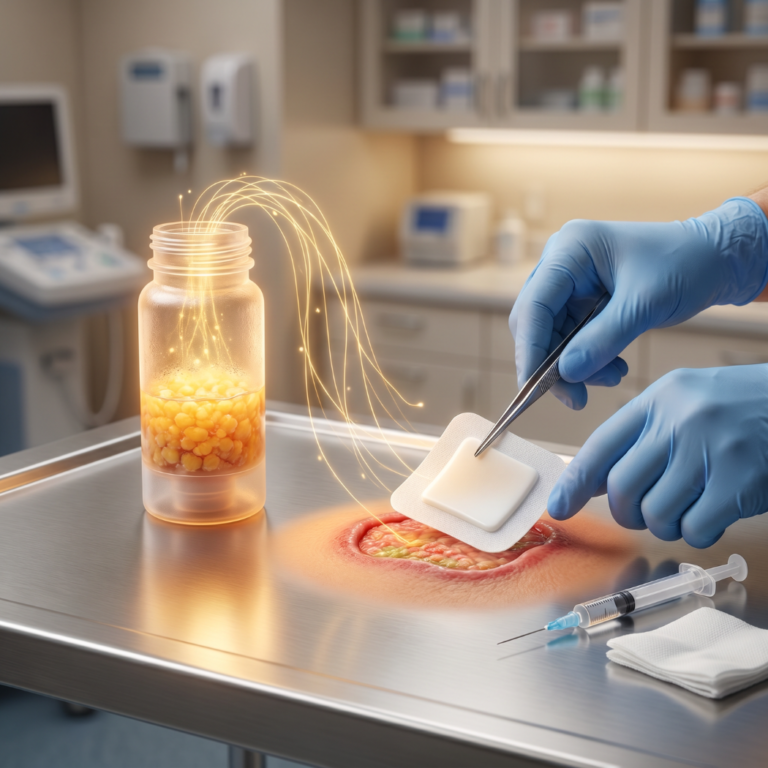

The adipose-derived stem cell market is one of the most active segments in regenerative medicine in 2026, driven by over four hundred active clinical trials, the December 2024 FDA approval of the first MSC-based biologic, and a growing body of published research documenting the multipotent and immunomodulatory properties of ADSCs across orthopedic, autoimmune, neurological, and aesthetic applications. Understanding where the market is and where the science is headed matters for patients who are considering banking, physicians who are evaluating the program, and anyone trying to separate the legitimate ADSC pipeline from the noise of unregulated clinic marketing. This post covers the science, the market data, the clinical trial pipeline, and the specific implications for patients who bank their cells today.
TLDR: The ADSC market is projected for double-digit compound annual growth through the end of the decade, driven by orthopedic, autoimmune, and neurological trial pipelines and the December 2024 FDA MSC approval. ADSCs are multipotent mesenchymal stem cells isolated from fat tissue, with higher yield per gram than bone marrow and well-documented differentiation and immunomodulatory properties. Patients who bank in 2026 are preserving access to a pipeline that will be significantly more developed in five, ten, and twenty years.
Important Disclaimer: This post discusses published research and active clinical trial data as of 2026. It does not represent clinical advice or a guarantee that any specific therapy will be approved or accessible to any individual patient. Save My Fat is a tissue banking service, not a treatment provider. Banking does not treat, cure, or prevent any disease. All content is for educational purposes only and does not constitute medical advice.
The stem cell space has a credibility problem. For more than a decade, the same scientific language, meaning stem cells, regenerative medicine, cellular therapy, has been used by both leading research institutions advancing rigorous clinical trials and unregulated clinics charging patients for unproven injections with no clinical validation. That dual use of terminology has made it genuinely difficult for informed patients and physicians to separate the signal from the noise.
The ADSC market in 2026 is where the signal is becoming unmistakable. A first MSC-based therapy is FDA-approved. More than four hundred trials are recruiting patients. Peer-reviewed published research has established the scientific foundation across multiple application categories. The market projections reflect not speculation but the translation of a maturing clinical pipeline into commercial reality.
Here is where the science is, where the market is, and what it means for a patient considering whether to bank today.
What Adipose-Derived Stem Cells Are: The Scientific Foundation
Adipose-derived stem cells are a population of mesenchymal stem cells isolated from adipose tissue. First characterized by Zuk and colleagues in 2002, ADSCs share the key biological properties of bone marrow-derived MSCs, specifically multipotent differentiation capacity and paracrine immunomodulatory activity, while being available in substantially higher quantities per unit of source tissue. The foundational characterization work established ADSCs as a distinct cell source within the broader mesenchymal stem cell category, and the subsequent two decades of research have refined the scientific profile considerably.
The key published properties of ADSCs fall into four categories.
- Multipotent differentiation. ADSCs can differentiate into osteogenic, chondrogenic, adipogenic, and myogenic cell lineages under appropriate culture conditions, making them relevant to bone, cartilage, fat, and muscle repair applications across multiple clinical categories.
- Immunomodulatory paracrine activity. ADSCs secrete anti-inflammatory cytokines and growth factors that modulate local immune responses, which is the primary mechanism of interest in autoimmune and inflammatory applications as well as in post-injury tissue repair contexts.
- High yield. Adipose tissue yields substantially more mesenchymal stem cells per gram than bone marrow, with published comparisons consistently reporting yields that are orders of magnitude higher, making adipose the most practical source for autologous cell collection in adults.
- Low immunogenicity. ADSCs express low levels of MHC-II antigens, reducing allogeneic rejection risk and supporting both autologous and allogeneic research programs across the current trial pipeline.
The 2019 MSC biology review from Pittenger and colleagues in npj Regenerative Medicine is the reference paper for the current mesenchymal stem cell biology framework, and the 2018 MSC clinical review from Galipeau and Sensebe in Cell Stem Cell covers the immunomodulatory mechanism in clinical contexts. Save My Fat’s patient-facing introduction to adipose-derived stem cells and comparison of mesenchymal stem cells across sources cover the same scientific territory in patient-accessible depth for readers who want a lighter entry point than the primary literature.
The Market: Size, Growth, and Drivers
Market Size and Trajectory
The global ADSC market is projected for double-digit compound annual growth rate through the end of the decade. Independent market research attributes this growth to a combination of structural drivers that are visible across the underlying data rather than speculative projections of future demand.
The drivers include expanding Phase 2 and Phase 3 clinical trial programs across multiple therapeutic categories, the December 2024 FDA approval of the first MSC-based biologic that established the regulatory precedent for additional approvals, growing physician and patient awareness of banking as a proactive option, and increasing investment in processing infrastructure and standardized collection protocols that make banking services more widely available. The growth is not concentrated in any single application category, which is structurally different from markets dominated by a single product or indication and suggests broader durability than narrower markets typically offer.
The December 2024 FDA Approval: Why It Matters
Ryoncil, generic name remestemcel-L, received FDA approval in December 2024 for steroid-refractory acute graft-versus-host disease in pediatric patients. It is derived from bone marrow MSCs, not ADSCs, which is worth naming explicitly because the approval is often misunderstood as an ADSC approval when it is structurally an MSC approval in a different cell source category. Its significance for the ADSC market is structural rather than categorical, and understanding why matters for interpreting the market data correctly.
The approval established three things that apply to the ADSC pipeline even though the product itself is not adipose-derived. First, the FDA’s willingness to approve MSC-based biologics through the standard BLA pathway, which had been an open question through years of pipeline development. Second, a published efficacy and safety precedent for MSC cellular therapy in a pediatric population with a serious immune condition. Third, a regulatory template that ADSC-based IND programs can reference and build upon, shortening the regulatory learning curve for programs developing ADSC therapies in adjacent or overlapping indication areas. The FDA approved cellular and gene therapy products database lists Ryoncil and will list future MSC and ADSC approvals as they occur.
For the ADSC pipeline specifically, Ryoncil is the proof of concept that MSC therapies can receive FDA approval. Not the final product, but the first through a door that will open further.
The Clinical Trial Pipeline: Where the Science Is Going
Orthopedic Applications, the Most Mature Category
Osteoarthritis, particularly knee OA, is the most advanced application category for ADSC and MSC therapies. Multiple Phase 2 trials have reported positive interim data on pain reduction and functional improvement outcomes across published literature in the orthopedic category. Phase 3 programs are active, and the cartilage repair and avascular necrosis categories also have active trials. The published MSC biology literature supports the underlying mechanistic case, and the active ADSC trial pipeline on ClinicalTrials.gov covers the current recruiting trials across orthopedic indications.
Why ADSCs are relevant in orthopedic applications: chondrogenic differentiation capacity and anti-inflammatory paracrine activity both apply directly to joint disease pathophysiology, which is a two-mechanism match that is relatively uncommon in stem cell applications. The mechanism of action is scientifically grounded, and the clinical trial data is the most mature in the ADSC field. Save My Fat’s resource on finding legitimate clinical trials covers the evaluation framework for patients reviewing specific orthopedic trials.
Autoimmune Applications, Active Phase 2 Programs
Crohn’s disease, multiple sclerosis, lupus, and rheumatoid arthritis all have active Phase 2 trial programs investigating MSC and ADSC therapies. The immunomodulatory paracrine mechanism, specifically suppression of pro-inflammatory cytokines and promotion of regulatory T-cell activity, is directly relevant to autoimmune pathophysiology, as the 2018 MSC clinical review covers in depth.
The autoimmune category is behind orthopedics in clinical maturity but ahead of neurological in terms of active Phase 2 enrollment and published interim data. The pipeline is real and moving, with several sponsors working through Phase 2 readouts that could support Phase 3 program expansion in the next few years.
Neurological Applications, Earlier Stage Active Pipeline
ALS, Parkinson’s disease, and multiple sclerosis (neurological mechanism) all have active trial programs. These are generally Phase 1 and early Phase 2 studies. The neurological pipeline is less mature than orthopedic but represents one of the highest unmet clinical need categories in all of medicine, which is why the research activity continues to expand even at these earlier clinical phases. The active trial pipeline on ClinicalTrials.gov covers the specific studies currently recruiting patients in each neurological indication.
Timeline to approval for neurological applications is longer than for orthopedic, but banking in 2026 for a patient with neurological family history preserves access over a twenty-plus year horizon that aligns reasonably well with the pipeline’s development trajectory.
Aesthetic and Reconstructive Applications, Established and Expanding
Fat grafting using adipose tissue, including approaches that enhance fat grafts with additional adipose-derived cells, is the most clinically established application of adipose tissue in aesthetics. Breast reconstruction, facial volumization, scar revision, and radiation damage repair are all active areas. The foundational Zuk 2002 paper covers the biological basis for the aesthetic application category, which predates much of the formal clinical trial activity in other indication areas.
The aesthetic application category is the one with the most current clinical use, though the regulatory pathway for specific enhanced fat grafting approaches continues to be refined as the field matures. Save My Fat’s overview of cryopreservation viability covers the storage considerations that apply across all application categories including aesthetics.
The ADSC Market Pipeline Summary
| Application Category | Trial Phase Status | Mechanism | Timeline |
|---|---|---|---|
| Orthopedic (knee OA, cartilage) | Phase 2 to Phase 3 active | Chondrogenic differentiation, anti-inflammatory paracrine | Nearest to approval |
| Autoimmune (Crohn’s, MS, lupus, RA) | Phase 2 active | Immunomodulatory paracrine | 5 to 10 year horizon |
| Neurological (ALS, Parkinson’s, MS) | Phase 1 to Phase 2 | Neuroprotective paracrine, possible regeneration | 10 to 20 year horizon |
| Aesthetic and reconstructive | Clinically established (fat grafting), expanding | Volume replacement, tissue regeneration | Available now in some forms |
The table distills the current pipeline state across the four main ADSC application categories. The published MSC biology literature and the active ADSC trial pipeline on ClinicalTrials.gov together form the primary reference set for the summary. Timelines are directional estimates based on current trial progression rather than guarantees of approval, and the specific indication within each category that produces the first approval is an open question the pipeline itself will answer over the next several years.
The Regulatory Framework: How Banking Fits
The Save My Fat banking program operates under 21 CFR Part 1271, which is FDA Section 361 HCT/P regulation. Banking is tissue preservation. It is not an IND-required investigational therapy and makes no treatment claims. The cells are preserved under a compliant regulatory framework for potential future use in trials, expanded access programs, or approved therapies as they develop. Save My Fat’s overviews of FDA regulations for adipose tissue and 21 CFR Part 1271 cover the regulatory structure in physician-appropriate and patient-appropriate depth respectively.
The distinction between banking and treatment is critical in a space where unregulated clinics frequently blur it. Banking is compliant, documented, and verifiable through the FDA’s tissue establishment registry. Unregulated treatment claims are an FDA enforcement category, and the two categories are not the same. Any patient evaluating services in this space should apply the distinction immediately rather than treating all stem cell-related services as interchangeable, and Save My Fat’s resources on finding legitimate clinical trials and expanded access programs cover the two primary near-term pathways for accessing legitimate investigational therapies.
What the Market Means for Patients Banking Today
If you bank in 2026, here is what the market data actually says about your position.
Your cells are preserved at your 2026 biological quality, which is the highest quality they will be for the rest of your life. The cryopreservation science is established. Published long-term cryopreservation research has demonstrated viable cell recovery after twenty to thirty years of storage with maintained differentiation potential, so the preservation value is intact across the relevant time horizons that matter for the maturing pipeline.
The orthopedic ADSC pipeline, which is the most clinically mature category, may produce its first approvals within five to ten years based on current trial trajectories. A patient who banks today and develops osteoarthritis at sixty may be banking for cells that are relevant to an approved therapy that exists when they are sixty-five. This is a concrete rather than speculative timeline, though the specific approval and its specific indication cannot be predicted in advance.
The autoimmune pipeline is five to ten years behind orthopedics in its trajectory toward approval. The neurological pipeline is ten to twenty years out from its first approvals in most indications, with the highest-unmet-need conditions like ALS potentially moving faster if the safety and efficacy data in current trials support accelerated pathways. Banking in 2026 for neurological applications is long-horizon option preservation, which is genuinely valuable for a forty-year-old with a family history of Parkinson’s but less immediately actionable than the orthopedic case is for a patient with joint disease risk factors.
The market is moving. The science is real. The uncertainty is also real, and the industry analysis supports the growth trajectory without guaranteeing the approval timeline in any specific indication. The patients who bank in 2026 are the ones preserving the most biological quality, because earlier is always better for cell quality, against a pipeline that will be significantly more developed before their banking decision becomes irrelevant in any specific indication area.
Key Takeaways
Adipose-derived stem cells are multipotent mesenchymal stem cells from adipose tissue with documented differentiation and immunomodulatory properties, available in substantially higher yield per gram than bone marrow. The scientific foundation is established across two decades of research and is consistent across the published literature.
The ADSC market is projected for double-digit compound annual growth through the end of the decade, driven by the active clinical trial pipeline and the December 2024 FDA MSC approval precedent. The growth is distributed across multiple application categories rather than concentrated in a single indication, which is structurally different from narrower biopharma markets and suggests broader durability.
Four application categories drive the clinical pipeline. Orthopedic is most mature at Phase 2 to Phase 3. Autoimmune is at active Phase 2. Neurological is at Phase 1 to Phase 2 but addresses the highest unmet-need conditions in the pipeline. Aesthetic and reconstructive applications are clinically established and expanding in parallel with the other categories.
Banking under 21 CFR Part 1271 is compliant tissue preservation. No IND is required, no treatment claims are made, and the processing laboratory operates as an FDA-registered tissue establishment. The regulatory framework is the foundation that distinguishes legitimate banking from the unregulated sector, and it is verifiable through public federal data rather than dependent on service marketing claims.
Patients who bank in 2026 are preserving their peak biological quality against a pipeline that will be meaningfully more developed in five, ten, and twenty years. The timing argument is structural rather than urgent. Earlier preservation captures higher-quality cells regardless of what specific approvals the pipeline produces in any given year, and the preservation value compounds across the storage term as the pipeline matures around it.
Learn More
Before exploring next steps: adipose tissue banking is a preservation service for potential future use in FDA-regulated pathways, not a treatment or a guarantee of access to any specific clinical trial, therapy, or product. No adipose-derived product is FDA-approved for general disease treatment, and banking cannot be represented as a treatment for any condition. Physicians considering partnership should independently verify applicable state licensing and informed-consent requirements, particularly in Florida, Utah, and Nevada, which have stem cell-specific statutes.
To understand adipose tissue banking as a service, visit Save My Fat’s complete guide to banking. To find a partner provider near you, visit the provider page. To review the underlying ADSC science in more depth, visit the patient-facing ADSC overview. To search active trials directly, visit the ADSC trial pipeline on ClinicalTrials.gov.
Save My Fat provides adipose tissue banking services in partnership with L2 Bio for laboratory operations. Save My Fat does not provide medical treatments, clinical trial enrollment, or Expanded Access services.
This article is for educational purposes only and does not constitute medical or legal advice. Legal and medical review including neurology and neurosurgery input is required before publication. Please consult your neurologist or neurosurgeon before making any decisions about neurologic treatment or research participation.
Related guide: emerging adipose stem cell research.