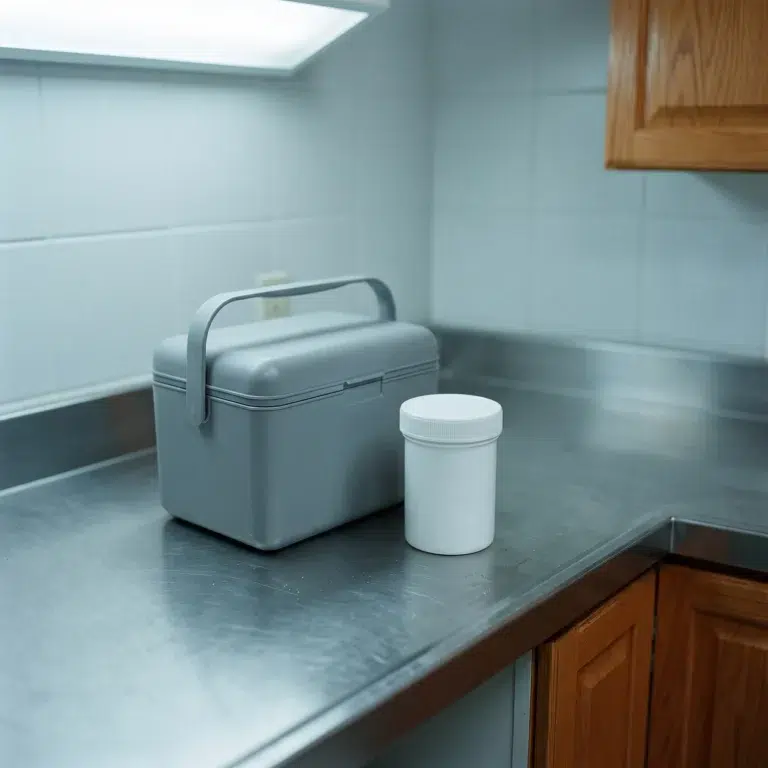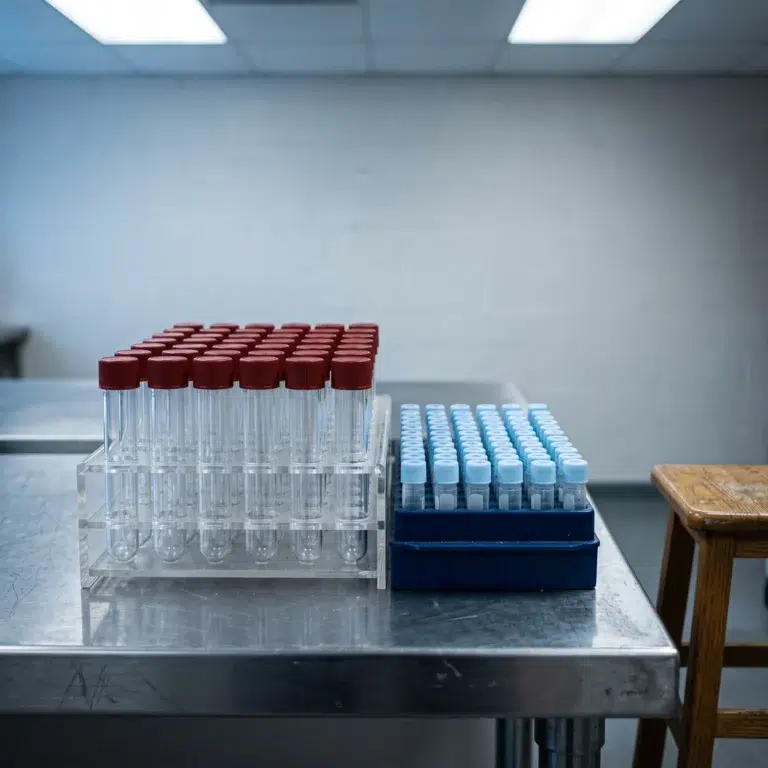
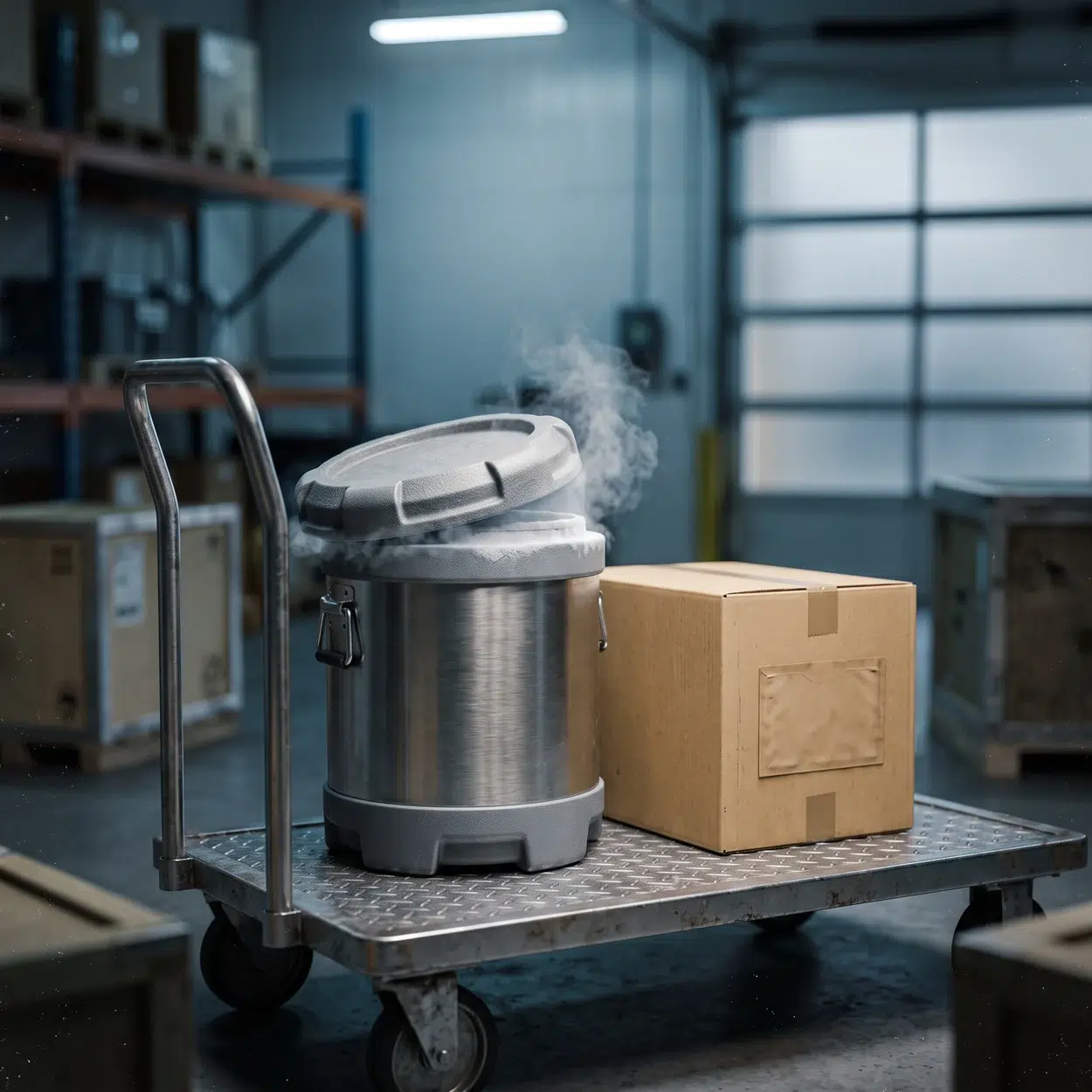
Readers outside the United States, and Americans whose harvest and tissue bank sit in different states, often ask what the rules say about moving tissue. This guide covers the federal import rule, Part 1271 inside one state, two state laws that reach across borders, packaging rules, and questions to ask before tissue travels.
TLDR International adipose banking and interstate banking both run through the same federal tissue rules. FDA holds imported tissue at the port of entry until it decides admissibility, Part 1271 applies whether or not tissue crosses a state line, and some states license banks that ship into them. Banking adipose tissue does not guarantee eligibility, access, or clinical benefit from any future therapy.
Important Disclaimer: Save My Fat does not provide FDA-approved treatments or cures for any disease. Banking adipose tissue today does not guarantee eligibility, access, or clinical benefit from any future therapy, clinical trial, or medical program. This article explains shipping and import rules only and is not legal advice about any country or state. All content is for educational purposes only and does not constitute medical advice. Patients must consult their own licensed healthcare professionals regarding all medical decisions.
A reader in another country sees a U.S. tissue bank online and wonders whether fat collected at home could be sent to it. A reader in one state has a physician nearby but a bank several states away. Both are really asking the same thing: what happens to tissue when it crosses a border?
Whether stem cell therapy is legal, and where, is the question readers bring to this site more than any other. Shipping rules are more concrete than most people expect.
One limit up front. This site cannot say whether banking from a particular country is possible. That depends on the bank and on the other country’s export rules, which are outside this article.
What Happens When Tissue Is Offered for Import?
Tissue offered for import into the United States is held until FDA decides whether it may enter. Under 21 CFR 1271.420, the importer of record must notify the FDA district for the port of entry, before or at importation, with enough information for an admissibility decision.
While FDA reviews, the rule says the tissue “must be held intact by the importer or consignee, under conditions necessary to prevent transmission of communicable disease, until an admissibility decision is made by FDA.” The same section allows the tissue to be “transported under quarantine to the consignee, while the FDA district reviews the documentation.”
Two points matter for anyone thinking about international adipose banking. First, the rule names a role, the importer of record, and someone has to fill it. Second, nothing in the section is written specifically about fat. It covers HCT/Ps in general.
Does Part 1271 Apply to Tissue That Never Leaves One State?
Yes. The federal tissue rules apply even when tissue stays inside one state. Section 1271.1(b) requires covered establishments to register, list, and comply with Part 1271 “whether or not the HCT/P enters into interstate commerce.”
The rules attach to the article itself. Under 1271.3(d), an HCT/P is an article “containing or consisting of human cells or tissues that are intended for implantation, transplantation, infusion, or transfer into a human recipient.” Adipose tissue is not named in the examples list, so readers should not assume the rule spells out anything fat specific.
Our Part 1271 overview covers the wider framework. For shipping, the takeaway is simple: a same state bank does not sit outside the federal rules.
What Does Crossing State Lines Add?
Crossing a state line can add a state license or permit on top of the federal rules. Some states reach banks located elsewhere that distribute or provide services inside their borders. Maryland and New York are two clear examples.
In Maryland, Health-General 17-305 requires a permit from the Secretary before a person may “Operate a tissue bank in this State; or (2) Represent or service in this State any tissue bank that is outside this State.”
In New York, 10 NYCRR 52-2.1 says anyone who plans to operate a tissue bank or distribute tissue in the state must obtain a license first. It adds that “Shipping of any tissue from an out-of-state facility shall constitute distribution and shall require a license,” with narrow exceptions.
Neither of these state rules names adipose or fat. They show that a bank’s home state is not the only state whose rules may matter.
International Adipose Banking and Interstate Shipping: What Applies Where
The rules stack as tissue travels farther. The table compares three situations using only the rules above, as a map rather than a ruling on any bank or route.
| Where harvest and bank are | Federal Part 1271 | Import rule, 1271.420 | State rules |
|---|---|---|---|
| Same state | Applies, per 1271.1(b) | Does not come into play | That state’s rules, if any |
| Another U.S. state | Applies | Does not come into play | Home state, plus states like Maryland or New York that reach out-of-state banks |
| Another country | Applies once tissue is offered for import | Hold at port of entry until FDA decides admissibility | Destination state rules, plus the other country’s export rules, which this article does not cover |
Read the table from the top down and each row adds a layer. Experience with one row does not prove experience with the next.
What Does Shipping Itself Require?
Federal rules require protective packaging and defined shipping conditions, but they set no numeric transport window. Under 1271.265, “Packaging and shipping containers must be designed and constructed to protect the HCT/P from contamination. For each type of HCT/P, you must establish appropriate shipping conditions to be maintained during transit.”
That section also covers what happens on arrival. Each incoming HCT/P must be evaluated for microorganisms, inspected for damage and contamination, and accepted, rejected, or quarantined under criteria set in advance.
Tracking travels with the tissue too. Section 1271.290 requires a distinct identification code and tracking from the donor to the consignee or final disposition and back again. Our guide to chain of custody explains why that paper trail matters.
For tissue stored for the donor’s own use, 1271.90 removes the donor eligibility determination requirement. It still requires the label “FOR AUTOLOGOUS USE ONLY,” and “NOT EVALUATED FOR INFECTIOUS SUBSTANCES” unless all applicable screening and testing was done.
What Should You Ask Before Banking From Abroad or Across State Lines?
Ask who handles each legal step, not just whether shipping is possible. These questions come from the rules above and describe no particular bank.
For tissue coming from another country, ask who acts as the importer of record under 1271.420. Ask who deals with the hold at the port of entry, and what happens to the tissue if FDA does not admit it. Ask whether the bank has received imported tissue before, and ask your own advisers what the other country requires for export.
For tissue crossing state lines, ask whether the bank holds any permit or license required in the state where the harvest happens.
For any route, ask what shipping conditions the bank has established under 1271.265, how the tissue is labeled, and what the written agreement says about return shipment. Our guide to physician coordination covers the harvest side of the same questions.
Frequently Asked Questions
Can Save My Fat tell me whether my country allows export?
No. This site cannot say whether banking from a particular country is possible. It depends on the bank and on that country’s export rules, which fall outside this article.
Does tissue from another country skip FDA review?
No. Under 1271.420, imported HCT/Ps are held intact until FDA makes an admissibility decision, although the rule allows transport under quarantine to the consignee during review.
If my harvest and bank are in the same state, do federal rules still apply?
Yes. Section 1271.1(b) applies Part 1271 whether or not the tissue enters interstate commerce.
Does federal law set a maximum shipping time or temperature?
No. Section 1271.265 requires protective containers and established shipping conditions for each type of HCT/P, but it sets no numeric time or temperature.
Is this related to medical tourism?
It overlaps. Readers weighing care abroad can browse our medical tourism articles, but shipping rules and treatment rules are separate questions.
Key Takeaways
International adipose banking starts with a federal hold. Under 1271.420, imported tissue stays intact until FDA decides admissibility, and an importer of record must file the notice. Part 1271 applies inside one state as well, whether or not tissue enters interstate commerce. Maryland and New York show that state rules can reach banks located elsewhere. Section 1271.265 requires protective packaging and defined shipping conditions but no numeric window. Before tissue travels, ask who fills each role and what the agreement says about return shipment.
Save My Fat connects patients and providers with a U.S.-based tissue bank. It is not a tissue bank, a laboratory, a medical practice, or a treatment provider. Stem cell and regenerative medicine regulations vary by state, including specific informed-consent and disclosure requirements in Florida, Utah, California, Georgia, and Tennessee governing tissue and stem cell services. Banking adipose tissue does not connect patients to any treatment pathway, and any future use depends on FDA regulatory status, physician guidance, and the availability of approved or investigational pathways at that time.
Readers weighing adipose tissue banking for potential future use can review current pricing or start a conversation through the contact page.
Save My Fat works with a U.S.-based tissue bank for laboratory processing and storage.
This article is for educational purposes only and does not constitute medical or legal advice. Please consult your own licensed healthcare provider before making any decisions about treatment or research participation.
About the author: Oscar Tellez is the founder and CEO of Save My Fat. He holds a Bachelor of Science in Exercise Science and Health Promotion from Florida Atlantic University. He has spent a decade in the regenerative medicine industry across product distribution, laboratory and vendor relationships, and provider training. He is not a licensed clinician, and this article is educational, not medical advice.
Related guide: FDA adipose tissue regulation.