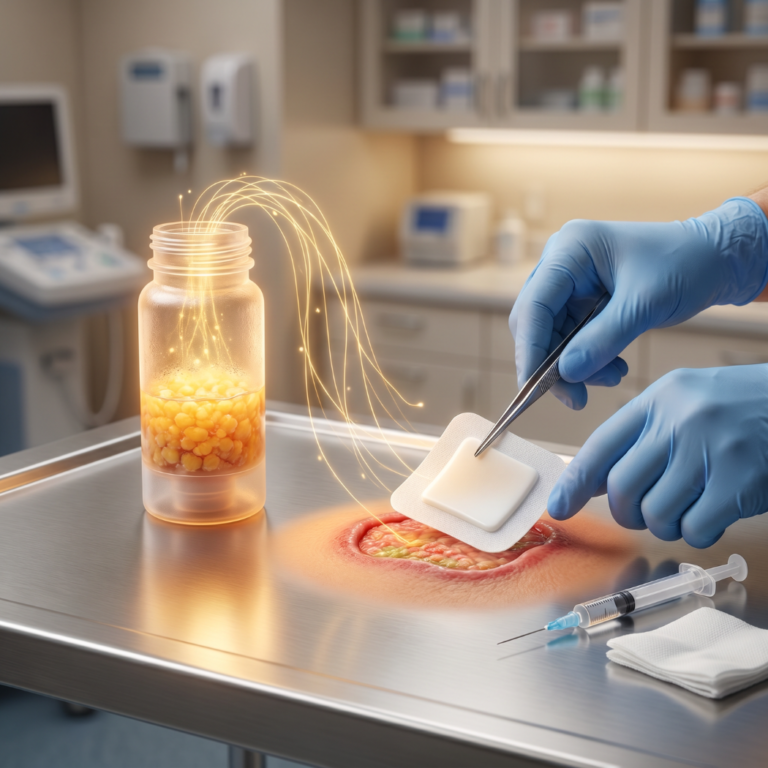
Chronic wounds are one of the most persistent and difficult challenges in medicine. Diabetic foot ulcers, pressure ulcers, and ischemic limb wounds affect millions of people and often fail to heal even with best-practice wound care. Researchers are now testing whether adipose-derived stem and stromal cells might support healing in these conditions, and a growing number of human trials have been registered and published. This work is still in the research phase and not standard care, but the published evidence is substantive enough to be worth understanding clearly.
TLDR: Adipose-derived stem and stromal cells have been studied in small human trials for diabetic foot ulcers, pressure ulcers, critical limb ischemia wounds, and burn injuries. Several studies report improved wound closure or healing metrics compared with standard care alone, but sample sizes are typically small and methods vary across studies. No adipose-derived cell-based wound therapy is FDA-approved as a standard treatment. ClinicalTrials.gov and peer-reviewed reviews give the most accurate picture of where the science stands.
Important Disclaimer: Save My Fat does not provide FDA-approved treatments or cures for any disease or medical condition. No adipose-derived stem cell therapy is FDA-approved for chronic wound treatment in the United States. This article summarizes research findings for educational purposes only and does not constitute medical advice. Patients must consult wound care specialists, vascular surgeons, podiatrists, or endocrinologists before making any decisions about chronic wound management or research participation.
For someone living with a wound that will not close, the idea of a biological treatment that might support healing where conventional care has stalled is genuinely compelling. Stories circulate online about fat-derived stem cells closing diabetic foot ulcers or healing ischemic leg wounds that were heading toward amputation. Some of those stories refer to real research. Others come from clinics marketing procedures that have not been studied in controlled trials, under regulatory conditions appropriate for the claims being made.
The difficulty is telling the difference. Clinics advertising stem cell wound treatments often use the same language as published research papers, citing cell types, growth factors, and healing mechanisms that are real but whose clinical application remains investigational. A patient or caregiver who wants to evaluate those claims fairly needs access to the actual research record, not marketing copy.
This guide focuses on that record. It reviews the published clinical trials and systematic reviews that have investigated adipose-derived stem cells (ADSCs), adipose-derived stromal cells, and related products in wound healing contexts. The goal is to present what has been studied, what has been reported, and what remains to be established, accurately and without overstating the conclusions the evidence currently supports.
Why Adipose-Derived Cells Are Being Studied for Wound Healing
Chronic Wounds and Why They Are Hard to Treat
Chronic wounds share a common feature: they have failed to progress through the normal stages of wound healing within an expected time frame, typically defined as wounds that have not shown meaningful improvement after several weeks of appropriate care. The underlying causes vary. In diabetic foot ulcers (DFUs), neuropathy and impaired microvascular function create a wound environment in which infection control, adequate perfusion, and cellular repair mechanisms are all compromised simultaneously. In pressure ulcers, sustained mechanical loading damages both skin and deeper tissue, and the wound bed may have poor vascular supply. In critical limb ischemia (CLI), arterial insufficiency deprives wound tissue of the oxygen and nutrients that healing requires.
Standard care for each of these conditions involves controlling infection, debriding non-viable tissue, offloading pressure, optimizing vascular supply where possible, and managing blood glucose in diabetic patients. These approaches are essential and evidence-based. Yet a substantial percentage of patients with complex chronic wounds do not achieve complete healing with standard care alone, and some face limb amputation. That treatment gap is what has motivated research into cell-based adjunctive approaches.
What ADSCs and Stromal Cells Bring Biologically
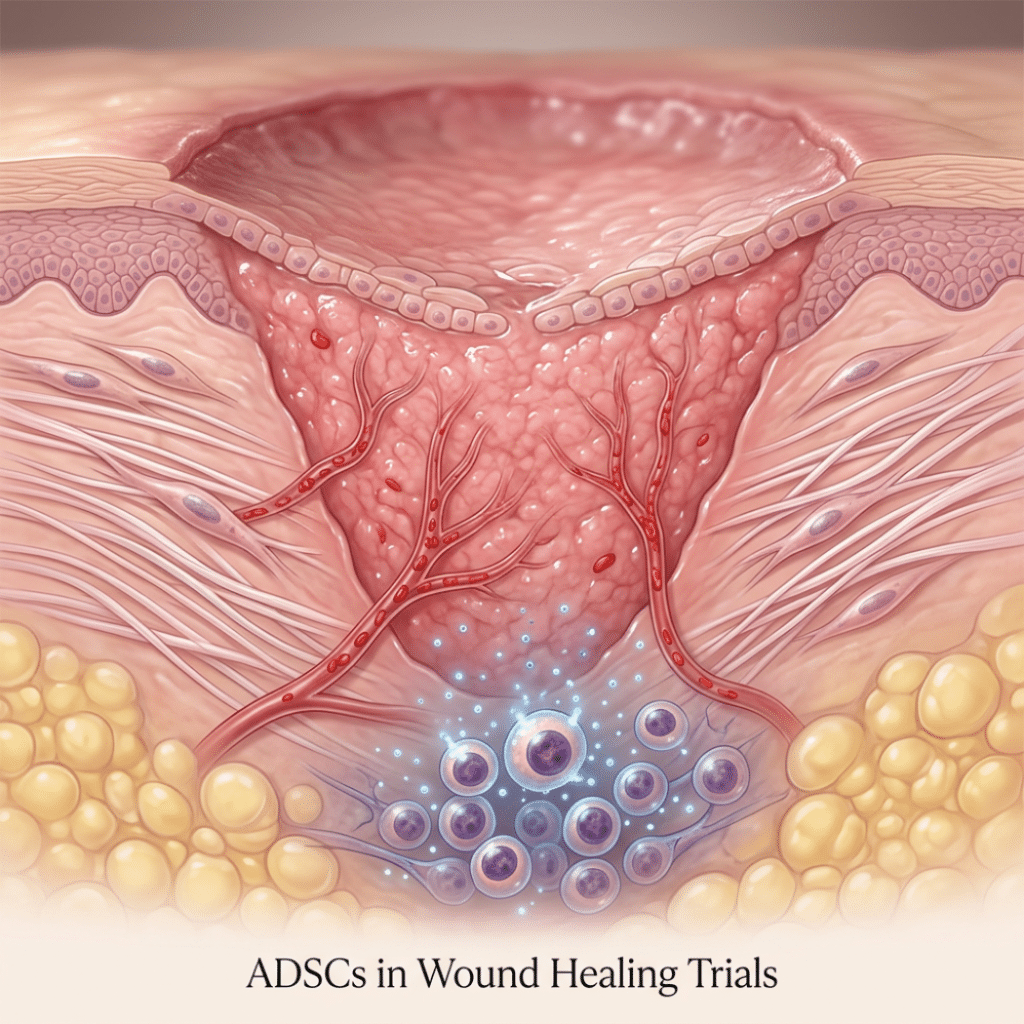
The interest in adipose-derived cells for wound healing is grounded in their biological properties in laboratory and preclinical settings. A 2023 review in Frontiers examining ADSC wound healing research summarizes paracrine mechanisms that researchers are studying: ADSC secretion of growth factors including VEGF (vascular endothelial growth factor), HGF (hepatocyte growth factor), and FGF (fibroblast growth factor), which in laboratory models appear to promote angiogenesis (new blood vessel formation), fibroblast activity, and keratinocyte (skin cell) migration. Cytokine profiles from ADSCs may also modulate the chronic inflammatory state that impairs healing in diabetic and ischemic wounds.
A 2024 review specifically examining the ADSC secretome in diabetic foot ulcers, available at PMC11373215, describes how adipose-derived cells may address several of the specific pathophysiological features of diabetic wounds: impaired angiogenesis, persistent inflammation, poor extracellular matrix remodeling, and reduced growth factor signaling. These are mechanistically plausible targets. What remains to be established is whether those laboratory-observed mechanisms translate reliably into clinically meaningful healing improvements in appropriately powered human trials.
For a foundation on what adipose-derived stem cells are, how they are identified, and what properties make them scientifically interesting, the patient’s guide to adipose-derived stem cells provides that background.
Autologous vs. Allogeneic Cells in Wound Research
Wound healing research has used both autologous and allogeneic approaches. Autologous studies use cells or regenerative cells derived from the patient’s own adipose tissue, processed and applied to their wound. This eliminates immune rejection risk but requires a liposuction procedure as part of the intervention and typically involves point-of-care processing or culture expansion that must occur close in time to the wound treatment.
Allogeneic approaches use cells sourced from healthy donors, manufactured into standardized cell products or bioengineered constructs such as cell-seeded patches. A 2023 study of allogeneic ADSCs in diabetic foot ulcers, published at PMC9864558, represents this approach: a donor-derived cell product applied to the wound surface rather than cells from the patient’s own tissue. Each approach has different regulatory implications; allogeneic cell products generally require more extensive IND and manufacturing oversight under the 351 biologic pathway.
Clinical Trials in Chronic Ulcers and Diabetic Foot
Diabetic Foot Ulcer Trials
Among wound types, diabetic foot ulcers have the most substantial body of ADSC clinical research. A systematic review at PMC5952370 examined multiple small trials involving autologous and allogeneic adipose-derived cell interventions across chronic wound types and reported that most included studies described improved wound closure metrics in the cell-treated groups compared with controls, along with acceptable short-term safety profiles.
The 2023 allogeneic ADSC diabetic foot ulcer study at PMC9864558 enrolled patients with non-healing diabetic foot ulcers and compared allogeneic ADSC application with standard care. Reported findings included higher complete wound closure rates in the ADSC group at follow-up time points and no major cell-related adverse events. The study’s investigators noted the small sample size and called for larger randomized controlled trials to confirm the findings.
NCT03916211 represents a randomized study of autologous adipose-derived stem cells for diabetic foot ulcers registered on ClinicalTrials.gov. Registered trial protocols like this one are important because they define prospective endpoints and patient populations before results are collected, which improves the quality of evidence they can produce.
Chronic Ulcer and Pressure Ulcer Studies
NCT02092870 registered a study of adipose-derived regenerative cells in chronic wounds, and NCT02375802 specifically examined autologous adipose-derived stromal cells in pressure ulcers. Pressure ulcers present particular challenges because the wound environment often involves deep tissue injury and compromised local circulation. Early trial registrations in this area reflect research interest but also the significant difficulty of running controlled studies in this population, which tends to include elderly patients with complex comorbidities.
A 2022 review published on adipose-derived cells in skin diseases and wounds summarized findings across multiple wound types and reported that pilot studies generally described improved healing metrics and tolerable safety profiles, while consistently noting methodological limitations, including open-label designs, lack of randomization in some studies, and short follow-up periods. The Oxford Stem Cell Translational Medicine review of adipose-derived stromal cells for chronic wounds provides a structured analysis of the available evidence and reaches broadly similar conclusions: promising early signals, methodological heterogeneity, and an urgent need for larger controlled trials.
How Strong Is the Evidence?
Taken together, the published clinical literature on ADSC-based wound interventions through 2025 shows a consistent pattern: small studies, typically with 10 to 40 patients, report improved wound closure rates or healing metrics in ADSC-treated groups compared to standard care controls, with acceptable short-term safety profiles and no major cell-related adverse events in most published reports. What the literature also consistently reports is that these are early-phase findings. Sample sizes are insufficient to establish efficacy definitively. Cell preparation methods, doses, delivery techniques (topical application, intradermal injection, cell-seeded constructs), and outcome measures vary substantially across studies, making cross-study comparisons difficult.
The consistent message from all systematic reviews in this field is the same: more robust, adequately powered randomized controlled trials are needed before any ADSC-based wound intervention can be considered a standard treatment.
Critical Limb Ischemia and Ischemic Wounds
ADSCs and Limb Ischemia
Critical limb ischemia (CLI) is the most severe form of peripheral artery disease (PAD), characterized by severely restricted blood flow to the limb, chronic ischemic rest pain, and tissue loss in the form of ulcers or gangrene. Patients with CLI face high rates of limb amputation and major cardiovascular events. When revascularization (surgical or endovascular procedures to restore blood flow) is not technically feasible or has failed, there are few established therapeutic options.
This treatment gap has motivated several trials investigating whether adipose-derived regenerative cells injected into ischemic tissue might promote therapeutic angiogenesis, improving microvascular perfusion and supporting wound healing. NCT02864654 is one such registered trial, examining adipose-derived regenerative cells for critical limb ischemia patients.
Reported Outcomes in Early Studies
Published early-phase CLI studies involving adipose-derived cells or SVF (stromal vascular fraction, the heterogeneous cell population obtained from enzymatically digested adipose tissue) have reported improvements in outcome measures including transcutaneous oxygen pressure (a measure of skin oxygenation), pain scores, ulcer healing rates, and amputation-free survival in some cohorts. These findings have been reported in early-phase research settings. The absence of large randomized comparator arms in most published CLI studies means these are signals that require confirmation in rigorous controlled trials, not established evidence of efficacy.
Regulatory and Safety Considerations
Many CLI studies using expanded ADSCs or SVF operate under formal clinical research protocols with IND oversight and IRB review. This is a critical distinction from off-trial SVF injections marketed by some clinics, which typically lack the regulatory scaffolding, independent safety monitoring, and prospective data collection that characterize legitimate research. A patient who encounters a clinic advertising stem cell injections for ischemic wounds should ask specifically for the ClinicalTrials.gov registration number and IND documentation before considering participation.
Adipose-Derived Cells in Burns and Complex Wounds
Burn Wound Applications
Burn wound healing represents a distinct wound biology context where early evidence for ADSC-based interventions has emerged. Some trials and observational studies have explored combining allogeneic ADSCs with skin grafts or dermal substitutes to potentially improve graft take (the successful integration of a skin graft) and accelerate epithelialization (the formation of new skin surface).
Preliminary published reports in this area describe improved graft adherence and faster new skin formation in some cell-supplemented groups, but these studies are typically small, often case series or early pilot studies, and epithelialization as an endpoint can be measured inconsistently across institutions. The evidence remains early-stage.
Perioperative and Complex Surgical Wound Applications
Some investigational work has explored adipose-derived cells in the context of reconstructive surgery, including the use of cell-enriched fat grafting or micro-fragmented adipose tissue to support healing at complex surgical sites such as amputation stumps. These applications involve a different regulatory and clinical framework than the wound healing trials discussed above, sitting at the intersection of reconstructive surgery and regenerative medicine. Registered protocols for some of these applications appear on ClinicalTrials.gov, and they reflect genuine scientific inquiry, but the evidence base for these specific applications remains limited.
Exosomes and Cell-Free Approaches in Wound Research
ADSC Exosomes in Preclinical and Early Human Work
As in cardiovascular research, exosomes derived from ADSCs have attracted attention in wound healing research as a potentially cell-free approach to delivering paracrine benefits. Preclinical studies have demonstrated that ADSC-derived exosomes can influence wound healing processes in animal models, including modulation of inflammatory cell behavior, promotion of fibroblast migration, and support of keratinocyte function.
A study published in Burns and Trauma (2023) examining adipose mesenchymal stem cell-derived exosomes in skin wound repair describes these mechanisms in animal model settings. A pilot human study referenced in connection with NCT05475418 explored human adipose tissue-derived exosomes applied to wounds and reported preliminary tolerability findings. These early human data are limited but form part of the rationale for ongoing exosome wound healing research.
Status in 2026
Exosome-based wound applications remain investigational. No exosome-based wound product derived from adipose-derived cells is FDA-approved in the United States. Questions about optimal dosing, manufacturing consistency, delivery method, and long-term safety remain unanswered and are the subject of ongoing research. Patients should treat any clinic offering exosome wound treatments as offering an unapproved product outside of a registered trial unless the clinic can provide ClinicalTrials.gov registration documentation and IND confirmation.
What Systematic Reviews Say About ADSCs in Wound Healing
Across Multiple Wound Types
The most comprehensive systematic analyses of ADSC wound healing research, including the review at PMC5952370 and the 2025 “From Fat to Healing” review, reach broadly similar conclusions across the included studies. ADSC-based interventions showed higher complete healing rates in many studies compared with controls, along with acceptable safety profiles in supervised research settings. The reviewers in each of these analyses emphasize that the evidence base is limited by the same recurring methodological issues: small sample sizes, heterogeneous cell preparation protocols, varying endpoints, and short follow-up durations.
The Oxford Stem Cell Translational Medicine review of adipose-derived stromal cells specifically for chronic wounds reaches a similar conclusion, characterizing the available evidence as showing a consistent directional signal toward improved healing but insufficient in quality and quantity to establish any ADSC-based intervention as a standard wound treatment.
Diabetic Foot-Specific Evidence
The 2024 review at PMC11373215 focusing on the ADSC secretome in diabetic foot ulcers provides mechanistic context for why the early clinical signals might be biologically plausible. The review outlines how the growth factors, cytokines, and extracellular vesicles that ADSCs release may address specific deficiencies in the diabetic wound environment: inadequate new blood vessel formation, dysregulated inflammation, impaired skin cell migration, and poor structural tissue repair. That mechanistic coherence supports the scientific rationale for continued clinical investigation, while the review’s authors are clear that mechanistic plausibility is not the same as clinical proof.
Overall Quality of Evidence
Across all wound types, the honest characterization of the current ADSC wound healing evidence is this: it is promising enough to justify continued rigorous investigation, but it is not sufficient to support clinical use outside of registered research protocols. Phase I and Phase II trials have established that the procedures are generally tolerable in carefully selected patients under supervised conditions. They have not established efficacy with the rigor required for standard clinical adoption. Phase III trials with sufficient power to detect meaningful clinical differences are the necessary next step.
What This Means for Patients and Banking
Research vs. Routine Care
The ADSC-based wound interventions described in the studies above are research procedures. They are conducted under protocols with specific eligibility criteria, defined intervention schedules, and follow-up requirements. A patient enrolled in NCT03916211 is participating in a scientific study with an independent oversight board and defined regulatory accountability. That is categorically different from visiting a wound clinic that offers stem cell treatments as a service.
Legitimate wound care for diabetic foot ulcers, pressure ulcers, and ischemic wounds remains grounded in evidence-based standard treatments: debridement, infection management, pressure offloading, vascular assessment and intervention where possible, blood glucose optimization, and advanced wound dressings. These are the treatments that have been tested in large trials and are endorsed by wound care specialty organizations. ADSC research is an adjunct to this framework currently being studied, not a replacement for it.
Banking Intact Adipose Tissue
Banking intact adipose tissue through a compliant service like Save My Fat preserves a patient’s own cellular material in cryogenic storage. For a fuller explanation of what that process involves and what it preserves, the complete guide to adipose tissue banking and the how banking works article describe each stage.
Banking is not the same as enrolling in a wound healing trial or accessing wound-healing cell therapy. The cell products used in wound trials have specific preparation requirements, quality specifications, and delivery methods that may or may not be compatible with material previously banked through a consumer banking service. Future wound healing applications that reach FDA approval, if any do, would come with defined manufacturing and clinical protocols.
No Guaranteed Pathway from Banking to Wound Therapy
There is no guarantee that any ADSC-based wound therapy will reach FDA approval, that any future therapy would accept tissue banked through a consumer service, or that any individual patient’s condition would make them eligible for a future study or approved therapy. These outcomes depend on clinical science, regulatory decisions, and individual patient circumstances that no banking service can predict or control. Chronic wound management must be conducted in partnership with qualified wound care specialists using approved evidence-based care.
For patients interested in understanding the broader regenerative medicine research landscape, the emerging research page on this site and the guide to clinical trials for regenerative medicine provide additional context.
Frequently Asked Questions
Are adipose-derived stem cells approved to treat chronic wounds today?
No. As of April 2026, no adipose-derived stem cell or stromal cell therapy is FDA-approved as a standard treatment for chronic wounds of any type in the United States, including diabetic foot ulcers, pressure ulcers, or ischemic limb wounds. The cell-based wound interventions described in this article are investigational products being studied in registered clinical trials under regulatory oversight. Being studied in a trial is not the same as being FDA-approved, and the evidence has not yet met the standards required for regulatory approval of any ADSC-based wound treatment.
What kinds of wounds have been studied with adipose-derived cells?
Registered trials and published studies have investigated ADSC-based interventions in diabetic foot ulcers, chronic venous and pressure ulcers, critical limb ischemia-related wounds, burn wounds, and complex surgical wounds. The most extensive published evidence is in diabetic foot ulcers and general chronic ulcer populations, with critical limb ischemia research representing a smaller but growing body of trials. Each wound type presents a different biological context, and findings in one wound type do not necessarily generalize to others.
Do the published trials prove that ADSCs cure diabetic foot ulcers?
No. Published trials in diabetic foot ulcers have reported improved wound closure rates and healing metrics in ADSC-treated groups compared with controls in several small studies. These are research signals, not proof of efficacy, and they cannot be generalized to all patients with diabetic foot ulcers. The studies that have been completed are largely phase I and phase II in scale, with sample sizes too small to support definitive conclusions. Systematic reviewers in this field consistently call for larger, rigorously controlled trials before any ADSC intervention can be considered proven for this indication.
What are the main risks of participating in a stem cell wound-healing study?
Risks depend on the specific protocol, the delivery method, and the patient’s underlying health. In the published wound healing trials described in this article, serious cell-related adverse events were not frequently reported in the supervised research settings. Autologous protocols involve a liposuction procedure as part of collecting the cells, which carries procedural risks including infection, bruising, and pain. Intradermal or local injection of cell products carries injection site-related risks. Unknown long-term effects of cell-based interventions, particularly in immunocompromised patients or those with active infection, represent important unknowns that ongoing research is working to characterize. Patients considering any research participation should discuss all known and unknown risks with their wound care team.
Are exosomes from adipose-derived cells used in standard wound care?
No. Exosome-based wound treatments derived from adipose-derived cells are not FDA-approved for any wound indication and are not part of standard wound care. They remain investigational, with most human evidence limited to small pilot studies or early feasibility data. Preclinical studies in animal models have described potentially relevant mechanisms, but those findings require rigorous clinical validation. Any clinic offering exosome wound treatments outside of a registered trial with IND documentation is offering an unapproved product.
If my wound clinic offers “stem cell treatment,” what should I ask?
Ask for the ClinicalTrials.gov registration number (NCT number) for the specific protocol being offered, the IND number from the FDA authorizing clinical investigation of the cell product, the IRB or ethics board that reviewed the protocol, and whether you are being charged for participation in what is described as research. Legitimate clinical research is registered, has regulatory oversight, and typically does not charge patients for the investigational product. A clinic that cannot provide this documentation is not conducting a registered clinical trial in the regulatory sense, regardless of the language used in its marketing.
Does banking my fat now mean I can use those cells later for wound healing?
Not automatically. Banking preserves your intact adipose tissue for potential future use in an FDA-regulated pathway. Whether any future wound-healing therapy would accept previously banked tissue from a consumer banking service depends on the manufacturing requirements and clinical protocols of that specific therapy, which would be defined at the time of approval or trial opening. Most current wound healing trials use freshly processed tissue collected as part of the trial protocol. Banking creates a preserved biological resource. It does not create eligibility for any specific trial or access to any specific therapy.
Where can I find legitimate information about ADSC wound studies?
ClinicalTrials.gov is the authoritative registry for registered human research studies in the United States. Searching terms like “adipose stem cells diabetic foot ulcer” or “adipose stromal cells chronic wound” will return registered trials. Published reviews in peer-reviewed journals, accessible through PubMed and PubMed Central, provide systematic analyses of the available evidence. The reviews cited in this article represent reliable starting points. The guide to clinical trials for regenerative medicine on this site explains how to evaluate trial listings and what to look for when assessing the quality of a research program.
Key Takeaways for People Living with Chronic Wounds
Living with a chronic wound is physically demanding, emotionally exhausting, and often isolating. The interest in new treatment options, including cell-based approaches, is completely understandable. What patients deserve is an honest account of where the science stands, not exaggerated claims in either direction.
Save My Fat’s role is to explain what the research actually shows about fat-derived cells in wound healing and to be honest about what that research does and does not mean for patients today.
The practical picture:
- ADSC-based wound interventions are investigational, studied in small trials that have reported encouraging early findings but have not established standard-of-care status.
- Several well-designed trials registered on ClinicalTrials.gov are actively investigating these approaches in diabetic foot ulcers, chronic ulcers, and ischemic limb wounds.
- Systematic reviews consistently describe the evidence as promising but limited, calling for larger randomized trials.
- Standard evidence-based wound care remains the foundation of chronic wound management, with cell-based research as an area of active scientific investigation.
- Banking adipose tissue preserves a biological option for a future that may include approved ADSC-based therapies; it is not a wound treatment itself.
Patients with chronic wounds should discuss any interest in research participation with their wound care specialist, vascular surgeon, podiatrist, or endocrinologist. Research studies have specific eligibility criteria, and not every patient is a candidate for any given trial. To explore more about the science behind adipose-derived cells, the patient’s guide to adipose-derived stem cells, the adipose tissue banking guide, and the emerging research page provide accessible context. For patients considering banking options, the pricing page, providers page, and family page offer relevant service information. The about page explains who Save My Fat is and how the service is positioned.
This article is for educational purposes only and does not constitute medical advice. Legal and medical review is required before publication. Please consult a qualified wound care specialist before making any decisions about wound treatment or research participation.
Related guide: the adipose stem cell clinical trials directory.
Last Updated: April 16, 2026