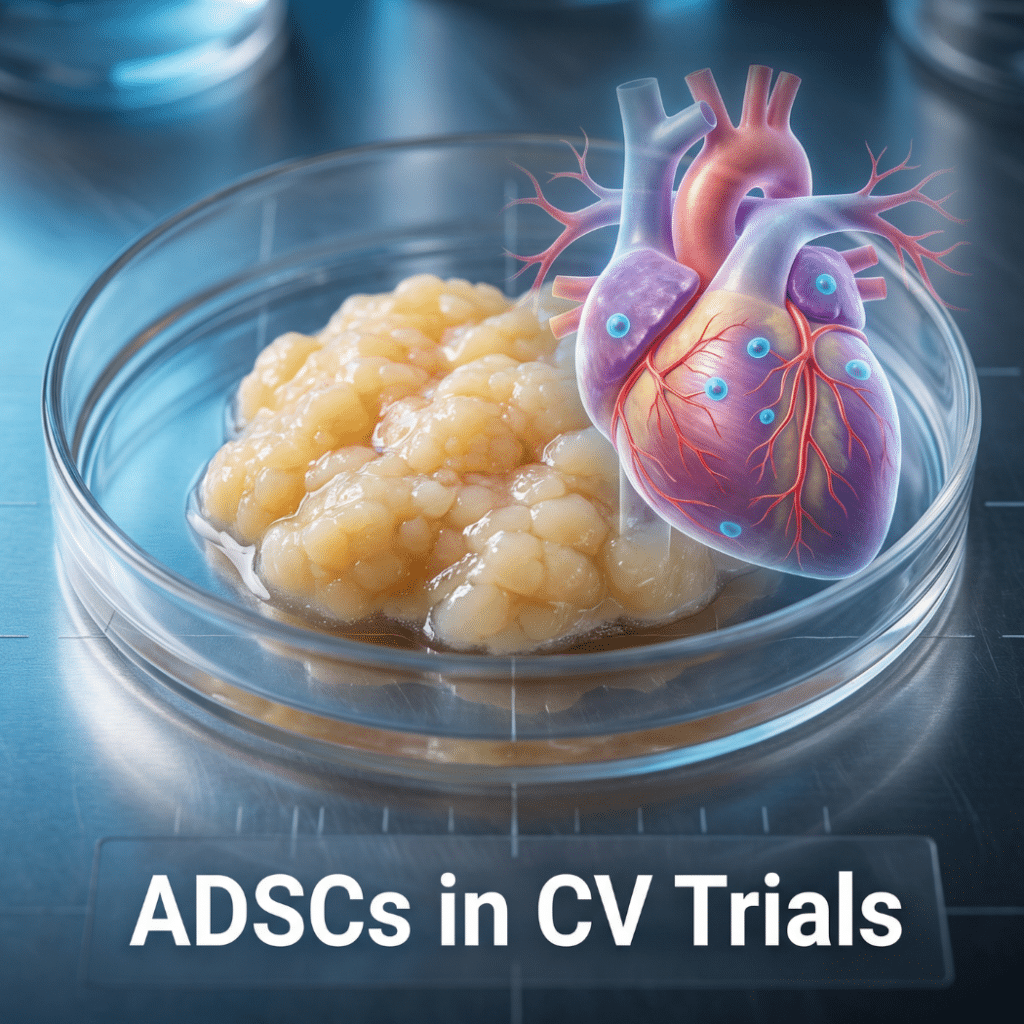
Researchers are studying whether adipose-derived cells might one day contribute to the treatment of certain cardiovascular conditions, but this work is still in the research phase and no products have been approved. If you have seen headlines about “fat stem cells healing the heart” and wondered whether those stories reflect real science or marketing, this guide is for you. The goal here is to explain what clinical trials are actually registered, what those trials have explored, and what the current state of the evidence does and does not support.
TLDR: Adipose-derived stem cells (ADSCs) and adipose-derived regenerative cells (ADRCs) are being studied in early-stage clinical trials for conditions including acute myocardial infarction, chronic ischemic cardiomyopathy, and heart failure. These trials are research, not standard treatment. Some early results have suggested possible signals worth investigating, but no ADSC-based therapy is approved for cardiovascular disease. Searching ClinicalTrials.gov gives you a real picture of what is being studied, not what is proven or available.
Important Disclaimer: Save My Fat does not provide FDA-approved treatments or cures for any disease or medical condition. No adipose-derived stem cell or regenerative cell therapy is FDA-approved to treat cardiovascular disease or any cardiac condition. This article summarizes research for educational purposes only and does not recommend any particular trial, product, or treatment approach. Patients must discuss all decisions about heart disease management, treatment, or research participation with a licensed cardiologist or relevant cardiac specialist.
Patients with chronic heart disease, and family members who help them research options, sometimes come across news stories or clinic websites describing how fat-derived stem cells might repair damaged heart tissue. The framing can sound transformative: cells from your own fat, repairing the heart that cannot heal itself. It is not surprising that people want to know whether this is real science or a marketing story.
The honest answer is that it is real science, but it is early-stage science, and the gap between a phase I safety trial and a standard-of-care treatment is substantial. Behind the headlines is a landscape of multiple clinical programs, different cell types, different delivery strategies, and preliminary findings that researchers themselves describe as promising rather than proven. That landscape is worth understanding accurately.
This guide covers why cardiologists have become interested in adipose-derived cells, what specific trial programs have investigated, what the published reviews of this research describe, how these cells are being delivered in cardiac studies, where exosome research fits in, and what all of this means for patients who are considering tissue banking or have questions about future cardiovascular applications.
Why Cardiologists Are Interested in Adipose-Derived Cells
Cardiovascular Disease and the Regenerative Problem
Ischemic heart disease and heart failure represent some of the most significant contributors to morbidity and mortality in the United States. When heart muscle is damaged by a heart attack or chronically deprived of oxygen due to coronary artery disease, cardiomyocytes (the muscle cells of the heart) are lost. Unlike the liver or skin, the heart has very limited capacity to regenerate those lost cells. Scar tissue forms where muscle was, reducing the heart’s mechanical function. For patients with reduced ejection fraction and heart failure, that functional deficit is the primary clinical problem, and current pharmacological and device-based therapies manage rather than reverse it.
This gap has motivated decades of research into whether cell-based interventions could encourage some degree of repair or functional preservation. Adipose-derived cells entered this research landscape as an attractive option because of their abundance, their accessibility, and the biological properties that distinguish them from other cell sources.
What ADSCs and ADRCs Bring to the Research Table
The interest in adipose-derived cells for cardiovascular research is not primarily about these cells becoming new heart muscle cells. Reviews summarized in the literature, including an overview of ADSCs in myocardial regeneration published at PMC5378017 and a broader cardiovascular review at PMC9350562, identify several mechanisms that researchers are studying. These include potential paracrine effects that may promote new blood vessel formation (angiogenesis), reduce inflammation in the injured myocardium, limit cardiomyocyte death (apoptosis), and modulate the remodeling process that follows myocardial injury.
It is worth being precise about terminology here. ADSCs (adipose-derived stem cells) typically refers to culture-expanded mesenchymal stromal cells derived from adipose tissue. ADRCs (adipose-derived regenerative cells) refers to the heterogeneous cell population obtained from freshly processed lipoaspirate without culture expansion, including ADSCs, endothelial progenitor cells, smooth muscle cells, and immune cells. Some cardiovascular trials have used ADRCs processed at the point of care; others have used culture-expanded ADSCs. These are related but distinct products with different regulatory profiles. For a broader explanation of what ADSCs are and how they are characterized, the patient’s guide to adipose-derived stem cells covers the foundational biology.
Autologous vs. Allogeneic Approaches in Cardiac Research
Most early cardiovascular trials used autologous approaches, where cells or regenerative cells were obtained from the patient’s own adipose tissue, processed, and returned to the same patient. This approach eliminates concerns about immune rejection but requires a liposuction procedure as part of the protocol.
More recently, allogeneic approaches using donor-sourced, standardized cell products have emerged in some heart failure programs. These allow for off-the-shelf manufacturing and may reach more patients, but they involve different regulatory and immunological considerations. The distinction matters for understanding both the trial design and what a future approved product might look like. For context on the clinical trials framework within which these programs operate, the guide to clinical trials for regenerative medicine explains how phase designations and regulatory pathways work in practice.
Key Clinical Trial Programs Using Adipose-Derived Cells in Heart Disease
This section reviews notable registered human trials in this field, organized by the cardiovascular context they studied. The goal is to illustrate the research landscape, not to recruit participants or imply that any of these trials established effective treatments. The trials described below are exemplars of program types, not a complete catalog of all registered studies.
Acute Myocardial Infarction: APOLLO and ADVANCE
The APOLLO trial was a randomized, double-blind, placebo-controlled phase I/IIa study that investigated intracoronary infusion of freshly isolated ADRCs in patients with ST-elevation myocardial infarction (STEMI, a type of heart attack caused by complete blockage of a coronary artery) who had already undergone percutaneous coronary intervention (PCI, the standard procedure to open blocked arteries). The trial evaluated whether delivering ADRCs directly into the treated coronary artery shortly after the heart attack was feasible and safe.
Published reports from APOLLO and its international follow-on ADVANCE program described the process of liposuction, point-of-care cell processing, and intracoronary infusion as technically feasible. The safety profile in the small initial cohorts did not raise major cell-related concerns. Some measures of left ventricular function and infarct size showed differences compared to placebo in certain analyses, but the reviews in PMC5378017 and PMC9350562 consistently note that larger, adequately powered trials are needed to determine whether those preliminary signals reflect a real treatment effect.
Chronic Ischemic Cardiomyopathy: PRECISE and ATHENA
The PRECISE trial (NCT00426868) was a randomized, placebo-controlled study investigating transendocardial injection of ADRCs, using specialized catheter-based delivery directly into heart muscle, in patients with refractory ischemic cardiomyopathy who were not candidates for revascularization. Reported outcomes included some measures suggesting preservation of left ventricular mass and modest improvements in myocardial perfusion and regional wall motion in some assessments. The published reviews note that the small sample size in PRECISE limits any conclusions about efficacy.
The ATHENA (NCT01556022) and ATHENA II programs studied intramyocardial ADRC delivery in patients with chronic myocardial ischemia, with safety and feasibility as primary objectives. These programs provided important early data on the tolerability of intramyocardial ADRC delivery and contributed to the evidence base for understanding adverse event profiles in this context. Across both PRECISE and ATHENA, the investigators consistently characterized the work as early-phase safety research.
Heart Failure and Non-Ischemic Cardiomyopathy
Several programs have investigated adipose-derived cells specifically in heart failure and non-ischemic cardiomyopathy (where the heart muscle is weakened by causes other than blocked arteries). Trials such as NCT01502501 explored the use of adipose-derived cells in non-ischemic cardiomyopathy patients, evaluating safety and exploratory functional endpoints. More recent programs, including allogeneic adipose-derived stromal cell trials for non-ischemic heart failure, have emerged as the field considers whether standardized, donor-sourced products might offer practical advantages for larger-scale development.
These heart failure programs remain in phase I or phase II, meaning safety and feasibility have been the primary focus and any functional endpoints are exploratory rather than definitive. A 2024 review in Frontiers in Cardiovascular Medicine summarizes the current state of this evidence with the consistent conclusion that results are preliminary and that the field needs larger, more controlled trials.
The common thread across all of these programs, as described in the published cardiovascular reviews, is that no product has emerged from any of them as a standard therapy. The research has been productive in establishing safety profiles in supervised settings and in identifying mechanisms worth further study. It has not established efficacy sufficient for FDA approval.
What the Reviews Say About ADSCs in Cardiovascular Research
Summary Across Human Cardiovascular Trials
Multiple reviews of ADSC and ADRC cardiovascular trials have reached broadly similar conclusions. Small trials have generally described the procedures as feasible and have not reported major cell-related adverse events in the supervised settings. Some measures of cardiac function, including ejection fraction (the percentage of blood pumped out of the heart with each beat), myocardial perfusion, and exercise capacity, have shown differences from placebo or baseline in some studies under some conditions. These findings appear in the reviews at PMC5378017, PMC9350562, and the Frontiers in Cardiovascular Medicine 2024 article as potential signals, not confirmed effects.
The consistency of the language across these reviews is notable: the terms used are “preliminary,” “promising,” “candidate therapy,” and “require larger trials.” None of the reviews describe ADSC or ADRC interventions as proven effective for any cardiovascular indication.
Mechanisms Still Being Studied
The biological mechanisms through which ADSCs might exert effects in a cardiac setting remain under active investigation. Preclinical work, reviewed in the exosome paper at PMC10600745, has explored how ADSC-derived exosomes (small membrane-bound vesicles carrying proteins and RNA) may modulate pathways involved in cardiomyocyte survival, including markers of apoptosis such as Bcl-2 and Bax in animal models. These preclinical findings are scientifically interesting but cannot be directly translated to predictions of human benefit. Animal models of heart failure differ from human heart failure in important ways, and effects observed in a mouse or rat model require rigorous human trial validation.
The prevailing view in the research community, reflected across the review literature, is that paracrine signaling rather than direct cardiomyocyte replacement is the more likely mechanism if these cells have any effect in the heart. That paracrine framing has shifted how newer trials are designed and has also motivated the exosome research described below.
How Trials Deliver Adipose-Derived Cells to the Heart
Delivery Routes in Cardiovascular Research
Different cardiovascular applications have used different cell delivery strategies, and the choice of delivery route affects both the trial design and the potential mechanism of action.
Intracoronary infusion delivers cells directly into a coronary artery, typically immediately after PCI in the acute myocardial infarction setting. This allows cells to be deposited in the region of the heart supplied by that artery. Transendocardial injection uses a specialized catheter guided by mapping technology to inject cells directly into targeted regions of the heart muscle from the inside. Intramyocardial injection, in surgical approaches, delivers cells directly to the heart wall during a cardiac procedure. Intravenous infusion, used in some heart failure programs, delivers cells systemically and relies on their natural migration and paracrine effects rather than direct cardiac targeting.
Fresh ADRCs vs. Culture-Expanded ADSCs
An important distinction across these trial programs is whether the product being used is freshly isolated ADRCs or culture-expanded ADSCs. Fresh ADRC programs, typified by APOLLO, PRECISE, and ATHENA, use lipoaspirate processed at the point of care, typically in a same-day procedure. Culture-expanded ADSC programs involve manufacturing cells over days to weeks before administration. Each approach has different regulatory implications: many of these products are studied under Investigational New Drug (IND) applications as biological drug products, not under the 361 HCT/P framework that governs intact tissue banking.
Safety Profiles Reported Across Programs
Across the supervised trial programs described above, published reports have generally not identified major cell-related adverse events, significant arrhythmia burdens attributable to cell delivery, or other serious cell-specific complications in the treated patients. Major adverse cardiac events (MACE) in the published early trials have not differed substantially from control groups. These are encouraging early safety signals, but the small sample sizes and limited follow-up periods in most programs mean that rarer adverse events may not have been detectable. Long-term follow-up data for most programs remain limited or unpublished.
Where ADSC Exosomes Fit in Cardiovascular Research
A Cell-Free Direction in Cardiac Research
As the field has increasingly recognized paracrine signaling as the probable primary mechanism of ADSC effects, some researchers have moved toward studying exosomes and extracellular vesicles derived from ADSCs as a potential cell-free alternative. The appeal of this approach is that exosomes might deliver paracrine cargo (proteins, RNA, lipids) without the logistics, regulatory complexity, and potential risks of live cell infusion.
Preclinical work reviewed at PMC10600745 has described ADSC-derived exosomes as having effects on cardiomyocyte survival pathways in animal heart failure models, including changes in markers associated with apoptosis regulation and mitochondrial function. These findings have generated scientific interest but represent animal model data, not human clinical evidence.
Human Evidence Status in 2026
As of April 2026, exosome-based cardiovascular interventions derived from ADSCs remain largely in preclinical research or very early clinical stages. No ADSC-derived exosome product is FDA-approved for any cardiovascular indication. The research trajectory is active and the scientific rationale is coherent, but the clinical evidence base for exosome cardiovascular applications is even less developed than the evidence base for ADSC cellular therapies, which is itself still preliminary.
How to Use ClinicalTrials.gov to Explore This Research
Searching for Cardiovascular ADSC Trials
ClinicalTrials.gov is the federal registry where all registered human studies in the United States must be listed. Patients who want to explore the cardiovascular ADSC research landscape directly can search using terms like “adipose stem cells ischemic cardiomyopathy,” “adipose-derived regenerative cells myocardial,” “adipose mesenchymal stem cells heart failure,” and filter by condition and trial phase. The registry allows sorting by recruitment status, which helps identify trials that are actively enrolling versus those that are completed, suspended, or withdrawn.
It is important to understand what a ClinicalTrials.gov listing does and does not mean. Registration means the trial exists and is publicly disclosed. It does not mean the FDA has reviewed or endorsed the study design, the product, or the outcomes. It does not mean the trial has produced positive results. Registration is a transparency requirement, not a quality certification.
What to Look for in a Specific Trial Listing
When you find a cardiovascular ADSC trial on ClinicalTrials.gov, the fields most relevant to evaluating it include the study phase (phase I or I/II studies are safety-focused; phase III studies are designed to confirm efficacy), the study design (randomized and placebo-controlled is more rigorous than open-label observational), the intervention description (which cell type, what source, what processing), the primary endpoint (safety versus a functional cardiac measure), and the sponsor type (academic medical center and NIH-funded studies typically operate under higher institutional oversight than commercially sponsored studies with no academic affiliation).
Red Flags Outside of Registered Trials
Patients should be cautious about any offering that describes itself as a clinical trial or research protocol but cannot provide a ClinicalTrials.gov identifier, charges patients full out-of-pocket costs for the investigational product, lacks IRB oversight documentation, and offers guarantees of benefit. These characteristics are inconsistent with legitimate clinical research.
What This Means for Patients Considering Tissue Banking
Banking vs. Treatment Today
Banking adipose tissue through a compliant tissue banking service like Save My Fat preserves the patient’s own tissue and its cellular components in cryogenic storage. This is categorically different from cardiovascular treatment, from enrollment in a cardiovascular stem cell trial, and from access to any of the programs described in this article. The complete guide to adipose tissue banking and the how banking works article explain what that banking process involves.
If future cardiovascular applications for autologous adipose-derived cells are eventually approved or available through clinical trials, those applications would likely involve specific manufacturing requirements, cell processing protocols, and quality specifications that may or may not be compatible with tissue banked through a consumer service. The regulatory pathway, product specifications, and trial eligibility criteria would determine whether and how previously banked tissue could be used.
No Guarantees of Cardiovascular Use
There is no guarantee that a future cardiovascular therapy will use banked adipose tissue, that any specific trial will accept tissue from a particular banking facility, or that the timeline for any such therapy aligns with any individual patient’s health circumstances. These outcomes depend on clinical science, regulatory decisions, and individual eligibility that no banking service can predict or control.
What banking can provide is a biological resource preserved under a compliant framework, available if a legitimate future opportunity arises and proves compatible with what was stored. For patients with cardiovascular disease who are interested in both preserving options and staying informed about research developments, the emerging research page on this site tracks the current landscape. Any cardiovascular decisions must be made in direct consultation with a cardiologist.
Frequently Asked Questions
Are adipose-derived stem cells or regenerative cells approved to treat heart disease?
No. As of April 2026, no ADSC-based or ADRC-based therapy is FDA-approved to treat any cardiovascular condition in the United States, including myocardial infarction, ischemic cardiomyopathy, or heart failure. The products described in this article are investigational, meaning they are being studied in registered clinical trials under INDs to determine whether they are safe and potentially effective. Being studied in a trial is not the same as being proven safe and effective, and it is not the same as being FDA-approved. Any clinic that claims otherwise is misrepresenting the regulatory status of the product.
What heart conditions are being studied with adipose-derived cells right now?
Registered trials and published programs have investigated conditions including acute ST-elevation myocardial infarction, chronic ischemic cardiomyopathy in patients not eligible for revascularization, ischemic heart failure with reduced ejection fraction, and non-ischemic cardiomyopathy. The research landscape spans multiple disease stages and delivery approaches. ClinicalTrials.gov is the most reliable way to identify currently enrolling studies, using search terms like “adipose stem cells heart failure” or “ADRC myocardial ischemia.”
Did trials like APOLLO, PRECISE, and ATHENA prove that these cells work for heart disease?
No. These trials were early-phase safety and feasibility studies. APOLLO was a phase I/IIa trial with a primary goal of assessing whether the procedure was safe and technically feasible. PRECISE and ATHENA were similarly designed to evaluate safety in supervised settings. Published reports described some preliminary functional signals in certain analyses, but all reviews of these programs consistently state that larger randomized trials are needed before any conclusions about efficacy can be drawn. These programs contributed important safety data and helped establish the research infrastructure for larger studies. They did not prove that ADSC or ADRC therapy is effective for heart disease.
What are the main risks of participating in a cardiovascular stem cell trial?
Cardiovascular cell therapy trials involve risks associated with the procedures used to collect and deliver the cells, including liposuction for collection and catheter-based procedures for intracardiac delivery. In the published early trials, serious cell-related adverse events were not frequently reported, but the small sample sizes and limited follow-up periods mean rarer risks may not have been detected. General risks in any research setting include unknown long-term effects of the investigational product. Any patient considering enrollment in a cardiovascular stem cell trial should discuss all known and unknown risks with their cardiologist before agreeing to participate.
Are exosomes from adipose-derived cells being researched for heart failure?
Yes, exosome and extracellular vesicle research from ADSCs is an active area of preclinical investigation for heart failure. Published preclinical work has described potential effects of ADSC-derived exosomes on cardiomyocyte survival pathways in animal models. As of 2026, human clinical data on exosome-based cardiovascular applications remains very limited. No ADSC-derived exosome product is FDA-approved for any cardiovascular indication, and clinical application in humans remains in very early stages.
If I bank my fat now, does that mean I can use it in a future heart trial?
Not automatically. Banking adipose tissue preserves your own cellular material for potential future use in an FDA-regulated pathway. Whether a future cardiovascular trial or therapy would be compatible with previously banked tissue depends entirely on the design of that trial, the manufacturing requirements of the specific product being studied, and individual eligibility criteria. Many current trials use fresh tissue processed as part of the trial protocol, not tissue banked separately in advance. Banking preserves an option. It does not create enrollment eligibility or access to any specific trial.
How can I tell if a study I find online is a real clinical trial?
Legitimate clinical trials are registered on ClinicalTrials.gov and have an NCT number that can be independently verified. They have IRB oversight by an independent ethics committee, an IND from the FDA authorizing clinical investigation of the product, a named sponsoring institution, and a primary research team with verifiable credentials. Participants are not typically charged for the investigational product itself. If a study lacks a ClinicalTrials.gov registration, cannot provide an NCT number, or charges patients full out-of-pocket cost for what it describes as research, it is not a registered clinical trial in the regulatory sense.
Where can I read more about cardiovascular trials using adipose-derived cells from reputable sources?
The best primary sources are ClinicalTrials.gov for trial registrations, PubMed and PubMed Central for peer-reviewed published findings, and the FDA website for information about regulatory status. Specific published reviews include the overview at PMC5378017, the broader cardiovascular review at PMC9350562, and the 2024 Frontiers in Cardiovascular Medicine article. For context on how trials work and how to evaluate what you read, the guide to clinical trials for regenerative medicine on this site provides a patient-accessible framework.
Key Takeaways and Next Steps
Cardiovascular research involving adipose-derived cells is active, scientifically grounded, and genuinely at the frontier of regenerative medicine. The trials described in this article represent real research programs conducted at academic medical centers with rigorous oversight. What they represent is not a proven treatment or an available therapy.
Save My Fat’s commitment is to give patients clear, source-backed information about where adipose-derived cells stand in cardiovascular research, rather than overstating what today’s science can deliver.
The practical picture for patients in 2026:
- ADSC and ADRC cardiovascular trials are early-stage programs primarily focused on safety and feasibility, with efficacy questions still open.
- No ADSC-based cardiac therapy is FDA-approved or a standard of care for any cardiovascular indication.
- ClinicalTrials.gov and peer-reviewed reviews are the reliable sources for tracking how this research develops.
- Banking adipose tissue preserves a biological resource within a regulated framework. It does not promise cardiovascular treatment.
- All cardiovascular decisions, including whether to participate in a research trial, must be made in direct consultation with a cardiologist.
To explore more about the banking process and the broader regenerative medicine research landscape, the complete guide to adipose tissue banking, the how banking works article, and the emerging research page are starting points. For patients exploring whether tissue banking might be relevant for themselves or a family member, the family page, pricing page, and providers page provide additional context. To learn more about who Save My Fat is and how the service is structured, the about page covers the company’s approach.
This article is for educational purposes only and does not constitute medical advice. Legal and medical review is required before publication. Please consult a licensed cardiologist or relevant specialist before making any decisions about heart disease treatment or research participation.
Related guide: the adipose stem cell clinical trials directory.
Last Updated: April 15, 2026