
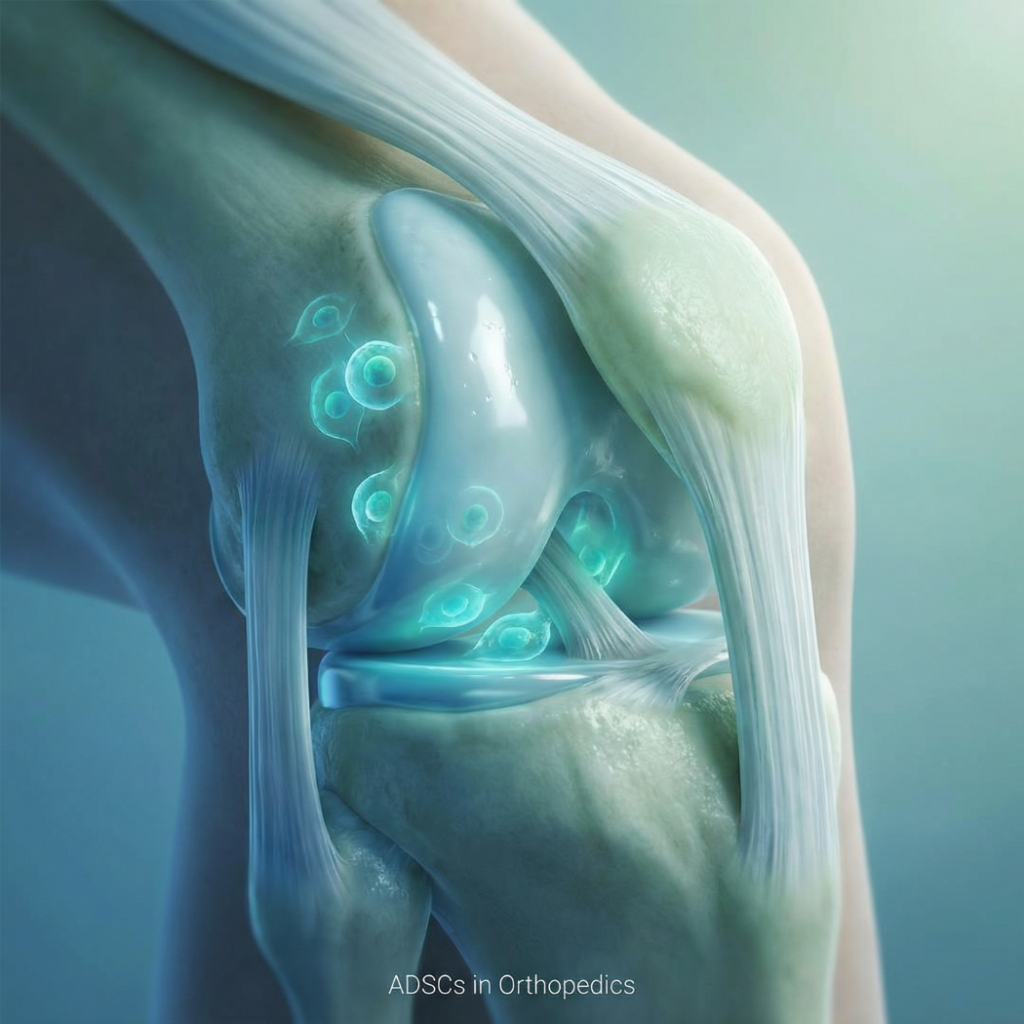
Adipose-derived stem cells are now part of almost every conversation about regenerative orthopedics, appearing in the marketing of pain clinics, in orthopedic surgery journals, and in the vocabulary patients bring to their appointments. Patients hear that fat-derived cells may reduce pain and help cartilage in osteoarthritis and sports injuries, and the claims range from carefully hedged research summaries to aggressive promises of cartilage regeneration and joint replacement avoidance. The science behind these cells is real and genuinely interesting, but the evidence base is still developing, and not all products marketed as “fat stem cell injections” are the same thing under the same regulatory framework.
TLDR: Adipose-derived stem cells, stromal vascular fraction, and adipose-derived regenerative cells have shown pain relief and some signs of cartilage improvement in certain knee osteoarthritis studies. These trials are generally small, use different processing methods, and often lack long-term comparative data against standard treatments. No adipose-derived cell injection is a guaranteed way to regrow cartilage or avoid joint replacement for any given patient. These approaches remain investigational or off-label for most indications, and tissue banking is not the same as being treated.
Important Disclaimer: Save My Fat does not provide joint injections, orthopedic surgery, or stem cell treatments of any kind for pain or joint disease. No adipose-derived stem cell or SVF product is FDA-approved as a disease-modifying treatment for knee osteoarthritis or cartilage repair. This article summarizes published research for educational purposes only and does not replace advice from an orthopedic surgeon or other licensed clinician. Patients must discuss all treatment options, including surgeries and injections, with their own medical team.
Imagine a patient who has been managing knee osteoarthritis for years with physical therapy, anti-inflammatory medications, and corticosteroid injections. The injections help for a few months, then wear off. Joint replacement has been discussed but feels premature. A pain clinic offers “fat stem cell injections” with promises of cartilage rebuilding and years of pain relief. The patient wants to know whether any of this is real.
The honest answer is nuanced. Clinical trials and published case series have explored adipose-derived cells in osteoarthritis, and results in some patient populations have been encouraging: reduced pain, improved function, and some imaging findings suggesting possible cartilage changes. At the same time, the evidence base is uneven, the products used across different studies are not interchangeable, and the regulatory status of these therapies ranges from formally investigated biologics to products whose clinical use is substantially ahead of the supporting evidence.
This guide covers how adipose-derived cells are obtained and what distinguishes the different product types, what knee osteoarthritis and cartilage trials have actually measured, what the data show and do not show about cartilage regeneration, where tendon and ligament research fits in, what the safety and regulatory picture looks like, and what it all means for patients considering tissue banking.
What Makes Adipose-Derived Cells Interesting in Orthopedics
Cell Types: ADSCs, SVF, and ADRCs
Three related but distinct terms appear across orthopedic research, and understanding the difference matters for interpreting what any given study is actually testing. For a broader explanation of ADSC biology, the patient’s guide to adipose-derived stem cells covers the foundational science.
ADSCs (adipose-derived stem cells) typically refers to mesenchymal stromal cells that have been isolated from adipose tissue and then expanded in cell culture, growing them to larger numbers over days to weeks before clinical use. These are regulated as biologic drug products by the FDA, requiring an IND for clinical investigation.
SVF (stromal vascular fraction) is the heterogeneous mix of cells obtained by processing lipoaspirate without culture expansion. It contains ADSCs alongside endothelial cells, pericytes, macrophages, and other cell types. Some SVF preparations are used same-day in what are called point-of-care procedures.
ADRCs (adipose-derived regenerative cells) is a term used most commonly for cell preparations from adipose tissue processed using specific commercial devices, sometimes under device clearances, without culture expansion. The regulatory classification of ADRCs depends heavily on how they are processed and what claims are made about their use.
Mechanisms in Joint Disease
The current scientific consensus is that adipose-derived cells act primarily through paracrine signaling rather than by directly becoming new cartilage. Published preclinical reviews describe these cells releasing cytokines, growth factors including TGF-beta and FGF, and extracellular vesicles that can modulate inflammation in the synovial joint environment, support the survival and function of resident chondrocytes (the cells that maintain cartilage), and influence the quality of extracellular matrix in the cartilage and subchondral bone.
In animal osteoarthritis models, interventions with MSC-based products have reduced synovial inflammation, decreased cartilage degradation markers, and improved joint function scores. These mechanisms are the scientific rationale for clinical investigation. They do not confirm that human patients with established OA will experience clinically meaningful cartilage regeneration.
How This Differs from PRP and Hyaluronic Acid
Platelet-rich plasma (PRP) is prepared by centrifuging the patient’s own blood to concentrate platelet-derived growth factors and injecting this into the joint. It does not contain live stem cells. Hyaluronic acid (HA) injections are viscosupplementation: adding a lubricating substance that may improve joint mechanics and reduce pain. Neither PRP nor HA has a plausible mechanism for substantially rebuilding cartilage.
Adipose-derived preparations introduce live cells and, in SVF, a complex biological mixture that may interact with joint tissues in more complex ways than growth factor delivery alone. This complexity is both the scientific appeal and the reason for additional regulatory scrutiny: these are not analogous to a pharmaceutical with a defined, reproducible chemical composition.
Knee Osteoarthritis: What Trials Actually Show
Knee osteoarthritis has been the most studied orthopedic application for adipose-derived cells, and the trial landscape spans early-phase single-arm studies, randomized placebo-controlled trials, and now some follow-on studies examining longer-term outcomes. The picture that emerges is one of consistent pain relief signals and variable structural findings, against a backdrop of methodological limitations that prevent drawing definitive conclusions.
Single-Arm and Early Phase Studies
Phase II trials, including the study registered as NCT03308006, have evaluated intra-articular ADSC injections following liposuction in patients with knee osteoarthritis. These studies typically enroll 12 to 30 participants, follow them for 6 to 18 months, and report outcomes on pain scales (VAS, Visual Analog Scale), function questionnaires (WOMAC, Western Ontario and McMaster Universities Osteoarthritis Index; KOOS, Knee Injury and Osteoarthritis Outcome Score), and MRI evaluation of cartilage. Most such studies have reported meaningful improvements in pain and function scores from baseline, with some patients showing MRI evidence of changes in cartilage appearance.
Without control groups, these findings cannot distinguish the effect of cell treatment from the natural variability of OA, the placebo effect of a procedure, or regression to the mean. They are hypothesis-generating, not confirmatory.
Randomized and Blinded Studies
More rigorous designs have been completed and reported. A triple-blind clinical study of allogeneic adipose-derived MSCs versus saline placebo in patients with idiopathic knee osteoarthritis enrolled 20 participants. The published report described statistically significant reductions in VAS pain scores in the ADSC-treated group compared with placebo at 6-month follow-up, and MRI findings showing increases in cartilage thickness at selected measurement locations in treated patients. Differences in overall KOOS domain scores or quality-of-life measures between the two groups were not statistically significant. The small sample size limits confidence in any single finding from this study.
The JOINTSTEM program, registered as NCT04821102 and NCT03990805, has evaluated autologous adipose-derived MSC products in randomized, placebo-controlled designs with arthroscopic evaluation as part of the endpoints. Published data from these studies describe clinically meaningful pain and function improvements in treated cohorts relative to placebo, and arthroscopic assessments in some participants showing improved cartilage appearance. Long-term structural disease modification, meaning whether these products change the overall OA disease course, remains under active investigation and has not been definitively established.
The ADIPOA program (NCT01585857) evaluated autologous adipose-derived MSCs in a dose-ranging study in knee OA and published data showing safety and some functional improvement without a clear dose-response relationship in the small cohorts studied. The larger follow-on trial, ADIPOA-2 (NCT02838069), a Phase 2b placebo-controlled study of culture-expanded autologous adipose-derived cells in mild to moderate knee osteoarthritis, did not meet its primary or secondary endpoints, so the ADIPOA program as a whole is not evidence of benefit.
SVF and ADRCs in OA
Trials combining SVF with PRP, including NCT05660824, have reported clinically significant improvements in pain and function scales at 6 to 12 months, along with MRI findings suggesting possible improvement in cartilage quality. Reviews of ADRC applications in regenerative orthopedics describe reduced pain and improved imaging scores across multiple studies, while consistently noting heterogeneity in cell doses, preparation devices, and outcome measures that makes cross-study comparison difficult.
The following table summarizes the major study types, their designs, key findings, and key limitations. These are research results from specific populations and should not be generalized to all patients with knee osteoarthritis.
| Study type | Design | Key findings | Key limitations |
|---|---|---|---|
| Single-arm ADSC knee OA | Phase II, no control group | Pain and function improved; some MRI cartilage changes | No control group; small sample size |
| Triple-blind allogeneic ADMSC | 20 patients, ADMSC vs saline | Lower VAS pain; focal MRI cartilage thickening | Very small; short follow-up; mixed functional data |
| JOINTSTEM randomized trials | Randomized, placebo-controlled, arthroscopy | Pain and function improved vs placebo; arthroscopy data | Long-term disease modification not yet established |
| SVF and ADRC OA studies | Prospective, some controlled | Pain and function better; possible cartilage quality gains | Variable protocols, cell doses, and endpoints across studies |
These are early-stage results from research settings, not established clinical standards.
What About Cartilage Regeneration?
Imaging and Arthroscopic Findings
Some knee OA and focal cartilage defect trials have reported imaging evidence that appears consistent with cartilage improvement. These include increased cartilage thickness at specific MRI measurement sites, improved MOCART scores (Magnetic Resonance Observation of Cartilage Repair Tissue, a standardized scoring system for cartilage repair quality), and arthroscopic observations of new tissue visible at previously damaged cartilage surfaces in some participants.
These are encouraging observations in specific patients at specific time points. They are not universal findings across all treated patients, and they do not confirm that adipose-derived cell injections reliably regenerate cartilage to the quality of native articular cartilage.
Disease Modification vs Symptom Relief
A careful reading of the orthopedic ADSC trial literature reveals a pattern: pain and function outcomes tend to show more consistent and statistically significant improvements than structural outcomes in the same trials. This is meaningful because osteoarthritis is ultimately a structural disease, and a treatment that reliably reduces pain but does not alter the underlying cartilage loss would be a symptomatic treatment, not a disease-modifying one.
Even in trials where MRI or arthroscopy shows structural improvement in some patients, it is not yet established whether these improvements translate to slower OA progression over years compared with standard care. Longer follow-up periods and comparative data against evidence-based treatments, including optimized medical management and total knee arthroplasty for appropriate candidates, are needed to answer those questions.
How Orthopedic Experts Interpret the Cartilage Data
Published reviews and meta-analyses, including the editorial review accessible at PMC11586737 and the 2019 regenerative orthopedics overview at PMC6627452, reach consistent conclusions: ADSC-based approaches for knee OA appear safe in supervised research settings, are associated with pain relief and some imaging signs of cartilage benefit in certain populations, and require larger, longer, rigorously controlled randomized trials before they can be considered disease-modifying treatments. The researchers who conduct these trials are appropriately careful in their conclusions, even when early results are encouraging.
Tendons, Ligaments, and Other Orthopedic Applications
Tendon and Ligament Uses Under Investigation
Orthopedic research into adipose-derived cells extends beyond knee OA. Small clinical series and pilot studies have explored ADSCs and SVF in rotator cuff tears, Achilles tendinopathy, plantar fasciitis, and partial anterior cruciate ligament injuries. These studies are generally smaller and less controlled than the knee OA literature, and most report outcomes over 3 to 12 months.
Common findings across tendon and ligament series include improved pain scores, patient-reported function, and in some cases MRI or ultrasound changes suggesting improved tendon quality or reduced lesion size. These are preliminary observations from heterogeneous patient populations using variable cell preparations, and they cannot be generalized to specific indications or used to recommend these approaches outside of research settings.
Cartilage Tissue Engineering and Focal Defects
Focal chondral defects, meaning localized full-thickness or partial-thickness cartilage damage from injury rather than diffuse OA, are another area of ADSC investigation. Researchers are studying ADSCs combined with scaffold materials, hydrogels, and three-dimensional bioprinted constructs to fill defects with repair tissue. Preclinical data consistently show that ADSCs can differentiate toward a chondrocyte-like phenotype under appropriate conditions and contribute to cartilage matrix formation in scaffold-supported environments. Clinical translation of these engineered cartilage approaches is at early stages.
Where These Applications Stand Today
Most tendon, ligament, and cartilage tissue engineering applications of adipose-derived cells remain in early clinical stages or in highly specialized academic and research settings. No adipose-derived product is an accepted standard treatment for tendon or ligament injuries in mainstream orthopedic practice. The emerging research page on this site tracks active areas across multiple ADSC research fields.
Safety and Regulatory Perspectives
Safety in Orthopedic Trials
Across the knee OA and orthopedic trials reviewed in the published literature, serious adverse events directly attributed to intra-articular ADSC, SVF, or ADRC injections have been uncommon. The most frequently reported side effects are transient pain, swelling, and stiffness at the injection site, typically resolving within days to a few weeks. No consistent pattern of serious immune reactions, joint infection, or ectopic tissue formation has emerged in the published series, though sample sizes are too small to detect rare adverse events reliably.
Clinical outcomes from regulated trial-grade preparations may not generalize to products offered through commercial clinics without equivalent manufacturing controls, adverse event monitoring, or regulatory oversight.
Regulatory Status: Biologic Drug vs Device
The regulatory classification of adipose-derived orthopedic products depends on how they are processed and what claims are made. Culture-expanded ADSCs, regardless of source, are regulated as biologic drug products by the FDA. They require an IND for clinical investigation and a BLA for approval. Many ADRC products and some SVF preparations that are enzymatically processed also fall under biologic drug regulation. Some micro-fragmented fat systems have received device clearances for specific surgical uses related to structural tissue support, but device clearance is not equivalent to drug approval and does not authorize marketing claims about treating OA as a disease. The FDA has issued warning letters and enforcement actions against clinics using adipose-derived products in ways that exceed permissible regulatory frameworks.
When Marketing Outpaces Evidence
The orthopedic regenerative medicine space has attracted significant commercial interest, and the marketing of adipose-derived joint injections often emphasizes early or incomplete results while omitting sample sizes, follow-up limitations, and the absence of comparative data against established treatments. Patients reading about “cartilage regeneration” in a clinic brochure are reading a presentation of research that is often more optimistic than the actual study conclusions support.
What This Means for Tissue Banking
Banking vs Ready-to-Use Cell Preparations
Banking adipose tissue stores frozen intact tissue for potential future use. It does not produce ready-to-inject ADSCs or SVF. Moving from frozen banked tissue to a clinical cell preparation would require a manufacturing step involving specific processing, quality testing, and in many cases regulatory authorization that goes well beyond the banking process. The complete guide to adipose tissue banking and the how banking works article explain the banking process in full.
Banking Does Not Guarantee Orthopedic Access or Outcomes
Banking does not guarantee eligibility for any future orthopedic trial or approved therapy. Future orthopedic biologics, if approved, would come with specific manufacturing requirements, quality specifications, and eligibility criteria defined by their clinical development program. Whether tissue banked today through a consumer service would satisfy those requirements depends on specifications that do not yet exist. Banking also does not promise that any future therapy would perform differently from established orthopedic treatments, or that joint replacement could be avoided.
Discussing Banking in an Orthopedic Context
Patients considering tissue banking because of knee OA, cartilage damage, or other joint concerns should understand that banking is a long-term preservation decision, not an alternative to current care. Current guideline-supported approaches including physical therapy, weight management, optimized pharmacological management, and surgery when clinically indicated should not be delayed or declined on the basis of a banking decision. For those interested in whether any registered orthopedic ADSC trial is currently enrolling, the guide to clinical trials for regenerative medicine explains how to evaluate and search for registered studies.
Frequently Asked Questions
Can adipose-derived stem cell injections cure my knee osteoarthritis?
No. No adipose-derived cell product is FDA-approved as a disease-modifying treatment for knee osteoarthritis in the United States. Trials in this area have reported pain relief and some imaging findings suggesting possible cartilage improvement in specific cohorts, but these are early-stage results from small studies that have not established whether these interventions change the overall course of OA over years. The appropriate treatment for knee OA depends on disease severity, patient health, and other factors, and must be decided in consultation with an orthopedic surgeon using current evidence-based guidelines.
Do knee OA studies show cartilage regrowth, or mainly pain relief?
Both have been reported, but pain relief tends to be more consistent across studies. Some randomized and single-arm trials have reported MRI changes suggesting cartilage thickness improvement or better cartilage quality at specific measurement sites, and some arthroscopy-based studies have reported visible improvement in cartilage surface appearance. These findings are in specific patients at specific time points. They do not mean that every patient receiving an ADSC injection experiences cartilage regeneration, and the long-term significance of these imaging changes for OA progression has not been established.
What is the difference between ADSCs, SVF, and ADRCs in joint injections?
ADSCs are culture-expanded mesenchymal stromal cells from adipose tissue, regulated as biologics. SVF is a heterogeneous mixture of cells obtained from lipoaspirate without culture expansion, containing ADSCs alongside other cell types. ADRCs is a term used for similar point-of-care preparations, often processed with specific devices. Each has a different regulatory classification, different cell composition, and a different clinical evidence base. These terms are sometimes used interchangeably in marketing but represent distinct product types. For a deeper explanation of ADSC biology and classification, the patient’s guide to adipose-derived stem cells provides the relevant detail.
Are adipose-derived cell injections safer or more effective than PRP or hyaluronic acid?
No head-to-head randomized controlled trials comparing adipose-derived cell preparations directly with PRP or hyaluronic acid in knee OA have produced results sufficient to establish superiority in either direction. Some observational studies suggest that adipose-derived preparations may produce larger or more durable pain relief than hyaluronic acid in selected patients, but these are not definitive comparative data. All three categories have different biological mechanisms, different regulatory frameworks, and different levels of clinical evidence. Any comparison should be made with an orthopedic specialist who knows the current literature.
What have randomized trials with adipose-derived cells in knee OA actually reported?
Randomized, placebo-controlled trials including the JOINTSTEM program and several smaller randomized studies have reported that adipose-derived cell injections produced greater improvements in pain and function scores than saline placebo at 6 to 12 months in their enrolled populations. Some of these trials also included arthroscopic or MRI evaluations showing possible structural improvements in treated patients. These are controlled trial findings, which are more informative than single-arm data, but the studies are still small, and longer-term comparative data against active standard treatments like total knee arthroplasty for appropriate patients are not yet available.
If I bank my fat now, can I use it later instead of a knee replacement?
Not automatically, and not necessarily at all. Banking preserves your tissue for potential future use if a regulated pathway becomes available. Whether any approved future orthopedic therapy would accept previously banked tissue from a consumer banking service depends on manufacturing requirements and clinical protocols that do not yet exist. More importantly, if your orthopedic team recommends total knee arthroplasty based on your current disease severity, quality of life, and failed conservative treatment, that recommendation is based on the evidence available today, and banking does not change the clinical logic of that recommendation. Orthopedic decisions should be made with an orthopedic surgeon, not deferred on the basis of speculative future options.
How can I tell if a clinic’s “stem cell” offer for joint pain is legitimate?
Ask for the ClinicalTrials.gov registration number (NCT number) for the specific protocol being offered, and verify it independently. Ask whether the FDA has issued an IND for the cell product being used. Ask whether the procedure is part of a registered, IRB-reviewed clinical study or is being offered as a commercial service outside of a trial. Ask the clinic to show you the published peer-reviewed studies that specifically support the product they are offering, not general studies of different cell preparations. Clinics that cannot provide these specifics are not operating within a legitimate research framework, regardless of how they describe their service.
Where can I read more about adipose-derived cells in orthopedics from reputable sources?
The editorial review accessible at PMC11586737 provides a focused overview of ADSCs in knee OA with attention to SVF versus culture-expanded distinctions. The 2019 regenerative orthopedics review at PMC6627452 provides broader mechanistic and clinical context. The JOINTSTEM trials at NCT04821102 and NCT03990805, the ADIPOA program at NCT01585857, and the SVF/PRP trial NCT05660824 are the most informative registered trials to follow on ClinicalTrials.gov.
Key Takeaways for People With Joint Pain
Living with knee osteoarthritis or chronic joint pain is genuinely difficult, and it is understandable to look for options that go beyond repeated injections with diminishing returns and a surgery that feels premature. The orthopedic regenerative medicine research field has produced real, interesting findings, and it deserves honest evaluation rather than either uncritical enthusiasm or reflexive dismissal.
Save My Fat’s goal is to describe what adipose-derived cells actually do in orthopedic research today, without overpromising or dismissing the early progress that has been made.
The current state of the evidence:
- Clinical trials show that adipose-derived cell approaches can reduce pain and improve function in some knee OA patients, including in randomized controlled designs.
- Imaging and arthroscopic data suggest possible cartilage improvement in specific settings for specific patients, but not guaranteed regeneration for everyone, and the long-term disease-modifying significance of these changes is not established.
- These treatments remain investigational or off-label for most indications and are not yet a standard, disease-modifying cure for osteoarthritis at any stage.
- Banking adipose tissue preserves a biological resource within a regulated framework. It does not replace guideline-supported orthopedic care, does not guarantee access to future biologic therapies, and does not provide a basis for delaying clinically indicated surgery.
Patients are encouraged to discuss all biologic options with their orthopedic specialist in the context of their specific OA severity, prior treatments, and overall health status. For more on the science of adipose-derived cells, the complete guide to adipose tissue banking, the how banking works article, and the emerging research page provide additional context. Service information including the pricing page, providers page, and information on banking for family members is available on this site. The about page describes who Save My Fat is.
This article is for educational purposes only and does not constitute medical or surgical advice. Please consult your orthopedic surgeon or licensed clinician before making any decisions about joint treatment.
About the author: Oscar Tellez is the founder and CEO of Save My Fat. He holds a Bachelor of Science in Exercise Science and Health Promotion from Florida Atlantic University. He has spent a decade in the regenerative medicine industry across product distribution, laboratory and vendor relationships, and provider training. He is not a licensed clinician, and this article is educational, not medical advice.
Related guide: the adipose stem cell clinical trials directory.
Last Updated: April 21, 2026