
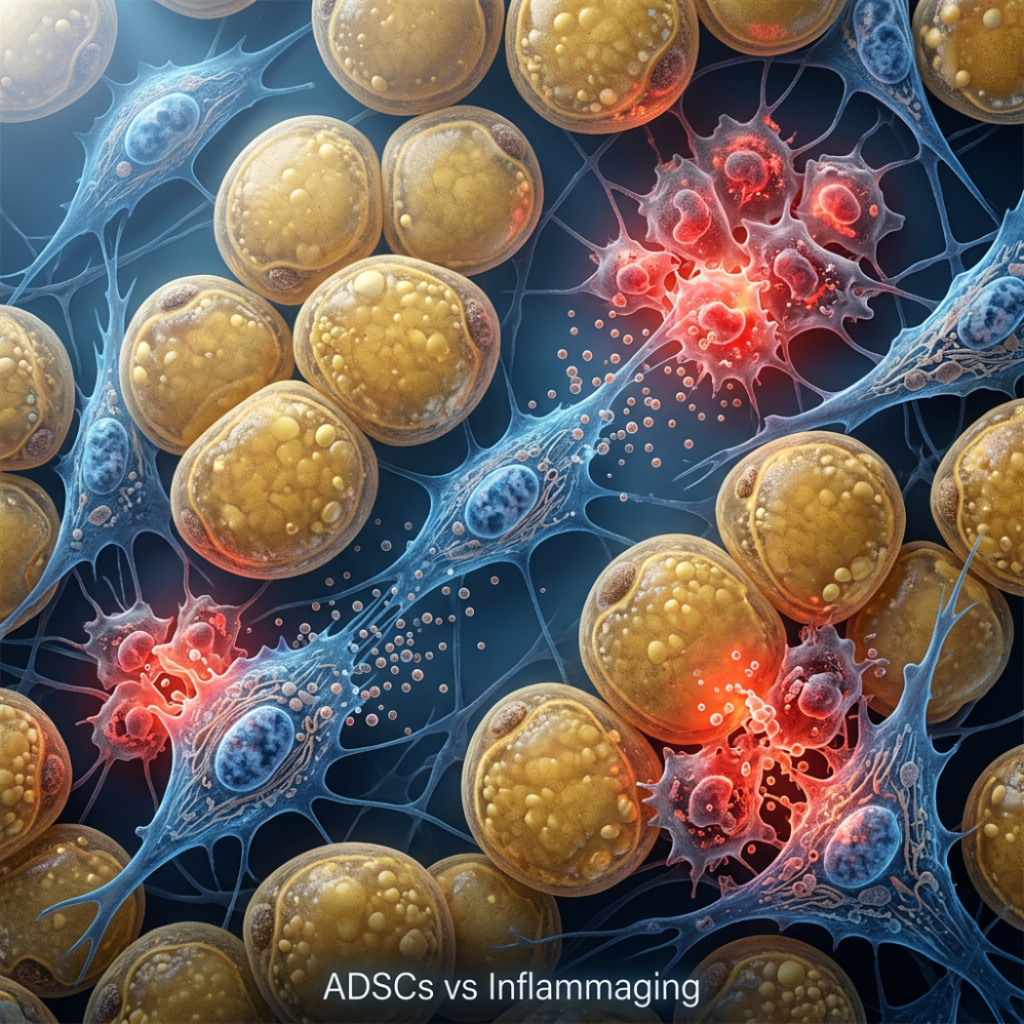
Adipose tissue and its resident stem cells do not stay the same over a lifetime. They feel the effects of aging, weight gain, and chronic low-grade inflammation in measurable ways that researchers have been documenting for more than a decade. The term “inflammaging” captures a phenomenon increasingly recognized as central to age-related decline: a persistent, low-intensity inflammatory state that rises with age and that adipose tissue actively contributes to. Researchers are now asking whether using younger or healthier adipose-derived cells or their secreted factors could help older tissues function better, and early animal and human data are beginning to map what that might mean.
TLDR: Adipose-derived stem cells lose some of their regenerative potential with age and obesity, and aged adipose tissue contributes to chronic low-grade inflammation. In animal studies, small extracellular vesicles from young ADSCs temporarily improved frailty scores, tissue health, and epigenetic age markers in old mice. Early human trials with mesenchymal stem cells in frailty and inflammaging have focused on safety and subtle functional changes. None of these approaches are proven anti-aging therapies for people, and banking tissue does not freeze the aging process or guarantee access to future longevity treatments.
Important Disclaimer: Save My Fat does not provide anti-aging treatments, longevity programs, or systemic stem cell infusions. No adipose-derived stem cell or exosome therapy is FDA-approved to slow or reverse normal human aging or frailty. This article summarizes published research on adipose-derived cells and aging for educational purposes only and does not constitute medical or legal advice. Patients should work with their primary care and specialty clinicians to manage age-related conditions and evaluate any research opportunities.
The phrase “stem cells from your own fat can reverse aging” has appeared in clinic marketing, wellness podcasts, and news summaries in ways that make it sound like a settled science rather than an early research hypothesis. For someone who wants to age well and feels the limitations of current medical options, that claim carries real emotional weight. It is also, in its marketing form, substantially ahead of what the evidence supports.
What is not ahead of the evidence is this: adipose tissue is genuinely involved in the biology of aging, ADSC function does change with age in ways that matter, and researchers are conducting real studies on whether cell-based approaches can influence frailty, inflammatory markers, and tissue function in older animals and humans. The story is worth understanding carefully, because there is genuine science here, and that science deserves to be read accurately rather than through the distorting lens of longevity marketing.
This guide covers how adipose tissue and ADSCs change with age, what cellular senescence means and why it matters, what a landmark mouse study of young ADSC extracellular vesicles actually showed, what early human trials in frailty and inflammaging are exploring, where cosmetic aging applications fit, and what banking can and cannot do for someone thinking about future options.
How Adipose Tissue and ADSCs Change with Age
Adipose as an Aging Organ
Adipose tissue is not static. Over a lifetime it shifts in distribution, moving from subcutaneous depots toward visceral fat in many people, and it changes structurally with increased fibrosis, enlarged and dysfunctional adipocytes, and altered patterns of adipokine secretion. Reviews of adipose tissue aging describe a tissue that progressively loses plasticity, meaning it becomes less able to healthily expand and remodel in response to energy demands, and more prone to generating pro-inflammatory signals.
The immune cell population within adipose tissue shifts with age toward more pro-inflammatory macrophages and altered T cell profiles, as described in a 2023 Frontiers in Immunology review on adipose tissue aging and the altered immune system. This immune shift is both a consequence and a driver of the chronic low-grade inflammation that characterizes older adipose tissue, and it affects the resident ADSC population directly.
ADSC Senescence and Functional Decline
The adipose-derived stem cells within aging tissue do not escape these changes. A 2024 review of senescence in adipose-derived stem cells, accessible at PubMed, describes how both chronological age and elevated body mass index are associated with measurable declines in ADSC proliferation rate, reduced differentiation capacity across adipogenic, osteogenic, and chondrogenic lineages, and higher expression of senescence markers. Senescent ADSCs, cells that have stopped dividing but remain metabolically active, produce what is called the senescence-associated secretory phenotype, or SASP, which includes pro-inflammatory molecules such as IL-6, IL-1 beta, and matrix metalloproteinases that can damage surrounding tissue and promote further senescence in neighboring cells.
This is not an abstract cellular detail. SASP factors secreted by senescent adipose progenitors can impair the differentiation of nearby healthy stem cells, disrupt the structural remodeling that healthy adipose tissue requires, and contribute to the chronic inflammation that affects metabolic function throughout the body. For a foundational explanation of what ADSCs are and how they are normally characterized, the patient’s guide to adipose-derived stem cells covers the underlying biology.
Inflammaging and the Adipose Connection
Inflammaging, a term coined by Italian gerontologist Claudio Franceschi, refers to the chronic, sterile, low-grade inflammatory state that rises systematically with age in humans. It is associated with elevated circulating levels of pro-inflammatory cytokines including IL-6, TNF-alpha, and C-reactive protein, and with increased risk for most major age-related diseases including cardiovascular disease, type 2 diabetes, dementia, and sarcopenia (age-related muscle loss).
Adipose tissue is a major contributor to inflammaging through multiple mechanisms: senescent adipocytes and ADSCs secreting SASP, pro-inflammatory adipokine imbalances (rising leptin, falling adiponectin), immune cell infiltration generating local and systemic cytokines, and the shift toward ectopic fat deposition in tissues where fat does not belong. This makes adipose tissue both a marker of inflammaging progression and a potential target for interventions aimed at reducing its inflammatory contribution.
What Cellular Senescence Means in Adipose Tissue
Cellular Senescence in Plain Language
Cellular senescence is a biological state in which a cell permanently exits the cell cycle, meaning it stops dividing, while remaining metabolically active and continuing to secrete a range of signaling molecules. Cells enter senescence in response to DNA damage, oxidative stress, oncogene activation, or the erosion of telomeres with age. Once a cell is senescent, it does not become cancerous because the cell cycle arrest blocks that, but it also cannot be recruited for tissue repair.
Senescent cells accumulate in adipose tissue and most other organs with age, obesity, radiation exposure, chemotherapy, and other stressors. The SASP they secrete can damage the extracellular matrix, inhibit neighboring stem cells from differentiating properly, and create a microenvironment that amplifies inflammation rather than resolving it.
Senescent ADSCs and Their Local Effects
In adipose tissue specifically, senescent adipose progenitors lose the ability to generate healthy new adipocytes, which means that when fat tissue needs to expand or remodel, the progenitor pool is less capable of responding appropriately. Instead, senescent progenitors promote fibrosis, accumulation of lipid droplets in non-adipose cells, and altered extracellular matrix composition. These changes contribute to insulin resistance, adipokine dysregulation, and the structural stiffening of adipose tissue that is visible in imaging studies of older, obese individuals.
The SASP produced by senescent ADSCs specifically includes IL-6, a central mediator of the systemic inflammaging phenotype. This means that senescent adipose tissue is not just locally dysfunctional; it is actively broadcasting pro-inflammatory signals that reach the liver, muscle, and brain.
Senescent Cells and Frailty
One of the most striking pieces of evidence connecting senescent cells to frailty came from animal transplant experiments in which small numbers of senescent cells were transplanted into young or middle-aged mice. These experiments demonstrated that even modest numbers of senescent cells were sufficient to cause frailty-like phenotypes, including reduced grip strength, decreased gait speed, and impaired physical endurance, in otherwise healthy animals. This supported a causal role for senescent cell accumulation in frailty rather than merely a correlative one, and it is part of what has motivated research into whether clearing or counteracting senescent cells can preserve function in aging organisms.
Young ADSC Small Extracellular Vesicles in Aging Animals
The Science Advances Study
A 2022 paper published in Science Advances, accessible at PMC9581480, asked a specific question: if you take small extracellular vesicles (sEVs, very small membrane-bound particles released by cells carrying proteins, RNAs, and lipids) from young ADSCs and give them to old mice, what happens?
Small extracellular vesicles from young adipose-derived stem cells were administered to old mice (approximately 24 months, corresponding roughly to late middle age in humans), and the animals were followed for 60 days. Compared with control animals, the sEV-treated old mice showed improved grip strength, better motor coordination, and reduced fatigue on physical performance tests at approximately 30 days after treatment. A lower proportion of sEV-treated mice were classified as frail when assessed using a multi-domain frailty index that evaluated characteristics including body weight, fur quality, mobility, and behavioral measures. Muscle and kidney tissue in treated mice showed structural changes consistent with reduced fat infiltration and better tissue organization.
Inflammation, Senescence, and Epigenetic Age
Beyond the physical performance findings, the Science Advances study examined biological markers in the treated animals. Treated old mice showed lower circulating and tissue levels of pro-inflammatory cytokines including IL-6 and IL-1 beta, and reduced markers of cellular senescence in muscle and kidney tissue. Metabolomic analysis suggested a shift in the metabolite profile of treated animals toward patterns more typical of younger animals. Perhaps most notably, treated animals showed a lower estimated epigenetic age in some tissues, using DNA methylation-based “clocks” that estimate biological age from molecular data.
These findings generated significant scientific interest because they pointed toward a mechanism by which young ADSC sEVs might communicate youthful signaling to older tissues, potentially through microRNA cargo and other bioactive molecules that influence gene expression in recipient cells.
What This Study Does and Does Not Mean for Humans
The Science Advances findings are striking and scientifically significant as animal model results. They do not demonstrate that similar approaches are safe, effective, or durable in humans. Several important caveats apply. The effects were time-limited: benefits began fading by approximately 60 days after a single treatment, suggesting that whatever signaling the sEVs provided was not permanently reprogramming the animals’ biology. The study used a controlled mouse model with defined cell preparations and characterized doses; translating this to human manufacturing is a substantial challenge. And mouse models of aging, while useful, do not replicate the full complexity of human aging biology, comorbidities, and pharmacology.
This study provides a scientifically motivated rationale for further investigation. It does not provide a basis for current clinical claims about ADSC exosome infusions reversing human aging.
MSC and ADSC Trials in Human Aging and Frailty
Mesenchymal Stem Cells in Frail Older Adults
Human clinical trials using mesenchymal stem cells in frailty and aging are in early stages. A review of MSC transplantation for age-related frailty, accessible at PMC8508885, summarizes the limited trial experience. A small randomized trial evaluated intravenous allogeneic MSCs (derived from bone marrow) in frail older adults and reported acceptable safety with modest improvements in physical performance measures including six-minute walk distance and functional assessment scores at short follow-up. A second frailty trial examined repeated MSC dosing and similarly focused on safety and functional exploratory endpoints, reporting no dose-limiting toxicities and some improvements in inflammatory markers.
A broader review of clinical trials using stem cells to address normal aging processes, accessible at PMC10116573, places these frailty trials in context: they are early-phase, small, and exploratory, and they establish feasibility and safety parameters rather than demonstrating clinical efficacy. No trial to date has established that MSC infusions extend lifespan, prevent frailty progression, or meaningfully modify the trajectory of aging in humans.
The Inflammaging Trial Using Autologous ADSCs
NCT05827757 is a registered phase I/II study specifically targeting inflammaging using autologous adipose-derived MSCs. The study design involves two intravenous doses of 100 million autologous ADSCs in participants identified as having an inflammaging phenotype, defined by elevated circulating levels of IL-6 and TNF-alpha. The primary outcomes focus on safety and tolerability, with secondary exploratory endpoints examining changes in inflammatory cytokine levels, frailty assessment scores, and functional measures.
This trial is notable because it specifically recruits participants based on an inflammaging biomarker profile rather than a specific disease diagnosis, reflecting the concept that chronic low-grade inflammation in aging individuals might be a target for cell-based intervention even before overt disease develops. As a phase I/II study, its design is primarily oriented toward characterizing the safety profile and generating preliminary signal data, not establishing clinical efficacy.
For context on how clinical trials are designed and what phase designations mean for interpreting early results, the guide to clinical trials for regenerative medicine provides accessible background.
ADSCs in Skin, Hair, and Cosmetic Aging
Skin Aging and Fat Grafting with SVF
Several registered trials have examined adipose-derived cells in the context of skin aging and facial rejuvenation. NCT03928444 and related protocols study autologous fat grafting enriched with SVF or ADSCs for facial tissue restoration, with endpoints including skin texture, elasticity, volume, and patient satisfaction. These studies report improvements in aesthetic outcomes and graft volume retention over follow-up periods of several months to a year, and they represent a legitimate area of clinical research.
These are local, tissue-level cosmetic applications. They address specific structural changes in the skin and facial tissue, which is a reasonable aesthetic goal. They do not represent systemic anti-aging interventions and should not be described as such.
Hair Loss and ADSC-Derived Preparations
NCT05296863 evaluates ADSC conditioned media, meaning the fluid in which ADSCs have been cultured, which contains secreted growth factors, applied to the scalp for male androgenetic alopecia (male-pattern hair loss). The study measures hair density and shaft thickness over the treatment period. Similar approaches using autologous SVF combined with PRP have been studied in additional registered trials. Early reports from these and similar protocols describe increased hair count and thickness in some participants, though the studies are small and the effects are localized.
These hair applications are cosmetic in nature. They exploit the growth factor-rich secretome of ADSCs to potentially stimulate hair follicle activity. Like the skin rejuvenation applications, they do not represent systemic age reversal.
Why Cosmetic Outcomes Are Different from Longevity
Improving the appearance of skin or stimulating hair growth addresses specific tissues and specific biological processes. It does not mean aging is reversed at the whole-body level, that lifespan is extended, or that the systemic inflammatory and metabolic changes of aging are meaningfully altered. Conflating localized cosmetic improvements with systemic anti-aging effects is a marketing practice, not a scientific conclusion, and patients evaluating clinical claims should make that distinction clearly.
Banking, Cell Quality, and Realistic Expectations
What Banking Does and Does Not Do for Aging
Banking adipose tissue through a compliant service preserves intact tissue at the biological state present at the time of collection. The complete guide to adipose tissue banking and the how banking works article explain what the banking process involves in full. Banking does not stop the banked cells from having the age-related characteristics they had at collection. It does not stop the rest of the body from continuing to age. And it does not guarantee access to any future anti-aging or frailty therapy.
What banking can do, in principle, is preserve tissue that was collected at a relatively younger biological state, before further age-related changes accumulate, for potential future use if regulated pathways eventually emerge that could use that tissue. This is a speculative rationale, and it is important to hold it as such.
Donor Age, Health, and Cell Quality
The published literature on ADSC aging consistently describes older and metabolically unhealthy donors as having ADSCs with more senescence markers, reduced proliferative capacity, and lower regenerative potential than younger, healthier donors. This is one of the biological arguments for banking at a younger age if the goal is preserving higher-quality cells for potential future use. It is also, importantly, a limitation on what autologous cell therapies derived from older donors can achieve, regardless of banking.
Whether the difference in ADSC quality between a 40-year-old donor and a 65-year-old donor is clinically meaningful for any specific future application remains unknown, because the applications themselves are not yet defined. This is a reasonable scientific consideration but not a guarantee of any outcome. The emerging research page on this site tracks where ADSC research is currently most active, including aging-related applications.
Banking as One Consideration, Not a Longevity Strategy
Banking can be understood as one option for preserving biological material in a regulated framework while the science of regenerative medicine continues to develop. It is not a substitute for the evidence-based strategies that most strongly support healthy aging, which include regular physical activity, quality nutrition, adequate sleep, social connection, preventive medical care, and management of modifiable risk factors for chronic disease. These are not consolation prizes compared with stem cell banking. They are, by far, the most robustly evidenced interventions available for promoting health across the adult lifespan.
Frequently Asked Questions
Do adipose-derived stem cells make people younger if they are infused?
No, not as currently understood or practiced. No FDA-approved infusion of adipose-derived stem cells exists for the purpose of reversing aging or extending lifespan. Small human trials using MSCs in frail older adults have reported early safety signals and modest exploratory improvements in some functional measures, but these are phase I and phase II studies without the scale, duration, or controls needed to demonstrate a genuine anti-aging effect. Animal data, including the young ADSC sEV mouse study, are scientifically interesting but cannot be directly translated into predictions of human outcomes without rigorous clinical research.
What does the mouse study with young ADSC small extracellular vesicles actually show?
A 2022 Science Advances study administered small extracellular vesicles from young adipose-derived stem cells to old mice and found improvements in physical performance, frailty classification, inflammatory markers, and estimated epigenetic age in some tissues at approximately 30 days after treatment, as reviewed at PMC9581480. The effects were time-limited, with benefits fading by about 60 days. The study provides a mechanistic proof of concept that sEV cargo from young ADSCs can influence aging-related biology in mice. It does not demonstrate that this approach is safe, effective, or durable in humans.
How do my fat stem cells change as I get older or gain weight?
Research reviewed in the 2024 senescence review at PubMed and related literature describes several consistent changes. With age, ADSCs show reduced proliferation, impaired differentiation across multiple lineages, higher expression of senescence markers, and a shift in secretion toward pro-inflammatory SASP factors. With obesity, similar dysfunctional changes occur alongside increased inflammation in the adipose microenvironment. Both age and excess body weight independently, and together, reduce ADSC regenerative capacity compared with lean, younger donors.
What is inflammaging and why is adipose tissue so involved in it?
Inflammaging is the chronic, low-grade, sterile inflammatory state that accumulates with age and is associated with elevated circulating levels of pro-inflammatory cytokines including IL-6, TNF-alpha, and CRP. Adipose tissue contributes to inflammaging through multiple pathways: senescent adipocytes and ADSCs produce SASP, the adipokine balance shifts toward pro-inflammatory patterns, immune cells within adipose tissue become more inflammatory, and ectopic fat deposition adds inflammation to tissues where fat does not belong. The Frontiers in Immunology review at frontiersin.org provides a detailed analysis of how the aging immune system and adipose tissue interact to sustain this inflammatory state.
Are there real clinical trials using stem cells to address frailty or aging?
Yes. Several registered trials have evaluated MSCs in frail older adults, as summarized in the frailty MSC review at PMC8508885 and the broader aging trial review at PMC10116573. The NCT05827757 trial specifically uses autologous adipose-derived MSCs in people with inflammaging defined by elevated cytokines. These are phase I and II studies focused on safety and preliminary signal detection. They are legitimate scientific endeavors, but none have established MSC or ADSC infusions as approved or clinically proven anti-aging treatments.
If I bank my fat now, does that freeze my stem cells at a younger age?
Cryopreservation does preserve the biological state of the cells at the time of collection, halting further biological aging while they are in frozen storage. In that narrow sense, cells banked today are preserved with the characteristics they have today, rather than continuing to accumulate senescence markers over the next decade. Whether the difference in cell quality between banking now and banking ten years from now is clinically meaningful for any specific future use depends on applications that are not yet defined. Banking is not a youth preservation strategy in the colloquial sense; it is preservation of a biological sample for potential future regulated use.
How can I tell if an “anti-aging” stem cell clinic is using real science?
Ask for the ClinicalTrials.gov registration number and verify it independently. Ask for the FDA IND number. Ask whether the product being offered has been studied in peer-reviewed human trials and request specific citations. Ask whether the procedure is being offered as a commercial service or as part of a registered, IRB-reviewed research study. Pay attention to whether the clinic discusses limitations, uncertainties, and the experimental nature of the approach, or whether it makes categorical claims about reversing aging or extending lifespan. Legitimate researchers describe their work with precision and acknowledge what remains unknown.
Where can I learn more about adipose-derived stem cells and aging from reputable sources?
The 2024 senescence review at PubMed covers ADSC senescence mechanisms in detail. The Frontiers in Immunology review at frontiersin.org addresses the immune system and adipose aging. The Science Advances sEV study at PMC9581480 is the most discussed animal study in this area. The registered trials NCT05827757, NCT03928444, and NCT05296863 on ClinicalTrials.gov represent examples of where human research is currently focused. The patient’s guide to adipose-derived stem cells on this site provides foundational biology context.
Key Takeaways for People Thinking About Aging and Future Options
Most people who are thinking seriously about aging are not looking for a simple answer. They want to understand what is real, what is exaggerated, and what they can actually do to protect their future health. The adipose-derived cell and inflammaging research space is one place where those questions are being asked rigorously, even as marketing in the same space often answers them irresponsibly.
Save My Fat’s commitment is to explain how adipose-derived cells fit into the science of aging without pretending that banking or any single intervention solves aging.
The honest picture:
- Adipose tissue and ADSCs clearly change with age and chronic inflammation in measurable ways that matter for tissue function and systemic inflammation.
- Animal studies with young ADSC sEVs show short-term improvements in frailty and tissue markers in old mice, which is scientifically encouraging but cannot be directly applied to human clinical practice.
- MSC and ADSC trials in frailty and inflammaging are small, early-phase, and exploratory. They are not approved anti-aging treatments and have not demonstrated clinically proven benefit in humans.
- Banking adipose tissue preserves a biological resource in a regulated framework for potential future use, but does not replace lifestyle, preventive care, and evidence-based medical management as the primary tools for healthy aging.
- Anti-aging marketing that promises rejuvenation from a single stem cell infusion is not reflecting what the current science supports.
Patients are encouraged to discuss realistic healthy aging strategies with their clinicians and to ask specifically about whether any clinical trial enrollment might be appropriate for their situation. For additional context, the what are clinical trials for regenerative medicine guide, the adipose tissue banking guide, and the how banking works article provide relevant background. Service information including the pricing page, providers page, and information on family banking is available on this site. The about page describes who Save My Fat is.
This article is for educational purposes only and does not constitute medical or legal advice. Please consult your primary care clinician and relevant specialists for all decisions about age-related health management and research participation.
About the author: Oscar Tellez is the founder and CEO of Save My Fat. He holds a Bachelor of Science in Exercise Science and Health Promotion from Florida Atlantic University. He has spent a decade in the regenerative medicine industry across product distribution, laboratory and vendor relationships, and provider training. He is not a licensed clinician, and this article is educational, not medical advice.
Related guide: longevity and tissue banking.
Last Updated: April 22, 2026