
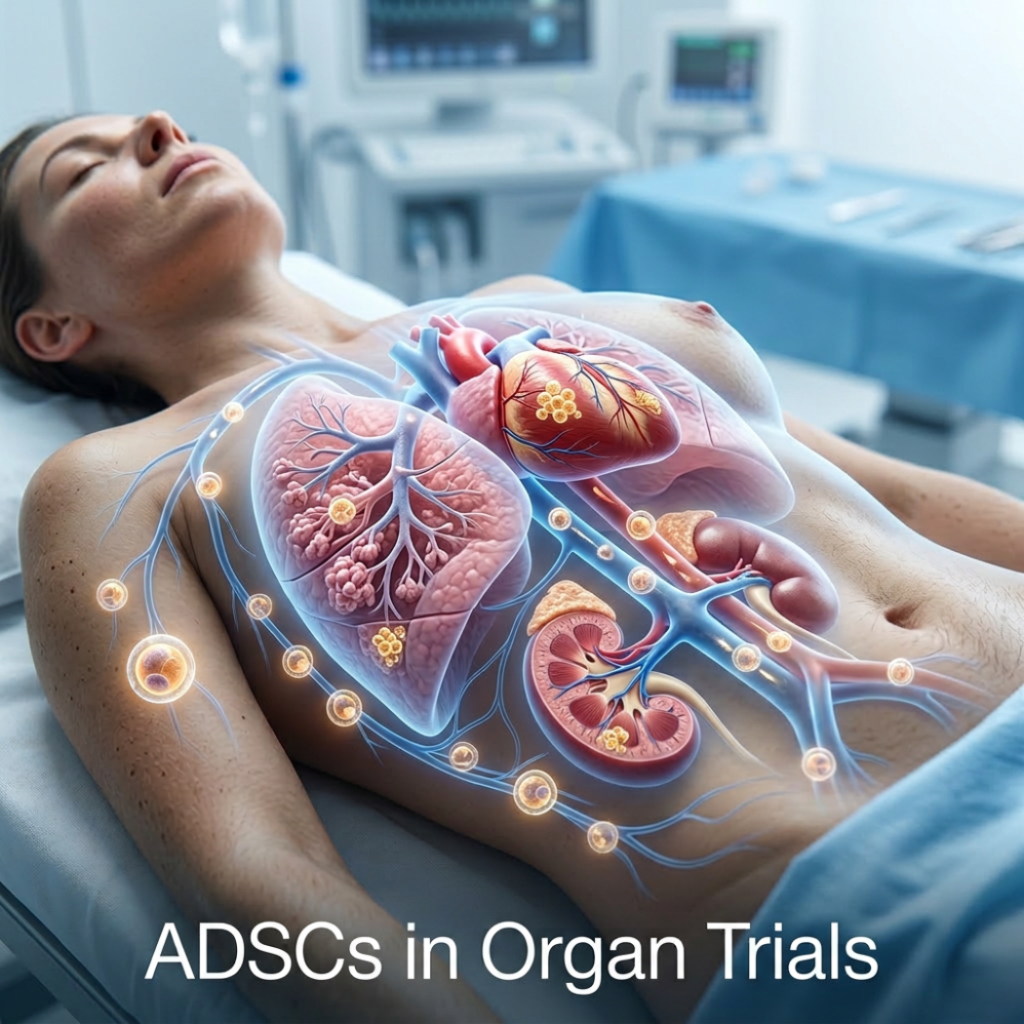
Adipose-derived stem cells and their secreted factors are being studied across multiple organ systems because they appear to modulate inflammation, reduce scarring, and support cell survival in animal models of chronic organ disease. Patients with kidney, heart, or lung conditions now encounter headlines about fat stem cell trials and case reports and want to understand what those studies have actually measured. This article walks through the organ-by-organ evidence, what the early human data show, and what they do not yet support in clinical practice.
TLDR: In chronic kidney disease, heart failure, and selected lung conditions, early trials of adipose-derived stem cell products have mostly focused on safety and small changes in markers such as proteinuria, ejection fraction, and lung function. Some studies report encouraging preliminary signals, but sample sizes are small and follow-up periods are limited. None of these approaches replace dialysis, transplant evaluation, guideline-directed heart failure therapy, or standard COPD and ARDS care. These are investigational options being studied, not approved treatments.
Important Disclaimer: Save My Fat does not treat chronic kidney disease, heart failure, COPD, ARDS, or any organ disease, and does not offer IV or intra-arterial adipose-derived stem cell therapies. No adipose-derived stem cell or exosome product is FDA-approved as a disease-modifying therapy for CKD, heart failure, or COPD in the United States. This article summarizes research for educational purposes only and does not constitute medical or legal advice. Patients should rely on their nephrologist, cardiologist, pulmonologist, or other relevant specialists for all treatment decisions and clinical trial evaluation.
A person with stage 3 chronic kidney disease reads a clinic advertisement promising that “fat stem cells can regenerate kidney tissue and stop progression to dialysis.” Someone with heart failure hears about a trial where adipose-derived cells reportedly improved cardiac function. A caregiver whose family member has severe COPD sees a news segment on exosome inhalation. In each case, the natural question is the same: is this real science, and does it apply to my situation?
The honest answer is that organ-focused research with adipose-derived stem cells and related products is real and growing, but it is also carefully regulated and substantially earlier in development than the commercial marketing in this space implies. Investigators at academic medical centers are running registered trials with defined protocols, independent ethics oversight, and regulatory authorization. What they are discovering is nuanced and genuinely worth understanding.
This guide covers why adipose-derived cells are scientifically interesting for kidney, heart, and lung applications, what the registered human trials have actually studied, what the emerging data from those trials suggest and do not prove, and what all of this means for patients thinking about tissue banking.
Why Adipose-Derived Cells Are Studied in Organ Disease
Shared Mechanisms Across Kidney, Heart, and Lung
The appeal of adipose-derived mesenchymal stem/stromal cells (AD-MSCs) across different organ systems is rooted in a set of biological properties that appear relevant regardless of which organ is damaged. Published preclinical reviews describe AD-MSCs and their secreted products as working primarily through paracrine mechanisms: releasing cytokines, growth factors, and extracellular vesicles (EVs, including exosomes) that influence the behavior of resident cells in damaged tissue rather than by physically replacing lost cells.
In organ disease contexts, these mechanisms include modulation of immune responses to reduce the chronic inflammation that drives fibrosis and organ failure, release of anti-apoptotic (cell death-preventing) factors that support the survival of stressed kidney tubular cells, cardiomyocytes, or alveolar cells, promotion of angiogenesis in ischemic tissue, and reduction of pro-fibrotic signaling that would otherwise continue scarring even after an acute injury resolves. These are biologically plausible and mechanistically coherent reasons to study these cells in kidney, heart, and lung disease. What they are not is proof of efficacy in humans. For foundational biology on what ADSCs are, the patient’s guide to adipose-derived stem cells provides that background.
Why Adipose-Derived Cells Are Used Rather Than Other Sources
Several MSC sources have been studied in organ disease, including bone marrow and umbilical cord tissue. Adipose tissue offers practical advantages: it is relatively abundant, accessible through minimally invasive liposuction procedures, and yields MSC populations that can be expanded to clinically relevant numbers. Reviews of organ-directed MSC research note that adipose-derived MSCs share the core properties of bone marrow MSCs, including the ability to produce anti-inflammatory and pro-survival paracrine factors, while being more accessible in sufficient quantities for clinical use.
Kidney Disease: CKD and Diabetic Nephropathy
What Early Pilot Trials in CKD Have Shown
The first human evidence that autologous adipose-derived MSCs could be safely administered to patients with chronic kidney disease (CKD, reduced kidney function measured by estimated glomerular filtration rate, or eGFR) came from a small pilot study published and accessible at PMC6577210. Seven patients with stage III to IV CKD received a single intravenous infusion of autologous expanded adipose tissue-derived MSCs on top of optimized standard medical therapy, and were followed for 12 months. The infusions were well tolerated with no treatment-related serious adverse events. Proteinuria (protein in the urine, a marker of kidney damage) decreased in most patients, and eGFR decline appeared to slow over the follow-up period compared with the year before treatment.
These are the kinds of findings that justify further study. They do not prove that AD-MSCs slow CKD progression, because the study had no control group. The same patients receiving standard care without any cells might have had a similar trajectory, and the improvements might reflect natural variation, more intensive medical management during the trial period, or other factors.
NCT01453816 is a registered trial evaluating the safety and effects of autologous adipose-derived stromal cells in renal failure, providing additional structured data on safety and kidney function markers. The primary contribution of these early kidney trials is establishing that the administration procedure is safe and tolerable, and that the direction of functional change in small groups is encouraging enough to warrant controlled investigation.
SVF and Diabetic Kidney Disease
NCT03939741 evaluates autologous SVF (stromal vascular fraction, the heterogeneous mixture of cells from processed lipoaspirate) in CKD stages 3 to 4, with primary endpoints focused on safety and changes in eGFR, creatinine, and proteinuria over 6 to 12 months. NCT03840343 takes a different delivery approach, using intra-arterial administration of autologous adipose-derived MSCs specifically in diabetic kidney disease (DKD, kidney damage from diabetes), with safety and eGFR trajectory as primary outcomes.
Diabetic kidney disease is a particularly important target because it is the leading cause of kidney failure in the United States, and current medications including SGLT2 inhibitors and renin-angiotensin blockade, while meaningful, do not prevent progression in all patients. The mechanistic rationale for AD-MSC therapy in DKD includes potential reduction of diabetic glomerular inflammation, support for tubular cell survival, and anti-fibrotic effects in the kidney interstitium.
Recent Allogeneic AD-MSC Data in CKD
A 2026 publication on the ELIXCYTE study, accessible at academic.oup.com/stcltm, provides the most rigorous human data available on allogeneic adipose-derived MSCs in CKD. The study reported good safety across dose groups in CKD patients, with slower eGFR decline and more stabilized proteinuria in lower-dose cohorts compared with higher-dose recipients and controls, suggesting a dose-dependent response window. The authors explicitly caution that larger, properly powered phase III trials are required before routine clinical use can be considered, and the paper characterizes the findings as preliminary signals that justify continued investigation.
Heart Disease: Ischemic Heart Disease and Heart Failure
Mechanisms in Cardiac Research
The biological rationale for AD-MSC therapy in cardiac conditions overlaps with the kidney rationale but has some specific cardiac dimensions. Preclinical work reviewed in the 2024 Frontiers in Cardiovascular Medicine article on application of adipose-derived stem cells in ischemic heart disease and a mechanistic exosome paper accessible at PMC10600745 describes effects in animal heart failure models including reduced cardiomyocyte apoptosis through modulation of Bax, caspase-3, and p53 signaling pathways, improved left ventricular ejection fraction (LVEF, the percentage of blood pumped out with each heartbeat), better stroke volume, increased ATP content suggesting improved mitochondrial energy production, and modulation of the local inflammatory environment that drives adverse cardiac remodeling after infarction.
These mechanisms are relevant to both ischemic heart disease (heart damage from blocked arteries) and non-ischemic heart failure (heart failure from other causes including cardiomyopathy). Most of the preclinical cardiac work uses animal models that produce encouraging results, with the same caveats about translation to humans that apply across all organ systems.
Clinical Trials in Heart Failure
NCT03092284 represents a category of randomized, placebo-controlled trials studying allogeneic adipose-derived MSCs in heart failure patients, using intracoronary or intravenous delivery routes and measuring LVEF, LV volumes, quality of life, and hospitalization rates as endpoints. Early results from studies in this design category have generally reported acceptable safety profiles, with modest improvements in LVEF and functional class measures in treated groups compared with placebo in some analyses. Sample sizes in these published reports remain small enough that these differences cannot be taken as definitive.
The cardiovascular ADSC trial landscape was reviewed in more detail in a prior article in this series on adipose-derived stem cells in cardiovascular research, which covers the specific APOLLO, PRECISE, and ATHENA programs that have been reported for ischemic heart disease applications.
Intramyocardial and Ischemic Applications
For ischemic heart disease specifically, AD-MSC and ADRC products have been studied in chronic ischemia patients who have no remaining options for surgical revascularization. In these patients, trials evaluating intramyocardial (directly into heart muscle via catheter) delivery have reported small improvements in regional wall motion, myocardial perfusion, and global cardiac function. Reviews of these programs characterize the ADSC contribution as potentially additive to optimal medical therapy, not as a replacement for PCI (percutaneous coronary intervention) or bypass surgery when those are appropriate options.
Phase I and II designs in cardiac trials have prioritized demonstrating that the administration procedures are safe and that functional signals warrant larger controlled trials. That evidence base is accumulating, but phase III cardiac trials with AD-MSC products have not yet produced the definitive efficacy data needed for FDA approval of any specific product.
Lung Disease: COPD, ARDS, and Lung Injury
COPD and Adipose-Derived Cell Approaches
Chronic obstructive pulmonary disease (COPD) involves progressive airflow limitation from chronic inflammation and structural destruction of alveoli (air sacs). In animal COPD models, MSC administration has been associated with reduced pulmonary inflammation, improved alveolar architecture, and better lung function measurements. The PMC5864644 review of stem cell therapies for COPD places these preclinical findings in context and describes the early human MSC trial experience, which has generally focused on safety in phase I settings.
A published case report accessible at Wiley Online Library describes an individual COPD patient who received autologous adipose-derived stem cell infusions and reported subjective symptom improvement and some spirometric (lung function test) changes over follow-up. This is a single uncontrolled case and cannot establish a treatment effect, but it represents part of the clinical experience that has motivated more structured investigation.
Standard of care for COPD remains inhaled bronchodilators, inhaled corticosteroids, pulmonary rehabilitation, smoking cessation, and oxygen therapy where indicated. Any ADSC-based approach should be understood as an experimental adjunct under formal trial conditions, not as an alternative to these established interventions.
ARDS and MSC Exosome Protocols
Acute respiratory distress syndrome (ARDS) is a severe, life-threatening form of lung injury characterized by widespread inflammation, alveolar flooding, and hypoxemia. It can arise from pneumonia, sepsis, aspiration, or trauma. MSC therapy for ARDS has been studied because of the cells’ potential to reduce alveolar inflammatory cytokines, improve alveolar fluid clearance, and support barrier function in the injured lung.
Protocols such as NCT02097641 and NCT04348435 have evaluated allogeneic MSCs in ARDS and severe viral lung injury, with primary endpoints focused on safety and tolerability rather than mortality, given the early stage of investigation. Published early-phase results from related MSC ARDS programs describe acceptable safety profiles without major cell-related adverse events, and exploratory endpoint data suggesting possible reduction in some inflammatory markers. No MSC-based ARDS therapy has demonstrated mortality benefit in an adequately powered randomized trial.
NCT04313647 represents a different direction: aerosolized exosomes derived from allogeneic adipose-derived MSCs administered by inhalation to healthy volunteers, specifically to establish the safety and tolerance of the delivery route before moving to patient populations. This type of study illustrates the careful, step-by-step process that responsible development of cell-based lung therapies requires.
Where Lung Trials Stand as of April 2026
For both COPD and ARDS, adipose-derived MSC and exosome approaches remain in safety-oriented and exploratory efficacy stages. No ADSC-based or exosome-based product is an approved component of COPD or ARDS treatment guidelines. The clinical trial trajectory in lung disease is generally behind the kidney and cardiac fields, reflecting both the complexity of lung biology and the logistical challenges of delivering cells or vesicles to injured lung tissue reliably.
What Organ Trials Mean for Patients
Safety So Far
Across the kidney, heart, and lung trials reviewed here, the consistent finding is that adipose-derived cell products, whether autologous SVF, expanded autologous ADSCs, or allogeneic products, have generally been well tolerated in the supervised trial settings. Infusion-related events such as transient fever, chills, headache, and mild injection-site discomfort are the most commonly reported adverse events. Serious adverse events thought to be directly caused by the cell products are uncommon in the published literature, though all published studies caution that long-term safety data are limited and that continued monitoring is necessary.
As with all investigational products, the safety profile established in rigorous trial conditions with careful patient screening may not generalize to commercial settings with less oversight.
Efficacy Signals and Their Limits
In kidney trials, some studies report reduced proteinuria and slower eGFR decline in treated patients, but open-label designs and small numbers limit confidence that these effects are caused by the cells rather than other factors. In heart failure, changes in LVEF and functional class are modest in the published trials and vary considerably across studies. In lung disease, symptom improvements and spirometric changes appear in some case reports and early series, but are not established across controlled populations. The honest summary is that these signals justify continued rigorous investigation. They do not justify clinical adoption outside of trials.
Standard Care Comes First
This point deserves emphasis because the marketing environment in this space often implies otherwise. For CKD, standard care includes blood pressure management, RAAS (renin-angiotensin-aldosterone system) blockade, SGLT2 inhibitors where appropriate, and timely dialysis or transplant referral when indicated. For heart failure, guideline-directed medical therapy including ACE inhibitors, beta-blockers, aldosterone antagonists, and SGLT2 inhibitors has strong mortality evidence. For COPD, bronchodilators, inhaled steroids, and pulmonary rehabilitation are evidence-based. Any cell therapy is an experimental adjunct being studied alongside these foundations, not an alternative to them.
Tissue Banking and Organ Disease
What Banking Involves in This Context
Commercial tissue banking stores intact adipose tissue in cryogenic preservation for potential future use. The complete guide to adipose tissue banking and the how banking works article explain what that process involves in detail. Banking is not the same as having a supply of injectable MSCs ready for kidney, heart, or lung therapy.
The trials described in this article use cell preparations manufactured under formal cGMP (current Good Manufacturing Practice) protocols with defined lot release criteria, specific cell doses, and quality testing at each manufacturing step. Whether tissue banked through a consumer banking service could be used as starting material for any of these manufacturing processes depends entirely on the specific manufacturing requirements of each product, most of which are not yet defined in a finalized commercial form.
No Guaranteed Access or Benefit
Banking does not guarantee that a patient can enroll in a kidney, heart, or lung cell therapy trial in the future. Trial enrollment depends on eligibility criteria, trial availability, geographic proximity to trial sites, and clinical characteristics that a banking decision has no influence over. Banking does not guarantee that any future approved therapy will exist for a specific organ condition at a specific disease stage, or that regulators and trial sponsors will accept material from a given banking facility. These outcomes depend on scientific progress, regulatory decisions, and individual circumstances that no banking service can determine in advance.
For patients interested in whether any registered organ-focused trial might be appropriate, the guide to clinical trials for regenerative medicine provides a practical framework for evaluating those opportunities. The emerging research page tracks where ADSC research is currently most active across organ systems.
Discussing This with Organ Specialists
Patients with CKD, heart failure, or lung disease who are interested in cell therapy research should bring that interest directly to their nephrologist, cardiologist, or pulmonologist. Those specialists can evaluate whether any registered trial is appropriate for the patient’s specific condition and stage, how a research study would interact with existing treatment plans, and whether any commercial offer the patient has encountered represents legitimate research or unregulated marketing. Organ specialists are the right people to make these assessments, not banking services or clinic marketing materials.
Frequently Asked Questions
Can adipose-derived stem cells cure chronic kidney disease or reverse diabetic kidney damage?
No. No adipose-derived stem cell or SVF product is FDA-approved to treat, cure, or reverse CKD or diabetic kidney disease in the United States. Early human trials have reported that AD-MSC infusions in CKD patients appear safe and are associated with some changes in proteinuria and eGFR trajectory in small, uncontrolled studies. The most rigorous recent data, from the ELIXCYTE program accessible at academic.oup.com/stcltm, describes preliminary signals in CKD that require larger phase III trials before any clinical conclusions can be drawn.
What have small clinical trials with adipose-derived stem cells in CKD actually shown?
The 2019 pilot study at PMC6577210 enrolled seven CKD patients, reported no serious cell-related adverse events over 12 months, and described decreased proteinuria and apparent slowing of eGFR decline. Registered trials including NCT01453816, NCT03939741, and NCT03840343 have evaluated safety and kidney function markers in CKD and diabetic kidney disease patients. These are small, early-phase studies demonstrating that the intervention is safe and that some functional signals appear worth pursuing in larger controlled trials.
How are adipose-derived stem cells being studied in heart failure and ischemic heart disease?
Randomized, placebo-controlled trials using allogeneic or autologous AD-MSC products by intracoronary or intravenous routes have measured LVEF, LV volumes, functional class, and hospitalization as endpoints. Early results describe modest LVEF and functional improvements in treated groups compared with placebo, with acceptable safety profiles. The mechanistic framework for these effects, including reduced cardiomyocyte apoptosis and anti-inflammatory signaling, is described in the Frontiers review at frontiersin.org and the exosome mechanism paper at PMC10600745.
Are there real trials using adipose-derived cells or exosomes in COPD or ARDS?
Yes. Published case reports and registered trials have examined ADSC and MSC therapies in COPD and ARDS. A case report accessible at Wiley Online Library describes a single COPD patient experience. ARDS protocols including NCT02097641 and NCT04348435 have evaluated allogeneic MSCs in severe lung injury settings. NCT04313647 is a first-in-human safety study of inhaled adipose-derived MSC exosomes in healthy volunteers. These are early-phase studies designed primarily to establish safety parameters for further research, not to demonstrate efficacy.
What are the main risks of organ-focused stem cell therapies based on current data?
Published phase I and II trials in kidney, heart, and lung applications have generally not identified major cell-related serious adverse events. Infusion-related reactions including transient fever, chills, and mild discomfort are the most common adverse events reported. Long-term safety surveillance, including monitoring for immune reactions, ectopic tissue formation, and effects on tumor risk, remains limited because most studies have short follow-up. Products available outside of registered trials lack the manufacturing controls, safety monitoring, and regulatory oversight of trial-grade preparations, which is an additional risk consideration.
If I bank my fat now, does that mean I can use those cells later instead of dialysis or heart failure medications?
No. Banking preserves your tissue but does not produce injectable cells or exosomes, does not provide any current organ protection, and does not create eligibility for or access to any future organ therapy. Dialysis, transplant evaluation, and guideline-directed medications for heart failure and kidney disease are evidence-based interventions that should not be delayed or discontinued on the basis of having banked tissue. Any future use of banked tissue for organ disease would require a separate regulatory and clinical pathway that does not currently exist in finalized form for these indications.
How can I tell whether a kidney, heart, or lung stem cell offer is a legitimate clinical trial?
Ask for the ClinicalTrials.gov registration number (NCT number) and verify it independently. Ask for the FDA IND number for the cell product. Ask whether the study has IRB approval and who the independent oversight body is. Ask whether participation involves any cost for the cell product itself (legitimate research typically covers product costs). Ask for specific peer-reviewed publications supporting the specific product being offered. Clinics that cannot provide all of these are not conducting registered, regulated research, regardless of how their services are described.
Where can I learn more about organ-focused adipose-derived stem cell trials from reputable sources?
ClinicalTrials.gov is the authoritative registry for registered human studies. The ELIXCYTE CKD trial publication at academic.oup.com/stcltm is the most current rigorous human kidney data. The Frontiers cardiovascular review at frontiersin.org covers the cardiac field. The COPD stem cell therapy review at PMC5864644 covers the lung field. The guide to clinical trials for regenerative medicine on this site explains how to evaluate any specific trial listing.
Key Takeaways for Patients With Organ Disease
Living with kidney, heart, or lung disease requires significant ongoing management, and it is understandable that patients track new research directions closely. The organ-focused ADSC research field represents genuine scientific progress worth understanding, presented here with the limitations it actually has rather than the certainty it is sometimes marketed with.
Save My Fat’s job is to translate organ-directed adipose stem cell research into clear language, without promising outcomes that current data cannot support.
The honest picture:
- AD-MSCs and related products have shown anti-inflammatory and protective effects in animal models, and early human trials in kidney, heart, and lung applications have generally reported acceptable safety profiles.
- Kidney studies describe some encouraging changes in proteinuria and eGFR trajectory; heart failure studies report modest functional improvements; lung studies are primarily at safety stages. All are preliminary.
- No adipose-derived cell therapy is a proven disease-modifying treatment for CKD, heart failure, or COPD and ARDS today.
- Banking adipose tissue preserves a biological resource in a regulated framework, but does not replace or defer standard organ disease management.
Patients are encouraged to bring questions about cell therapy research directly to their organ specialist, who can evaluate whether any registered trial is appropriate for their specific clinical situation. For more context on the banking process and the broader research landscape, the adipose tissue banking guide, the how banking works article, and the emerging research page are starting points. Service information including pricing, providers, and family banking is available on the site. The about page describes who Save My Fat is.
This article is for educational purposes only and does not constitute medical or legal advice. Please consult your organ specialist before making any decisions about organ disease management or research participation.
About the author: Oscar Tellez is the founder and CEO of Save My Fat. He holds a Bachelor of Science in Exercise Science and Health Promotion from Florida Atlantic University. He has spent a decade in the regenerative medicine industry across product distribution, laboratory and vendor relationships, and provider training. He is not a licensed clinician, and this article is educational, not medical advice.
Related guide: the adipose stem cell clinical trials directory.
Last Updated: April 23, 2026