
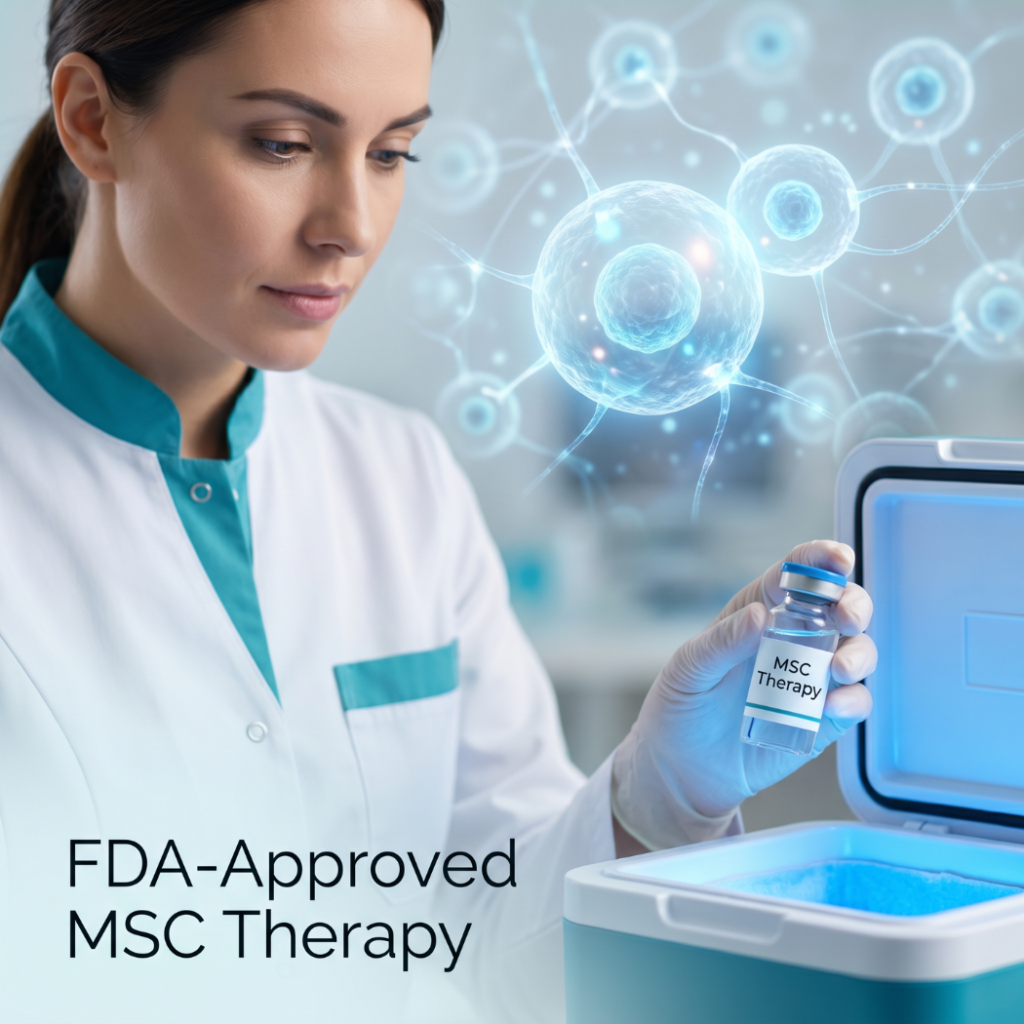
In December 2024, the FDA approved Ryoncil (remestemcel-L-rknd), making it the first mesenchymal stem cell product to complete the full FDA approval pathway. For physicians evaluating whether the stem cell field is scientifically and regulatorily credible, this approval is the clearest available answer. It does not mean that adipose-derived cell therapies are currently approved for any condition. It does mean the FDA has now demonstrated it will approve MSC-based products when the clinical evidence supports it.
TLDR: Ryoncil (remestemcel-L-rknd), an allogeneic bone-marrow-derived MSC therapy developed by Mesoblast, received FDA approval in December 2024 for steroid-refractory acute graft-versus-host disease in pediatric patients. It is the first MSC product to complete the full FDA approval pathway including Phase 3 trial and BLA. For physicians in the regenerative medicine space, this approval establishes that MSC-based therapies can and do navigate the FDA process, setting the precedent for the ADSC pipeline behind it.
Important Disclaimer: Save My Fat does not provide FDA-approved treatments or cures for any disease. Ryoncil is an allogeneic bone-marrow-derived MSC product and is not related to adipose tissue banking, Save My Fat, or any service provided in partnership with a U.S.-based tissue bank. Banking adipose tissue does not guarantee eligibility, access, or clinical benefit from any future therapy, clinical trial, or medical program. All content is for educational purposes only and does not constitute medical advice.
When physicians evaluate the stem cell field, one of the first questions is whether the FDA has ever approved anything in this category. Until December 2024, the honest answer was no, not at the full Biologics License Application level. Plenty of cell therapy products had cleared 510(k), plenty of trials were underway, and plenty of companies claimed FDA compliance in their marketing. But no mesenchymal stem cell product had completed the full approval pathway. That changed.
In December 2024, the FDA approved Ryoncil. This is not a minor regulatory footnote. It is the first time the agency responsible for approving every pharmaceutical and biologic in clinical use determined that an MSC-based therapeutic met its standards for safety and efficacy. The pathway it cleared, IND to Phase 1 to Phase 2 to Phase 3 to BLA, is the same pathway every drug and biologic must navigate. The field cleared it.
For physicians deciding whether to engage with the banking space, this approval changes the frame. Banking is not a bet on a field that has never produced an approved product. It is a bet on a field that has now produced one, with an active pipeline of more than 400 clinical trials behind it. This post explains what Ryoncil is, what it took to get there, and what the approval means for a physician evaluating banking today.
What Ryoncil Is
The Product
Ryoncil (remestemcel-L-rknd) is an allogeneic, bone-marrow-derived mesenchymal stromal cell therapy developed by Mesoblast. It is administered intravenously and works through immunomodulatory mechanisms: suppression of inflammatory cytokines, modulation of T-cell and dendritic cell activity, and reduction of the cytokine storm that drives steroid-refractory acute graft-versus-host disease. The approval is documented in the FDA’s approved cellular and gene therapy products database.
The Indication
Ryoncil is approved for the treatment of steroid-refractory acute graft-versus-host disease (aGvHD) in pediatric patients aged two months and older. Steroid-refractory aGvHD is a life-threatening immune complication that occurs after allogeneic hematopoietic stem cell transplantation, when the donor immune cells attack the recipient’s tissues. Standard steroid therapy fails in a significant proportion of pediatric cases, leaving those patients with very limited treatment options. Ryoncil’s pivotal trial is registered at NCT02336230 on ClinicalTrials.gov.
The Pivotal Trial
The FDA approval was supported by a Phase 3 multicenter trial in pediatric patients with steroid-refractory acute graft-versus-host disease. The trial’s primary endpoint was Day 28 overall response rate. This is the evidence base that cleared the BLA: a registered, multicenter, prospective trial with a predefined primary endpoint conducted under FDA oversight. The 2018 MSC clinical review from Galipeau and Sensebe in Cell Stem Cell provides the broader context for how MSC therapies have navigated clinical development, including the specific challenges in graft-versus-host disease that Ryoncil’s trial had to address.
What This Approval Is Not
Precision matters here. Ryoncil’s approval does not translate into an approval of banking or any adipose-derived product, and the post will not read that way.
Ryoncil is an allogeneic product sourced from a donor rather than the patient’s own cells. It is bone-marrow-derived, not adipose-derived. It is approved for one specific pediatric indication (steroid-refractory acute graft-versus-host disease) administered in transplant-center settings. It is not related to Save My Fat’s banking service or the tissue bank’s processing model. Nothing about Ryoncil’s approval changes what a banking patient can or cannot do with their preserved cells.
What the approval is not: an approval of adipose-derived cell therapies, an approval of autologous banking or any banking-derived treatment, evidence that any specific future ADSC therapy will be approved, or a signal that patients can currently access stem cell treatments for conditions outside Ryoncil’s indication. The Save My Fat overview of mesenchymal stem cells walks through how different MSC sources compare, and the patient-facing introduction to adipose-derived stem cells gives patients a baseline reference.
What This Approval Does Mean
The Regulatory Pathway Is Open
Before December 2024, a common objection to the MSC field was that no product had ever navigated the FDA’s full approval process. That objection is no longer available. The pathway is open. The FDA has demonstrated it will approve an MSC-based product when the Phase 3 evidence supports it. The question for the ADSC pipeline is not whether the FDA will approve such products. It is when the Phase 3 data for specific indications becomes strong enough to support a BLA. Banking operates under 21 CFR Part 1271 Section 361 HCT/P regulations, which is a separate framework from the Section 351 pathway Ryoncil navigated, but the scientific credibility signal cuts across both.
The Mechanism of Action Is Validated at the BLA Level
Ryoncil’s approval validates MSC immunomodulatory mechanisms at the highest level of FDA scrutiny. The same immunomodulatory and paracrine signaling properties that drove Ryoncil’s efficacy in graft-versus-host disease, suppression of pro-inflammatory cytokines, T-cell modulation, and promotion of tissue repair signaling, are the same mechanisms under investigation in ADSC trials for autoimmune conditions, joint disease, and neurological applications. The 2019 MSC biology review from Pittenger and colleagues in npj Regenerative Medicine describes these mechanisms in depth, and the 2006 ISCT minimal criteria from Dominici and colleagues remains the reference standard for how MSCs are defined across the research base. The Save My Fat overview of autoimmune and inflammatory research covers the trial landscape across those indications.
The Precedent Accelerates the Pipeline
FDA approvals do not exist in isolation. The regulatory precedent, the manufacturing standards, the safety data, and the clinical trial infrastructure built around Ryoncil all inform the development of subsequent MSC products. Regulatory agencies learn from each approval. Developers learn from the trial design that succeeded. The path behind the first approval is navigated more efficiently by those who follow. The ADSC trial pipeline on ClinicalTrials.gov includes more than 450 registered studies, roughly 80 to 150 of them currently active, and independent market research firms project double-digit annual growth in the adipose-derived stem cell market through 2033.
Banking Is Building the Asset Before the Approvals Arrive
The patient who banks today is banking ahead of the next approvals, not after them. If an ADSC-based therapy for osteoarthritis clears Phase 3 and receives FDA approval in four or five years, the patient who banked at forty-five has autologous cells preserved from when they were forty-five. The patient who waits for approval before banking has cells from whatever age they are then. The Save My Fat resource on long-term cryopreservation explains how storage arrests biological aging at the point of collection. For the banking-curious patient, Ryoncil’s approval is not a reason to wait, and it is not a reason to rush. It is a reason to have the banking conversation with your physician.
What This Means for Physicians Specifically
The Credibility Conversation Gets Easier
A physician who offers or discusses banking can now point to a concrete, documented fact. The FDA approved an MSC product in December 2024 after a completed Phase 3 trial. That fact changes the patient conversation. It changes the conversation with skeptical colleagues. It changes the physician’s own internal frame for what they are offering. The approval sits in a public FDA database and is independently verifiable, which is exactly the kind of anchor a physician wants when engaging a skeptical audience.
The Compliance Framework Remains Unchanged
Ryoncil’s approval does not change the regulatory framework for banking. Banking is still governed by FDA Section 361 HCT/P regulations. The provider’s obligations, harvest procedure, informed consent, chain-of-custody documentation, are unchanged. The approval validates the field. It does not modify the rules under which banking operates. The Save My Fat guides to FDA regulations for adipose tissue and 21 CFR Part 1271 cover the regulatory framework in physician-appropriate depth.
The Pipeline Context for Patient Conversations
Physicians can now situate banking within a coherent pipeline story. The field has produced its first FDA-approved product. More than 400 ADSC trials are active. Autologous banking preserves a patient’s cells for the treatments coming through that pipeline. This is a cleaner, more credible narrative than “the science is promising.” The Save My Fat resources on finding legitimate clinical trials and expanded access programs give patients reference material for the downstream pathways.
Frequently Asked Questions
Is Ryoncil available for my patients now?
Ryoncil is approved for steroid-refractory acute graft-versus-host disease in pediatric patients aged two months and older. It is an allogeneic therapy administered in transplant-center contexts. It is not a therapy available for general adult conditions and is not related to Save My Fat’s banking service or any adipose-derived product.
Does Ryoncil’s approval mean ADSC therapies are next?
Ryoncil’s approval establishes the regulatory precedent that MSC-based products can clear the full FDA pathway. It does not guarantee or predict approval timelines for specific ADSC applications. Those depend on the Phase 3 trial results in each indication. The active ADSC trial pipeline includes more than 400 registered studies, and banking today preserves cells ahead of whatever approvals those studies ultimately support.
How do I explain Ryoncil to a patient who asks about it?
Ryoncil is the first FDA-approved mesenchymal stem cell product. It is approved for a specific pediatric immune condition after allogeneic bone marrow transplant. It is not the same as adipose tissue banking. What it demonstrates is that the FDA will approve MSC-based therapies when Phase 3 evidence supports them, and the ADSC pipeline is building that evidence across multiple indications. The Save My Fat overview of mesenchymal stem cells is a useful patient handoff for this conversation.
Does this approval change what I can say to patients about the future of their banked cells?
No. Banking does not guarantee future access to any therapy, including any future ADSC-based therapy. What banking does is preserve the patient’s cells at their current biological quality for whatever FDA-regulated pathways become available. The Ryoncil approval supports the scientific credibility of those pathways. It does not create a specific promise for any individual patient. Save My Fat’s overview of informed consent in regenerative medicine covers the compliant framing for patient conversations.
Key Takeaways
In December 2024, the FDA approved Ryoncil (remestemcel-L-rknd), the first-ever FDA-approved mesenchymal stem cell product, for steroid-refractory acute graft-versus-host disease in pediatric patients. The approval followed a completed Phase 3 multicenter trial and cleared the full Biologics License Application pathway that every drug and biologic in clinical use must navigate.
Ryoncil is an allogeneic, bone-marrow-derived product. It is not an adipose-derived product, it is not an autologous product, and it is not related to adipose tissue banking in any operational or regulatory sense. Precision on this point is important, because the approval does not automatically translate to any other indication or any other cell source.
What the approval does establish is that the FDA will approve MSC-based products when Phase 3 evidence supports them. The regulatory pathway for the cell class is now demonstrably open, which resolves one of the most common objections to the field and reframes the ADSC pipeline from a speculative bet to a pipeline operating inside a regulatory framework that has now produced a first approval.
The MSC immunomodulatory mechanisms validated by Ryoncil’s approval are the same mechanisms under investigation in ADSC trials for autoimmune disease, joint disease, and neurological conditions. The trial design, manufacturing standards, and safety evidence accumulated around Ryoncil also inform how subsequent MSC products navigate the FDA process.
For physicians offering banking, Ryoncil’s approval is a credibility anchor for patient and colleague conversations about the scientific legitimacy of the field. Banking still operates under Section 361 HCT/P regulations, unchanged by this approval, but the physician now has a concrete, documented fact to cite when the credibility of the broader field is questioned.
Want to Be Part of What Comes Next?
Before contacting Save My Fat: adipose tissue banking is a preservation service for potential future use in FDA-regulated pathways, not a treatment or a guarantee of access to any specific clinical trial, therapy, or product. Ryoncil is not related to banking, and no adipose-derived product is FDA-approved for general disease treatment. Banking cannot be represented to patients as a treatment pathway or as a guaranteed route to any future therapy.
The field has produced its first approval. The pipeline has more than 450 registered trials. The patients who bank today are preserving their cells ahead of the treatments coming through that pipeline, not after them. Save My Fat partner providers are building the clinical relationships now that will matter when those approvals arrive.
To review the full program structure, visit the provider program overview. To begin onboarding as a partner, visit the partner sign-up page.
Save My Fat works with a U.S.-based tissue bank for laboratory processing and storage. Save My Fat does not provide medical treatments, clinical trial enrollment, or Expanded Access services.
This article is for educational purposes only and does not constitute medical or legal advice. Please consult your own licensed healthcare provider before making any decisions about treatment or research participation.
About the author: Oscar Tellez is the founder and CEO of Save My Fat. He holds a Bachelor of Science in Exercise Science and Health Promotion from Florida Atlantic University. He has spent a decade in the regenerative medicine industry across product distribution, laboratory and vendor relationships, and provider training. He is not a licensed clinician, and this article is educational, not medical advice.
Related guide: FDA regulation of adipose tissue and stem cells.