
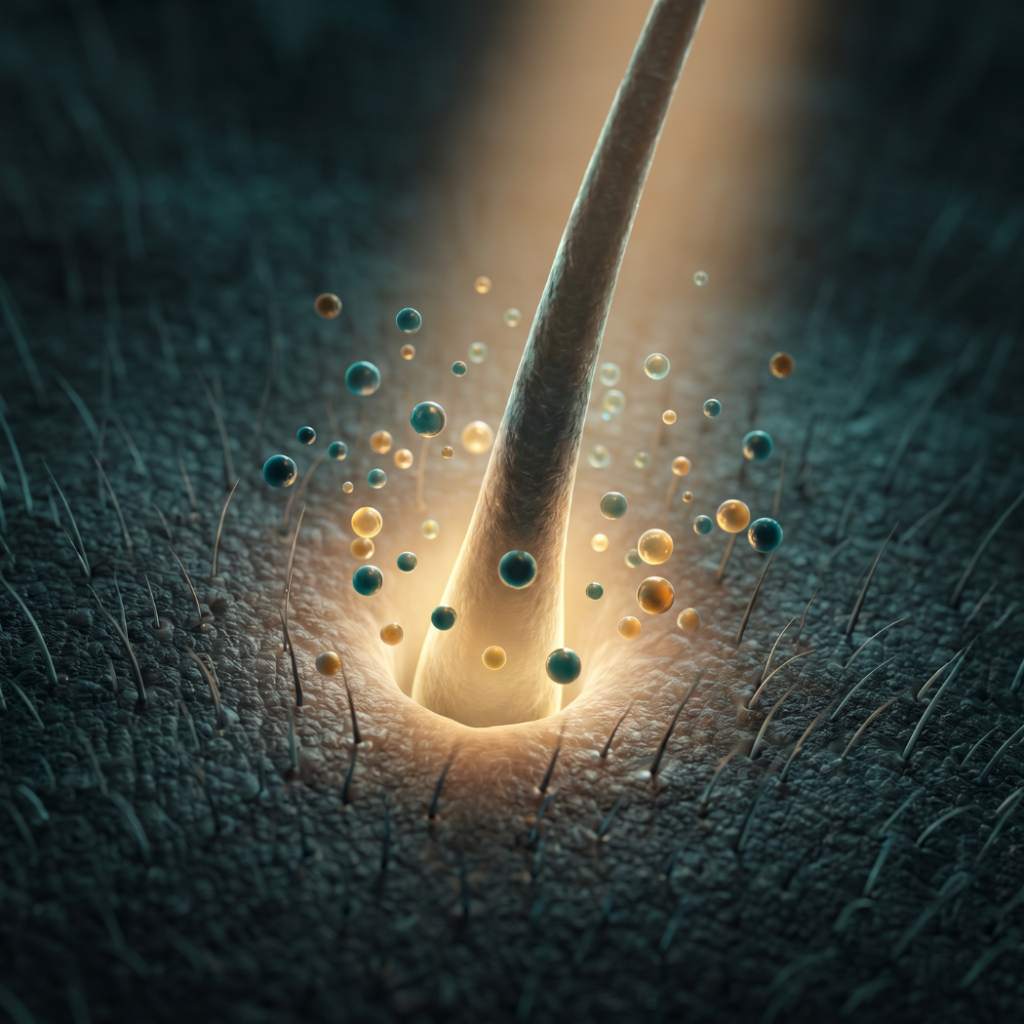
Hair loss research has drawn attention to adipose-derived stem cells, and patients searching for options often come across the connection between fat-derived cells and the hair follicle. The practical questions are reasonable: what is the science actually studying, and does banking adipose tissue have anything to do with future hair restoration? This guide walks through what the research shows, framed around a patient’s decision rather than any promise that banking grows hair.
TLDR: Adipose-derived stem cells and the signaling molecules they release are being studied in early, mostly small clinical trials for a possible role in hair density, often alongside or compared with existing options such as minoxidil. Importantly, most of these studies use cell-derived products like conditioned media or cell extracts rather than a person’s own banked fat, and none has produced an FDA-approved adipose-derived product for hair loss. Banking preserves a person’s own adipose tissue for potential future use; it is not a hair restoration treatment, it does not regrow hair, and it does not guarantee eligibility, access, or any clinical benefit.
Important Disclaimer: Save My Fat does not provide FDA-approved treatments or cures for any condition, including hair loss. Banking adipose tissue today does not guarantee eligibility, access, or clinical benefit from any future therapy, clinical trial, or medical program. All content is for educational purposes only and does not constitute medical advice. Patients must consult their own licensed healthcare professionals regarding all medical decisions.
Hair loss is common, emotionally significant, and surrounded by aggressive marketing, which makes clear information valuable. The aim here is to separate what adipose stem cell research is genuinely investigating from what banking actually is, so patients can weigh the decision honestly and bring good questions to a specialist.
What Adipose Stem Cells Have to Do With Hair
Adipose tissue contains mesenchymal stem cells along with a mix of supporting cells, and these cells release signaling molecules that researchers study for their influence on surrounding tissue. The interest in hair comes from laboratory and early clinical work suggesting that some of these signals may interact with the cells around the hair follicle. This is a research hypothesis under investigation, not an established mechanism with an approved product behind it.
It helps to be precise about terminology. Much of the hair-related research focuses not on transplanting whole fat but on the secretome, meaning the collection of growth factors and other molecules that cells secrete. That distinction matters for any patient thinking about banking, because preserving tissue and studying a purified cell-derived product are different things. For broader context on the underlying service, the guide to adipose tissue banking explains what is actually being preserved and why.
What the Research Pipeline Actually Shows (With NCT Numbers)
A look at registered studies gives a more grounded picture than marketing language does. One completed Phase 3 study listed under NCT05296863 evaluated a topical product combining adipose-derived stem cell conditioned media with 5 percent minoxidil in men with pattern hair loss. Note two features: it tested a conditioned-media product rather than banked whole tissue, and it was a small academic trial rather than a large registration program. A separate completed study, NCT02594046, examined a donor-derived adipose stem cell component extract in androgenic alopecia. Patients comparing entries across the field can review the current active clinical trials to see how early most of this work remains.
Two cautions belong with every reference above. First, registration on ClinicalTrials.gov confirms that a study took place; it does not mean a therapy is approved, effective, or available. Second, the products tested in these trials, such as conditioned media and cell extracts, are not the same as a patient’s own cryopreserved adipose tissue, and results from one cannot be assumed to apply to the other.
Androgenetic Alopecia: Where the Trials Stand
Androgenetic alopecia, the pattern hair loss common in both men and women, is the condition most often referenced in adipose-related hair research, and it is also where patient searches concentrate. The honest summary is that the adipose-derived pipeline for this condition is early and small. Trials have tended to use cell-derived products, enroll limited numbers of participants, and frequently study these products alongside established options rather than as standalone replacements.
What does not yet exist is an FDA-approved adipose-derived therapy for androgenetic alopecia. The approved and widely studied options for pattern hair loss remain the conventional ones a dermatologist can discuss. Framing adipose research accurately means acknowledging genuine scientific interest while being clear that the evidence is preliminary and the regulatory finish line has not been crossed.
How Banking Fits the Patient Interested in Hair Research Pathways
For a patient drawn to the idea of future hair-related research, the realistic role of banking is narrow and worth stating plainly. Banking preserves a person’s own adipose tissue today; it does not enroll anyone in a trial, it does not regrow hair, and it does not guarantee that any future hair-related pathway will exist or apply. Whether stored tissue could ever be relevant to a future approved use depends entirely on FDA regulatory status and the science at that time, neither of which can be promised now.
It also helps to understand how preservation actually works before deciding. The overview of how banking works describes collection, processing, and storage, which clarifies why banking is a preservation step and not a treatment. A patient can reasonably choose to bank for general reasons while keeping expectations about any specific application, including hair, firmly grounded.
What to Discuss With a Dermatologist or Hair Specialist
A focused conversation produces better decisions than online research alone. Patients can ask a dermatologist or hair specialist which hair loss options actually have FDA approval and evidence behind them, how to interpret claims about stem cell or secretome hair products, and whether any current research participation is appropriate for their situation. A specialist can also explain why a registered trial is not the same as an available therapy.
It is reasonable to ask how banking itself is regulated. Adipose tissue banking operates under the federal framework for human cells and tissues set out in 21 CFR Part 1271, which governs screening, handling, and storage. A trustworthy specialist will reinforce that banking preserves tissue for potential future use and offers no guarantee of access or benefit, including for hair.
Frequently Asked Questions
Does banking adipose tissue regrow hair?
No. Banking preserves a person’s own adipose tissue for potential future use. It is not a hair restoration treatment and does not regrow hair. Adipose-derived products are being studied in early trials, but none is an FDA-approved therapy for hair loss.
Are the hair studies using my own banked fat?
Generally no. Most adipose-related hair research uses cell-derived products such as conditioned media or cell extracts rather than a participant’s own cryopreserved whole tissue. Results from those products cannot be assumed to apply to banked tissue.
Is there an FDA-approved adipose stem cell treatment for hair loss?
No. There is genuine research interest, but no adipose-derived therapy has FDA approval for androgenetic alopecia or any other form of hair loss. A dermatologist can review the options that do have approval and evidence.
What hair loss treatments actually have evidence?
That is a question for a dermatologist or hair specialist, who can explain the approved and well-studied options for pattern hair loss and how they compare. This article does not recommend or rank treatments.
How is adipose tissue banking regulated?
Banked adipose tissue is handled under 21 CFR Part 1271, the federal framework covering screening, processing, and storage of human cells and tissues.
Key Takeaways
For patients interested in the link between fat-derived cells and hair, accuracy matters more than enthusiasm. Adipose-derived stem cells and their secretome are under early, mostly small clinical study for a possible role in hair density, with trials such as those registered under NCT05296863 and NCT02594046 typically testing cell-derived products like conditioned media or extracts rather than a person’s own banked fat. No adipose-derived product has FDA approval for androgenetic alopecia or any hair loss condition, and the approved options remain the conventional ones a dermatologist can discuss. Banking does not enroll anyone in a trial, and stored tissue does not create eligibility for any future pathway. Above all, banking adipose tissue is a preservation service for potential future use; it is not a hair restoration treatment, it does not regrow hair, and it does not guarantee eligibility, access, or clinical benefit.
Save My Fat operates as a tissue preservation service, not a medical practice or treatment provider. Stem cell and regenerative medicine regulations vary by state, including specific informed-consent and disclosure requirements in Florida, Utah, California, Georgia, and Tennessee governing tissue and stem cell services. Banking adipose tissue does not connect patients to any treatment pathway, and any future use depends on FDA regulatory status, physician guidance, and the availability of approved or investigational pathways at that time.
To review whether banking fits an individual situation, patients can contact the team and discuss the decision with their specialist.
Save My Fat partners with a U.S.-based tissue bank for laboratory processing and storage.
This article is for educational purposes only and does not constitute medical or legal advice. Legal and medical review including dermatology input is required before publication. Please consult your dermatologist before making any decisions about treatment or research participation.
About the author: Oscar Tellez is the founder and CEO of Save My Fat. He holds a Bachelor of Science in Exercise Science and Health Promotion from Florida Atlantic University. He has spent more than a decade in the regenerative medicine industry across product distribution, laboratory and vendor relationships, and provider training. He is not a licensed clinician, and this article is educational, not medical advice.
Related guide: the adipose stem cell clinical trials directory.