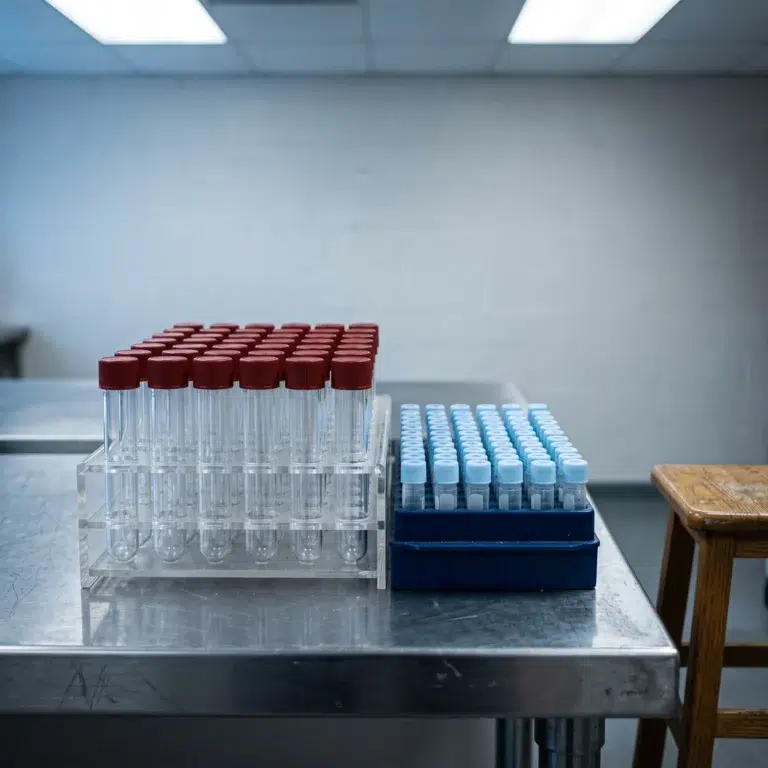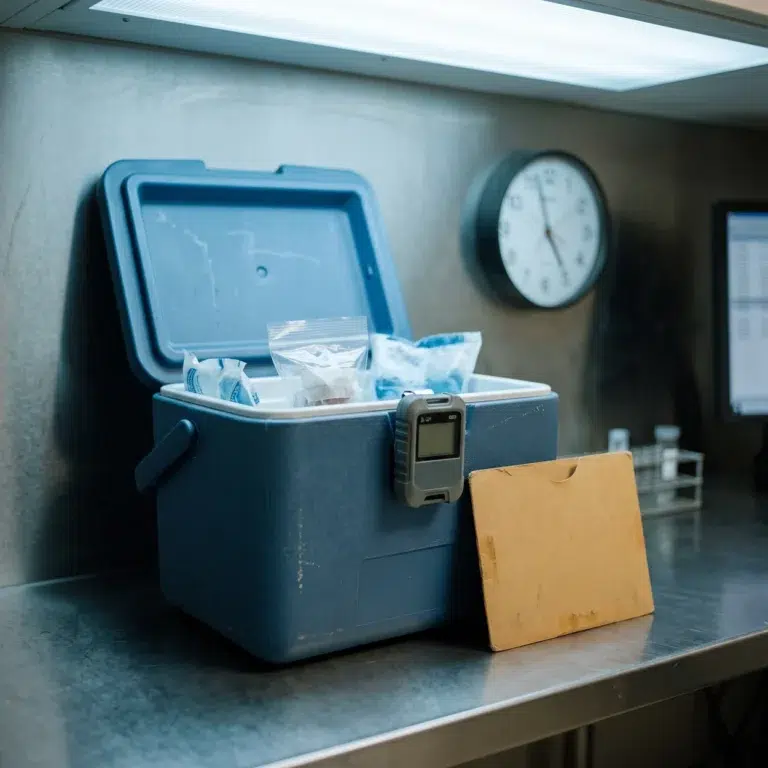

Fat banking during liposuction means sending fat removed in your procedure to a tissue bank for storage instead of having it thrown away. FDA’s tissue rules leave room for it. In practice it only works when it is arranged before surgery, so this post covers the rules and the questions to ask.
TLDR Without other arrangements, fat removed during liposuction is handled as waste. Sending it to a tissue bank instead has to be set up before surgery, so ask your surgeon and the banking service first. The establishment that stores it must register with FDA, and registration is not FDA approval. Banking adipose tissue does not guarantee any future use, and no adipose-derived product has FDA approval to treat any disease.
Important Disclaimer: Save My Fat does not provide FDA-approved treatments or cures for any disease. Banking adipose tissue today does not guarantee eligibility, access, or clinical benefit from any future therapy, clinical trial, or medical program. All content is for educational purposes only and does not constitute medical advice. Patients must consult their own licensed healthcare professionals regarding all medical decisions.
Most people think the fat that comes out during liposuction has one place to go. It gets suctioned out and thrown away, and that is the end of it, right?
Not always. FDA’s rules have a place for tissue stored for the person it came from, so fat from a liposuction can sometimes go to a tissue bank instead. But that does not happen on its own, and nobody can arrange it once the fat is gone.
So it has to be set up before your surgery. Here’s why.
Is Fat Banking During Liposuction Allowed Under FDA Rules?
FDA’s rules leave room for it, and they regulate how it is done. Let’s define the term first. HCT/P is the short name in 21 CFR 1271.3(d) for human cells or tissues “intended for implantation, transplantation, infusion, or transfer into a human recipient.”
Fat sits inside that framework. FDA’s July 2020 guidance says: “FDA considers adipose tissue to be a structural tissue for the purpose of applying the HCT/P regulatory framework.”
The rules also cover tissue kept for the person it came from, which they call autologous use. Under 21 CFR 1271.90, tissue stored that way has to be labeled for autologous use only. A rule that tells you how to label stored tissue expects some tissue to be stored.
Whether your surgeon or a given tissue bank will do it is a separate question, and you have to ask.
What Normally Happens to the Fat Removed in Liposuction?
Unless something else has been arranged, it is handled as waste. Removed human tissue falls under OSHA’s bloodborne pathogens rule, 29 CFR 1910.1030. That rule counts “any unfixed tissue or organ (other than intact skin) from a human (living or dead)” among other potentially infectious materials. It also defines regulated waste to include “pathological and microbiological wastes containing blood or other potentially infectious materials.”
Disposal rules are also state rules, so do not assume every state handles it the same way.
Why Is Banking Different From a Same-Day Fat Transfer?
Because the rule that covers a fat transfer only applies when the tissue goes back into you during the same operation. 21 CFR 1271.15(b) lifts FDA’s tissue rules, known as Part 1271, for “an establishment that removes HCT/P’s from an individual and implants such HCT/P’s into the same individual during the same surgical procedure.”
FDA’s November 2017 guidance says the HCT/Ps must be implanted “within the same surgical procedure” and remain “in their original form”. Its own example of what qualifies is liposuction fat that is only centrifuged and then put back.
Place matters too. The same guidance says: “The exception generally applies only to those establishments that both remove and implant the autologous HCT/P at the same establishment.”
Now put banking next to that. The table below compares fat that goes back in during surgery with fat sent out to be stored.
| Question | Fat put back during the same surgery | Fat sent out for storage |
|---|---|---|
| Where does the tissue go? | Back into the same person, in the same procedure | To a separate establishment that stores it |
| Which rule covers it? | The exception in 21 CFR 1271.15(b) | The Part 1271 tissue rules, where storage is a manufacture step |
| Does Part 1271 apply? | Not when the exception applies | Yes, including FDA registration |
Neither guidance uses the word banking, so this is how I read the rule. Fat that is sent out to be stored is not put back in the same procedure at the same establishment, so the exception does not reach it.
Who Stores the Fat, and What Does FDA Registration Tell You?
A separate establishment stores it, and it has to register with FDA. Registration is not FDA approval. 21 CFR 1271.3(e) counts storage as manufacture, which it defines to include “any or all steps in the recovery, processing, storage, labeling, packaging, or distribution of any human cell or tissue”.
Under 21 CFR 1271.10(b), an establishment that manufactures HCT/Ps regulated solely under what the rules call section 361 has to register with FDA and submit a list of each HCT/P it manufactures.
Registered sounds a lot like approved. FDA’s Tissue Establishment Registration page says acceptance of a registration “does not constitute a determination that an establishment is in compliance with applicable rules and regulations or that the HCT/P is licensed or approved by FDA.”
FDA also runs a public lookup of registered tissue establishments, the HCTERS Public Query, so ask the banking service to show you the tissue bank’s registration.
Where does Save My Fat sit in this? It is a connector. A partner provider collects the tissue, and a U.S.-based tissue bank processes and cryopreserves it.
What Should You Ask Your Surgeon Before Surgery?
Start by asking whether the practice can collect fat for banking at all. A practice that performs liposuction may not be set up to send tissue to a tissue bank. Ask if it has handled fat banking during liposuction before.
Here is the next question I would ask. Is there a banking consent form, separate from the surgical consent? I cannot point you to a federal rule that requires one, so ask what you will be signing. Our post on adipose banking consent explains that paperwork.
Then ask what happens to the fat if the collection cannot go as planned.
Last, ask whether banking changes anything about how your procedure is done. That is a medical question, and the answer comes from your surgeon. For the provider’s side of the process, we wrote a plastic surgeon guide.
What Should You Ask the Banking Service?
Ask first whether its tissue bank accepts fat collected during a cosmetic liposuction. Do not assume the answer is yes. That goes for any banking service, Save My Fat included, and you want the answer in writing.
Then ask about the kit and the timing. Who supplies the collection kit, and when does it have to reach your surgeon’s office? How fast does the tissue have to reach the tissue bank? I do not have a federal rule that sets a number of hours, so ask for theirs.
Ask to see the agreement before you sign it. What does it say about getting your tissue back, and about future use? Our list of tissue banking questions goes further.
Does Banking Your Fat Mean You Can Use It Later?
No. Banking is storage, and storage comes with no promise about what happens next. FDA’s patient information page, with content current as of 04/08/2024, says: “Currently, the only stem cell products that are FDA-approved for use in the United States consist of blood-forming stem cells (also known as hematopoietic progenitor cells) that are derived from umbilical cord blood.” That page predates one approval. On December 18, 2024, FDA approved a donor bone marrow-derived cell therapy for one pediatric condition, which its press announcement calls “the first FDA-approved MSC therapy”. That product is not made from fat.
Fat is not on that list. No adipose-derived product has FDA approval to treat any disease.
Any future use depends on FDA regulatory status, physician guidance, and the availability of approved or investigational pathways at that time. Nobody can honestly say yet what those pathways will be. So think of banking as storage, and take treatment questions to your own licensed provider.
Frequently Asked Questions
Can you decide to bank your fat on the day of surgery?
Do not count on it. Banking needs a provider set up to collect the tissue and a registered establishment ready to store it. No federal rule that I can cite sets a deadline, so ask both how much notice they need.
Does FDA registration mean a tissue bank is approved by FDA?
No. FDA says accepting a registration is not a determination that the establishment is in compliance or that its tissue is licensed or approved. Registration is not FDA approval.
Does a federal rule require a separate consent form for banking?
I cannot point you to one. State rules vary, so ask which ones apply where your surgery takes place, and ask to read what you will sign.
Can banked fat be used for a treatment later?
Nobody can tell you that today. It would depend on FDA’s rules and the pathways open at that time, and on your physician’s guidance. Banking does not guarantee any future use, so talk it through with your own licensed provider.
Key Takeaways
Fat removed in liposuction is handled as waste unless something else is arranged, so fat banking during liposuction has to be set up before surgery. A separate establishment stores it and has to register with FDA, and registration is not FDA approval. Ask your surgeon whether the practice can collect for banking, and ask the banking service whether its tissue bank accepts fat from a cosmetic liposuction. Banking does not guarantee any future use.
Save My Fat connects patients and providers with a U.S.-based tissue bank. It is not a tissue bank, a laboratory, a medical practice, or a treatment provider. Stem cell and regenerative medicine regulations vary by state, including specific informed-consent and disclosure requirements in Florida, Utah, California, Georgia, and Tennessee governing tissue and stem cell services. Banking adipose tissue does not connect patients to any treatment pathway, and any future use depends on FDA regulatory status, physician guidance, and the availability of approved or investigational pathways at that time.
Readers weighing adipose tissue banking for potential future use can look over the pricing page or send questions through the contact page.
Save My Fat works with a U.S.-based tissue bank for laboratory processing and storage.
This article is for educational purposes only and does not constitute medical or legal advice. Please consult your own licensed healthcare provider before making any decisions about treatment or research participation.
About the author: Oscar Tellez is the founder and CEO of Save My Fat. He holds a Bachelor of Science in Exercise Science and Health Promotion from Florida Atlantic University. He has spent a decade in the regenerative medicine industry across product distribution, laboratory and vendor relationships, and provider training. He is not a licensed clinician, and this article is educational, not medical advice.
Related guide: FDA adipose tissue regulation.