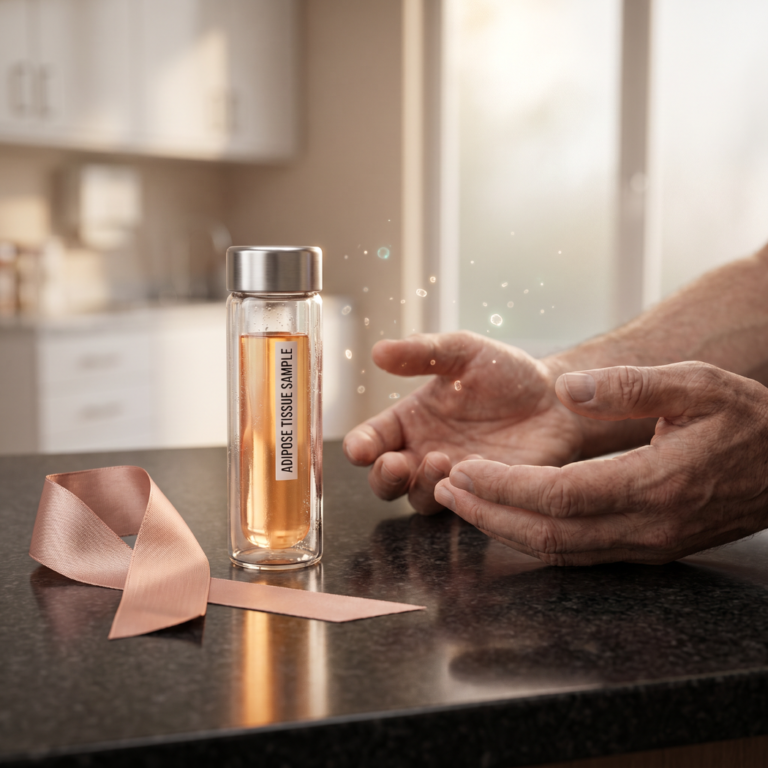
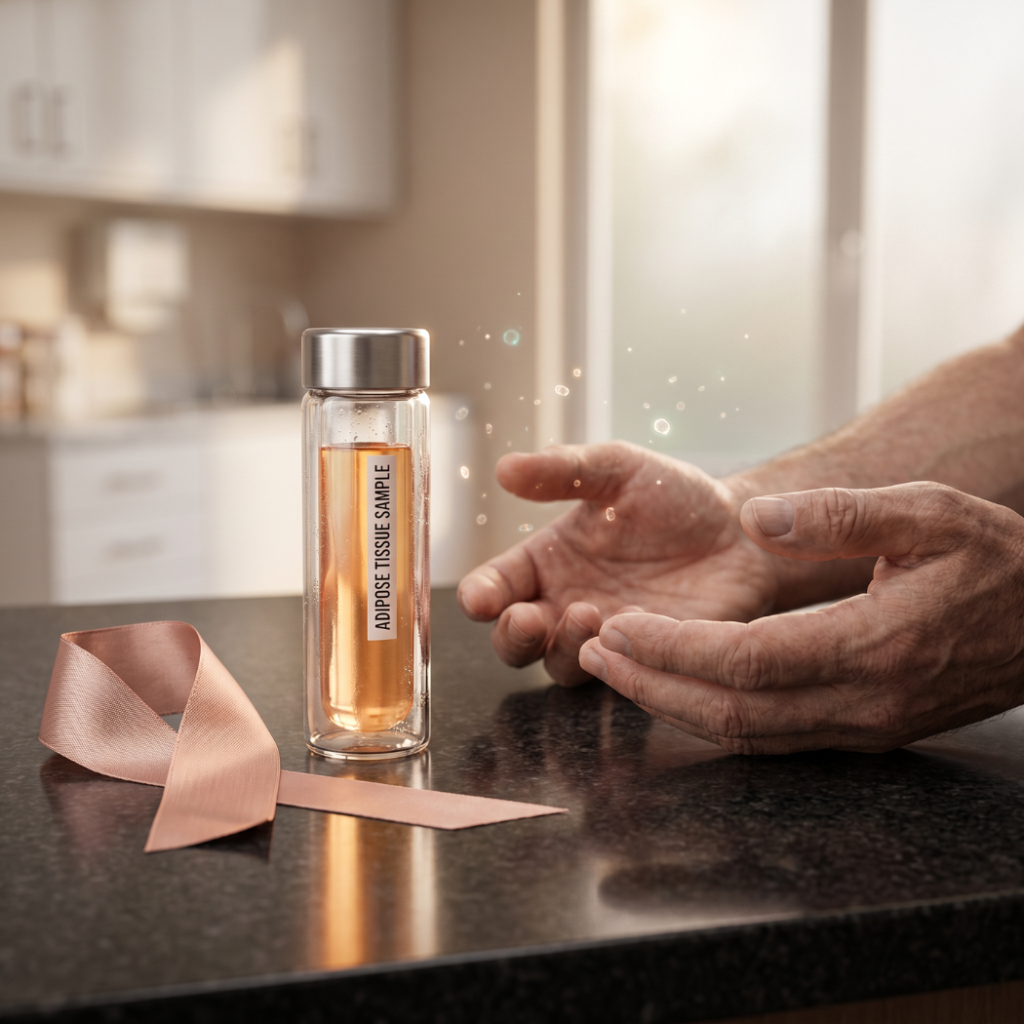
Cancer survivors and patients in remission often ask whether they can bank adipose tissue and whether prior treatment has affected their cells. These are reasonable questions, and the honest answers depend heavily on individual medical history and an oncologist’s input. This guide explains what the research suggests about treatment effects on cell quality, what remission timing means, and why this decision belongs in a conversation with the treating oncology team.
TLDR: Research suggests that cancer treatments such as chemotherapy and radiation may affect the quality and function of stem and progenitor cells, including adipose-derived cells, though effects vary and remain under investigation. Whether and when a survivor might consider banking is an individual decision that depends on diagnosis, treatment history, and remission status, and it must involve the treating oncologist. Research on how adipose-derived cells interact with the tumor environment is ongoing and unsettled, which is another reason for oncologist involvement. No adipose-derived product is FDA-approved for cancer. Banking preserves a person’s own tissue for potential future use; it is not a cancer treatment and does not improve cancer outcomes.
Important Disclaimer: Save My Fat does not provide FDA-approved treatments or cures for any disease, including cancer. No adipose-derived stem cell product currently has FDA approval for cancer. Banking adipose tissue today does not guarantee eligibility, access, or clinical benefit from any future therapy, clinical trial, or medical program. All content is for educational purposes only and does not constitute medical advice. Patients must consult their own licensed healthcare professionals regarding all medical decisions.
For survivors, accuracy matters more than reassurance. The goal here is to lay out what is known and unknown so a patient can have an informed conversation with the oncology team rather than make a decision based on marketing.
How Cancer Treatment Affects Adipose Stem Cell Quality
Cancer treatments are designed to affect rapidly dividing cells, and research suggests that chemotherapy and radiation may also influence the quality and function of stem and progenitor cells, including adipose-derived cells. The degree of effect appears to vary with the type of treatment, dose, and timing, and this remains an area of investigation rather than settled fact. A survivor should treat any general statement about cell quality as preliminary and individual. The relevant effects also depend on factors a survivor cannot assess alone, including the specific agents used, the cumulative dose, and the time elapsed since treatment, all of which fall within the oncologist’s knowledge of the case.
The practical implication is that prior treatment is part of the biological context of any tissue collected, and it is one of the reasons an oncologist’s input is essential before a banking decision. Banking records a person’s tissue as it is at the time of collection, and the value of that record does not depend on any promised future use. The overview of ideal banking candidates describes general considerations, which an oncologist can apply to an individual survivor’s situation.
Timing: What Remission Status Means for a Banking Decision
Remission status is central to any banking conversation for a survivor, and timing is a clinical judgment that belongs to the oncologist. Active treatment, recent treatment, and stable remission are very different contexts, and what is appropriate in one is not appropriate in another. A patient should not assume that banking is advisable at any particular point without the oncology team’s guidance.
The honest framing is that banking is elective preservation, not a step in cancer care, so there is no medical urgency that should override the oncologist’s assessment of timing. A survivor can reasonably explore banking as a preservation decision while deferring entirely to the treating team on whether and when collection is appropriate given their disease history and current status.
The Tumor Microenvironment Research: A Brief Note
An area survivors should understand is research on how mesenchymal and adipose-derived cells interact with the tumor environment. This is an active and unsettled field, and some research has raised questions about how these cells may interact with tumor biology. It is mentioned here not to alarm but to be transparent, because it is one of the specific reasons oncologist involvement matters for a survivor considering banking.
This research is investigational, and it does not establish either benefit or harm in the context of banking a survivor’s own tissue. The overview of adipose cells and the tumor microenvironment summarizes what this research is examining. The appropriate response to an unsettled area is caution and professional guidance, not assumption in either direction.
What the Oncology-Adjacent Research Pipeline Looks Like
The research pipeline relevant to cancer survivors is early, and an accurate read keeps expectations grounded. Adipose-derived cells are studied in various contexts, but no adipose-derived product is FDA-approved for cancer or for use in cancer survivors, and registration of any study does not establish an approved therapy. A survivor should regard this as a developing research area rather than a source of available options.
For context on what is enrolling across the field, the current active clinical trials show where adipose-derived research stands. The overview of adipose tissue banking explains what banking is and is not. None of this should be read as suggesting banking offers a cancer benefit, because it does not.
Questions to Bring to Your Oncologist
A focused conversation with the oncology team produces better decisions than online research alone. A survivor can ask whether banking is appropriate given their specific diagnosis and treatment history, whether prior chemotherapy or radiation is relevant to the decision, and what remission status means for timing. These are questions only the treating oncologist can answer for an individual.
It also helps to ask the oncologist to explain why the research on cell-tumor interactions is unsettled and why banking is a preservation decision rather than a cancer treatment. A trustworthy clinician will reinforce that banking preserves tissue for potential future use and offers no cancer benefit or guarantee.
Frequently Asked Questions
Does banking adipose tissue help treat my cancer or prevent recurrence?
No. Banking preserves a person’s own tissue for potential future use. It is not a cancer treatment, it does not improve cancer outcomes, and no adipose-derived product is FDA-approved for cancer.
Has my prior chemotherapy or radiation affected my cells?
Research suggests cancer treatments may affect the quality and function of stem and progenitor cells, including adipose-derived cells, but effects vary and remain under investigation. Your oncologist is the right person to assess what this means for your individual situation.
Can I bank while I am still in treatment?
That is a decision for your oncologist. Active treatment, recent treatment, and stable remission are different contexts, and banking is elective preservation rather than a step in cancer care, so timing should follow the oncology team’s guidance.
Why does the tumor microenvironment research matter?
Research on how adipose-derived cells interact with the tumor environment is active and unsettled, and it is one specific reason oncologist involvement matters. The research is investigational and does not establish benefit or harm in the context of banking a survivor’s own tissue.
How is adipose tissue banking regulated?
Banked adipose tissue is handled under 21 CFR Part 1271, the federal framework governing screening, processing, and storage of human cells and tissues.
Key Takeaways
For cancer survivors, the banking decision is individual and belongs in a conversation with the oncology team. Research suggests cancer treatments such as chemotherapy and radiation may affect the quality and function of stem and progenitor cells, including adipose-derived cells, though effects vary and remain under investigation. Remission status and timing are clinical judgments for the oncologist, and banking is elective preservation rather than a step in cancer care. Research on how adipose-derived cells interact with the tumor environment is active and unsettled, which is a further reason for professional guidance, and no adipose-derived product is FDA-approved for cancer. Above all, banking adipose tissue is a preservation service for potential future use; it is not a cancer treatment, it does not improve cancer outcomes, and it does not guarantee eligibility, access, or clinical benefit.
Save My Fat operates as a tissue preservation service, not a medical practice or treatment provider. Stem cell and regenerative medicine regulations vary by state, including specific informed-consent and disclosure requirements in Florida, Utah, and Nevada governing tissue and stem cell services. Banking adipose tissue does not connect patients to any treatment pathway, and any future use depends on FDA regulatory status, physician guidance, and the availability of approved or investigational pathways at that time.
Survivors who want to understand what banking does and does not offer can review the complete guide and contact the team after discussing the decision with their oncologist.
Save My Fat partners with L2 Bio for laboratory processing and storage.
This article is for educational purposes only and does not constitute medical or legal advice. Legal and medical review including oncology input is required before publication. Please consult your oncologist before making any decisions about treatment or research participation.
Related guide: the adipose stem cell clinical trials directory.