Chain of custody is what turns a banked sample into a usable asset. A unit of adipose tissue that cannot be traced, with documentary certainty, from a specific patient through harvest, transfer, processing, and storage is a unit that a trial sponsor or treating physician may be unable to accept, regardless of how well it was actually preserved. Under 21 CFR Part 1271, that traceability is not a best practice but a core CGTP requirement, and Florida SB 1768 layers state requirements on top that presuppose it. What follows is a physician-level, CFR-cited walkthrough of the six links in the adipose tissue chain of custody, the record-retention rules, what an FDA inspection examines, and an audit-ready checklist.
TLDR: Under 21 CFR Part 1271, establishments handling HCT/Ps must keep records allowing each unit to be traced bidirectionally between donor and consignee. The adipose chain of custody breaks into six documented links: patient identity at harvest, the harvest procedure record, container labeling and transfer, receipt at the processing facility, the processing batch record, and cryostorage with ongoing monitoring. Records must be retained at least 10 years (1271.270). Gaps in the chain can disqualify tissue from later use. Banking adipose tissue does not enroll a patient in therapy and does not guarantee any future eligibility, access, or benefit.
Important Disclaimer: Save My Fat does not provide FDA-approved treatments or cures for any disease. Banking adipose tissue today does not guarantee eligibility, access, or clinical benefit from any future therapy, clinical trial, or medical program. No adipose-derived stem cell product currently holds FDA approval for the conditions discussed in this article. All content is for educational purposes only and does not constitute medical or regulatory advice. Patients must consult their own licensed healthcare professionals regarding all medical decisions.
The reason chain of custody deserves a dedicated guide is that it is where banking programs most often fail quietly. The tissue is fine; the paperwork is not, and the deficiency surfaces only years later when someone tries to use the sample and cannot prove it is what it claims to be. Building the documentation correctly at the outset is far cheaper than reconstructing it, which in many cases is impossible.
Why Chain of Custody Is a Requirement, Not a Courtesy
Under 21 CFR Part 1271, establishments that manufacture HCT/Ps must maintain records that allow each product to be traced from the donor to the consignee and from the consignee back to the donor. That bidirectional traceability is the regulatory foundation of chain of custody. Florida SB 1768 reinforces it at the state level: the accreditation requirement and the post-thaw viability report both presuppose a documented chain connecting the tissue to a specific patient and a specific processing event. The practical consequence is the banking-relevance point: when a patient seeks to use banked tissue in a trial or an authorized therapy, the sponsor or treating physician will demand documentation of the complete chain, and gaps in it can disqualify the tissue from use. Incomplete documentation can render otherwise sound tissue unusable, which defeats the entire purpose of banking.
The Six Links in the Adipose Tissue Chain of Custody
Link 1: Patient identity at harvest
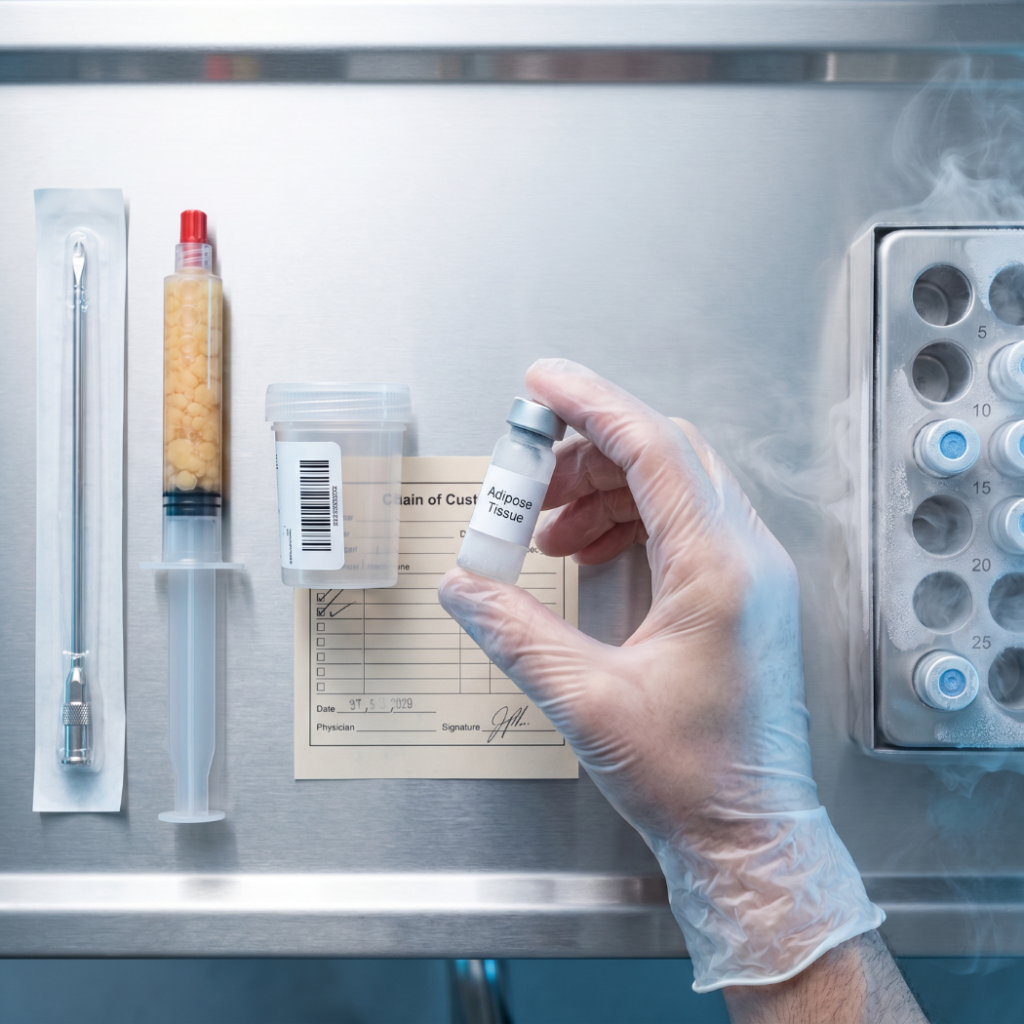
Identity must be verified at the moment of harvest using at least two identifiers, and in practice a name, date of birth, and a third identifier such as a medical record number. The verification must be recorded in the procedure record and signed by the harvesting physician or a qualified staff member. The donor-eligibility and records provisions at 21 CFR 1271.55 and 1271.270 govern here. A point specific to adipose banking: 1271.55 requires a distinct identification code on the container, and while it normally bars using a patient’s name or MRN on that code, autologous donations are explicitly carved out of that restriction, so identifying the autologous sample directly to the patient is permitted and appropriate.
Link 2: The harvest procedure record
This is the origin record, establishing when and where the tissue came from. It must capture the date and time of harvest, the specific anatomical site (flank, periumbilical, inner thigh, and so on), the volume harvested in milliliters or grams, the collection method and instrumentation, the name and credentials of the harvesting physician, and any deviation from protocol with the action taken.
Link 3: Container labeling and transfer
The container receiving the tissue immediately after harvest must be labeled, before it leaves the harvest room, with the patient identifier, the date and time of harvest, the harvesting facility, and the tissue type. It must be sealed and its integrity verified before transfer. The transfer record must show who transferred the container, to whom, and at what time, with transport temperature documented where the tissue is temperature-sensitive. Labeling provisions appear at 21 CFR 1271.250 and 1271.290.
Link 4: Receipt at the processing facility
The facility must document receipt: the date and time received, the condition of the container on arrival (integrity intact or compromised), and verification of the tissue’s identity against the collection label. Any discrepancy between the label and the expected shipment must be documented and resolved before processing begins. This receipt record must be retained and made available to the harvesting physician on request, under 21 CFR 1271.270.
Link 5: The processing batch record
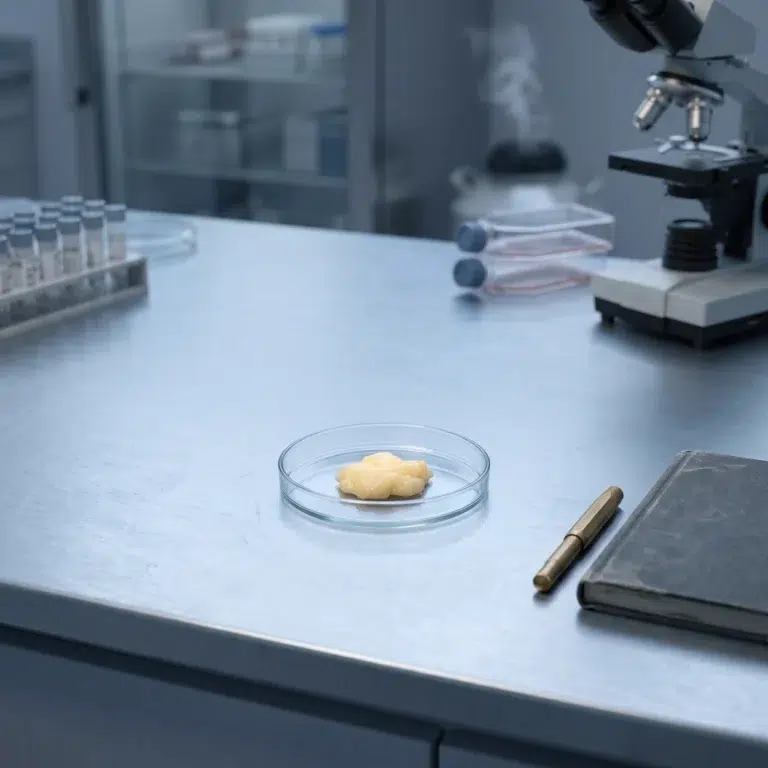
Every processing step must be documented in the batch record, the core CGTP compliance document for this stage. It must include the processing date and time, the method and SOPs followed, reagents and supplies with lot numbers and expiration dates, the personnel performing each step, environmental conditions, and any deviation with its corrective action. The processing and process-control requirements are at 21 CFR 1271.220, with records under 1271.270.
Link 6: Cryostorage and ongoing monitoring
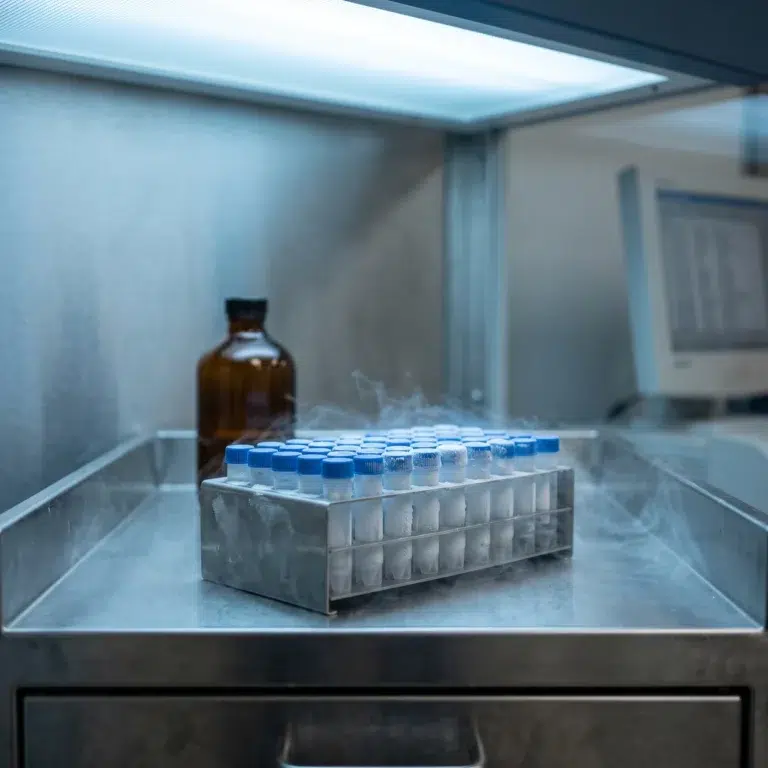
At cryopreservation, documentation must capture the date and time, the cryoprotectant (type, concentration, lot number), the storage-vessel identifier (tank, rack, box, position), and the storage temperature and monitoring schedule. Storage is then continuous: temperature logs must be maintained without gaps, any excursion documented and assessed for viability impact, and access to the vessel logged by who, when, and why. Storage provisions are at 21 CFR 1271.260, with records under 1271.270.
Chain of Custody Documentation Elements
| Link | Document | Required elements | CFR basis |
|---|---|---|---|
| Patient identity | Identity verification record | Name, DOB, MRN, third identifier, staff signature | 1271.55, 1271.270 |
| Harvest | Procedure record | Date/time, site, volume, method, physician, deviations | 1271.270 |
| Container labeling | Container label | Patient identifier, date/time, facility, tissue type | 1271.250, 1271.290 |
| Transfer | Transfer record | Who transferred, to whom, time, temperature | 1271.270, 1271.290 |
| Receipt | Receipt record | Date/time received, container condition, identity verified | 1271.270 |
| Processing | Batch record | All steps, reagents, personnel, environment, deviations | 1271.220, 1271.270 |
| Cryostorage | Storage record | Cryo date/time, cryoprotectant, vessel ID, temp monitoring | 1271.260, 1271.270 |
| Ongoing storage | Temperature logs | Continuous logs, excursion documentation | 1271.260 |
Record Retention
Under 21 CFR 1271.270, records must be retained for at least 10 years after their creation, and records pertaining to a particular HCT/P at least 10 years after the date of administration, or if that date is unknown, 10 years after the tissue’s distribution, disposition, or expiration, whichever is latest. For tissue that is banked and remains in storage rather than administered, the practical reading is that records must be kept for as long as the tissue is stored and then through the applicable 10-year tail. Physicians should confirm the specific retention schedule with their processing partner and with qualified counsel, since the storage-duration interpretation matters for long-banked autologous samples.
What an FDA Inspection Examines
The FDA conducts routine and for-cause inspections of registered HCT/P establishments. Investigators typically request establishment registration documentation, SOPs, batch records for specified lots, temperature logs, deviation reports, and personnel training records. A facility whose records cannot trace a specific unit from its donor to its current storage location is exposed to a Form 483 observation for failure to comply with 1271.270. For a physician using a processing partner, the partner’s inspection history is part of the physician’s own due diligence, since the physician relies on that partner’s records to establish the chain. The lab-partner standards are covered in the CGTP lab partner requirements discussion.
Audit-Ready Chain of Custody Checklist
- Two-identifier patient verification documented at harvest.
- Harvest procedure record completed and signed.
- Collection container labeled with all required elements before leaving the harvest room.
- Transfer record completed at the time of transfer.
- Processing-facility receipt confirmation obtained and filed.
- Batch record obtained from the processing facility for each lot.
- Cryostorage documentation received and filed.
- Temperature logs requested from the processing facility periodically.
- A 10-year retention policy established and staff trained.
- Chain of custody reviewed annually as part of the compliance audit.
Frequently Asked Questions
Can I put the patient’s name and MRN on the collection container?
For autologous adipose banking, yes. 21 CFR 1271.55 generally bars a patient’s name or MRN in the identification code, but autologous donations are explicitly carved out of that restriction, so identifying the sample directly to the patient is permitted.
How long must banking records be kept?
At least 10 years under 1271.270(d): 10 years after administration, or if unknown, after distribution, disposition, or expiration, whichever is latest. For tissue still in storage, records should be maintained throughout storage and the applicable tail; confirm the schedule with your processing partner.
What single gap most often disqualifies banked tissue?
A missing or incomplete transfer record, the handoff between harvest and the processing facility. It is the link most often skipped in the moment and the one that most often cannot be reconstructed later.
Key Takeaways
Chain of custody is a core CGTP requirement under 21 CFR Part 1271, not a courtesy, and it is the documentation that determines whether banked tissue is usable when it matters. The chain breaks into six links, identity, harvest, labeling and transfer, receipt, processing, and cryostorage with monitoring, each with its own required elements and CFR basis, and a gap in any one can disqualify the tissue. Records must be retained at least 10 years under 1271.270, with a longer practical horizon for tissue that stays in storage. For physicians working through a processing partner, the partner’s records and inspection history are part of the physician’s own due diligence. Documentation quality directly determines the future clinical value of banked tissue, but banking itself remains a preservation decision separate from therapy, with no guarantee of future benefit.
Save My Fat connects patients and providers with a U.S.-based tissue bank. It is not a tissue bank, a laboratory, a medical practice, or a treatment provider. Stem cell and regenerative medicine regulations vary by state, including specific informed-consent and disclosure requirements in Florida, Utah, California, Georgia, and Tennessee governing tissue and stem cell services. Banking adipose tissue does not connect patients to any treatment pathway, and any future use depends on FDA regulatory status, physician guidance, and the availability of approved or investigational pathways at that time.
Practices building or auditing a documentation workflow can contact Save My Fat to discuss how the chain of custody is maintained on the processing side.
Save My Fat partners with a U.S.-based tissue bank for laboratory processing and storage.
This article is for educational purposes only and does not constitute medical or legal advice. Please consult your own licensed healthcare provider before making any decisions about treatment or research participation.
About the author: Oscar Tellez is the founder and CEO of Save My Fat. He holds a Bachelor of Science in Exercise Science and Health Promotion from Florida Atlantic University. He has spent a decade in the regenerative medicine industry across product distribution, laboratory and vendor relationships, and provider training. He is not a licensed clinician, and this article is educational, not medical advice.
Related guide: the stem cell science glossary.