
The adipose-derived stem cell market is one of the fastest-growing areas in regenerative medicine, with more than four hundred active clinical trials, the FDA’s first-ever mesenchymal stem cell product approval in December 2024, and a growing number of patients who are choosing to bank their own fat-derived stem cells now, before the next wave of approved therapies arrives. For a patient researching this space, the most important things to understand are what this market actually is, what stage it is in, what banking means in this context, and how to evaluate whether banking makes sense for you. This post answers all four questions in plain language.
TLDR: Adipose-derived stem cells come from fat tissue and are among the most accessible and abundant adult stem cells in the human body. The market for these cells, in research, banking, and emerging therapies, is large and growing. Banking preserves your own cells now for potential future use in FDA-regulated pathways. It is not a current treatment. The FDA approved its first mesenchymal stem cell product in December 2024, establishing the pathway for what comes next.
Important Disclaimer: Save My Fat does not provide FDA-approved treatments or cures for any disease. Banking adipose tissue does not guarantee eligibility, access, or clinical benefit from any future therapy, clinical trial, or medical program. Market projections cited in this post are from third-party research firms and are forward-looking estimates, not guarantees. All content is for educational purposes only and does not constitute medical advice. Consult your physician before making any healthcare decision.
You have probably heard the phrase “stem cells from fat” somewhere. Maybe a podcast. Maybe a longevity article. Maybe an ad for a clinic down the street. What you want to know is whether any of this is real, or whether it is hype dressed up in scientific language. You searched for the adipose-derived stem cell market because you want to understand the landscape before you take any of it seriously. That is a reasonable instinct, and it deserves a reasonable answer.
It is real. The science behind adipose-derived stem cells, also called ADSCs or fat-derived mesenchymal stem cells, is peer-reviewed, institutionally funded, and advancing through clinical trials at a scale that would surprise most patients. More than four hundred trials are active right now. The FDA approved the first mesenchymal stem cell product in December 2024. And banks storing autologous (meaning your own) fat-derived cells are operating under FDA-regulated frameworks in the United States today.
This post covers what ADSCs actually are, what the market looks like and why it is growing, where the clinical evidence stands, what banking means in this context, and the three questions every patient should ask before making a decision about banking their own cells.
What Adipose-Derived Stem Cells Actually Are
The Source
Adipose tissue, the fat under your skin, is one of the richest accessible sources of adult stem cells in the human body. A single gram of fat tissue contains roughly one hundred to five hundred times more mesenchymal stem cells than a gram of bone marrow, which was the traditional source for adult stem cell collection before fat harvesting techniques were developed. The landmark 2002 Zuk et al. paper in Molecular Biology of the Cell is the foundational reference that established this yield advantage, and Save My Fat’s patient-facing overview of adipose-derived stem cells covers the biology in more depth.
What These Cells Do
Adipose-derived stem cells are mesenchymal stromal cells, a population with three well-documented biological capabilities. The first is differentiation, the ability to develop into other cell types including bone, cartilage, fat, and muscle cells under the right conditions. The second is immunomodulation, the ability to regulate immune responses and reduce inflammation, which is the primary mechanism under investigation in autoimmune and inflammatory condition trials. The third is paracrine signaling, the ability to release growth factors and signaling molecules that support tissue repair and regeneration in surrounding cells.
These properties are why ADSC research spans such a wide range of conditions, from joint disease to autoimmune disorders to wound healing to aesthetic applications. The 2019 MSC biology review from Pittenger and colleagues in npj Regenerative Medicine summarizes how these mechanisms work in research and early clinical applications, and Save My Fat’s comparison of mesenchymal stem cells across sources puts adipose-derived cells in context against the other major cell sources.
The Adipose-Derived Stem Cell Market in 2026
How Big Is This Market?
Independent research firms tracking the ADSC space place the global market value in the multi-billion dollar range with compound annual growth rates projected in the double digits through the end of this decade. Grand View Research’s industry analysis of the adipose derived stem cells market points to clinical trial activity, aging demographics, and consumer demand for regenerative health interventions as the primary growth drivers. These projections are forward-looking estimates with their own methodologies, not guarantees of market performance, and they should be read as directional context rather than as specific promises about what the market will look like in any given year.
What Is Driving the Growth?
Five factors are driving the market expansion:
- A clinical trial pipeline exceeding four hundred active studies, with the largest categories in joint disease, autoimmune conditions, and aesthetics.
- The December 2024 FDA approval of Ryoncil, the first mesenchymal stem cell product to complete the full FDA approval pathway, establishing that MSC therapies can be approved.
- Aging demographics, because the forty to seventy age cohort (the primary banking and regenerative medicine market) is the largest health-investing demographic in modern history.
- Consumer longevity culture and growing mainstream interest in proactive health preservation, including genetic testing, advanced diagnostics, and cellular banking.
- Geographic expansion, with clinical trial activity growing in Europe and Asia-Pacific alongside the established North American market.
The active ADSC trial pipeline on ClinicalTrials.gov and the FDA’s approved cellular and gene therapy products database are the public sources patients can use to verify both the pipeline and the regulatory milestone independently.
The FDA Milestone That Changed the Conversation
In December 2024, the FDA approved Ryoncil (remestemcel-L-rknd), an allogeneic bone-marrow-derived MSC therapy for a specific pediatric immune condition, after a completed Phase 3 randomized trial. This was the first time any MSC-based product cleared the full FDA approval pathway in the United States. What this means for patients interested in ADSCs is that the regulatory agency responsible for approving drugs and biologics in the US has now demonstrated it will approve MSC-based therapies when the Phase 3 evidence supports them. The ADSC pipeline is building that evidence across multiple conditions, and the Save My Fat overview of ADSC autoimmune and inflammatory research covers the specific indication areas where the pipeline is most advanced.
Where the Clinical Evidence Stands
Joint Disease
Osteoarthritis, particularly of the knee and hip, has the largest body of published clinical evidence for ADSC-based interventions. Published systematic reviews and meta-analyses of ADSC trials have analyzed outcomes across multiple studies, and ongoing orthopedic-specific ADSC trials continue to expand the evidence base. For a patient with early-to-moderate joint disease, this is the most developed part of the ADSC evidence base and the category most likely to produce approved therapies in the near term, though no ADSC-based therapy is currently FDA-approved for any orthopedic indication.
Autoimmune and Inflammatory Conditions
MSC immunomodulatory properties are under active investigation in conditions including Crohn’s disease, multiple sclerosis, lupus, and rheumatoid arthritis. Phase 1 and Phase 2 trial data have demonstrated biological activity and favorable safety profiles across multiple conditions, as summarized in the published MSC biology literature. Save My Fat’s overview of ADSC autoimmune research covers the indication landscape in more depth. As with orthopedic applications, no ADSC-based therapy is currently FDA-approved for any autoimmune or inflammatory indication.
Aesthetics and Wound Healing
ADSC applications in aesthetic medicine, including skin rejuvenation, fat grafting enhancement, and scar treatment, represent the most commercially mature segment of the field. The MSC biology review summarizes the evidence from published studies supporting ADSC-based approaches in multiple aesthetic applications, and this category tends to be the one patients have most often encountered directly through their aesthetic or dermatology providers.
What Banking Means in This Context
Banking is not a treatment. It is not access to a current therapy. It is preservation, meaning storing your own cells now at their current biological quality for potential future use in FDA-regulated pathways as the market above continues to mature.
Why Timing Matters
Cells banked earlier in life are preserved at higher biological quality than cells banked later. Mesenchymal stem cell proliferative capacity, differentiation potential, and immunomodulatory function decline with age, as the published MSC biology literature documents. A patient who banks at forty-five has cells from when they were forty-five, regardless of when they eventually use them. Save My Fat’s complete guide to banking walks through the timing rationale in patient-facing depth.
What the Banking Process Involves
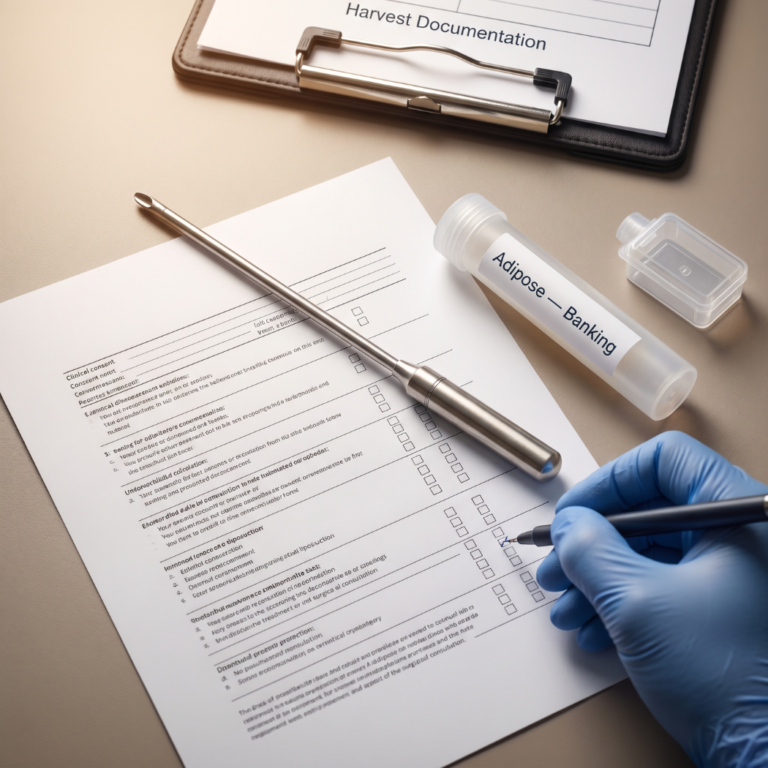
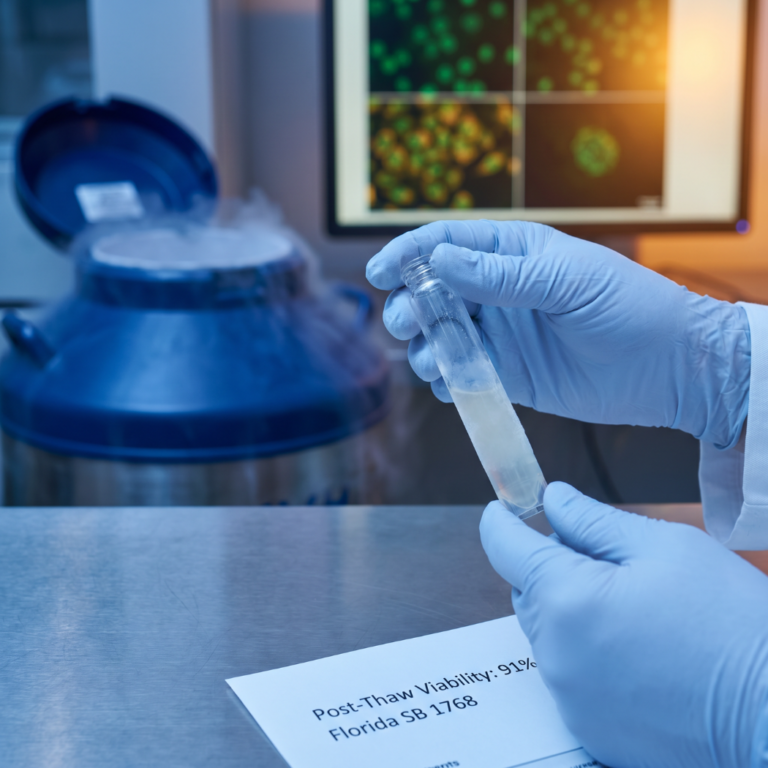
A physician partner performs a thirty-minute outpatient harvest procedure under local anesthesia. Approximately 20 cc of fat is collected from the abdomen or flank. The specimen is shipped to L2 Bio, which processes and cryopreserves the cells into a documented vial inventory typically in the 200 to 400 vial range. The patient receives a viability certificate. The cells are stored in liquid nitrogen until the patient and their physician decide to access them. Save My Fat’s overview of how banking works covers the full patient-facing process from consultation through storage.
What Banking Does Not Guarantee
Banking preserves the option. It does not guarantee eligibility for any specific clinical trial. It does not guarantee access to any future approved therapy. It does not guarantee clinical benefit from any future use of the banked cells. It does not guarantee that any specific therapy will be approved by the time the patient wants to use their cells. A patient who banks is making a reasoned preservation decision under the regulatory framework at 21 CFR Part 1271, not purchasing a treatment, and Save My Fat’s comparison of banking vs. stem cell treatment clinics makes this distinction explicit.
Three Questions Every Patient Should Ask Before Banking
Question 1: Is this service operating under an FDA-compliant framework?
Ask the provider which FDA regulatory framework governs the banking service. The correct answer is FDA Section 361 HCT/P regulations under 21 CFR Part 1271. Services operating outside this framework or making disease treatment claims without FDA approval are not compliant, and the FDA’s consumer alert on regenerative medicine products explains the enforcement position in patient-friendly language. Save My Fat’s guide on fake stem cell clinic red flags walks through the specific signals that separate compliant services from the enforcement-target category.
Question 2: Who processes and stores my cells, and what are their qualifications?
The processing lab should be a US-based, FDA-registered tissue establishment operating under current Good Tissue Practice regulations at 21 CFR Part 1271 Subpart D. Ask for the lab’s name and registration status. A compliant banking service will answer this question directly without hesitation. Save My Fat’s resource on how to compare banking services gives patients the specific questions to ask and the answers to listen for.
Question 3: What happens to my cells if the company goes out of business?
This is the question most patients do not ask and should. Understand the contractual terms for long-term storage, what happens to stored cells if the banking company or the lab partner ceases operations, and whether there is a transfer or release protocol that protects patient access to their own tissue. This is a legitimate piece of due diligence, and a service that cannot answer it clearly is not ready to hold your cells for decades. Save My Fat’s resource on questions to ask before banking is the patient-facing checklist for the full due diligence conversation.
How to Find a Banking Provider
Save My Fat connects patients with physician partners in their area who are trained in the harvest procedure and operating within the FDA-compliant banking framework. The physician who performs the harvest is the same physician who will administer any future vial access, which means the patient’s cells and their clinical relationship stay in the same place rather than being handed off to an unfamiliar provider years later.
The Save My Fat resources on how banking works, questions to ask before banking, and how to compare banking services together give patients the research framework for choosing a provider and a service. For patients interested in active clinical trials involving adipose-derived stem cells, the ClinicalTrials.gov search for ADSC trials and Save My Fat’s resource on finding legitimate clinical trials are the starting points. For patients interested in expanded access programs for investigational therapies, the Reagan-Udall Foundation’s Expanded Access Navigator and Save My Fat’s overview of expanded access programs are the appropriate references.
Frequently Asked Questions
Are stem cell treatments available now for conditions like arthritis or multiple sclerosis?
For most conditions, no, not through FDA-approved therapies. The published evidence base is growing, and active clinical trials are testing ADSC-based treatments for joint disease, autoimmune conditions, and other applications. The FDA approved the first MSC product in December 2024 for a specific pediatric immune condition. Treatments for adult orthopedic and autoimmune conditions are in active trial development but not yet approved, and Save My Fat’s overview of what ClinicalTrials.gov phases actually mean helps patients interpret where any given trial sits in the development process.
How is banking different from paying a clinic for stem cell injections?
Banking is compliant tissue preservation under FDA Section 361 HCT/P regulations, with no disease treatment claims, no injections, and regulated storage and processing. Clinics marketing stem cell injections for specific diseases are typically operating in a different regulatory category, one the FDA has actively warned about in its published consumer alerts. The difference is not cosmetic. Save My Fat’s comparison of banking vs. stem cell treatment clinics draws the distinction in more depth.
What does banking cost?
Banking packages are typically in the $8,000 to $15,000 range depending on the service and package selected. Banking is a cash-pay service. It is not covered by insurance, which is similar to how egg freezing, cord blood banking, and other elective preservation services are paid for.
Can my family members use my banked cells?
Under FDA Section 361 HCT/P criteria, first-degree and second-degree blood relatives may be eligible to use your banked cells in certain clinical contexts. This is not a blanket guarantee. Eligibility depends on the specific pathway and the clinical situation at the time of use, and it is one of the structural features of 21 CFR Part 1271 that distinguishes autologous banking from commercial allogeneic cell products.
Where can I verify the claims in this post independently?
ClinicalTrials.gov is the federal registry for active trials, including the ADSC trial search referenced throughout this post. The FDA’s approved products database lists every FDA-approved cellular and gene therapy product, including the December 2024 Ryoncil approval. PubMed is the searchable database for peer-reviewed medical literature, and every scientific claim in this post links to a PubMed record you can review directly. Verifying health claims against primary sources is good practice for any medical decision, and Save My Fat encourages it.
Key Takeaways
Adipose-derived stem cells come from fat tissue and are among the most abundant adult stem cell sources in the human body. A gram of fat yields roughly one hundred to five hundred times more mesenchymal stem cells than a gram of bone marrow, which is the biological reason the field has grown around adipose as a source tissue rather than around older bone marrow techniques.
The global adipose-derived stem cell market is growing rapidly, driven by a four-hundred-plus trial pipeline, aging demographics, the December 2024 FDA MSC approval precedent, the broader consumer longevity movement, and geographic pipeline expansion across Europe and Asia-Pacific. Independent market research firms project double-digit compound annual growth rates through the end of the decade, with the caveat that these are forward-looking estimates rather than guarantees.
The three largest clinical trial categories are joint disease (particularly knee osteoarthritis), autoimmune and inflammatory conditions, and aesthetic and wound-healing applications. Each has its own evidence trajectory, and none has yet produced an FDA-approved adipose-derived product for a specific disease indication.
Banking preserves your own cells at their current biological quality for potential future use in FDA-regulated pathways. It is not a current treatment. Earlier banking preserves better biological quality because MSC function declines with age, and the cells banked today are the cells available for whatever pathways become available later.
Three questions every patient should ask before banking: Is the service operating under an FDA-compliant Section 361 HCT/P framework? Who processes and stores the cells, and are they an FDA-registered tissue establishment? What happens to your cells if the company ceases operations? A banking service that can answer all three questions clearly is a service worth evaluating further.
Banking and unregulated stem cell injection clinics are not the same thing. The distinction matters for both patient safety and regulatory compliance, and it is worth understanding before you make any decision about your own cells.
Ready to Take the Next Step in Your Research?
Before taking any next step: adipose tissue banking is a preservation service for potential future use in FDA-regulated pathways, not a treatment or a guarantee of access to any specific clinical trial, therapy, or product. No adipose-derived product is FDA-approved for general disease treatment. Market projections discussed in this post are third-party estimates, not guarantees of performance. Consult your physician before making any healthcare decision, and take the time to ask the three questions above of any banking service before you commit.
Save My Fat’s resources are written specifically for patients doing this research. To start with the framework for evaluating a banking service, visit questions to ask before banking. To understand how the banking process works from consultation through storage, visit how banking works. To compare banking services against the criteria that actually matter, visit how to compare banking services.
Save My Fat provides adipose tissue banking services in partnership with L2 Bio for laboratory operations. Save My Fat does not provide medical treatments, clinical trial enrollment, or Expanded Access services.
This article is for educational purposes only and does not constitute medical or legal advice. Legal and medical review including neurology and neurosurgery input is required before publication. Please consult your neurologist or neurosurgeon before making any decisions about neurologic treatment or research participation.