For physicians already working in a cash-pay or hybrid model, stem cell banking adds a compliant service line that requires no insurance billing, no new equipment, and no additional laboratory infrastructure. The harvest is a 30-minute outpatient procedure under local anesthesia. A U.S.-based tissue bank handles all cell processing and storage. Save My Fat routes patients in the provider’s area directly to the practice. The revenue model is front-loaded on the banking package and recurring on every future vial use, creating a compounding patient relationship from a single procedure.
TLDR: Stem cell banking is 100% cash-pay with no insurance complexity, no new equipment, and no on-site lab requirement. The harvest takes 30 minutes under local anesthesia. The patient pays in the $8,000 to $15,000 range for a banking package. Each future vial use brings the patient back to the same provider. Family eligibility extends the relationship further. For practices already in a cash-pay or hybrid model, this is a natural service line addition with a compounding revenue structure.
Important Disclaimer: Save My Fat does not provide FDA-approved treatments or cures for any disease. Banking adipose tissue does not guarantee eligibility, access, or clinical benefit from any future therapy, clinical trial, or medical program. Revenue outcomes vary by practice, patient volume, and market conditions, and are not guaranteed. All content is for educational purposes only and does not constitute medical, legal, or financial advice. Physicians should conduct independent due diligence and consult applicable state licensing and regulatory requirements before offering any new service.
If you are reading this, you have already made a decision most physicians have not. You have decided, in some form, that fee-for-service insurance billing is not how you want to build your practice. You have chosen a model where the patient relationship is direct, the pricing is transparent, and the service has to stand on its own value. From that starting point, the question about any new service line is always the same: does this fit the model, or does it require building something entirely new?
Banking fits the model. No new billing infrastructure. No insurance code to negotiate. No prior authorization forms. No claim denials. The patient pays for a preservation service. The physician performs a procedure they are either already trained for or can learn through a single onboarding. The lab partner handles everything downstream. The economics are straightforward and the workflow is clean.
This post covers exactly how banking maps onto a cash-pay practice: the procedure economics, the recurring revenue structure, how banking compares to the other cash-pay add-ons you have probably already evaluated, and the practice valuation implications for a physician building something they may eventually sell or partner.
Why Cash-Pay Is the Right Frame for Banking
No Insurance, No Reimbursement Risk
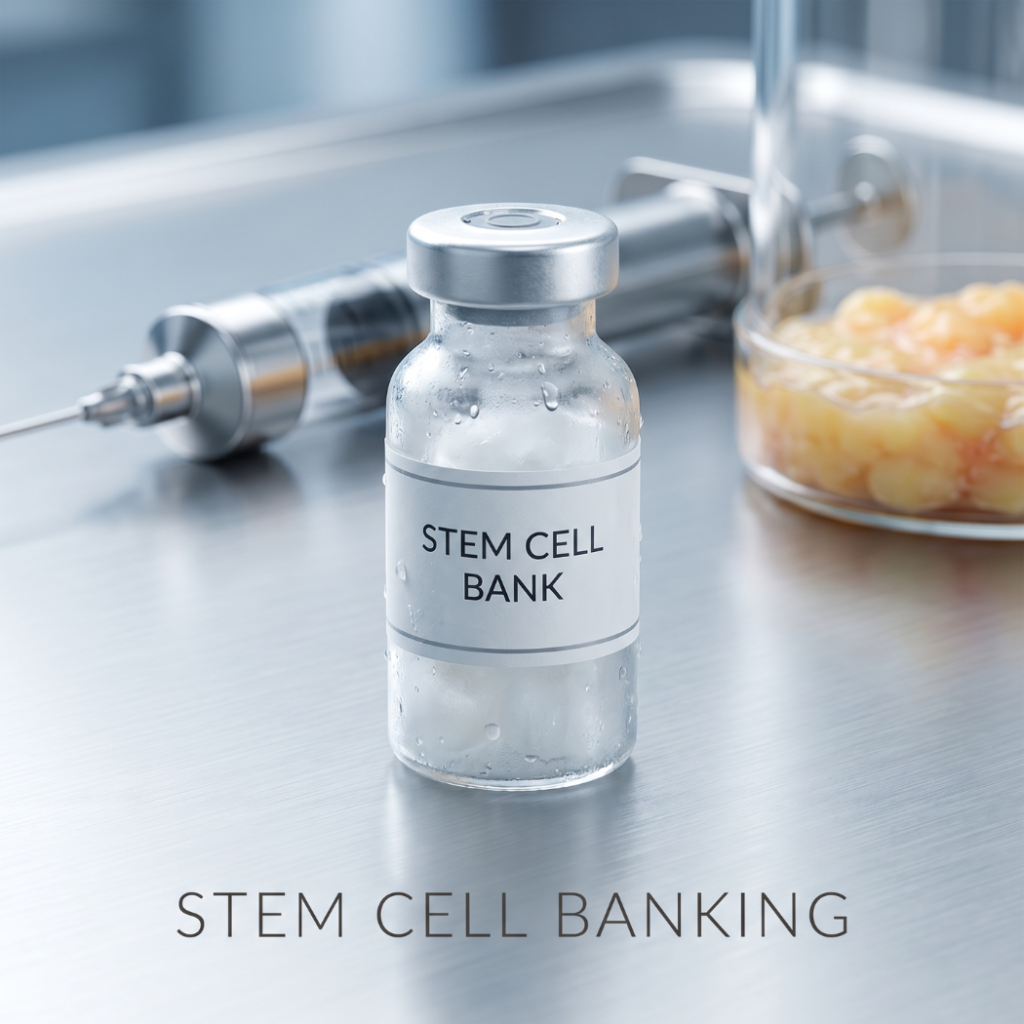
Adipose tissue banking is a patient-elected preservation service, not a covered medical procedure. The patient pays out of pocket for the harvest procedure, lab processing and cell isolation, cryopreservation and initial storage, and long-term storage with vial management. The all-in cost typically falls in the $8,000 to $15,000 range depending on the banking package the patient selects.
There is no CPT code to submit. No insurance carrier to negotiate with. No reimbursement rate that changes annually. No prior authorization that delays the procedure. The financial relationship is direct between patient and provider, which is the reason most cash-pay practices exist in the first place.
The Patient Who Banks Is Already in Your Practice
The cash-pay banking demographic is not a new patient type to acquire. It overlaps almost entirely with the patients already in cash-pay aesthetic, functional medicine, concierge, and longevity practices. The banking-ready patient is health-forward and proactively invested in their future wellbeing, comfortable with out-of-pocket medical spending for non-covered services, already researching regenerative medicine and longevity interventions, and likely already spending on cash-pay services: concierge memberships, functional medicine panels, aesthetic procedures, supplements, genetic testing. This patient is not a new acquisition challenge. They are an upsell opportunity inside an existing relationship.
The Procedure Economics
What a Harvest Day Looks Like
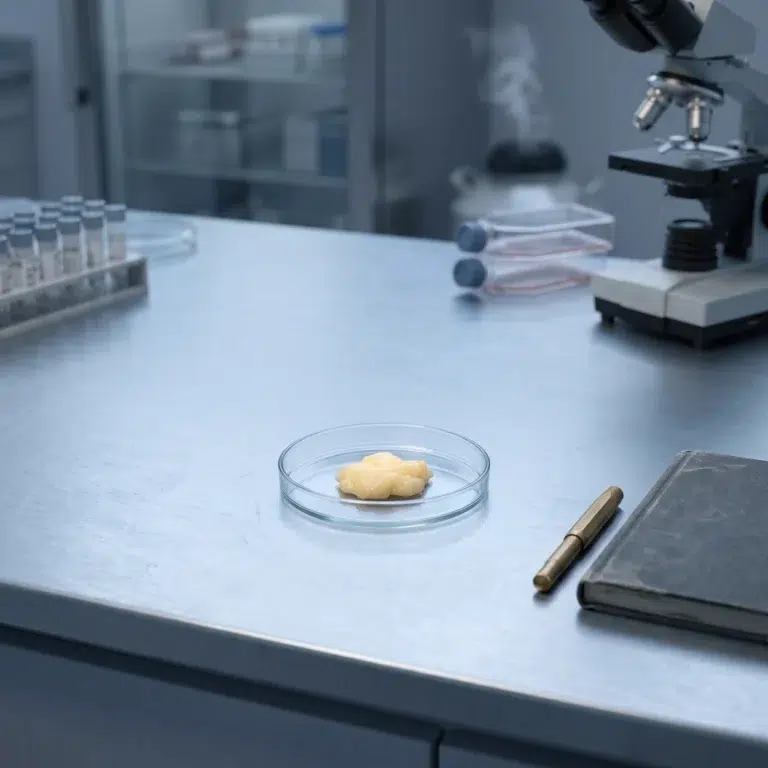
The harvest is a 30-minute in-office procedure. Local anesthesia is applied to the donor site, typically the abdomen or flank. Approximately 20 cc of subcutaneous fat is collected via a small-volume lipoaspiration cannula. The specimen is packaged per Save My Fat’s chain-of-custody transport protocol and shipped to a U.S.-based tissue bank for processing. No hospital facility is required. No general anesthesia. No post-procedure recovery room. The patient goes home the same day. The physician returns to their next appointment. The Save My Fat overview of how banking works covers the clinical workflow in physician-appropriate depth.
Equipment and Overhead
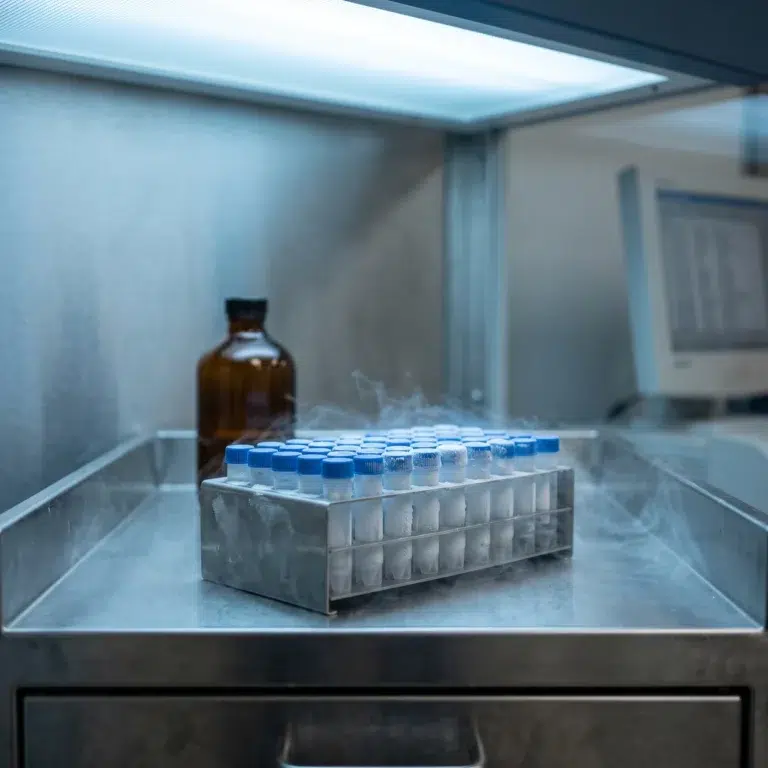
No new equipment is required beyond what an aesthetic or minor surgical practice already has. The cannula and harvest kit are part of Save My Fat’s provider supply protocol. No on-site laboratory. No cryogenic storage infrastructure. No cell processing equipment on the premises.
The overhead for adding banking is materially lower than adding most other ancillary service lines in a cash-pay practice. IV therapy and NAD+ infusion programs require nursing staff, a supply chain, and dedicated room space. Laser aesthetics require capital equipment investment in the $30,000 to $150,000 range. Hormone pellet therapy requires supply agreements, storage protocols, and specific training. Banking requires none of these. The capital-light entry profile is one of the reasons the service fits cleanly alongside what a cash-pay practice is already doing.
Training and Onboarding
Save My Fat provides full onboarding before a provider sees their first banking patient. That includes harvest procedure training, the patient consultation framework, protocol documentation, informed consent requirements and templates, and patient education materials for the practice. Specialty-specific onboarding details are available through the provider program.
The Recurring Revenue Structure
From One Harvest to Long-Term Relationship
A single banking procedure produces a documented vial inventory typically in the 200 to 400 range. Those vials sit in storage at a U.S.-based tissue bank until the patient and their physician decide to access them, for a clinical trial, an expanded access program, or an approved therapy as those pathways become available.
Every vial use is a return visit to the same provider. The physician who performed the harvest is the physician who administers the treatment. That is not a policy imposed from outside. It is the natural structure of an autologous banking relationship. The patient’s cells are at their provider. The provider is who they call.
The Compounding Math
The revenue logic is easiest to see as a model rather than a projection. Consider, hypothetically, a provider who banks twenty patients in their first year. Each of those patients has a vial inventory in storage. As clinical trials produce results and approved therapies emerge, some portion of those patients will access their vials. Each access is a return appointment and a procedure fee at the same practice. The provider does not need to re-acquire these patients. The relationship already exists. The cells are already stored. The clinical infrastructure is already in place. Year two, new banking patients layer on top of year one’s accumulated relationships. Same compounding logic. Actual outcomes depend on patient volume, local market conditions, and the pace of pipeline development, and are not guaranteed.
Family Eligibility Multiplies the Reach
Under Section 361 HCT/P criteria in 21 CFR Part 1271, a patient’s banked autologous cells may be used by first-degree or second-degree blood relatives in applicable clinical contexts, subject to the full criteria being satisfied at the time of use. One banking patient can potentially extend the clinical relationship to a spouse, children, parents, or siblings, all of whom become prospective patients in the same practice. The Save My Fat overview of family eligibility walks through the regulatory basis. For a concierge or family-medicine-adjacent cash-pay practice, this is a structural multiplier worth evaluating carefully.
Banking Compared to Other Cash-Pay Add-Ons
The table below gives context on how banking stacks up against the ancillary service lines you have probably already considered. This is practical context, not a ranking. Every practice’s fit depends on the specialty and patient base.
| Service Line | Capital Required | Billing Model | Recurring Revenue | Patient Returns For |
|---|---|---|---|---|
| Stem cell banking | Minimal, no on-site equipment | Direct pay, one-time banking fee | Yes, each future vial use | Future vial access |
| IV therapy or NAD+ | Low to moderate, supplies and staff | Per session | Yes, repeat sessions | Ongoing wellness |
| Laser aesthetics | High, $30K to $150K or more | Per treatment | Yes, maintenance cycles | Maintenance and new treatments |
| PRP injections | Low, centrifuge and consumables | Per treatment | Yes, repeat injections | Ongoing joint or aesthetic care |
| Hormone pellet therapy | Low, supply agreement | Per insertion | Yes, quarterly | Quarterly reinsertion |
Banking’s distinguishing characteristic is the combination of low capital entry with high per-patient revenue and a long-term recurring relationship model. Most cash-pay add-ons require either significant equipment investment or repeat patient acquisition to sustain revenue. Banking front-loads revenue and builds a long-term asset in the patient relationship itself, which is a different financial profile from the other lines.
Practice Valuation Implications
For any physician who may sell, merge, or take on a partner in the next five to ten years, cash-pay ancillary revenue with recurring characteristics is among the highest-value financial attributes a practice can demonstrate at valuation. Insurance-dependent practices are typically valued at four to six times EBITDA. Cash-pay and hybrid practices with recurring ancillary revenue currently command six to ten times EBITDA multiples in M&A activity, according to practice valuation reporting on 2025 and 2026 trends.
The mechanics here compound in the physician’s favor. Adding a cash-pay service line with a long-term recurring relationship model adds both EBITDA and a higher multiple to apply against it. The physician who adds banking at year one and sells at year eight has not just earned eight years of banking revenue. They have built eight years of compounding recurring relationships that price into the practice valuation at a higher multiple than insurance revenue.
Frequently Asked Questions
Do I need to renegotiate or modify any existing insurance contracts to offer banking?
No. Banking is a cash-pay service with no insurance billing component. It does not interact with existing payer contracts or require notification to insurance carriers. Onboarding details are available through the partner sign-up page.
How do I introduce banking to patients who are already in my practice?
Save My Fat provides patient education materials for partner providers. The most natural introduction is in the context of an existing appointment: annual wellness visits, pre-procedure consultations, or discussions about long-term health planning. The patient does not need to be actively seeking banking. They need to understand the option exists. The Save My Fat resource on questions to ask before tissue banking gives patients a framework for the conversation.
What is the realistic patient volume for a new banking provider?
Volume depends on practice size, specialty, patient demographic, and how actively the provider introduces banking in patient consultations. Save My Fat’s referral model supplements the provider’s own patient introductions with geographic patient matching through the provider program. Revenue outcomes vary and are not guaranteed.
How does banking compare financially to PRP, which I already offer?
PRP generates per-injection revenue, typically in the $500 to $1,500 range per session with repeat visits over time. Banking generates $8,000 to $15,000 per patient at the time of harvest, with potential recurring vial-use revenue downstream. The two services address different patient needs and are complementary rather than competitive. A patient who banks may also receive PRP treatments. A patient receiving PRP for joint pain is often a strong candidate for a banking consultation.
What happens if a patient cannot afford the full banking package?
The banking demographic is typically patients already invested in cash-pay health services at meaningful price points, so affordability concerns are less common than in insurance-dependent populations. When they come up, the Save My Fat overview of how to compare banking services helps patients evaluate packages against their specific goals, and partner providers have access to current package details to share during consultation.
Key Takeaways
Banking is a 100% cash-pay service with no insurance billing, no prior authorization requirements, and no reimbursement risk. The patient pays in the $8,000 to $15,000 range for a banking package, and the financial relationship is direct between patient and provider.
The overhead profile is materially lighter than most cash-pay ancillaries. No new equipment is required. No on-site laboratory. No cell processing infrastructure. The harvest takes thirty minutes under local anesthesia, and full training plus protocol documentation is included in Save My Fat’s provider onboarding before any patient is seen.
The recurring revenue structure is where banking separates from most cash-pay add-ons. Each banked patient produces a documented vial inventory, typically in the 200 to 400 range, and every future vial use is a return visit to the same provider. Family eligibility under Section 361 HCT/P can extend a single banking relationship to a spouse, children, parents, or siblings, which multiplies the practical reach of each patient the practice banks.
The practice valuation implications compound alongside the operational revenue. Cash-pay ancillary services with recurring characteristics add measurable EBITDA multiple value at exit. For any physician building a practice they may sell, merge, or partner within the next decade, this is the kind of service line that prices well at valuation even before the operational revenue is counted.
Ready to Add Banking to Your Practice?
Before contacting Save My Fat: adipose tissue banking is a preservation service for potential future use in FDA-regulated pathways, not a treatment or a guarantee of access to any specific clinical trial, therapy, or product. No adipose-derived product is FDA-approved for general disease treatment, and banking cannot be represented to patients as one. Revenue outcomes vary by practice and market conditions and are not guaranteed. Physicians considering partnership should independently verify applicable state licensing and informed-consent requirements, particularly in Florida, Utah, California, Georgia, and Tennessee, which have stem cell-specific statutes.
The model is designed to fit inside what you already do. The patient is already in your waiting room. The procedure is thirty minutes. The lab infrastructure is fully managed by a U.S.-based tissue bank. The patient referral system is already running.
Save My Fat partner providers receive full training on the harvest procedure and patient consultation framework, protocol documentation and informed consent templates, patient education materials ready for the practice, geographic patient referral matching, and ongoing support from a team with decades of regenerative medicine experience.
To review the full program structure, visit the provider program overview. To begin onboarding as a partner, visit the partner sign-up page.
Save My Fat works with a U.S.-based tissue bank for laboratory processing and storage. Save My Fat does not provide medical treatments, clinical trial enrollment, or Expanded Access services.
This article is for educational purposes only and does not constitute medical or legal advice. Please consult your own licensed healthcare provider before making any decisions about treatment or research participation.
About the author: Oscar Tellez is the founder and CEO of Save My Fat. He holds a Bachelor of Science in Exercise Science and Health Promotion from Florida Atlantic University. He has spent a decade in the regenerative medicine industry across product distribution, laboratory and vendor relationships, and provider training. He is not a licensed clinician, and this article is educational, not medical advice.
Related guide: the physician resource center.