If you have been exploring ways to prepare for the future of regenerative medicine, understanding adipose tissue banking is a smart place to start. This guide explains how adipose tissue (body fat) is collected, processed, and cryopreserved for potential future use in FDA-regulated clinical research, Expanded Access programs, or approved therapies. You will learn how the banking process works, what the FDA says about regenerative medicine products, and how to tell the difference between legitimate tissue preservation and unproven treatments. By the end, you will have the clarity you need to make an informed decision.
TLDR: Adipose tissue banking preserves your body’s own fat cells through validated cryopreservation protocols for potential future use in FDA-regulated research or approved therapies. Banking does not guarantee access to treatments or clinical benefit. Understanding how tissue preservation works, what the FDA requires, and how to spot red flags from unproven clinics helps you make a confident, informed decision. Read on for the full picture.
Important Disclaimer: Save My Fat does not provide FDA-approved treatments or cures for any disease or medical condition. Adipose tissue banking is a preservation service for potential future opportunities, not a therapeutic product. Banking adipose tissue today does not guarantee eligibility, access, or clinical benefit from any future therapy, clinical trial, or medical program. All content is for educational purposes only and does not constitute medical advice. Patients must consult their own licensed healthcare professionals regarding all medical decisions.
You have probably seen headlines about regenerative medicine, “stem cell” therapies, and tissue banking. Maybe you are planning ahead for future health challenges, or maybe you have seen clinics advertising miraculous cures and want to know what is real. Either way, one question likely stands out: if I preserve my tissue today, does that actually mean I will have access to effective treatments in the future?
The honest answer is that it depends on many factors outside the banking process itself. Regenerative medicine holds genuine scientific promise, but the field is also crowded with unproven therapies and aggressive marketing. This guide walks you through what adipose tissue banking actually is, how preservation works, what the FDA requires, and how to distinguish between compliant tissue storage and clinics making disease-cure claims. By the end, you will know what questions to ask before making any decision.
What Is Adipose Tissue Banking and Why Consider It?
Adipose tissue banking is the process of collecting, processing, and cryopreserving (freezing under controlled conditions) a patient’s own body fat for potential future medical use. The tissue remains the patient’s property and can be accessed if legitimate, FDA-regulated opportunities arise.
Key facts about adipose tissue banking:
- Adipose tissue is one of the richest sources of mesenchymal stromal cells (MSCs) in the body, yielding significantly more cells per gram than bone marrow [1]
- Validated cryopreservation protocols can preserve tissue viability for years in controlled storage environments
- Banking is a preservation service, not a treatment, therapy, or FDA-approved product
- Stored tissue does not guarantee future access to clinical trials, Expanded Access programs, or approved therapies
Researchers have registered hundreds of clinical trials on ClinicalTrials.gov investigating adipose-derived cells across musculoskeletal, cardiovascular, autoimmune, and wound healing applications [2]. However, most of these products have not yet completed the rigorous FDA approval process. Banking tissue positions you to potentially participate in future regulated opportunities, but it does not guarantee participation or benefit.
Learn more about why patients are considering tissue banking.
The following table outlines what Save My Fat provides and what it does not.
| What Save My Fat Does | What Save My Fat Does NOT Do |
|---|---|
| Collects and preserves your adipose tissue | Provide FDA-approved treatments for any disease |
| Uses validated cryopreservation protocols | Offer stem cell injections or therapies |
| Educates patients about FDA-regulated pathways | Diagnose, treat, cure, or prevent any disease |
| Stores tissue as your property for future access | Guarantee future clinical benefit or trial eligibility |
| Maintains transparent communication about limitations | Market unapproved “stem cell” cures |
| Follows proper tissue handling and storage protocols | Provide medical advice or physician services |
Understanding this distinction is the foundation for making an informed decision about tissue banking.
How Adipose Tissue Collection Works
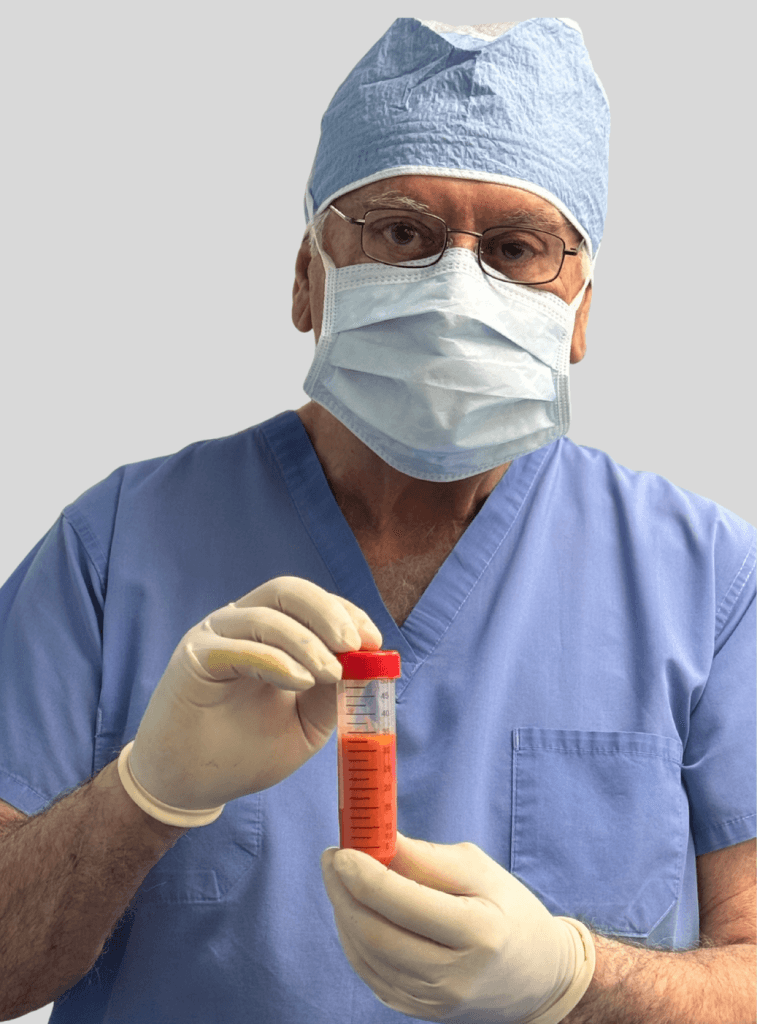
Adipose tissue is typically collected through a minimally invasive liposuction procedure performed by a qualified physician in an outpatient setting.
The Collection Procedure
A small volume of fat tissue (usually 50 to 200 mL) is collected from common harvest sites such as the abdomen or flanks using tumescent local anesthesia. The procedure typically takes 15 to 30 minutes, and most patients return to normal activities within a few days.
What Happens to Your Tissue
After collection, the tissue is transported under controlled conditions to a processing facility where it is prepared for long-term cryopreservation. The tissue is not processed into therapeutic products, isolated into specific cell populations, or prepared for immediate medical use. It is preserved for potential future opportunities.
For detailed information about collection, see how stem cell banking works. Like any medical procedure, tissue collection carries potential risks including bruising, minor discomfort, infection, and adverse reactions to local anesthesia. Patients should discuss all risks with their physician before proceeding.
The Cryopreservation Process: Preserving Your Tissue
Cryopreservation is the science of freezing biological materials in a way that maintains cell viability over long periods. It is one of the most well-established techniques in modern biobanking.
How Cryopreservation Works
The process uses cryoprotective agents (most commonly DMSO, or dimethyl sulfoxide) combined with controlled-rate freezing to prevent the formation of damaging ice crystals inside cells. Tissue is cooled at a carefully controlled rate, typically around 1 degree Celsius per minute, before being transferred to long-term storage in liquid nitrogen at temperatures near negative 196 degrees Celsius [3].
| Cryopreservation Step | What Happens | Purpose |
|---|---|---|
| Tissue preparation | Collected adipose tissue is cleaned and prepared | Removes debris, prepares for preservation |
| Cryoprotectant addition | DMSO-based solution is added at controlled temperature | Prevents ice crystal formation inside cells |
| Controlled-rate freezing | Temperature is lowered at approximately 1 degree per minute | Minimizes cellular damage during freezing |
| Transfer to storage | Tissue is moved to liquid nitrogen environment | Maintains long-term viability at ultra-low temperatures |
| Ongoing monitoring | Temperature and storage conditions are continuously tracked | Ensures preservation quality over time |
Viability and Storage Duration
Peer-reviewed research demonstrates that adipose-derived cells can maintain viability after cryopreservation, with post-thaw viability rates commonly reported between 80 and 91 percent under validated protocols [4]. Studies have successfully isolated functional cells from tissue stored for multiple years, and liquid nitrogen storage is theoretically stable for decades based on the biology of ultra-low temperature preservation.
| Storage Duration | Expected Viability | Evidence Level |
|---|---|---|
| Immediately post-thaw | 80 to 91 percent (validated protocols) | Strong, peer-reviewed data |
| 1 to 3 years | Viability maintained in liquid nitrogen | Published clinical data |
| 5 or more years | Viability expected based on storage science | Limited long-term ADSC-specific data, supported by cord blood precedent |
| Decades | Theoretically stable at negative 196 degrees | Based on cryobiology principles |
It is important to note that while storage science is well established, long-term viability data specific to adipose tissue is still being collected. Learn more about storage and banking protocols.
FDA Regulations and Banking Status
Understanding how the FDA regulates regenerative medicine products is essential for making informed decisions about tissue banking.
How the FDA Classifies Tissue Products
The FDA regulates human cells, tissues, and cellular and tissue-based products (HCT/Ps) under 21 CFR Part 1271 [5]. Products are classified into two primary pathways based on how the tissue is processed and what it is used for.
| Classification Element | Section 361 HCT/P | Section 351 Biological Product |
|---|---|---|
| Legal authority | 21 CFR Part 1271 | Federal Food, Drug, and Cosmetic Act |
| Clinical trials required? | No (if all four criteria are met) | Yes, must demonstrate safety and efficacy |
| Four required criteria | Minimal manipulation, homologous use, not combined with other articles, no systemic effect or autologous use | Fails to meet one or more 361 criteria |
| Marketing approval | No Biologics License Application needed | BLA required before legal marketing |
| Examples | Bone grafts, certain minimally processed adipose tissue | Enzymatically digested SVF, cultured cells, exosomes |
What “Minimal Manipulation” Means
Minimal manipulation means the tissue is processed in ways that do not fundamentally change how it works [6]. Rinsing, cutting, and cryopreserving adipose tissue are generally considered minimally manipulative. However, enzymatic digestion (using collagenase to break down tissue and isolate specific cell populations) is generally considered more than minimal manipulation by the FDA, triggering the more stringent 351 pathway.
Is Adipose Tissue Banking FDA-Approved?
Adipose tissue banking as a preservation service is not itself an FDA-approved or FDA-disapproved product. However, any future medical application of stored tissue must comply with FDA regulations at that time. Products that undergo more than minimal manipulation or are used for non-homologous purposes require IND applications and BLA before legal marketing [7]. Currently, there are no FDA-approved adipose-derived stem cell products for any disease indication in the United States.
Legitimate Future Pathways for Banked Tissue
While no one can predict future regulatory decisions, several legitimate, FDA-recognized pathways exist through which banked tissue could potentially be used.
| Pathway | What It Is | Who Qualifies | Key Requirements |
|---|---|---|---|
| Clinical trials | Research studies testing safety and efficacy of investigational products | Patients meeting specific enrollment criteria | FDA oversight via IND, IRB approval, informed consent, voluntary participation |
| Expanded Access (Compassionate Use) | Access to investigational products outside trials for serious conditions | Patients with serious or life-threatening conditions who have exhausted alternatives | Physician, sponsor, FDA, and IRB must all approve |
| Right to Try | Federal law allowing access to investigational drugs that completed Phase 1 | Patients with life-threatening diseases who exhausted approved options | Physician and sponsor must agree, no FDA approval required |
| Future approved therapies | Products that complete clinical trials and receive FDA marketing approval | Patients for whom the therapy is indicated | Must have completed full approval process |
Important Context
Clinical trials are research studies, not treatment programs. Results are not guaranteed, and participation is voluntary. Expanded Access requires approval from four separate parties: the treating physician, the product sponsor, the FDA, and an institutional review board [8]. Sponsors frequently decline Expanded Access requests. Right to Try removes FDA oversight but does not require sponsors to provide products.
Banking adipose tissue today does not automatically connect patients to any of these pathways. Eligibility depends on future medical circumstances, regulatory decisions, sponsor willingness, and physician involvement. For more information on Expanded Access, visit the Reagan-Udall Foundation Navigator or the FDA Expanded Access page.
Banking vs. Direct Stem Cell Treatment Clinics
One of the most important distinctions for patients to understand is the difference between tissue banking services and clinics marketing direct-to-consumer stem cell treatments.
| Factor | Tissue Banking (Save My Fat) | Direct-to-Consumer Clinics |
|---|---|---|
| Primary service | Tissue preservation for future regulated opportunities | Immediate injection or treatment using processed cells |
| FDA compliance approach | Focuses on compliant preservation and patient education | Often markets products without required FDA approval |
| Disease treatment claims | None. Banking is a preservation service. | Frequently claims to treat arthritis, pain, neurological conditions |
| Regulatory pathway | Stores tissue for future use within legitimate pathways | Often bypasses required IND/BLA process |
| Transparency about limitations | Honest about uncertainties and lack of guarantees | May minimize risks and overstate expected outcomes |
| Cost structure | One-time collection plus ongoing storage fees | Pay-per-treatment, often thousands per session |
Red Flags to Watch For
Patients should be cautious of any clinic that claims stem cell treatments can cure or reverse specific diseases, charges patients to “participate” in clinical trials, has no ClinicalTrials.gov registration number, markets directly to consumers with guaranteed outcomes, or lacks transparent information about FDA regulatory status.
The FDA has issued consumer alerts specifically warning about unapproved regenerative medicine products [9]. Patients can search for warning letters at the FDA compliance page.
Visit Save My Fat’s patient resources page for answers to common questions about how banking differs from treatment clinics.
Storage, Ownership, and Long-Term Care
Understanding the practical aspects of tissue storage helps patients plan for the long term.
Your Tissue, Your Property
Banked adipose tissue remains the patient’s property throughout the storage period. You control access to your tissue and can request retrieval if a legitimate medical opportunity arises. Storage facilities maintain proper documentation, temperature monitoring, and chain-of-custody protocols to protect your biological material.
Financial Considerations
Tissue banking involves both upfront costs (collection procedure, processing, initial storage) and ongoing annual storage fees. Insurance typically does not cover tissue banking for future investigational use.
| Cost Category | Typical Range | Notes |
|---|---|---|
| Initial collection and processing | Varies by provider and procedure complexity | Includes physician fees, facility costs, and processing |
| Annual storage fee | Varies by provider | Covers facility maintenance, monitoring, and documentation |
| Retrieval and transport | Varies based on destination and protocol | Required if tissue is needed for future medical use |
| Future treatment costs | Unknown and highly variable | Depends on regulatory status, insurance coverage, and provider pricing at that time |
Patients should understand all financial commitments, including long-term storage costs, before proceeding. Ask about refund policies, what happens if the company closes, and how retrieval works.
Patient Considerations and Questions to Ask
Making an informed decision about adipose tissue banking involves considering your health goals, financial situation, and realistic expectations about future possibilities.
Questions to Ask Before Banking
Before proceeding, discuss these topics with your physician and the banking provider:
- What are my specific goals for banking tissue?
- What are the realistic chances that banked tissue will be usable in my lifetime?
- What are the total costs over 5, 10, and 20 years?
- What happens to my tissue if the storage company closes?
- What is the company’s regulatory compliance history?
Tissue banking may be worth exploring for individuals who are proactively planning for future health options, are comfortable with the financial commitment, and understand that no treatment guarantees exist. It is not a substitute for current medical treatment, and patients should never delay conventional care based on the possibility of future regenerative therapies.
For more detailed answers, see our patient resources page.
Frequently Asked Questions About Adipose Tissue Banking
Q: What exactly is adipose tissue banking? A: Adipose tissue banking is the process of collecting, processing, and cryopreserving your own body fat for potential future use in FDA-regulated clinical research, Expanded Access programs, or approved therapies. It is a preservation service, not a treatment. Learn more about the banking process.
Q: Is adipose tissue banking FDA-approved? A: Tissue banking as a preservation service is not a product requiring FDA approval. However, any future medical use of stored tissue must comply with FDA regulations. Products derived from adipose tissue that undergo more than minimal manipulation typically require IND applications and BLA before legal marketing [5].
Q: How is my tissue collected? A: A qualified physician collects a small volume of adipose tissue through a minimally invasive liposuction procedure, usually from the abdomen or flanks under local anesthesia. The procedure takes 15 to 30 minutes in an outpatient setting.
Q: How long can adipose tissue be stored? A: Validated cryopreservation protocols maintain tissue viability for years. Storage in liquid nitrogen at negative 196 degrees Celsius is theoretically stable for decades, though long-term ADSC-specific data is still being collected [4].
Q: Does banking guarantee I can use my tissue later? A: No. Banking does not guarantee eligibility, access, or clinical benefit from any future therapy, clinical trial, or medical program. Future use depends on evolving science, FDA decisions, your clinical situation, and availability of approved pathways.
Q: What is the difference between banking tissue and getting stem cell treatments? A: Banking preserves tissue for potential future regulated opportunities. Direct-to-consumer “stem cell treatments” typically involve immediate injection of processed cells, often without required FDA approval. These are fundamentally different services.
Q: What are the risks of tissue collection? A: Like any medical procedure, tissue collection carries potential risks including bruising, discomfort, infection, and reactions to anesthesia. Cryopreservation protocols are well established, but long-term storage outcomes cannot be guaranteed. Discuss all risks with your physician.
Q: How much does tissue banking cost? A: Costs vary by provider and include initial collection and processing fees plus ongoing annual storage charges. Insurance typically does not cover tissue banking for investigational purposes. Ask your provider for a complete cost breakdown.
Q: Can my banked tissue be used in clinical trials? A: Potentially, if a trial is designed to use patient-banked tissue and you meet its eligibility criteria. Banking does not guarantee participation in any trial. Search ClinicalTrials.gov and consult your physician about opportunities [2].
Q: What happens to my tissue if I no longer want to store it? A: Your tissue is your property. You can request disposal according to the provider’s procedures. Review your storage agreement for specific terms.
Key Takeaways
Adipose Tissue Banking Basics
- Involves collection, processing, cryopreservation, and long-term storage of your own fat tissue
- Validated protocols can preserve tissue viability for years at ultra-low temperatures
- Banking is a preservation service, not a treatment or FDA-approved therapy
- Does not guarantee future treatment access, trial eligibility, or clinical benefit
FDA Regulatory Landscape
- Regenerative medicine products are regulated under 21 CFR Part 1271
- Most adipose-derived therapeutic products require the 351 pathway with clinical trials and BLA
- No adipose-derived stem cell products are currently FDA-approved for disease treatment in the U.S.
- Banking tissue does not circumvent regulatory requirements for future therapies
Patient Safety and Protection
- Avoid clinics marketing unapproved disease cures using stem cells or exosomes
- Verify any provider’s regulatory compliance before proceeding
- Consult qualified physicians before making decisions about tissue banking
- Report suspicious marketing to the FDA or FTC
Financial and Practical Factors
- Banking involves upfront collection costs plus ongoing annual storage fees
- Insurance typically does not cover investigational tissue banking services
- Understand all financial commitments, including long-term projections, before proceeding
- Review ownership terms, retrieval policies, and provider stability
Making an Informed Decision
- Research thoroughly using authoritative sources such as FDA.gov, ClinicalTrials.gov, and PubMed
- Set realistic expectations about the timeline and uncertainty of future therapies
- Distinguish between tissue preservation (banking) and active therapy (treatment)
- Ask questions, verify claims, and prioritize transparency over hype
Ready to Learn More About Adipose Tissue Banking?
You now understand how adipose tissue banking works, how the FDA regulates regenerative medicine, and how to tell the difference between compliant tissue preservation and unproven clinics. The next step is connecting with a provider that prioritizes transparency and honest communication.
Save My Fat helps individuals preserve adipose tissue through validated cryopreservation protocols for potential future use in FDA-regulated pathways. We focus on education and honesty about limitations, not disease-cure promises.
Here is what we offer:
- Comprehensive consultation to discuss your goals and answer questions
- Transparent information about the banking process, costs, and realistic expectations
- Validated cryopreservation protocols supported by peer-reviewed research
- Long-term storage in controlled facilities with proper documentation
- Educational resources about FDA pathways, clinical trials, and patient safety
Banking adipose tissue is a preservation service for potential future opportunities, not a treatment or cure for any disease. Outcomes cannot be guaranteed. All medical decisions must be made with your licensed healthcare provider.
Ready to learn more? Visit: https://savemyfat.com Contact Save My Fat to discuss whether adipose tissue banking aligns with your health planning goals.
Learn About the Banking Process | For Patients | Emerging Research
Save My Fat Adipose Tissue Banking for Future Regenerative Medicine Opportunities
References
[1] Bourin P, et al. “Stromal cells from the adipose tissue-derived stromal vascular fraction and culture expanded adipose tissue-derived stromal/stem cells: a joint statement of the International Federation for Adipose Therapeutics and Science (IFATS) and the International Society for Cellular Therapy (ISCT).” Cytotherapy. 2013;15(6):641-648. Available via PubMed/NIH.
[2] U.S. National Library of Medicine. ClinicalTrials.gov. Search: “adipose-derived stem cells.” https://www.clinicaltrials.gov/
[3] Thirumala S, et al. “Cryopreservation of adipose-derived adult stem cells.” Biotechnology and Bioengineering. Published research available via PubMed/NIH.
[4] Minonzio G, et al. “Frozen adipose-derived mesenchymal stem cells maintain high capability to grow and differentiate.” Cryobiology. Available via PubMed/NIH.
[5] U.S. Food and Drug Administration. 21 CFR Part 1271: Human Cells, Tissues, and Cellular and Tissue-Based Products. https://www.ecfr.gov/current/title-21/chapter-I/subchapter-L/part-1271
[6] U.S. Food and Drug Administration. “Regulatory Considerations for Human Cells, Tissues, and Cellular and Tissue-Based Products: Minimal Manipulation and Homologous Use.” November 2017. https://www.fda.gov/regulatory-information/search-fda-guidance-documents/
[7] U.S. Food and Drug Administration. “FDA Warns About Stem Cell Therapies.” Consumer Update. https://www.fda.gov/vaccines-blood-biologics/consumers-biologics/consumer-alert-regenerative-medicine-products-including-stem-cells-and-exosomes
[8] Reagan-Udall Foundation for the FDA. Expanded Access Navigator. https://navigator.reaganudall.org
[9] U.S. Food and Drug Administration. “Consumer Alert on Regenerative Medicine Products Including Stem Cells and Exosomes.” https://www.fda.gov/vaccines-blood-biologics/consumers-biologics/consumer-alert-regenerative-medicine-products-including-stem-cells-and-exosomes
[10] U.S. Federal Trade Commission. “Health Products Compliance Guidance.” https://www.ftc.gov/business-guidance/resources/health-products-compliance-guidance
Last updated: February 13, 2026