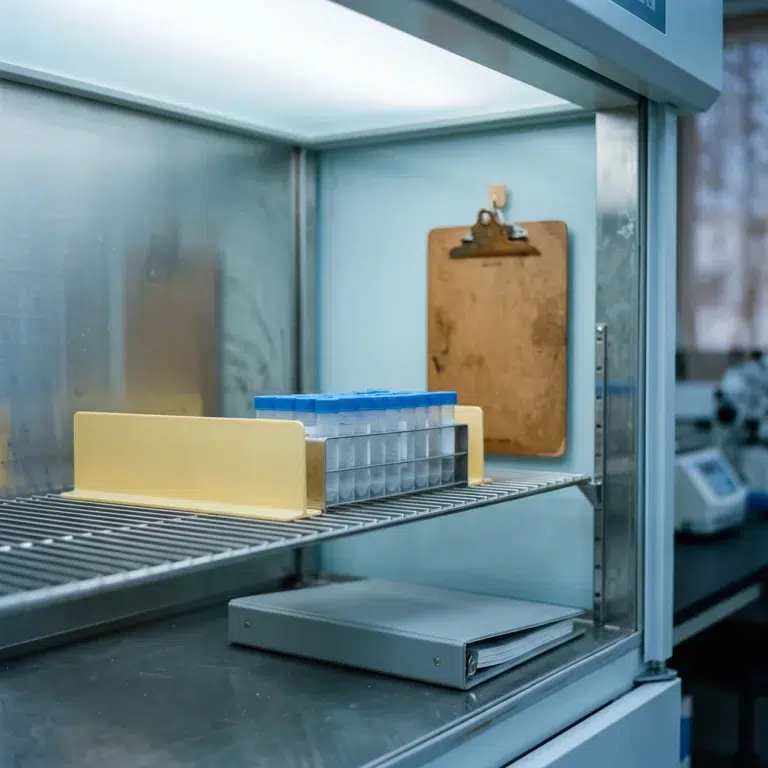

Carrollton sits in Carroll County, about 40 miles west-southwest of Atlanta in a straight line. Residents there often ask whether that distance narrows their options for adipose tissue banking, and whether Georgia’s stem cell law reads differently outside the metro core. It does not. This guide covers the federal rules that apply everywhere, the state statute that took effect in 2026, what the process involves, and the questions worth putting to a physician.
TLDR Adipose tissue banking preserves a person’s own tissue for possible future use. Nothing derived from that tissue is FDA approved for any disease, and banking does not guarantee eligibility, access, or clinical benefit from any future therapy or trial. Georgia’s HB 1275 regulates licensed clinicians rather than locations, and its own sourcing rule does not require the storage facility to sit inside Georgia.
Important Disclaimer: Save My Fat does not provide FDA-approved treatments or cures for any disease. Banking adipose tissue today does not guarantee eligibility, access, or clinical benefit from any future therapy, clinical trial, or medical program. No adipose-derived stem cell product currently has FDA approval for any disease. All content is for educational purposes only and does not constitute medical advice. Patients must consult their own licensed healthcare professionals regarding all medical decisions.
Carrollton had an estimated population of 27,925 as of July 1, 2025, according to U.S. Census QuickFacts, and the city falls inside the Atlanta-Sandy Springs-Roswell metro area even though it sits well outside the perimeter. That pairing produces a common assumption: that anything involving human tissue has to be arranged in Atlanta.
The assumption is understandable and wrong on the law. Federal tissue rules are national. Georgia’s statute regulates people who hold licenses, not the counties they practice in.
What follows is a regulatory picture, not a recommendation. Nothing here suggests that banking adipose tissue addresses any condition, because no adipose-derived product is approved by FDA for any disease.
Is Adipose Tissue Banking Available Without Traveling to Atlanta?
Geography is not the limiting factor. Banking splits into a collection procedure performed by a licensed physician and long-term storage at a registered facility. Only the first requires an in-person visit.
Human cells, tissues, and cellular and tissue-based products are governed by 21 CFR Part 1271, which reads the same in Carroll County as it does in Fulton County. State legislatures regulate professional licensure and discipline. They do not set the federal standard.
Save My Fat is a connector. It links patients and providers with a U.S. tissue bank, and it does not collect, process, store, or treat tissue. Readers new to the category can start with the adipose tissue banking fundamentals.
How Georgia’s Stem Cell Law Applies in Carroll County
It applies the same way it applies in Atlanta, because it regulates licensed clinicians rather than places. Georgia House Bill 1275, cited as HB 1275 (2026 Ga. Laws Act 453), was signed in May 2026 and took effect July 1, 2026.
The statute says a physician, or a physician assistant or nurse practitioner acting on that physician’s lawful designation, may perform human stem cell therapy that is not approved by the FDA, within their scope of practice, so long as the patient is advised and signs a consent form. The enrolled text also sets the sourcing rule, accepting a facility “registered with the FDA and located in Georgia, another state in the United States, or another country.”
Note what the law does not do. It does not legalize, authorize, or create access to any therapy, and its only penalty is discipline by the clinician’s professional board. No state statute can override FDA jurisdiction, and 21 CFR 1271.20 applies in all 50 states.
What the Banking Process Involves Step by Step
Four stages: consultation, collection, transfer, and storage. A licensed physician performs the collection, and the stages after it are laboratory and recordkeeping work.
It starts with a clinical conversation in which a physician evaluates whether an elective collection is appropriate for that individual. The tissue then moves to a facility that has registered and listed with FDA.
Storage carries federal labeling duties. Under the autologous exception, tissue held for the patient’s own use must be labeled FOR AUTOLOGOUS USE ONLY, and NOT EVALUATED FOR INFECTIOUS SUBSTANCES unless donor screening and testing were performed anyway. That exception covers screening and testing only. Registration, listing, good tissue practice, and labeling still apply.
Nothing is promised past that point. Any future use depends on FDA regulatory status, physician guidance, and the availability of approved or investigational pathways at that time. A walkthrough of how banking works covers the sequence in more detail.
Why Stromal Is the More Accurate Word
Because the International Society for Cellular Therapy concluded the word stem was inaccurate for these cells. Its 2005 nomenclature ISCT position statement said the properties of the unfractionated cell population “do not seem to meet generally accepted criteria for stem cell activity, rendering the name scientifically inaccurate and potentially misleading to the lay public.”
It proposed that these plastic-adherent cells, regardless of tissue of origin, be called multipotent mesenchymal stromal cells, reserving the older name for cells meeting specified criteria. A 2019 ISCT nomenclature update kept that standard and asked that the acronym be paired with the tissue source.
Language is a useful screen. How a provider names the cells is worth noticing.
Questions to Ask Before Choosing a Provider
Ask about registration, about claims, and about the notice Georgia requires. Those three cover most of the ground.
On registration: ask whether the facility handling the tissue is registered and listed with FDA, then read what that means. Registration is self-submitted. FDA states on its patient information page that a firm registering with FDA and listing its product “does not mean the product is legally marketed.”
On claims: FDA is blunt on that same page. “If you are being charged for these products or offered these products outside of a clinical trial, you are likely being deceived and offered a product illegally.”
On the notice: Georgia requires any advertisement for these services to carry a mandated notice, in type no smaller than the largest type used in that advertisement, stating that the therapies have not yet been approved by the FDA. Its absence is worth a question.
Frequently Asked Questions
Does banking tissue guarantee access to a future therapy?
No. Banking preserves tissue. It does not guarantee eligibility, access, or clinical benefit from any future therapy, trial, or program, and FDA’s consumer alert states that no regenerative medicine products are approved for orthopedic, neurological, cardiovascular, pulmonary, or chronic pain conditions.
Is FDA registration the same as FDA approval?
No. Registration and listing are self-submitted filings made by the establishment. They are not approval, endorsement, clearance, or certification.
Does autologous use mean no FDA requirements apply?
No. The exception at 21 CFR 1271.90 waives donor eligibility screening and testing. Registration, listing, current good tissue practice, labeling, and the criteria at 1271.10(a) all still apply.
Key Takeaways
Carrollton’s distance from Atlanta does not change the rules. The federal framework at 21 CFR Part 1271 is national, and Georgia’s HB 1275 regulates licensed clinicians rather than locations, with a sourcing rule that accepts registered facilities in other states. Banking preserves a person’s own tissue and nothing more. Nothing derived from adipose tissue is FDA approved for any disease, the cells involved are more accurately called stromal cells, and FDA registration is a filing rather than an endorsement. Anyone weighing this should bring these questions to a licensed physician and expect straight answers about what is stored and what is not promised.
Save My Fat connects patients and providers with a U.S.-based tissue bank. It is not a tissue bank, a laboratory, a medical practice, or a treatment provider. Stem cell and regenerative medicine regulations vary by state, including specific informed-consent and disclosure requirements in Florida, Utah, California, Georgia, and Tennessee governing tissue and stem cell services. Banking adipose tissue does not connect patients to any treatment pathway, and any future use depends on FDA regulatory status, physician guidance, and the availability of approved or investigational pathways at that time.
Carroll County readers weighing adipose tissue banking for potential future use can review current pricing or begin a conversation through the contact page.
Save My Fat works with a U.S.-based tissue bank for laboratory processing and storage.
This article is for educational purposes only and does not constitute medical or legal advice. Please consult your own licensed healthcare provider before making any decisions about adipose tissue banking or research participation.
About the author: Oscar Tellez is the founder and CEO of Save My Fat. He holds a Bachelor of Science in Exercise Science and Health Promotion from Florida Atlantic University. He has spent a decade in the regenerative medicine industry across product distribution, laboratory and vendor relationships, and provider training. He is not a licensed clinician, and this article is educational, not medical advice.
Related guide: state stem cell laws.