
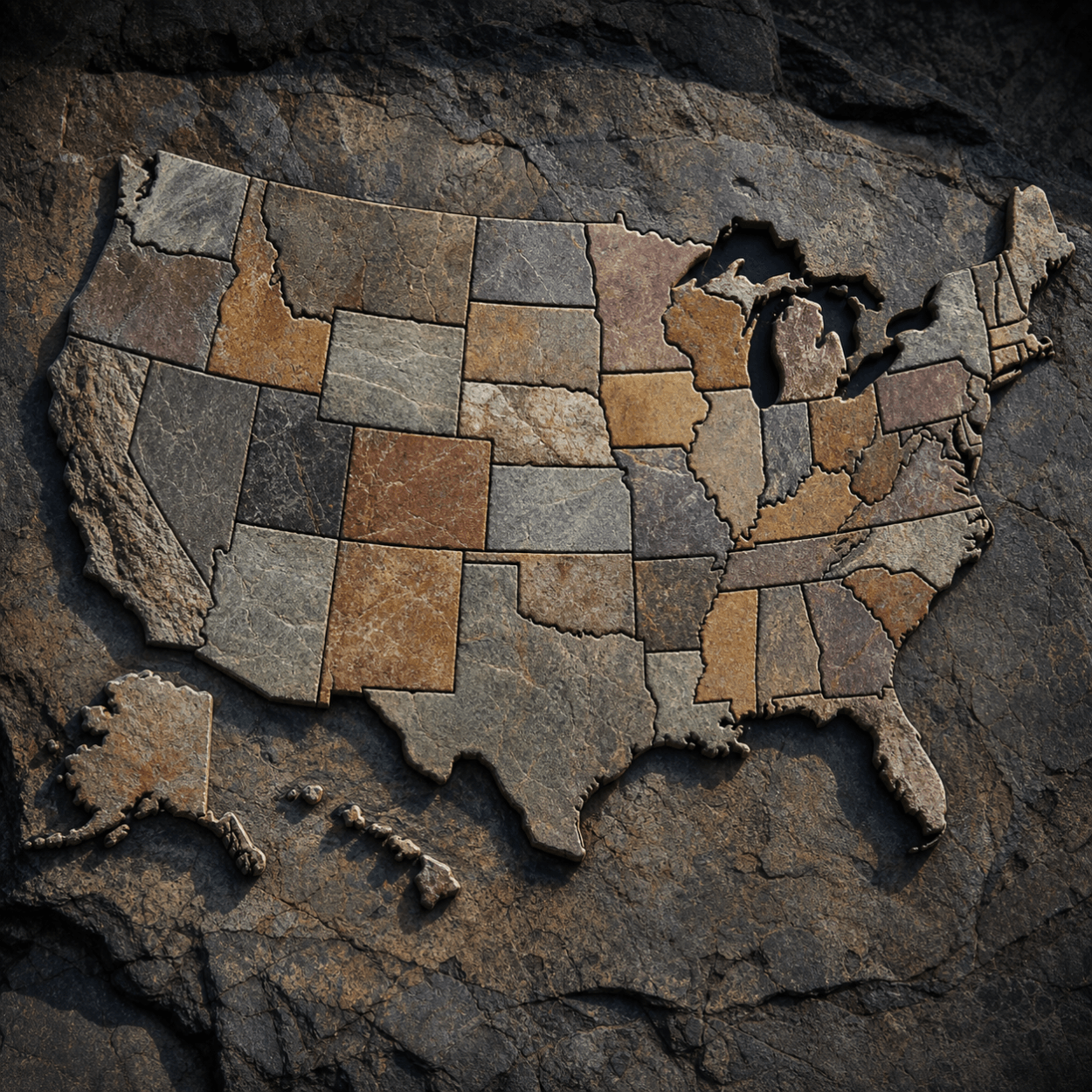
Three state stem cell statutes took effect on July 1, 2026, and a fourth bill was vetoed eleven days earlier. This multi-state stem cell law map 2026 update covers the state stem cell laws that changed and adds Utah’s quieter May amendment, verified against official sources.
TLDR: Georgia HB 1275, Tennessee HB 2246, and Wyoming SF0048 all took effect on July 1, 2026, while Arizona SB 1214 was vetoed on June 19, 2026. Utah’s amendment landed earlier, on May 6, 2026, creating the first supplier-side confirmation duty anywhere. None of these laws makes any product FDA approved, and banking adipose tissue does not guarantee eligibility, access, or clinical benefit.
Important Disclaimer: Save My Fat is a tissue preservation connector and does not provide FDA-approved treatments or cures. The laws below govern how providers advertise, document consent, and source products. They create no access to any therapy, and Save My Fat does not guarantee eligibility, access, or clinical benefit. This article is provided for educational purposes only, and readers should consult their own licensed healthcare professionals and attorneys.
July 1, 2026 was a heavy day for state stem cell regulation. Three statutes reached their effective dates at once, in Georgia, Tennessee, and Wyoming. Eleven days earlier, an Arizona bill that had cleared both chambers died on the governor’s desk. Anyone reading this map from June is working from a stale copy.
The pattern across the group is consistent. States are not banning anything. They regulate how a provider advertises, what a patient signs, and where the product came from. One change got almost no coverage at all: Utah’s amendment, effective May 6, 2026, reaches suppliers rather than the physicians using the product.
Georgia and Tennessee: Two July 1 Laws, Two Different Burdens
Georgia HB 1275 Took Effect With No Specialty Limit
Georgia’s Act 453 was signed May 11, 2026 and created O.C.G.A. 43-34-49. Under the Georgia enrolled legislation, a physician, physician assistant or nurse practitioner under lawful designation may perform non-FDA-approved human stem cell therapy within scope, with advisement and a signed consent form stating the treatment’s nature and character, that it is not yet FDA approved, and anticipated results.
Advertising must carry a required notice in type no smaller than the largest used in the ad. Product may come from an FDA-registered facility in Georgia, another state, or abroad, or from one certified by the World Marrow Donor Association, AABB, or the American Association of Tissue Banks. Georgia sets no post-thaw viability requirement and, unlike Florida, no specialty limitation.
Tennessee HB 2246 Brought the Only Numeric Viability Standards
Public Chapter 1016 was signed May 19, 2026. It defines two categories, stem cell therapy and regenerative medicine therapy, and is the only state law with numeric viability thresholds. The Tennessee public chapter requires a pre-thaw certificate of analysis showing greater than 90 percent viability and a post-thaw report at no less than 80 percent, unless the product is autologous.
The standards are tiered by product type. Allogeneic product must come from a facility giving the physician proof of FDA registration, while autologous product needs a facility holding a CLIA certificate of compliance. Storage must sit no higher than minus 80 degrees Celsius unless the product is autologous. Written consent, signed before the therapy, applies either way.
Wyoming Is the Outlier, and Its Scope Runs the Other Way
Wyoming SF0048, Chapter 64 of the 2026 Budget Session, was signed March 6, 2026 and created W.S. 35-4-1101 through 35-4-1106. Its scope is autologous mesenchymal stem cells only. It excludes anything derived from an abortion and does not cover allogeneic birth tissue, the opposite posture from Georgia, Florida, and Utah.
The act sets four preconditions: current IRB approval or investigational status after phase 1, cGMP manufacture and handling, an existing physician-patient relationship, and registration with the Wyoming State Board of Medicine. The Wyoming enrolled act directs the Board to publish a public registry, which no other state does. There is no advertising notice, and the statute behind Wyoming physician registration excludes physician assistants.
Utah’s May Amendment Is the Most Consequential Item
Utah Code 58-1-512 was enacted by S.B. 199 in 2024, and S.B. 55 amended it effective May 6, 2026. Most coverage read the bill title, Placental Tissue Amendments, assumed the subject was birth tissue, and moved on. The substantive change is a supplier-side duty found nowhere else in the country.
Under the amended Utah code section, a person may supply human cells, tissues, and cellular and tissue-based products to a provider only if the provider’s scope of practice includes stem cell therapy and the provider has given the supplier written confirmation, before supply, that the provider will give the required notice to each patient whose therapy uses those products.
The obligation attaches to the supplier, not only the clinician, and it requires a document in hand before any product ships. Organizations reviewing the Utah supplier duty should build that confirmation into provider onboarding. Utah’s scope incorporates the federal HCT/P definition, so adipose-derived products sit inside it despite the bill’s title.
Arizona SB 1214 Was Vetoed, So Arizona Is Off the Map
Arizona is the item reported incorrectly most often, because the bill traveled a long way before it failed. SB 1214 passed the Senate on March 4, 2026, the House on June 9, 2026, and final Senate passage on June 12, 2026. Governor Katie Hobbs vetoed it on June 19, 2026, and there was no override.
The vetoed Arizona bill text would have required accredited continuing education, an all-caps advertising disclosure, a five-element written consent, accredited sourcing, manufacturer validation reports, adverse event reports within 15 calendar days, and 10,000 dollars in statutory damages per violation. None of it is in force, and none of it describes current Arizona practice.
The Full State List in This Multi-State Stem Cell Law Map 2026 Update
Eleven states now impose stem cell disclosure requirements, consent requirements, or both. Seven pair a patient-facing notice with a statutory consent, and four require consent alone. Every entry below was checked against an official source.
| State | Statute and date | Requires |
|---|---|---|
| Georgia | HB 1275, July 1, 2026 | Notice and consent, no specialty limit |
| Tennessee | HB 2246, July 1, 2026 | Notice and consent, numeric viability thresholds |
| Wyoming | SF0048, July 1, 2026 | Consent only, autologous MSC, public registry |
| Utah | Code 58-1-512, amended May 6, 2026 | Notice and consent, supplier confirmation |
| Florida | SB 1768, July 1, 2025 | Notice and consent, orthopedics, wound care, or pain management |
| California | SB 512, 2017 | Notice and consent |
| Washington | RCW 18.130.420, June 7, 2018 | Notice and consent |
| Vermont | S.22, Act 61, July 1, 2021 | Notice and consent |
| Texas | HB 810, September 1, 2017 | Consent only, severe chronic or terminal illness |
| North Carolina | HB 934, December 1, 2019 | Consent only |
| Mississippi | SB 2830, 2020 | Consent only, Right to Try, adult autologous MSC |
| Nevada | NRS 629.300 to 629.390, 2009 | Permissive statute, no notice or consent duty |
Verification is not completeness. Treat the table as a starting point for state-specific legal review, not a substitute for one.
Two entries get misreported most often. Nevada is the larger error, because readers comparing Nevada’s authorizing statute against Florida or Utah are looking at two different species of law. California does belong: the California disclosure law requires disclosure that the therapy is not FDA approved and requires the Medical Board of California to report complaints and discipline.
What These State Stem Cell Laws Do Not Change
None of these statutes makes any product FDA approved. Classification still runs through the criteria on the FDA tissue product questions and answers page, and adipose tissue and stromal vascular fraction remain investigational. Anyone weighing adipose tissue banking for potential future use should read a posted notice as a disclosure, never an endorsement, and check the state law map.
Frequently Asked Questions
What new state laws have passed since the original map was published in June 2026?
Three took effect on July 1, 2026: Georgia HB 1275, Tennessee HB 2246, and Wyoming SF0048. Utah’s amendment took effect earlier, on May 6, 2026. Arizona SB 1214 is often listed as a fourth, and that is wrong. Governor Hobbs vetoed it on June 19, 2026.
How many states now have specific stem cell therapy legislation?
Eleven, as checked on July 27, 2026. Seven require both a patient notice and a statutory consent: California, Washington, Vermont, Utah, Florida, Georgia, and Tennessee. Four require consent without an advertising notice: Texas, North Carolina, Mississippi, and Wyoming. Montana and Alabama are on neither list.
What is the practical effect of these new laws for patients?
Mostly disclosure and documentation. You should receive a written or posted notice stating the therapy is not FDA approved, and sign a consent describing its nature, character, and anticipated results. None of it makes a therapy approved or establishes eligibility, access, or clinical benefit.
Does the Utah amendment apply to companies that supply tissue?
Yes, and that is what makes it unusual. Since May 6, 2026, a supplier may provide human cells, tissues, and cellular and tissue-based products to a Utah provider only after receiving written confirmation, in advance, that the provider will notify each affected patient.
Does Nevada require a stem cell disclosure?
No. Nevada has no stem cell disclosure law and no stem cell specific consent law. NRS 629.300 to 629.390, enacted in 2009, is permissive and authorizing rather than a disclosure regime. It is regularly misread, and several trackers list Nevada incorrectly as a result.
Where can readers find the most current version of the state law map?
The map on this site is the current version, and this update is folded into it. Legislative status shifts without warning, so verify any state’s rule against the official chaptered text before relying on it. Recheck after each session closes.
Key Takeaways
Four things moved since June 2026, and one moved the other way. Georgia HB 1275, Tennessee HB 2246, and Wyoming SF0048 all took effect on July 1, 2026, while Arizona SB 1214 was vetoed on June 19, 2026 and is not law. Utah’s supplier-side amendment, effective May 6, 2026, is the item most trackers missed, and it is the only obligation in the country that attaches to the entity supplying human cells and tissue rather than to the clinician using them.
Wyoming runs opposite to everyone else, covering autologous mesenchymal stem cells only and creating a public registry. Eleven states now regulate disclosure, consent, or both. Federal classification is unchanged, and preserving tissue does not establish eligibility, access, or clinical benefit.
Save My Fat connects patients and providers with a U.S.-based tissue bank. It is not a tissue bank, a laboratory, a medical practice, or a treatment provider. Stem cell and regenerative medicine regulations vary by state, including specific informed-consent and disclosure requirements in Florida, Utah, California, Georgia, and Tennessee governing tissue and stem cell services. Banking adipose tissue does not connect patients to any treatment pathway, and any future use depends on FDA regulatory status, physician guidance, and the availability of approved or investigational pathways at that time.
Patients comparing preservation programs can review pricing, and questions go to our contact page.
Save My Fat works with a U.S.-based tissue bank for laboratory processing and storage.
This article is for educational purposes only and does not constitute medical or legal advice. Please consult your own licensed healthcare provider before making any decisions about banking, treatment, or research participation.
About the author: Oscar Tellez is the founder and CEO of Save My Fat. He holds a Bachelor of Science in Exercise Science and Health Promotion from Florida Atlantic University. He has spent a decade in the regenerative medicine industry across product distribution, laboratory and vendor relationships, and provider training. He is not a licensed clinician, and this article is educational, not medical advice.
Related guide: state stem cell laws.