Save My Fat provides comprehensive onboarding to every partner provider before they see their first banking patient, covering the harvest procedure, patient consultation framework, informed consent requirements, chain-of-custody documentation, and specimen shipping protocol. Physicians already comfortable with minor liposuction techniques will find the procedural training familiar. Those who are not will find it achievable. No external certification is required beyond Save My Fat’s onboarding program to begin offering banking in the practice.
TLDR: Save My Fat’s provider onboarding covers the harvest procedure, patient consultation, informed consent documentation, chain-of-custody specimen handling, and specimen shipping. Training is provided before the first patient is scheduled. No prior regenerative medicine certification is required. Ongoing support is available after onboarding. The timeline from signup to first patient is typically a matter of weeks, not months. This post covers exactly what onboarding includes and what a provider can expect.
Important Disclaimer: Save My Fat does not provide FDA-approved treatments or cures for any disease. Banking adipose tissue does not guarantee eligibility, access, or clinical benefit from any future therapy, clinical trial, or medical program. Training described in this post is for the harvest procedure and patient consultation only and does not constitute medical education or certification in any specialty. Physicians are responsible for ensuring their scope of practice permits the harvest procedure in their state and practice setting, and should confirm this with their state licensing board and malpractice carrier before scheduling their first banking patient.
If you have worked through the prior posts in this series, you have done the research. You understand the model, the market, the compliance framework, and the procedure itself. The question remaining before you hit the sign-up button is practical. What exactly does the training involve, how long does it take, and will you feel genuinely confident before your first patient? These are reasonable questions and they deserve specific answers.
Onboarding anxiety is one of the most common reasons physicians interested in adding a new service delay acting. The gap between “I understand what this is” and “I feel ready to do it with a patient” is real, and for most physicians it is the deciding factor. A training program that is vague about what it covers does not close that gap. This post closes it specifically.
The sections that follow cover the full Save My Fat onboarding curriculum, what each component prepares the provider to do, what the provider’s staff needs to know, how long the process takes, and what ongoing support looks like after the first patient. The post also addresses the external certification question directly, because the hesitation to act often hinges on uncertainty about whether additional credentialing is required.
What Save My Fat’s Provider Onboarding Covers
The onboarding program has five components. Each is designed to close a specific confidence gap before the provider sees their first banking patient.
Component 1: Harvest Procedure Training
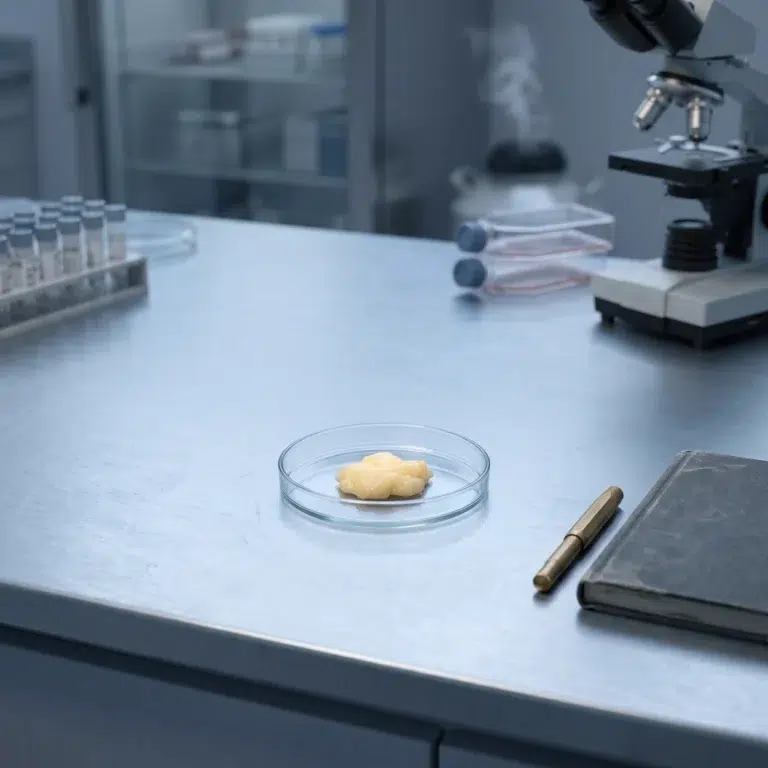
This is the clinical core of onboarding. Training covers donor site selection and patient positioning, tumescent anesthesia preparation and infiltration technique, cannula selection and entry port creation, low-pressure fat collection technique and volume targeting at approximately 20 cc, entry port closure and post-procedure wound dressing, and recognition and initial management of procedure-related adverse events. For physicians already performing liposuction, this component is largely a protocol alignment exercise, confirming that the existing technique is adapted for cell viability preservation with manual low-pressure aspiration preferred over high-pressure mechanical methods. For physicians newer to liposuction techniques, this component is the primary procedural foundation, building on the published small-volume lipoaspiration literature that establishes the clinical risk profile and technical baseline. Save My Fat’s overview of the complete banking process situates the harvest component within the broader workflow.
Component 2: Patient Consultation Framework
Training covers how to introduce banking to patients, how to answer the questions patients consistently ask, and how to stay within compliance language throughout the conversation. The specific elements covered include how to identify patients in the existing practice who are good banking candidates, how to frame the banking conversation at an appropriate point in an appointment, the permissible and impermissible language framework, how to respond to the comparison question about unregulated stem cell clinics, how to answer the family eligibility question accurately, and when and how to refer a patient to clinical trial resources or expanded access information. Save My Fat’s comparison of banking vs. stem cell treatment clinics and the patient-facing resource on questions to ask before banking are two of the materials partner providers use during consultations, and the FDA physician guidance on expanded access is the primary federal reference for the downstream pathway discussions that come up in consultations.
Component 3: Informed Consent Requirements and Documentation
Under FDA Section 361 HCT/P regulations, the provider is responsible for obtaining and documenting informed consent before the harvest. Save My Fat provides informed consent templates and walks providers through what each element must cover. That includes what banking is and what it is not, what the harvest procedure involves including risks, what a U.S.-based tissue bank will do with the tissue, what the patient’s cells may and may not be used for, the cost structure, the limitations that apply to future access, and the patient’s rights regarding their stored tissue. The regulatory basis is found in 21 CFR Part 1271 and the FDA’s tissue products framework, and Save My Fat’s overviews of informed consent in regenerative medicine and FDA regulations for adipose tissue translate both into physician-appropriate operational guidance.
Component 4: Chain-of-Custody Documentation and Specimen Shipping
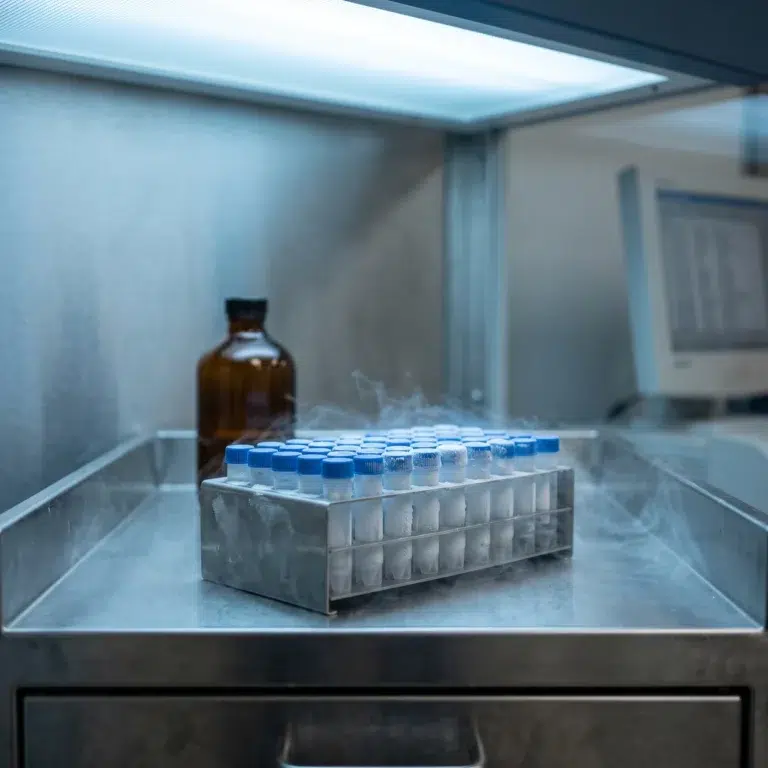
This component is where providers most often have questions, because it is the piece of the process most different from standard clinical documentation. Training covers how to complete chain-of-custody labeling for the specimen container, what information must appear on the label (patient identifier, collection date and time, provider name, and donor site), how to package the specimen in Save My Fat’s shipping kit, how to complete the accompanying documentation set, how to arrange same-day shipping to a U.S.-based tissue bank, and what happens if a shipment is delayed or temperature integrity is compromised in transit. The documentation obligations flow from 21 CFR Part 1271, and Save My Fat’s overview of what happens after banking describes the downstream lab workflow that the provider’s shipping handoff connects to.
Component 5: Patient Education Materials
Save My Fat provides a set of patient-facing materials that partner providers receive as part of onboarding. These include practice-ready patient handouts covering what banking is, what the procedure involves, and what to expect; FAQ sheets for common patient questions; a reference card for the permissible language framework; and access to the savemyfat.com patient content library for patient self-directed research. The practical value of this component is that it means the provider does not need to build patient education from scratch. The materials are already built, already compliance-reviewed, and ready to use from the first patient consultation.
What the Provider’s Staff Needs to Know
Banking involves the provider, but it also involves front-desk and clinical support staff. Three things practice staff need to understand before the first banking patient is scheduled.
Scheduling is the first. Banking consultations and harvest appointments need specific appointment block lengths. The consultation runs thirty to forty-five minutes. The harvest runs sixty to seventy-five minutes including preparation and discharge. Staff need to know not to double-book the harvest slot, because same-day specimen shipping is time-sensitive and cannot be rescheduled without coordination.
Specimen logistics is the second. Clinical staff handling the specimen packaging and shipping need to understand the chain-of-custody requirements. Same-day shipping is not optional. Specimens cannot sit overnight. Staff need to know the shipping cut-off time for the designated carrier and have the shipping kit prepared before the procedure date. Save My Fat’s protocol documentation covers the operational specifics, and the onboarding training includes a staff-facing walkthrough of the shipping workflow.
Patient questions at the front desk is the third. Patients will ask front-desk staff questions about banking before they see the physician. Staff should be able to accurately describe what banking is, a preservation service rather than a treatment, and what it costs, typically in the $8,000 to $15,000 range depending on the package selected. Clinical or compliance questions should be referred to the provider rather than answered at the front desk, and the patient education materials provided by Save My Fat give the front desk ready reference material for the basic factual questions.
Does a Provider Need External Certification?
This is the question worth answering directly because many physicians assume the answer is yes when it is not.
The short answer is no. Save My Fat’s onboarding program covers the harvest procedure and the banking-specific clinical and compliance framework in full. No additional external certification is required to join the provider network and begin offering banking. That is by design, because banking under Section 361 HCT/P is a tissue collection service rather than a treatment modality requiring separate credentialing.
There is context worth understanding about external programs, however. Organizations such as the American Academy of Procedural Medicine offer autologous fat grafting training courses that some providers pursue for broader procedural training context. These programs are valuable for physicians who want deeper procedural foundation across multiple fat-grafting applications, but they are not prerequisites for Save My Fat’s program. The harvest procedure for banking is smaller in scope than most fat grafting applications those programs train for, and the Save My Fat onboarding is designed to be sufficient on its own.
What does matter from a credentialing standpoint is a different question. The provider’s existing medical license must permit the performance of minor liposuction procedures in their state and practice setting. This is a scope-of-practice question that varies by state and specialty, not a certification question. Physicians should confirm this with their state licensing board and their malpractice carrier before scheduling their first harvest patient. Physicians in states with stem cell-specific informed-consent statutes, notably Florida, Utah, California, Georgia, and Tennessee, should also verify that their consultation and consent materials meet state-specific requirements on top of the federal Section 361 framework.
Timeline from Signup to First Patient
A realistic picture of the onboarding timeline helps physicians plan.
In weeks one to two, the provider signs up through the partner sign-up page. The Save My Fat onboarding team initiates contact. The provider receives onboarding materials, the training schedule, and specimen kit specifications.
In weeks two to three, procedural training is completed. The patient consultation framework is reviewed. Informed consent templates are delivered and reviewed. Chain-of-custody documentation training is completed.
In weeks three to four, the provider practice is listed in Save My Fat’s geographic referral network. Patient education materials are delivered. Specimen shipping kits are received. Staff are briefed on scheduling and specimen logistics.
From week four onward, the first banking patient can be scheduled. The Save My Fat support team is available for questions before, during, and after the first case.
Most providers move from signup to first patient in three to four weeks. The timeline is determined primarily by the provider’s scheduling availability for training rather than by the program’s pace. A provider who can block training time sooner typically onboards faster; a provider with a busier calendar takes the upper end of the range.
Ongoing Support After Onboarding
Onboarding is not the end of the support relationship. Clinical questions about the harvest procedure or patient selection are supported by the Save My Fat clinical team. Compliance and patient communication questions are supported by the Save My Fat compliance framework and the resources available to partner providers. Specimen shipping and chain-of-custody issues are supported in real time, which matters because same-day shipping windows do not accommodate long email threads. As clinical trial pipeline updates, new informed consent language updates, or regulatory changes occur, Save My Fat communicates these to the provider network through the provider program channels. The cadence of updates tends to follow the pace of the underlying field, which has been moving quickly since the December 2024 Ryoncil approval.
Frequently Asked Questions
How experienced with liposuction do I need to be before I can offer banking?
Save My Fat’s training is designed for providers at multiple experience levels. Physicians already performing aesthetic liposuction will find the harvest familiar and training brief. Physicians who are not currently performing liposuction can learn the harvest technique through the training program. The 20 cc harvest is smaller in scope than most aesthetic liposuction cases, and the published biological background on adipose tissue as a cell source plus the clinical safety literature on small-volume lipoaspiration together establish that the procedure is appropriate for providers at a range of starting experience levels. If you have specific concerns about your current procedural baseline, discuss with the Save My Fat onboarding team during the initial consultation.
Can a PA or NP in my practice perform the harvest?
The harvest is a minor lipoaspiration procedure, and whether a physician assistant or nurse practitioner can perform it independently depends on the state scope-of-practice regulations and the physician supervision requirements that apply in that jurisdiction. In most states, performing this kind of procedure requires at minimum physician supervision, and in some states it requires direct physician performance. Consult your state licensing board and your malpractice carrier for the specific requirements, and confirm the scope-of-practice posture before including a PA or NP in your banking workflow. The federal 21 CFR Part 1271 framework does not specify which licensed professional performs the collection, but state law does.
What happens if I have a question during my first harvest case?
Save My Fat’s support team is available before and after the first case. Questions that arise during the procedure itself are managed using the protocol documentation and training the provider received during onboarding. For urgent clinical questions, the support team is reachable by phone. The provider program page describes the support channels partner providers use after onboarding is complete.
Is there a fee to join the provider network?
Current provider program terms are available directly from Save My Fat through the partner sign-up page. Terms may vary based on practice specialty, geographic market, and onboarding timeline, and the Save My Fat onboarding team reviews specifics with each interested provider.
What if I want to do additional fat grafting training beyond Save My Fat’s program?
The American Academy of Procedural Medicine offers autologous fat grafting training courses that cover procedural techniques in broader depth across multiple applications. Providers who want deeper procedural foundation can pursue this kind of training as optional context. It is not a prerequisite for Save My Fat’s program, and the Save My Fat onboarding is designed to be sufficient on its own for banking-specific competence.
Key Takeaways
Save My Fat’s provider onboarding covers five components: harvest procedure training, patient consultation framework, informed consent documentation, chain-of-custody specimen handling, and patient education materials. Each component is designed to close a specific confidence gap before the provider sees their first banking patient, and none of the five is optional.
No external certification is required to join the provider network. What is required is that the provider’s existing medical license permits minor lipoaspiration procedures in their state and practice setting, and that the practice’s informed-consent materials meet any state-specific requirements that apply on top of the federal Section 361 framework. Florida, Utah, California, Georgia, and Tennessee are among the states where state-specific stem cell informed-consent statutes warrant the closest attention.
Onboarding typically takes three to four weeks from signup to first patient. The pacing is driven primarily by the provider’s scheduling availability for training rather than by program-side delays, and providers who can block time sooner onboard faster.
Clinical support staff need to understand scheduling requirements, specimen shipping logistics, and front-desk patient communication basics before the first banking patient is seen. Save My Fat’s onboarding includes a staff-facing component so the practice does not have to build internal training on top of the physician-facing curriculum.
Ongoing support is available after onboarding for clinical questions, compliance and patient communication questions, specimen shipping issues, and pipeline or regulatory updates. The support relationship does not end when the first patient walks out of the exam room.
External fat grafting training programs are available for providers who want broader procedural context across multiple applications, but they are not prerequisites for banking. The Save My Fat onboarding is designed to be complete on its own for the banking procedure.
Ready to Start the Onboarding Process?
Before contacting Save My Fat: adipose tissue banking is a preservation service for potential future use in FDA-regulated pathways, not a treatment or a guarantee of access to any specific clinical trial, therapy, or product. No adipose-derived product is FDA-approved for general disease treatment, and banking cannot be represented to patients as one. The training described in this post does not constitute medical education or certification in any specialty, and physicians are responsible for confirming that their scope of practice permits the harvest procedure in their state and practice setting. Physicians considering partnership should independently verify applicable state licensing and informed-consent requirements, particularly in Florida, Utah, California, Georgia, and Tennessee, which have stem cell-specific statutes.
Onboarding is designed to move efficiently. Three to four weeks from signup to first patient. Every component is built to close a specific confidence gap, procedural, clinical, compliance, and documentation. You will not see your first banking patient until you are ready.
Save My Fat partner providers receive full procedural training on the harvest technique, the patient consultation and compliance language framework, informed consent templates, chain-of-custody documentation and specimen shipping kits, patient education materials ready for the practice, geographic listing in Save My Fat’s patient referral network, and ongoing clinical and compliance support.
To review the full program structure, visit the provider program overview. To begin onboarding as a partner, visit the partner sign-up page.
Save My Fat works with a U.S.-based tissue bank for laboratory processing and storage. Save My Fat does not provide medical treatments, clinical trial enrollment, or Expanded Access services.
This article is for educational purposes only and does not constitute medical or legal advice. Please consult your own licensed healthcare provider before making any decisions about treatment or research participation.
About the author: Oscar Tellez is the founder and CEO of Save My Fat. He holds a Bachelor of Science in Exercise Science and Health Promotion from Florida Atlantic University. He has spent a decade in the regenerative medicine industry across product distribution, laboratory and vendor relationships, and provider training. He is not a licensed clinician, and this article is educational, not medical advice.
Related guide: the physician resource center.