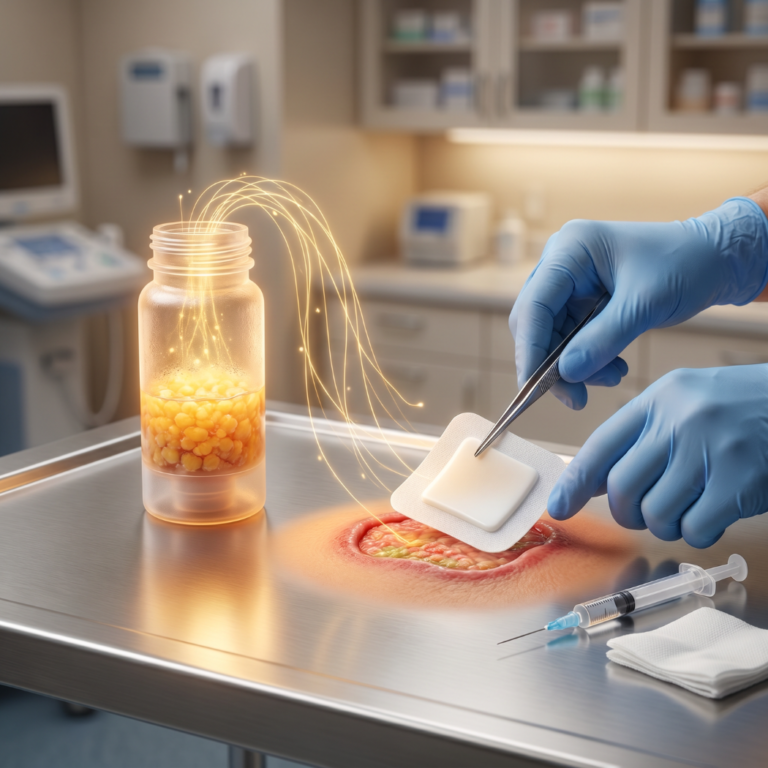

Chronic wounds affect approximately 8.2 million Americans, and diabetic foot ulcers alone are responsible for over 100,000 lower limb amputations each year. Adipose-derived stem cells (ADSCs) and their cell-free derivatives are among the most actively investigated regenerative approaches for wound healing. This guide covers published clinical trial results, 2025 meta-analyses, active trials on ClinicalTrials.gov, emerging exosome research, FDA regulatory context, and what this research means for patients considering adipose tissue banking.
TLDR Multiple clinical trials are studying adipose-derived stem cells, stromal vascular fraction, and ADSC-derived exosomes for diabetic foot ulcers, critical limb ischemia, and chronic wounds. A 2025 meta-analysis found adipose-derived stem cells produced an odds ratio of 5.23 for wound healing compared to controls in diabetic foot ulcer studies. A published randomized controlled trial of 114 patients reported 80% healing with micro-fragmented adipose tissue versus 46% with standard care. No ADSC, SVF, or exosome product has FDA approval for any wound healing or tissue repair indication. Save My Fat banks intact adipose tissue for potential future use in FDA-regulated pathways. Banking does not guarantee eligibility for any clinical trial, access to any therapy, or clinical benefit.
Important Disclaimer: Save My Fat does not provide FDA-approved treatments or cures for any disease, including wound conditions or diabetic foot ulcers. No adipose-derived stem cell, SVF, or exosome product currently has FDA approval for any wound healing or tissue repair indication. Banking adipose tissue today does not guarantee eligibility, access, or clinical benefit from any future therapy, clinical trial, or medical program. All content is for educational purposes only. Patients must consult their own licensed healthcare professionals regarding all medical decisions.
Chronic wounds affect approximately 8.2 million Americans, with diabetic foot ulcers alone responsible for over 100,000 lower limb amputations each year in the United States. For patients whose wounds resist standard treatments, the search for effective new therapies is urgent. Adipose-derived stem cells and their cell-free derivatives (such as exosomes and conditioned media) are among the most actively investigated regenerative approaches for wound healing and tissue repair.
A 2025 systematic review and meta-analysis published in Frontiers in Genetics found that ADSC therapy produced statistically favorable healing outcomes compared to standard care for diabetic foot ulcers, while multiple clinical trials registered on ClinicalTrials.gov are investigating these cells across a range of wound types (Tong et al., 2025). This article examines the published evidence, active trials, regulatory context, and what patients need to understand before drawing conclusions about this rapidly evolving field.
Why Adipose-Derived Cells Are Being Studied for Wound Healing
Normal wound healing involves a complex, coordinated sequence of inflammation, cell proliferation, new blood vessel formation (angiogenesis), and tissue remodeling. In chronic wounds, particularly those associated with diabetes, vascular disease, or pressure injuries, one or more of these processes is disrupted, preventing the wound from progressing through its normal healing stages.
ADSCs have attracted research interest for wound healing because of several biological properties observed in laboratory studies. ADSCs secrete over 80 bioactive factors, including vascular endothelial growth factor (VEGF), basic fibroblast growth factor (bFGF), hepatocyte growth factor (HGF), and insulin-like growth factor-1 (IGF-1), all of which are involved in wound repair processes. In preclinical models, ADSCs have been shown to promote new blood vessel formation (critical for delivering oxygen and nutrients to healing tissue), shift macrophage polarization from the pro-inflammatory M1 phenotype to the anti-inflammatory M2 phenotype (associated with transitioning from the inflammatory to the proliferative phase of healing), and influence the balance between tissue breakdown and repair through secretion of matrix metalloproteinases and their inhibitors (Brembilla et al., 2023).
Important: These observations come primarily from laboratory and animal studies. Whether these mechanisms produce meaningful clinical benefits in human patients requires validation through properly controlled clinical trials, and the biological pathways are still being studied.
Clinical Trials: Diabetic Foot Ulcers
Diabetic foot ulcers (DFUs) represent the most extensively studied wound healing application for adipose-derived cells. The combination of impaired circulation, neuropathy, and dysregulated inflammation in diabetic patients makes these wounds particularly resistant to standard care. Researchers are investigating multiple adipose-derived approaches, from whole tissue preparations to isolated cell populations, across several continents.
Published Clinical Trial Results
MiFrAADiF Randomized Controlled Trial (Lipogems). A single-center randomized controlled trial evaluated autologous micro-fragmented adipose tissue (processed using the Lipogems system, a mechanical/minimal manipulation approach) injected at the amputation stump of 114 diabetic patients undergoing lower limb minor amputation. At 6 months, 80% of the adipose tissue-treated group healed compared to 46% in the standard care control group (p = 0.0064). No treatment-related adverse events or relapses were reported. This trial is notable because the Lipogems system uses mechanical processing without enzymatic digestion, which may have implications for FDA regulatory classification under the minimal manipulation criteria of 21 CFR Part 1271 (Raposio et al., 2019).
STEMFOOT Pilot Trial (NCT05595681). A Phase I pilot trial at Copenhagen Diabetes Foot Center (Bispebjerg Hospital, Denmark) randomized 30 diabetic foot ulcer patients 1:1 to receive allogeneic adipose-derived stromal cells (20 million cells injected around the wound) plus standard care versus standard care alone. The primary endpoint measures healing outcomes with 6-month follow-up.
SVF and ASCs for Diabetic Pressure Ulcers (NCT05610865). A three-arm trial evaluating uncultured stromal vascular fraction and cultured adipose-derived stem cells, both supplemented with platelet-rich plasma (PRP), for chronic diabetic foot ulcers in 28 participants. This study compares PRP plus ASCs, PRP plus SVF, and standard care alone.
2025 Meta-Analyses
Two systematic reviews published in early 2025 provide the most current aggregate analysis of ADSC therapy for diabetic wounds.
A meta-analysis published in Diabetology and Metabolic Syndrome analyzed studies from January 2000 through December 2023 and found that ADSC therapy produced a statistically significant improvement in total healing state (risk ratio = 1.56, 95% CI: 1.32 to 1.86, p < 0.00001) compared to standard wound care methods for diabetic foot ulcers. The homogeneity across studies (I-squared = 0%) suggested consistent results. The authors concluded that ADSCs provide favorable healing results compared to standard care while noting the need for larger, multi-center trials (Diabetology and Metabolic Syndrome, 2025).
A broader analysis published in Frontiers in Genetics examined 24 studies involving 1,321 patients and compared stem cells from multiple sources for DFU healing. Adipose-derived stem cells demonstrated an odds ratio of 5.23 (95% CI: 2.76 to 9.90) for wound healing compared to controls, with zero heterogeneity within the adipose-derived group (I-squared = 0.00%). Among all stem cell sources, adipose-derived cells ranked second only to peripheral blood-derived stem cells in wound healing effect size (Tong et al., 2025).
Important context: While these meta-analyses report positive signals, the individual studies included are generally small, single-center, and use varying protocols. The zero heterogeneity in the adipose group, while encouraging, reflects a small number of included studies. Larger, multi-center, randomized controlled trials are needed to confirm these early findings before any product can be considered proven for clinical use.
Clinical Trials: Critical Limb Ischemia and Vascular Disease
Critical limb ischemia (CLI) is the most severe form of peripheral artery disease, characterized by rest pain, non-healing ulcers, or gangrene. For the estimated 5% to 20% of CLI patients who are not candidates for standard revascularization procedures, the prognosis is poor, with high rates of amputation and mortality. Researchers are investigating whether adipose-derived cells may promote new blood vessel formation in ischemic tissue through paracrine signaling.
Published Phase 1/2a Trial (2025)
A Phase 1/2a clinical trial published in March 2025 in the International Journal of Stem Cells evaluated allogeneic adipose tissue-derived mesenchymal stem cell clusters (ADMSCCs) administered via intramuscular injection in 20 CLI patients ineligible for revascularization. Key findings included significant reductions in ischemic pain at 4, 12, and 24 weeks, increases in pain-free walking distance at all follow-up time points, and no serious treatment-related adverse events or dose-limiting toxicities. The study authors noted the treatment was well-tolerated and supported further investigation in larger trials (Park et al., 2025).
Active Clinical Trials
ACellDREAM2 (NCT03968198). A Phase II trial at a French academic center evaluating autologous adipose-derived stem cells in CLI patients with poor or no options for revascularization. Outcomes include limb preservation, new vessel formation (measured by angiographic MRI), blood flow changes, wound surface reduction, and pain reduction over 6 months.
ADIPOCLI (NCT04746599). An interventional trial evaluating local administration of autologous adipose-derived stromal/stem cells for pain and ulcers caused by CLI, with safety, feasibility, and clinical parameter assessments.
Nanofat Grafting for CLI (NCT06357936). A 2024-registered trial investigating nanofat grafting (mechanically processed adipose tissue) as a treatment for critical limb ischemia, assessing pain relief, walking distance, limb preservation, and mortality.
Autologous ADMSCs for CLI (NCT01079403). A prospective, multicenter, open, randomized, parallel-group study evaluating two dose levels of autologous adipose-derived mesenchymal stem cells in 30 CLI patients, with 20 in the experimental group and 10 controls.
Preclinical Advance (2026)
A January 2026 study published in npj Regenerative Medicine demonstrated that combined transplantation of two adipose-derived cell types (vascular multipotent stem cells and ADSCs) markedly decreased limb loss and promoted both angiogenesis and arteriogenesis in a preclinical ischemia model, with transplanted cells partially integrating into host vasculature. While preclinical, this research suggests continued scientific interest in optimizing adipose-derived cell approaches for vascular conditions (Nature, 2026).
Clinical Trials: Chronic Wounds and Pressure Ulcers
Beyond diabetic foot ulcers and vascular disease, researchers are studying adipose-derived cells for broader chronic wound applications, including pressure ulcers and therapy-resistant wounds.
Active Trials
Adipose Derived Regenerative Cellular Therapy of Chronic Wounds (NCT02092870). A study exploring the effects of adipose-derived stem cells on chronic wounds that have not responded to standard treatment.
ADSCs for Pressure Ulcers (NCT02375802). A pilot study of 12 patients testing the safety and efficacy of applying autologous, uncultured, adipose-derived stromal cells on Stage III pressure ulcers.
Clinical Evidence Summary
A 2023 review published in Stem Cells Translational Medicine summarized clinical evidence for adipose-derived stromal cells in chronic wounds. The review found that the field had progressed from case reports to controlled clinical studies, with improved healing rates and time to closure compared to standard care in several small trials. Particularly promising results were observed when ADSCs or SVF were combined with scaffolds or platelet-rich plasma. Very low rates of serious adverse events were attributed to the cells themselves across all studies examined (Brembilla et al., 2023).
Regulatory note: Both enzymatically processed SVF and culture-expanded ADSCs are generally classified by the FDA as more than minimally manipulated, placing them under the Section 351 regulatory pathway. Mechanically processed adipose tissue (such as micro-fragmented fat or nanofat) may have a different regulatory classification depending on the specific processing method and intended use, but this determination must be made on a case-by-case basis.
Emerging Research: ADSC Exosomes for Wound Healing
One of the most active areas of adipose-derived cell research involves exosomes, small extracellular vesicles (30 to 150 nm in diameter) secreted by ADSCs. These vesicles carry proteins, lipids, and microRNAs that may mediate many of the therapeutic effects attributed to ADSCs themselves, and they represent a potential cell-free approach to regenerative wound care.
Why Exosomes Are Generating Research Interest
ADSC-derived exosomes offer potential advantages as a cell-free approach. They may avoid some risks associated with transplanting live cells, can be stored and standardized more easily than whole-cell products, and carry bioactive cargo including microRNAs (miR-21, miR-31, miR-146a) associated with wound healing pathways. In preclinical studies, ADSC-derived exosomes have been shown to promote fibroblast proliferation, support angiogenesis, and shift macrophage polarization toward anti-inflammatory profiles (Brembilla et al., 2023).
Preclinical Meta-Analysis (2024)
A 2024 meta-analysis published in Burns and Trauma analyzed 19 preclinical animal studies (356 animals total) of ADSC-derived exosomes for wound healing. The analysis found significant improvements in healing rate at day 7 (standardized mean difference = 2.87) and day 14 (SMD = 2.89) for general wounds, with even stronger effects in diabetic wound models at day 14 (SMD = 3.43). ADSC-exosome therapy also significantly improved neovascularization, epithelization, and collagen fiber deposition while reducing scar formation. The authors concluded that ADSC-derived exosomes have broad potential but emphasized that results remain entirely preclinical (Wei et al., 2024).
Clinical Trials
Adipose Tissue-Derived Exosomes for Wound Healing (NCT05475418). A pilot study in Shanghai evaluating human adipose tissue-derived exosomes mixed with sterile hydrogel and applied directly to chronic wound surfaces in patients aged 18 to 60.
Allogeneic Adipose Tissue Extract for Wounds and Scars (NCT07372404). A 2026-registered trial evaluating an allogeneic adipose tissue extract product for wound treatment and scar prevention, representing the newest generation of adipose-derived cell-free products entering clinical investigation.
Critical Regulatory Context
There are currently no FDA-approved exosome products for any human medical use. The FDA has issued multiple public warnings about unapproved exosome products and has taken enforcement actions against companies marketing exosome treatments to consumers. Any human adipose-derived exosome product intended for therapeutic use is generally regulated as a biological drug, not as a cosmetic or supplement. Patients should be cautious of any clinic or product marketed as an exosome “treatment.”
Understanding What This Research Means
The Current Evidence Landscape
| Application Area | Strongest Evidence Level | Key Finding | Important Limitation |
|---|---|---|---|
| Diabetic Foot Ulcers | Meta-analysis of small trials | Favorable healing rates vs. standard care (OR 5.23) | Individual studies are small; multi-center Phase 3 data needed |
| Critical Limb Ischemia | Phase 1/2a published results | Pain reduction, improved walking distance, acceptable safety | Small sample sizes; no Phase 3 data yet |
| Chronic/Pressure Wounds | Small controlled studies | Improved healing rates in pilot studies | Very limited controlled data; heterogeneous wound types |
| Scar/Tissue Remodeling | Early clinical trials | Active trials registered | No published efficacy data in humans yet |
| Exosome-Based Wound Care | Preclinical meta-analysis | Significant healing acceleration in animal models | Almost entirely preclinical; very few human trials |
What Patients Should Understand
The research shows consistent positive signals across wound healing applications, but the evidence base consists primarily of small, early-phase trials. These are promising early signals, not proven treatments. Patients with chronic wounds should work with their healthcare team to optimize all available evidence-based treatments before considering investigational options. Even with positive early data, the path from Phase 1/2 trials to FDA-approved wound healing products typically requires years of additional research.
Not all processing methods are equal. The regulatory classification of adipose-derived products depends heavily on how the tissue is processed. Mechanical processing, enzymatic digestion, and cell culture expansion each carry different biological properties and different regulatory implications under FDA guidelines.
Patients should also understand that no exosome product is FDA-approved for any human use, despite growing research interest. The FDA has taken enforcement action against companies marketing unapproved exosome products, and patients should exercise caution when encountering clinics or products making therapeutic claims about exosomes. For guidance on distinguishing compliant services from unregulated clinic offerings, see the Save My Fat comparison guide.
What This Means for Adipose Tissue Banking
The wound healing research landscape represents one of the most clinically intuitive applications of adipose-derived cells. Fat tissue naturally contributes to soft tissue structure and repair, and the paracrine factors secreted by adipose-derived stromal cells have demonstrated clear biological activity in wound healing contexts. Adipose tissue is the starting material for multiple categories of investigational products, from whole tissue (micro-fragmented fat, nanofat) to isolated cells (SVF, expanded ADSCs) to cell-free products (exosomes, conditioned media).
Adipose tissue banking is a preservation service, not a therapeutic product. Save My Fat helps individuals preserve their own adipose tissue through validated cryopreservation protocols for potential future opportunities that may arise as regenerative medicine science and FDA regulations evolve. Research is expanding, with new trials being registered as recently as January 2026. The safety profile across published wound healing studies has been consistently favorable, with no treatment-related deaths and low rates of serious adverse events. Adipose tissue harvested and cryopreserved today retains the cellular characteristics present at the time of collection.
Banking adipose tissue today does not guarantee eligibility for any wound healing clinical trial, access to any investigational product, or clinical benefit from any future therapy. Any future use depends on the regulatory status of products or procedures at that time, the patient’s clinical situation, physician guidance, and availability of FDA-regulated pathways including clinical trials, Expanded Access programs, or future approved therapies.
Frequently Asked Questions
Are adipose-derived stem cells FDA-approved for wound healing? No. No adipose-derived stem cell, SVF, or exosome product has FDA approval for wound healing or any tissue repair indication in the United States. All such therapies remain investigational. Clinics marketing stem cell wound “treatments” are promoting unapproved products.
What is the difference between micro-fragmented fat, SVF, and cultured ADSCs in wound research? These represent different levels of tissue processing. Micro-fragmented fat (such as Lipogems) is mechanically processed without enzymes, preserving the tissue’s native architecture. SVF is produced through enzymatic digestion, yielding a heterogeneous cell mixture. Cultured ADSCs are isolated from SVF and expanded in the laboratory to produce a more homogeneous cell population. Each approach has different biological properties, cell yields, and FDA regulatory classifications.
Do the meta-analyses prove that ADSCs heal diabetic wounds? Meta-analyses aggregate data from multiple studies and can identify trends, but they do not prove that a product is safe and effective for clinical use. The 2025 meta-analyses show favorable signals for ADSCs in diabetic wound healing, but the individual studies are generally small and heterogeneous. Only products that complete the full FDA approval process (including large, well-designed Phase 3 trials) can be marketed as treatments.
Are exosome-based wound treatments available? No exosome product is FDA-approved for any human medical use, including wound healing. The FDA has issued warnings about unapproved exosome products and has taken enforcement actions against companies marketing them. While preclinical research shows promising biological activity, exosome-based therapies for wound healing remain entirely investigational.
Can banked adipose tissue be used for wound treatment? Banking adipose tissue is a preservation service, not a wound treatment. Whether banked tissue could be used in a future clinical trial or approved wound healing therapy depends entirely on future scientific developments, FDA regulatory decisions, specific trial protocols, and individual clinical circumstances. There is no current pathway to use banked adipose tissue as a wound treatment outside of a properly regulated clinical trial or future approved therapy.
What is the safety profile of ADSCs in wound healing studies? Published studies report a favorable short-to-medium term safety profile. The MiFrAADiF randomized trial of 114 patients reported no treatment-related adverse events. A 2023 review examining adipose-derived cell therapies across multiple chronic wound studies found very low rates of serious adverse events attributed to the cells. Long-term safety data remain limited, and patients should discuss all risks with their healthcare providers.
How is legitimate wound healing research different from what unregulated clinics advertise? Legitimate clinical research occurs under FDA oversight with registered clinical trials, Institutional Review Board (IRB) review, informed consent processes, and published results. Many clinics market adipose-derived cell injections as available wound “treatments” without FDA authorization. Patients should verify ClinicalTrials.gov registration, IRB oversight, and IND status before enrolling in any regenerative medicine study.
Does Save My Fat provide stem cell wound treatments? No. Save My Fat banks whole, intact adipose tissue under 361 HCT/P regulations. Save My Fat does not isolate SVF, culture-expand ADSCs, provide stem cell treatments, or offer therapies for any disease or wound condition. If banked tissue is needed in the future for use in an FDA-regulated clinical trial or Expanded Access program, it can be thawed and processed at that time through the appropriate regulatory pathway.
Key Takeaways
No ADSC product has FDA approval for wound healing. All adipose-derived stem cell, SVF, and exosome research for wound conditions remains investigational and unapproved. Only products that successfully complete the full FDA approval process can be legally marketed for disease treatment.
2025 meta-analyses show favorable early signals. Pooled analysis of available studies found adipose-derived stem cells improved diabetic foot ulcer healing with an odds ratio of 5.23, and a separate meta-analysis found a risk ratio of 1.56 favoring ADSC therapy. These results require confirmation in larger, multi-center trials.
Published RCT data supports further investigation. The MiFrAADiF trial (114 patients) demonstrated statistically significant healing improvement with micro-fragmented adipose tissue versus standard care. Phase 1/2a CLI data showed pain reduction and improved walking distance with acceptable safety.
Exosome research is promising but entirely preclinical in wound healing. No exosome product is FDA-approved for any human use. Preclinical meta-analysis data shows significant effects in animal wound models, but human clinical trials are just beginning.
Standard care comes first. Patients with chronic wounds should optimize all evidence-based treatments with their healthcare team before considering investigational approaches.
Adipose tissue banking preserves future options. Save My Fat banks intact tissue under 361 HCT/P regulations, preserving biological material for potential future use in FDA-regulated pathways. Banking does not guarantee access, eligibility, or benefit from any wound healing therapy.
Learn More
Before contacting Save My Fat: Adipose tissue banking is a preservation service for potential future opportunities, not a treatment or cure for any disease or wound condition.
Outcomes cannot be guaranteed. All medical decisions must be made with a licensed healthcare provider.
To explore wound healing and regenerative medicine science further, visit the Save My Fat pages on stem cell research areas, joint and orthopedic research, wellness and healthy aging, and emerging research.
To understand the banking process, visit how stem cell banking works or explore pricing and family eligibility.
Healthcare providers can learn more on the providers page.
Patients interested in wound healing research should discuss options with their own clinicians and review registered studies at ClinicalTrials.gov.
Save My Fat Adipose Tissue Banking for Future Regenerative Medicine Opportunities
Related guide: the adipose stem cell clinical trials directory.
Last Updated: March 24, 2026.