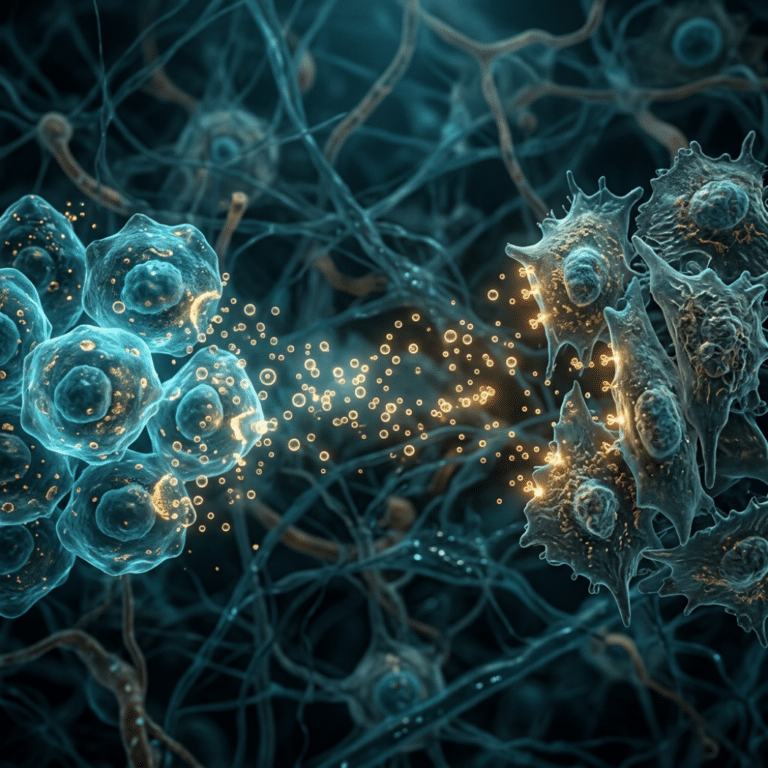
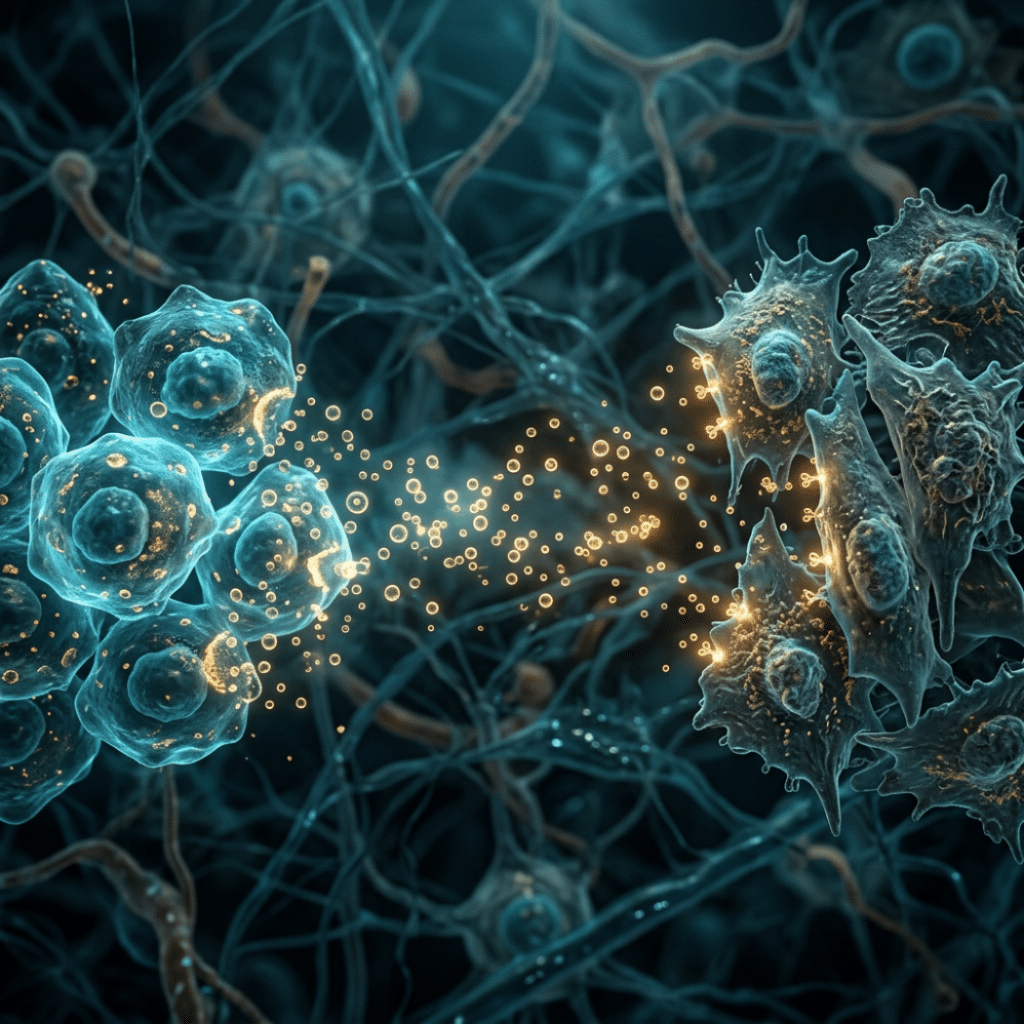
When researchers discuss why adipose-derived stem cells are scientifically interesting, they often describe something that surprises patients: these cells may not work primarily by differentiating into new tissue. Instead, the current evidence points toward a different mechanism entirely, one built on chemical communication. Understanding that mechanism, called paracrine signaling, gets you much closer to understanding what the science actually says and what researchers are still trying to prove.
This guide explains paracrine signaling in plain language, walks through the specific molecules adipose-derived stem cells (ADSCs) release, introduces the concept of the secretome, and explains what all of this means for anyone thinking about adipose tissue banking.
TLDR: ADSCs appear to exert most of their effects in research settings not by becoming new cells, but by releasing signaling molecules that communicate with surrounding tissue. Researchers have identified over 80 bioactive factors in the ADSC secretome, including growth factors, immune-modulating molecules, and exosomes. This is investigational science. No ADSC-based therapy is FDA-approved. Understanding this mechanism helps clarify why cell viability matters in tissue banking.
Important Disclaimer: Save My Fat does not provide FDA-approved treatments or cures for any disease or medical condition. Adipose tissue banking is a preservation service for potential future opportunities, not a therapeutic product. Banking adipose tissue today does not guarantee eligibility, access, or clinical benefit from any future therapy, clinical trial, or medical program. All content on this site is for educational and informational purposes only and does not constitute medical advice, diagnosis, or treatment recommendations. Patients must consult their own licensed healthcare professionals regarding all medical decisions. Outcomes of any regenerative medicine research or future therapies are highly individual and cannot be predicted or guaranteed.
You may have read that stem cells “communicate with the body” or “send healing signals.” Those phrases show up in research summaries, clinic marketing, and wellness content alike. But the biology behind them varies enormously in quality and accuracy.
The honest version of that idea is grounded in a real and well-documented scientific mechanism: paracrine signaling. It explains how cells in proximity to ADSCs may be influenced by what those ADSCs secrete, without the ADSCs ever physically becoming new tissue cells. It is the subject of active research across dozens of clinical trials. And it is also, predictably, the mechanism most commonly misrepresented by clinics selling unapproved treatments.
This article builds on the foundation laid in the patient’s guide to adipose-derived stem cells from March. If you have not read that piece yet, it covers what ADSCs are, where they come from, and how they are identified. This article goes deeper into one specific property: how ADSCs talk to the cells around them, what molecules they use to do it, and what researchers have learned from studying those molecules.
Two Ways Stem Cells Can Work: Differentiation vs. Paracrine Signaling
The Original Assumption
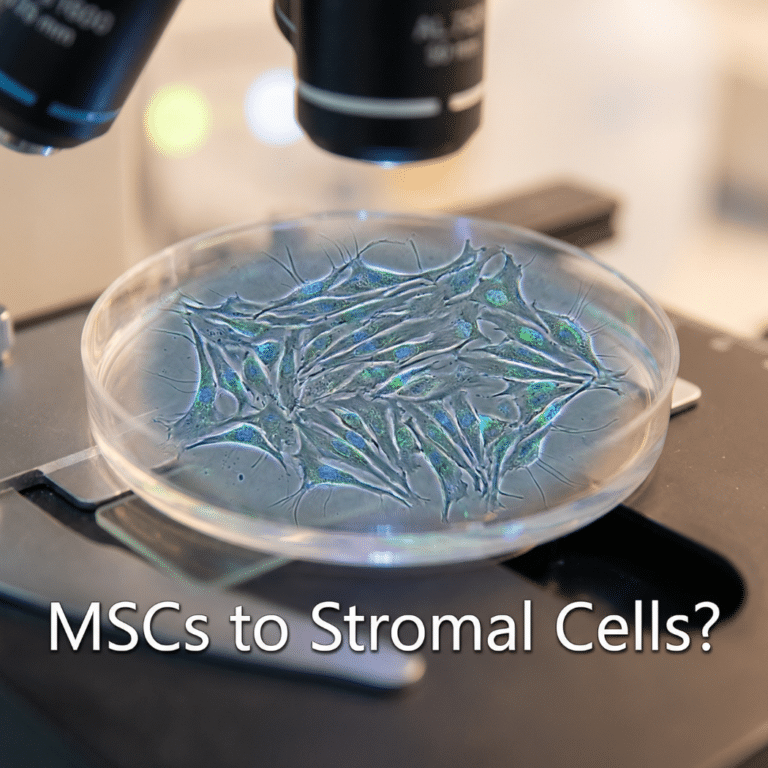
When stem cell research gained momentum in the early 2000s, the dominant hypothesis was relatively intuitive: stem cells would work by traveling to damaged tissue, differentiating (becoming) the cell type that was missing or injured, and physically replacing what had been lost. A stem cell near damaged cartilage, the theory went, would become a cartilage cell. Near a damaged nerve, it would become a neuron.
This concept drove enormous early excitement and also enormous early investment. It also proved, over time, to be incomplete as an explanation for what researchers actually observed in the lab.
What the Evidence Shifted Toward
As studies accumulated, a pattern emerged that challenged the replacement hypothesis. When researchers tracked transplanted stem cells in animal models, those cells rarely engrafted in meaningful numbers or persisted long enough to account for the beneficial effects that were being observed. The cells were often cleared by the immune system within days or weeks, yet the effects sometimes lasted longer than the cells themselves.
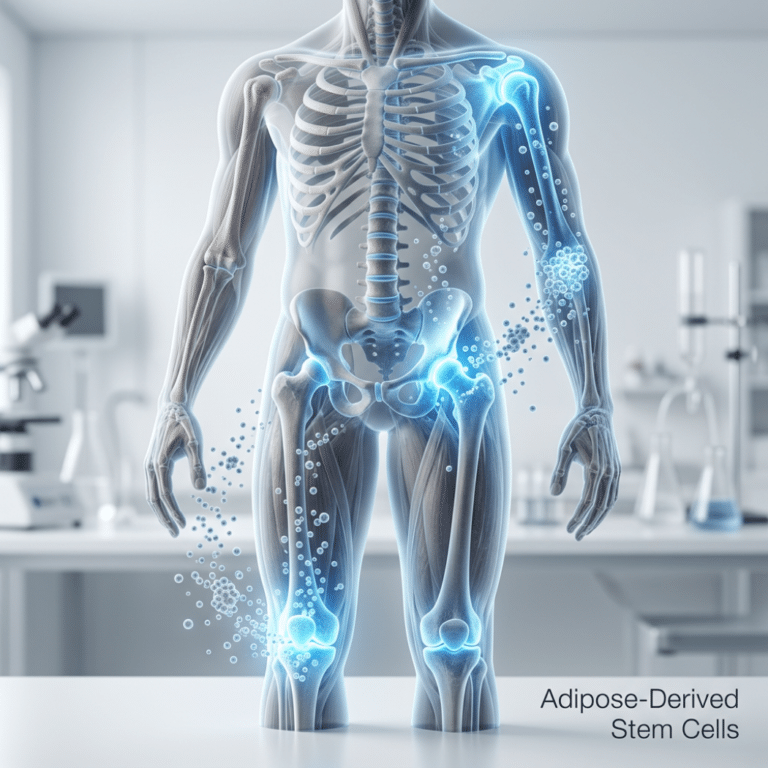
That gap between cell persistence and observed effect pointed toward a different explanation: the cells were not rebuilding tissue directly. They were communicating with surrounding cells in ways that influenced local biology. This communication happens through paracrine secretion, and it is now the leading mechanistic explanation for ADSC effects in preclinical and early clinical research.
To be clear, ADSCs do retain differentiation potential. The comparison of bone marrow and adipose-derived stem cells describes this in detail. But researchers now believe paracrine activity accounts for most of what they observe in studies, not direct cellular replacement.
Comparing the Two Mechanisms
| Mechanism | What It Means | Persistence Required? | Current Evidence Weight |
|---|---|---|---|
| Differentiation | ADSCs physically become new tissue cells | Yes, cells must survive and integrate | Lower for most applications studied |
| Paracrine Signaling | ADSCs release molecules that influence nearby cells | No, effects can outlast the cells | Higher for most applications studied |
Both mechanisms are real. Both are being studied. The balance of current evidence, particularly in early clinical research, points toward paracrine signaling as the more significant contributor.
What Is Paracrine Signaling?
Cell communication works at multiple scales. Think of it as a spectrum from very local conversations to broadcast messages sent across the whole body.
Autocrine signaling is the most local: a cell releases a molecule that acts back on itself, a kind of internal feedback loop. Endocrine signaling is the most distant: a gland releases a hormone that travels through the bloodstream to act on tissues far away, the way insulin released by the pancreas affects cells throughout the body. Paracrine signaling sits between these two: a cell releases a molecule that acts on nearby cells within the same tissue environment, without needing to travel through the bloodstream to get there.
| Signaling Type | Source | Target | Travel Route | Example |
|---|---|---|---|---|
| Autocrine | A cell | The same cell | None | Immune cell self-activation |
| Paracrine | A cell | Nearby cells | Local diffusion | ADSC secretion affecting surrounding tissue |
| Endocrine | A gland or organ | Distant cells | Bloodstream | Insulin from the pancreas |
For ADSC research, paracrine is the key mechanism because it is local, targeted, and does not require the ADSCs themselves to survive long-term to exert an effect. One useful analogy: ADSCs act more like a broadcast tower sending signals to surrounding tissue than like a construction crew physically rebuilding it. The tower does not need to lay bricks. It just needs to transmit.
The ADSC Secretome: What Researchers Have Identified
The secretome refers to the complete set of molecules a cell actively secretes into its surrounding environment. For ADSCs, this is an unusually rich collection. Researchers have identified over 80 bioactive factors in the ADSC secretome, organized into several functional categories.
Every molecule described below has been identified in laboratory or preclinical research settings. None of these findings constitute FDA approval of any therapy, and no ADSC-based therapy is currently FDA-approved. All applications described are investigational.
Growth Factors
Growth factors are proteins that influence how cells grow, divide, survive, and repair themselves. ADSCs secrete several that have attracted significant research attention.
VEGF (vascular endothelial growth factor) is being studied for its roles in angiogenesis, the process by which new blood vessels form. bFGF (basic fibroblast growth factor) is being studied in the context of cell proliferation and tissue repair processes. HGF (hepatocyte growth factor) is being investigated for potential anti-inflammatory and tissue-protective effects in preclinical models. IGF-1 (insulin-like growth factor-1) is being studied in relation to cell survival and metabolic regulation. TGF-beta (transforming growth factor beta) is being investigated for immune modulation effects and its role in fibrosis regulation. PDGF (platelet-derived growth factor) is being studied for its potential roles in cell migration and wound repair processes.
Immune-Modulating Molecules
ADSCs secrete a number of molecules that interact with the immune system. This is one of the most studied aspects of their paracrine activity. IL-10 (interleukin-10) is being studied for potential anti-inflammatory effects. IL-1RA (interleukin-1 receptor antagonist) is being investigated for its capacity to block pro-inflammatory cascades in laboratory settings. PGE-2 (prostaglandin E2) is being studied in the context of immune suppression. IDO (indoleamine 2,3-dioxygenase) is being investigated for its role in T-cell suppression in preclinical models. IL-6 (interleukin-6) plays complex roles in inflammation and is under active investigation.
Chemokines and Matrix Proteins
Chemokines are signaling molecules that guide the movement of cells. ADSCs secrete several that are being studied in wound repair and injury response contexts. SDF-1 (stromal cell-derived factor-1) is being studied for its potential role in recruiting progenitor cells to sites of injury. MCP-1 (monocyte chemoattractant protein-1) is being investigated for its role in immune cell recruitment. MMP-1 and MMP-2 (matrix metalloproteinases) are enzymes being studied for their roles in extracellular matrix remodeling. TIMP-1 and TIMP-2 (tissue inhibitors of metalloproteinases) are being investigated as regulators of matrix breakdown.
Neurological Research Factors
BDNF (brain-derived neurotrophic factor) and GDNF (glial cell-derived neurotrophic factor) are neurotrophic factors secreted by ADSCs that are being studied in neurological research contexts. It is worth being explicit here: neurological applications of ADSC-derived factors are early-stage and investigational. The research is active, but no ADSC-derived neurotrophic therapy has advanced to Phase 3 trials or FDA approval in the United States.
ADSC Secretome Reference Table
| Molecule | Category | Being Studied For | Status |
|---|---|---|---|
| VEGF | Growth Factor | Angiogenesis | Investigational |
| bFGF | Growth Factor | Cell proliferation, tissue repair | Investigational |
| HGF | Growth Factor | Anti-inflammatory effects, tissue protection | Investigational |
| IGF-1 | Growth Factor | Cell survival, metabolic regulation | Investigational |
| TGF-beta | Growth Factor | Immune modulation, fibrosis | Investigational |
| PDGF | Growth Factor | Cell migration, wound repair | Investigational |
| IL-10 | Immune Modulator | Anti-inflammatory effects | Investigational |
| IL-1RA | Immune Modulator | Blocking inflammatory cascades | Investigational |
| PGE-2 | Immune Modulator | Immune suppression | Investigational |
| IDO | Immune Modulator | T-cell suppression | Investigational |
| SDF-1 | Chemokine | Progenitor cell recruitment | Investigational |
| MCP-1 | Chemokine | Immune cell recruitment | Investigational |
| MMP-1/2 | Matrix Protein | Extracellular matrix remodeling | Investigational |
| TIMP-1/2 | Matrix Protein | Matrix regulation | Investigational |
| BDNF | Neurotrophic Factor | Neurological research contexts | Early investigational |
| GDNF | Neurotrophic Factor | Neurological research contexts | Early investigational |
All applications listed above are investigational. No ADSC-based therapy utilizing any of these factors is FDA-approved to diagnose, treat, cure, or prevent any disease. These findings come from laboratory and preclinical research. For a review of relevant peer-reviewed literature on ADSC paracrine mechanisms, see the published review at PMC10579872 and the secretome overview at PMC7787857.
Exosomes: The Paracrine Delivery System
Not all paracrine signaling happens through molecules dissolving freely into the surrounding fluid. ADSCs also release small membrane-wrapped packages called exosomes, which carry paracrine signals in a more protected and targeted form.
Exosomes are vesicles (bubble-like structures made from cell membrane) ranging from 30 to 150 nanometers in diameter, roughly 500 to 1,000 times smaller than a human hair. They are released by ADSCs as part of normal cellular activity and carry a cargo that includes proteins, lipids, messenger RNA, and microRNAs. Because they are enclosed in a protective membrane, their molecular cargo is more stable during transport than freely secreted proteins. They also carry surface markers (including CD9, CD63, and CD81) that help researchers identify and study them.
Among the microRNAs researchers have identified in ADSC-derived exosomes, miR-21, miR-31, and miR-146a have been studied in wound healing research contexts. miR-124 has been studied in neurological research contexts. MicroRNAs are small RNA molecules that can influence gene expression in recipient cells, which is part of why ADSC exosomes are considered a potentially important paracrine mechanism. Peer-reviewed research on this topic is available through resources such as PMC5297838 and the wound healing paracrine review published in Frontiers in Chemistry.
Before going further, this point requires direct emphasis: no exosome product derived from ADSCs or any other cell source is currently FDA-approved for any therapeutic use. The FDA has issued a specific consumer alert about unapproved exosome products, documenting serious adverse events in patients who received them. Clinics marketing exosome injections or infusions as treatments are selling unapproved products. The FDA consumer alert on exosome products is the authoritative source on this issue and should be reviewed by any patient who has seen clinics promoting these services.
Exosomes are valuable research tools. They are not approved treatments, and the science does not yet support their commercial application outside of registered clinical trials.
Exosomes vs. Conditioned Medium as Research Tools
| Research Tool | What It Is | What It Contains | Main Research Use |
|---|---|---|---|
| ADSC Exosomes | Membrane-bound vesicles secreted by ADSCs | Proteins, lipids, mRNA, microRNAs | Studying specific paracrine cargo; understanding cell communication mechanisms |
| Conditioned Medium (ADSC-CM) | Cell culture fluid exposed to ADSCs | All freely secreted factors (growth factors, cytokines, chemokines) | Studying bulk paracrine effects without using live cells |
Both are research tools. Neither is an FDA-approved product.
Immunomodulation Through Paracrine Signaling
One of the most actively studied aspects of ADSC paracrine activity is its interaction with the immune system. In laboratory and preclinical settings, ADSCs have been shown to shift macrophage behavior in a way that researchers find scientifically significant.
Macrophages are immune cells that can exist in broadly two functional states. M1 macrophages tend to be pro-inflammatory: they release signals that ramp up immune responses, which is useful in fighting infection but potentially harmful when inflammation becomes chronic or excessive. M2 macrophages tend to be anti-inflammatory and are associated with tissue repair and resolution of inflammation. In preclinical models, ADSC paracrine secretion has been observed to shift macrophage populations from the M1 toward the M2 phenotype.
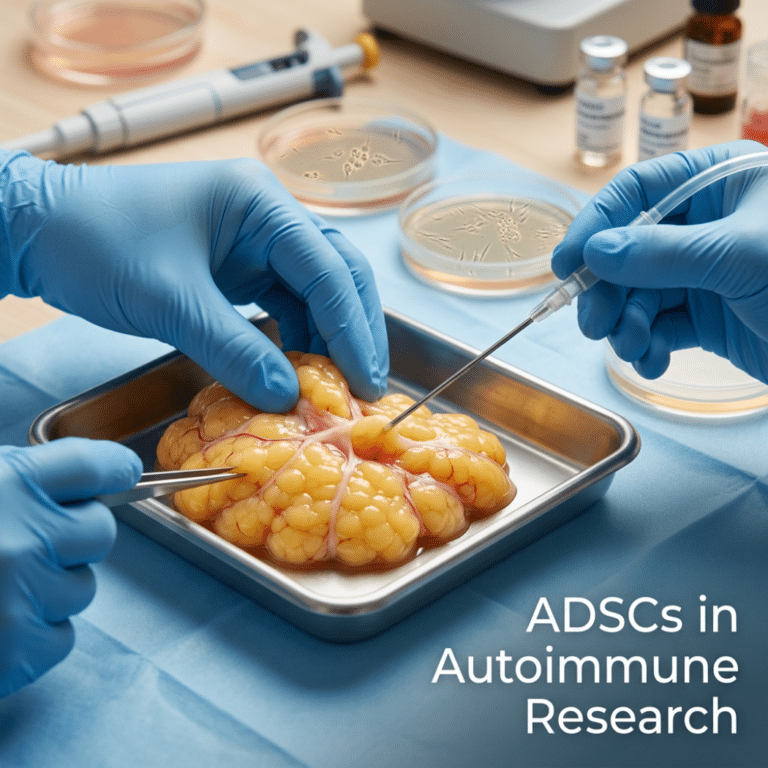
ADSCs also demonstrate T-cell suppression effects in laboratory studies, primarily through secretion of IDO and PGE-2. These molecules interfere with T-cell proliferation, which is part of why ADSC research has been pursued in immune-related conditions. This is investigational. The effects observed in preclinical models have not been confirmed in FDA-approved therapies, and no ADSC product has been approved for any immune condition in the United States.
For context on the range of conditions where this science is being studied, see the emerging research overview and the stem cell research areas section of this site.
Conditioned Medium: Studying Paracrine Effects Without Live Cells
One of the tools researchers use to isolate and study paracrine activity is conditioned medium, often abbreviated as ADSC-CM. The concept is straightforward: researchers grow ADSCs in a cell culture dish, then collect the fluid those cells were living in. That fluid now contains all the secreted factors the cells released during the culture period. Researchers can then study what that factor-rich fluid does to other cell types, without the complexity of working with live cells directly.
ADSC conditioned medium has been used in hair growth research (including work published in the Journal of Dermatological Science), skin rejuvenation research, and wound healing research. It is a valuable research tool because it lets scientists test paracrine effects in controlled settings and begin to identify which secreted factors are responsible for which observed effects.
Conditioned medium is not an FDA-approved product. It is not available as a consumer treatment. Clinics marketing “conditioned medium treatments” or ADSC-CM injections are selling unapproved products outside the boundaries of legitimate clinical research.
What This Means for Patients Considering Tissue Banking
The science described in this article has a direct, if carefully bounded, connection to why cell viability matters in adipose tissue banking.
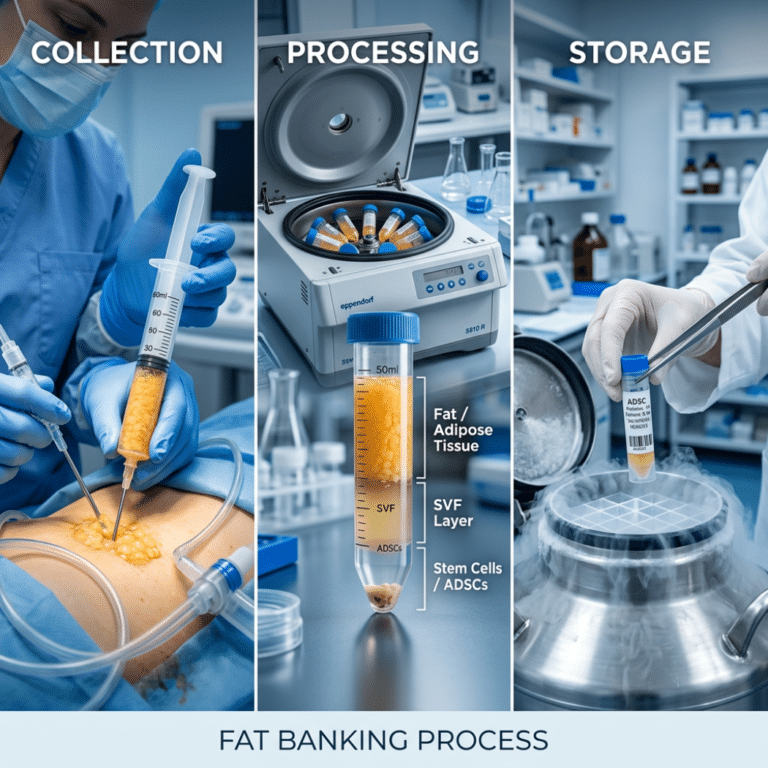
If future FDA-regulated opportunities, whether an approved therapy, a clinical trial, or an Expanded Access program, require viable adipose tissue as starting material, the paracrine capacity of that tissue will depend on whether the cells are still alive and functional when they are used. Cryopreservation protocols are designed specifically to preserve cell viability through the freezing and storage process. This is the scientifically grounded reason why the quality of the banking process matters: you are preserving not just tissue, but the biological activity associated with that tissue.
Save My Fat helps individuals preserve their own adipose tissue through validated cryopreservation protocols for potential future opportunities that may arise as regenerative medicine science and FDA regulations evolve. Banked tissue does not guarantee eligibility, access, or clinical benefit from any future therapy, clinical trial, or medical program. Any future use depends on the regulatory status of products or procedures at that time, the patient’s clinical situation, physician guidance, and availability of FDA-regulated pathways.
Most regenerative medicine products marketed directly to consumers are not FDA-approved to diagnose, treat, cure, or prevent any disease. Save My Fat does not provide FDA-approved treatments or cures.
To understand the full banking process, see the complete guide to adipose tissue banking. For context on the clinical research landscape, see the introduction to clinical trials for regenerative medicine.
Frequently Asked Questions
What is paracrine signaling and how is it different from a stem cell becoming a new cell?
Paracrine signaling is a form of cell communication in which a cell releases molecules that act on nearby cells rather than on itself. When ADSCs engage in paracrine signaling, they are not physically transforming into new tissue. They are releasing bioactive factors that may influence the behavior of surrounding cells. Differentiation (becoming a new cell type) is a different process and one that current research suggests plays a smaller role in most ADSC effects than paracrine activity does.
What specific molecules do ADSCs release and what do researchers know about them?
ADSCs secrete over 80 identified bioactive factors, organized into several categories: growth factors (including VEGF, bFGF, HGF, IGF-1, and others), immune-modulating molecules (including IL-10, IL-1RA, PGE-2, and IDO), chemokines (including SDF-1 and MCP-1), matrix proteins (including MMPs and TIMPs), and neurotrophic factors (including BDNF and GDNF). Each has been studied in laboratory or preclinical settings for specific biological roles. None of these findings equate to FDA approval of any therapy. All applications remain investigational.
What is a secretome and why do researchers study it?
The secretome is the complete collection of molecules a cell actively secretes into its environment. Researchers study the ADSC secretome to understand which specific factors are responsible for which observed biological effects. If a particular molecule can be identified as driving a beneficial response in a preclinical model, that finding can help guide the design of future clinical trials and potentially the development of cell-free therapeutic products. Understanding the secretome is a step toward understanding which parts of ADSC biology are most worth pursuing clinically.
What are exosomes and how do they fit into paracrine signaling?
Exosomes are small membrane-bound vesicles released by ADSCs as part of their normal paracrine activity. They range from 30 to 150 nanometers in diameter and carry proteins, lipids, and microRNAs that can influence the behavior of recipient cells. They are one delivery mechanism within the broader paracrine signaling system. No exosome product is FDA-approved for any therapeutic use. The FDA has issued a consumer alert about serious adverse events associated with unapproved exosome products, available at the FDA consumer resource on exosome products.
Why do scientists think paracrine signaling matters more than differentiation in most ADSC research?
Primarily because the evidence does not support cellular replacement as the dominant mechanism. When researchers track transplanted stem cells in preclinical models, those cells typically engraft in low numbers and do not persist long enough to account for observed effects. Paracrine factors, on the other hand, can act quickly and their effects can outlast the cells that produced them. Conditioned medium studies reinforce this: researchers can reproduce many of the effects of live ADSC transplantation using only the secreted factors, without any live cells present.
What is conditioned medium and why is it used in research?
Conditioned medium (ADSC-CM) is the fluid collected from a cell culture dish where ADSCs were grown. It contains all the factors those cells secreted during the culture period. Researchers use it to study paracrine effects in a controlled way, testing what the secreted factors do to other cell types without the complexity of working with live cells. It has been used in hair growth research, skin rejuvenation research, and wound healing research. It is a research tool, not an FDA-approved product or a treatment available through clinical services.
Does paracrine signaling mean ADSCs treat disease?
No. Paracrine signaling is a biological mechanism that researchers have identified and are actively studying. Identifying a mechanism is not the same as proving a treatment works, and proving a treatment works in a preclinical model is not the same as establishing clinical safety and effectiveness in humans. No ADSC-based therapy utilizing paracrine signaling has received FDA approval. Describing the mechanism is educational context, not a treatment claim.
How does understanding paracrine signaling help patients understand what tissue banking preserves?
The paracrine capacity of ADSCs depends on the viability of the cells. Cells that are not alive cannot secrete factors. Validated cryopreservation protocols are designed to preserve cell viability through freezing and long-term storage, so that if a future legitimate medical opportunity requires viable tissue, the paracrine activity of those cells is maintained. This is the biological reason why the quality of the banking process matters: it is about preserving functional cells, not just physical tissue.
What is the difference between autocrine, paracrine, and endocrine signaling?
Autocrine signaling occurs when a cell releases a molecule that acts back on itself. Paracrine signaling occurs when a cell releases a molecule that acts on nearby cells in the local environment. Endocrine signaling occurs when a molecule travels through the bloodstream to act on cells at a distance, the way a hormone like insulin does. ADSC research is primarily focused on the paracrine mechanism because ADSCs operate locally within tissue, not at a systemic hormonal level.
What should patients know about clinics marketing paracrine-based products?
Clinics that market “paracrine signaling treatments,” “exosome therapy,” or “secretome injections” are selling products that have not received FDA approval for any therapeutic use. The fact that these mechanisms are real and under scientific investigation does not make their commercial application legitimate. FDA approval requires proving safety and effectiveness through controlled clinical trials, and no such approval has been granted for these products. The FDA consumer alert on exosome products specifically documents serious adverse events. Any patient who has been offered these services should consult their physician and review the FDA consumer alert on exosome products before proceeding.
Key Takeaways
- Paracrine signaling, not differentiation, is the dominant mechanism. Current evidence suggests ADSCs exert most of their observed effects in research settings by secreting bioactive molecules, not by physically becoming new tissue cells.
- The ADSC secretome is extensive. Over 80 identified bioactive factors have been catalogued, including growth factors, immune modulators, chemokines, matrix proteins, and neurotrophic factors. All applications remain investigational.
- Exosomes are a paracrine delivery vehicle, not an approved treatment. They carry proteins and microRNAs between cells and are valuable research tools. No exosome product is FDA-approved. The FDA has documented serious adverse events from unapproved exosome products.
- Conditioned medium is a research tool. ADSC-CM lets researchers study paracrine effects without live cells. It is not a consumer treatment.
- Immunomodulation is one of the most studied applications. ADSCs shift macrophage polarization toward anti-inflammatory states and suppress T-cell activity in preclinical models. This is investigational and not the basis for any approved therapy.
- Paracrine capacity depends on cell viability. This is the scientific connection between how ADSCs work and why preserving viable tissue matters in banking. Dead or damaged cells cannot secrete active factors.
- Mechanism is not approval. Identifying how a biological process works is a research finding, not evidence that a treatment is safe and effective in humans. These are different things, and distinguishing between them protects patients from misleading marketing.
Learn More About Adipose Tissue Banking
The science of paracrine signaling is part of what makes adipose-derived stem cells a compelling research subject. The breadth of the secretome, the stability of exosomes, the immunomodulatory potential observed in preclinical models: these are the reasons the research community continues to invest in understanding ADSCs.
Tissue banking is a way to preserve that biological material at its current state for potential future use, should FDA-regulated pathways emerge. It is not a treatment, a guarantee of access, or a shortcut to any of the therapies being studied.
Save My Fat helps individuals preserve their own adipose tissue through validated cryopreservation protocols for potential future opportunities that may arise as regenerative medicine science and FDA regulations evolve. Banking does not guarantee eligibility, access, or clinical benefit from any future therapy. Save My Fat does not provide FDA-approved treatments or cures.
To learn more, visit savemyfat.com. For information tailored to patients, see the patients section. If you are a provider interested in offering tissue banking to your patients, visit the providers section.
This article is for educational purposes only and does not constitute medical advice. Please consult your licensed healthcare provider regarding any medical decisions.
Last Updated: April 2, 2026