Advertising for “stem cell” clinics is everywhere, from social media to hotel seminar invitations, and the promises can sound incredible. This guide explains the most common red flags of non-compliant regenerative medicine clinics, shows you how to verify whether a clinic is operating within FDA rules, and gives you concrete steps to protect yourself and your family from unsafe or misleading practices.
TLDR: Many clinics market “stem cell” treatments that are not FDA-approved and may make illegal disease-cure claims. Ethical, legitimate clinics are transparent about regulatory status, risks, and scientific evidence, and they never pressure patients into quick decisions. You can protect yourself by learning to recognize red flags, verifying physician credentials, checking FDA resources like the consumer alert on regenerative medicine, and always discussing decisions with your own trusted physician before agreeing to any procedure.
Important Safety and Legal Disclaimer: This guide is for general education and does not accuse any specific clinic, company, or provider of wrongdoing. Save My Fat is a tissue banking and cryopreservation service and does not provide medical treatments, stem cell therapies, or referrals to treatment clinics. Nothing in this article constitutes medical or legal advice. Patients should consult their own licensed healthcare professionals and, where appropriate, legal counsel before making medical decisions. Only regulators and courts can make official determinations about violations of law.
You have probably seen the ads. A clinic promises that a single injection of “stem cells” can reverse arthritis, heal chronic pain, restore mobility, or even treat neurological conditions like Parkinson’s disease. The testimonials sound life-changing, the language sounds scientific, and the before-and-after photos look convincing. If you are living with a chronic condition and feel like you have run out of options, these promises can be incredibly appealing.
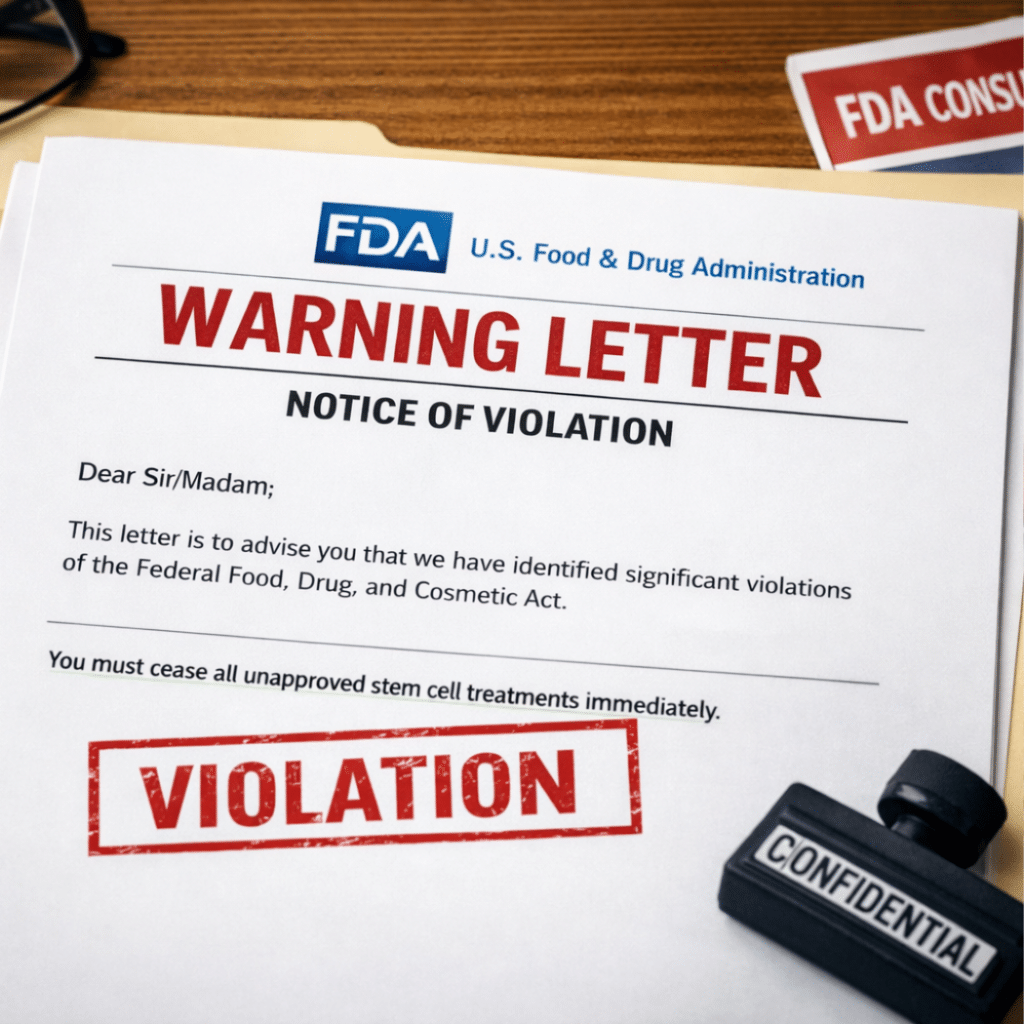
But here is what makes this so important to get right: the wrong choice can cost you thousands of dollars, delay proven medical care, and in some cases cause serious physical harm. The FDA has issued dozens of warning letters to clinics marketing unapproved regenerative medicine products, and the FTC has taken action against deceptive health advertising in this space. These are not theoretical risks.
This guide will walk you through the most common red flags seen in FDA and FTC enforcement actions, show you exactly what questions to ask before agreeing to any procedure, and give you the tools to verify claims independently. By the end, you will know how to tell the difference between a clinic operating within the rules and one that may be putting your health and finances at risk.
Red Flag 1: Disease Cure Claims and “Too Good to Be True” Promises
The single biggest warning sign is a clinic that claims its products can treat, cure, or reverse specific diseases. The FDA prohibits marketing unapproved cell-based products as treatments for diseases without completing the required approval process, which includes filing an Investigational New Drug (IND) application, conducting clinical trials, and obtaining a Biologics License Application (BLA).
Yet many enforcement actions have targeted clinics making exactly these kinds of claims for conditions like arthritis, COPD, Alzheimer’s disease, multiple sclerosis, heart failure, and more. Phrases that should immediately raise your guard include “cures almost any condition,” “works for all types of arthritis, heart problems, and neurological issues,” “permanent cure,” and “guaranteed results.”
Legitimate clinics and researchers use cautious, specific language. They acknowledge that evidence is preliminary, that more studies are needed, and that individual results vary. They can tell you clearly whether the product they use is FDA approved for your specific condition and whether it is part of a registered clinical trial or investigational use. If a clinic’s website or seminar reads like an infomercial promising miracle cures for a long list of unrelated conditions, that is a serious red flag. For more context on how the FDA classifies these products, see our guide to understanding FDA regulations for adipose tissue.
Red Flag 2: Misusing “FDA Approved” Language
Some clinics use the phrase “FDA approved” in ways that are technically misleading. For example, a clinic may say its procedure is “FDA approved” when only the centrifuge or syringe used in the process has FDA clearance, not the actual cell product being injected into your body. These are very different things.
As of this writing, there are no FDA-approved adipose-derived or SVF “stem cell” products for treating common chronic diseases like osteoarthritis, back pain, or neurological conditions. The fact that a piece of laboratory equipment is FDA cleared does not mean the overall treatment is approved. The FDA consumer alert on regenerative medicine specifically warns patients about this distinction.
Before any procedure, ask these questions directly: “Exactly what part of this procedure is FDA approved?” “Is the actual product going into my body an FDA-approved drug, biologic, or device for my condition?” “Can you show me the FDA approval letter or product name so I can verify it myself?” Vague answers, evasion, or an unwillingness to provide documentation are red flags. A clinic operating within the rules will answer these questions clearly and without hesitation.
Red Flag 3: No Mention of Clinical Trials, INDs, or Regulatory Pathway
Any cell-based product used to treat or prevent disease almost always requires an IND for clinical investigation and, eventually, a BLA for marketing approval. The FDA has issued multiple warning letters to companies that offer unapproved “stem cell” injections without INDs or BLAs, or that incorrectly claim their products qualify as minimally manipulated Section 361 HCT/Ps when they do not.
A significant red flag is when a clinic’s website and marketing materials never use terms like “investigational,” “IND,” “clinical trial,” or “not FDA approved.” Instead, the procedure is marketed as a routine treatment, as though it has already been proven safe and effective and fully approved. This framing misleads patients into believing they are receiving an established therapy rather than something that has not completed the rigorous testing the FDA requires.
Patients should hear clear explanations of whether the procedure is considered investigational, whether the product falls under Section 361 HCT/P or Section 351 biologic rules, and whether an IND is in place. If a clinic cannot explain where its product sits within the FDA regulatory framework, proceed with extreme caution. You can learn more about the difference between tissue banking and treatment clinics in our complete guide to adipose tissue banking.
Red Flag 4: High-Pressure Sales Tactics and Large Upfront Cash Payments
Unethical clinics often use sales tactics that feel more like a timeshare presentation than a medical consultation. Watch for “today only” discounts, claims that the price will double if you do not sign up immediately, and sales staff pushing credit applications or financing during your first visit.
Seminar-style events are particularly common in this space. At these events, salespeople rather than physicians often do most of the talking, risks and uncertainties are minimized or glossed over entirely, and patients may even be told not to consult their own doctors because “they don’t understand stem cells.” These are serious warning signs.
Legitimate medical practices encourage second opinions. They give patients time to think, provide written information and consent forms well before any procedure, and use thorough medical history reviews and physical examinations to determine whether a patient is even a suitable candidate. When a “stem cell” consultation feels more like a sales pitch than a careful medical conversation, that is a major red flag. A trustworthy provider will never rush you into a decision about your health.
Red Flag 5: Lack of Clear Informed Consent, Risks, and Alternatives
Ethical medical providers are required to give patients robust informed consent that lists known and unknown risks, explains that benefits may be uncertain, describes alternatives (including standard care and doing nothing), and clearly states whether the therapy is investigational and not FDA approved.
Red flags include a consent form that is very short and vague, presented only at the last minute with no opportunity for discussion, or a clinic that discourages questions about infection risk, blood clot risk, tumor risk, or what happens if complications occur. Any clinic that minimizes or avoids discussing risks is prioritizing revenue over your safety.
You should insist on time to read consent documents carefully. Ask to take forms home if you need more time, and discuss the documents with your own physician before signing. Lack of honest discussion about risks and alternatives is a strong signal that a clinic may be prioritizing sales over patient safety.
Red Flag 6: No Verifiable Physician Credentials or Oversight
Any injection or invasive procedure should be performed or directly supervised by appropriately trained, licensed clinicians. You should be able to look up the treating physician’s license on your state medical board website, confirm board certification where relevant, and clearly identify who the medical director is.
Be cautious when a clinic’s website heavily features “center” or “clinic” branding but does not clearly list physician names and qualifications, or uses titles like “stem cell expert” or “regenerative specialist” that are not recognized medical credentials. Procedures performed in non-medical settings such as spas or beauty salons without clear medical oversight should also raise concerns.
You can verify a physician’s license status and check for disciplinary actions through your state medical board’s online search tool. Board certification can be confirmed through official certifying boards, not through marketing claims on a clinic’s website. If you cannot easily confirm who the doctor is and what their qualifications are, do not proceed. Learn more about the role of qualified providers in how stem cell banking works.
Red Flag 7: No Connection to Real Research or Evidence, Only Testimonials
Patient testimonials and dramatic before-and-after photos are emotionally powerful, but they are not scientific evidence. They can be cherry-picked, exaggerated, or entirely unrepresentative of typical outcomes. A clinic whose marketing relies mostly on patient stories, video testimonials, or social media posts rather than references to peer-reviewed research, registered clinical trials, or reputable medical journals is giving you a one-sided picture.
Claims like “100% success rate” or “everyone gets better” should make you very skeptical. No medical intervention works for everyone, and any provider who suggests otherwise is not being honest with you. Ethical practices reference peer-reviewed data where available, use appropriate caveats about the limitations of existing research, and never present uncommon or exceptional results as typical. You can search ClinicalTrials.gov to see what legitimate research is actually underway for specific conditions. When marketing is built on testimonials and photos instead of data, that is a warning sign. For an overview of where real research stands, visit our emerging research page.
How to Check Clinics, Verify Claims, and Report Concerns
You are not powerless. There are concrete steps you can take before agreeing to any procedure.
Verify regulatory status. Search the FDA’s public warning letter database using terms like “stem cell,” “regenerative medicine,” or “HCT/P.” Review the FDA consumer alert page for warnings about unapproved products.
Confirm trial legitimacy. If a clinic claims to be running a “clinical trial,” ask for the NCT number, which is the ClinicalTrials.gov registration identifier. Search that number on ClinicalTrials.gov to confirm the study details, listed sponsor, and locations match what the clinic tells you. Legitimate trials are registered, conducted under an IND, and monitored by an institutional review board (IRB).
Check physician licensing. Use your state medical board’s website to confirm that the treating physician’s license is active and to check for any disciplinary history. Confirm board certification through official certifying organizations.
Report questionable clinics. If you believe a clinic is making misleading claims or you experience an adverse event, you have several reporting options. Report adverse events to FDA MedWatch. Report deceptive advertising to the FTC at ReportFraud.ftc.gov. Contact your state medical board for concerns about physician conduct, and reach out to your state attorney general’s consumer protection division for broader complaints. Knowing where to look and how to report helps protect both you and other patients.
How to Apply This Information to Your Decisions
Treat any “stem cell treatment” decision as a serious medical choice, not a consumer purchase. Before signing anything or handing over payment, pause. Bring materials and marketing claims to your own physician for an independent opinion. Use this guide as a checklist of warning signs and questions to ask during any consultation.
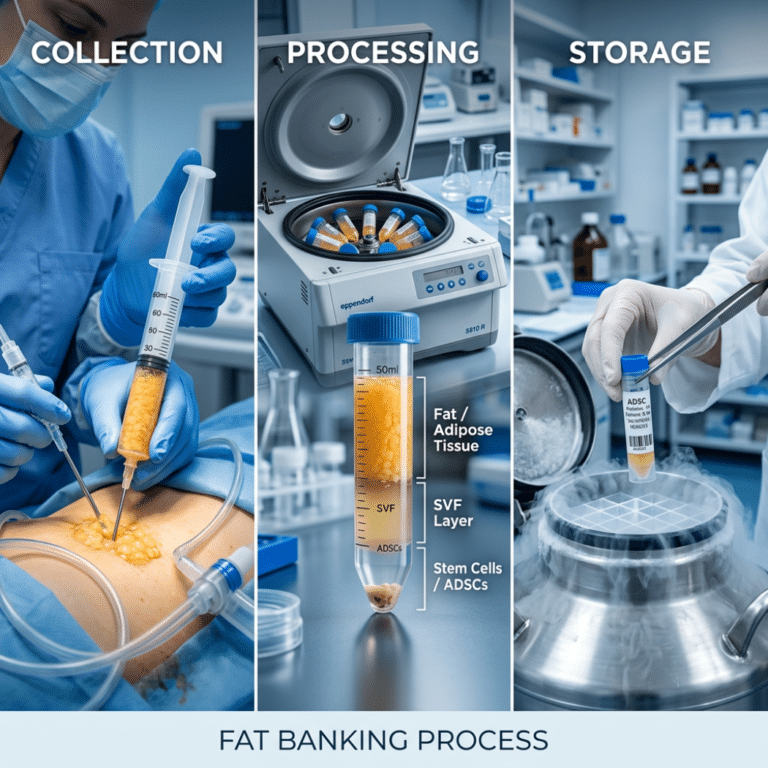
Save My Fat focuses on adipose tissue banking and patient education, not selling treatments. One reason patients choose to bank tissue is precisely to avoid feeling pressured into unproven procedures today based on fear or hype. Banking preserves your tissue for potential future use in FDA-regulated clinical research, Expanded Access programs, or approved therapies that may emerge as science evolves, without rushing into something that has not been proven safe or effective. Learn more about what Save My Fat offers on our patients page.
Frequently Asked Questions About Stem Cell Clinic Red Flags
Q: Are any stem cell therapies actually FDA approved? A: Yes, but very few. Hematopoietic stem cell transplantation (bone marrow transplants) for certain blood disorders like leukemia and lymphoma has long been FDA approved. A small number of other specific products have received approval for narrow indications. However, the vast majority of “stem cell” treatments advertised directly to consumers for conditions like arthritis, back pain, COPD, and neurological diseases are not FDA approved. The FDA’s consumer alert page provides current guidance on this topic.
Q: Is it normal to pay thousands of dollars to participate in a clinical trial? A: No. Legitimate clinical trials typically do not charge patients large fees for participation. In many cases, the research covers treatment costs and may even compensate participants for their time. If a clinic asks you to pay a large cash fee to “enroll” in a study, that is a significant red flag. Search the trial’s NCT number on ClinicalTrials.gov to verify it is a real, registered study.
Q: If a clinic has not received a warning letter, does that mean it is safe? A: Not necessarily. The FDA cannot inspect every clinic simultaneously, and enforcement is selective based on risk prioritization and available resources. The absence of a warning letter does not equal FDA approval or endorsement. It simply means the FDA has not yet taken public enforcement action against that specific entity.
Q: How do I know if a clinic follows FDA rules for adipose-derived products? A: Ask the clinic directly how they classify their product under FDA regulations. Specifically, ask whether the product meets all four criteria for Section 361 HCT/P status or whether it requires the Section 351 biologic pathway with an IND and BLA. Ask if they have an active IND. Read the FDA’s guidance on regenerative medicine products so you understand the basics before your consultation. Our guide on FDA regulations for adipose tissue also explains these pathways in plain language.
Q: Are overseas stem cell clinics more dangerous? A: Regulations vary widely by country. Some regions have significantly less regulatory oversight than the United States, meaning products may not undergo the same safety testing, manufacturing quality controls, or physician credentialing standards. Patients who travel abroad for treatment may also have limited legal protections and less access to follow-up care if complications arise. This does not mean every international clinic is unsafe, but the risks can be harder to evaluate.
Q: What if my friend had a great experience at a clinic? A: Individual stories, even from people you trust, do not replace controlled scientific data. Your friend’s condition, health history, and risk tolerance may be very different from yours. Positive anecdotal experiences also do not tell you about the patients at the same clinic who did not improve or who experienced complications. Always base your decisions on verified evidence and professional medical advice, not on any single person’s experience.
Q: Can I rely on Google reviews or social media ratings? A: Online reviews can provide some useful perspective, but they can also be manipulated, selectively curated, or posted by individuals who do not disclose financial relationships with the clinic. Reviews should never substitute for checking a clinic’s regulatory status, verifying physician credentials, and consulting your own physician. Use reviews as one small piece of a much larger evaluation process.
Q: What should I do if I already had a procedure and something feels wrong? A: Seek medical care from your own physician or an emergency department immediately. Then report the adverse event to FDA MedWatch so the FDA can track safety signals. You may also want to file a report with your state medical board and consider consulting an attorney if you believe you were misled about the nature of the procedure.
Key Takeaways
Unapproved Products Are Widespread. Many “stem cell” products marketed directly to consumers are not FDA approved for disease treatment and may violate federal regulations. The FDA has issued numerous warning letters to clinics making illegal claims.
Red Flags Are Recognizable. Cure-all promises, vague “FDA approved” language, high-pressure sales tactics, minimal risk disclosure, unverifiable physician credentials, and marketing built on testimonials instead of data are all warning signs of a non-compliant clinic.
Ethical Clinics Are Transparent. Legitimate providers clearly explain the regulatory status of their products, discuss risks and limitations honestly, provide robust informed consent, and encourage patients to seek second opinions and take time before deciding.
You Can Verify Claims Independently. Search for FDA warning letters, confirm trial registrations on ClinicalTrials.gov, check physician licenses through state medical boards, and review the FDA’s consumer guidance on regenerative medicine products.
Reporting Protects Everyone. Filing reports with FDA MedWatch, the FTC, state medical boards, and state attorneys general helps regulators identify problematic clinics and protects future patients from harm.
Tissue Banking Is Not Treatment. Save My Fat provides adipose tissue banking and education, not unapproved treatments. Banking preserves tissue for potential future use through legitimate, FDA-regulated pathways, giving patients time to make informed decisions rather than feeling pressured into unproven procedures.
Ready to Learn More About Protecting Yourself?
Use this red flag list as a checklist before any regenerative medicine or “stem cell” consultation. Print it out or save it on your phone, and bring it with you to discuss with your own physician. The most important thing you can do is slow down, ask hard questions, and verify claims before agreeing to any procedure.
If something feels rushed, unclear, or too good to be true, you are allowed to slow down, ask more questions, or walk away. Protecting yourself starts with understanding how ethical clinics talk about risks, evidence, and regulations.
Save My Fat helps individuals preserve their own adipose tissue through validated cryopreservation protocols for potential future opportunities that may arise as regenerative medicine science and FDA regulations evolve. We focus on education and transparency, not selling unproven treatments. If you are interested in learning more about tissue banking as a way to prepare for the future without rushing into unproven procedures today, we are here to help.
Learn more: Visit savemyfat.com | About Us | Contact Us
Save My Fat Adipose Tissue Banking for Future Regenerative Medicine Opportunities
Save My Fat helps individuals preserve their own adipose tissue through validated cryopreservation protocols for potential future opportunities that may arise as regenerative medicine science and FDA regulations evolve. Save My Fat does not provide stem cell treatments or recommend unapproved therapies. This guide is educational only and does not replace personalized medical or legal advice.
Last updated: March 4, 2026