
Hundreds of clinics across the United States market “stem cell therapy” directly to consumers for conditions ranging from arthritis to Alzheimer’s disease, often charging thousands to tens of thousands of dollars per treatment. Most of these offerings are unproven, unregulated, and have led to documented patient harms, including infections, vision loss, and even deaths. The FDA and FTC have significantly increased enforcement in recent years, issuing warning letters, pursuing court injunctions, and securing permanent bans against companies that make false claims. Patients considering any regenerative medicine treatment need to understand how to distinguish legitimate, regulated pathways from predatory marketing.
TL;DR Unregulated stem cell clinics often promise to cure many unrelated conditions, charge high out-of-pocket fees, and operate outside FDA oversight. Red flags include vague product descriptions (“amniotic stem cells,” “exosomes”), the absence of a ClinicalTrials.gov listing, the absence of imaging guidance, and high-pressure sales tactics. Legitimate options include FDA-regulated clinical trials, Expanded Access programs, and compliant tissue banking services. Patients should always verify claims, ask specific questions, and consult board-certified physicians before paying for any regenerative medicine product or service.
Important Disclaimer: This article is for educational purposes only and does not constitute medical, legal, or financial advice. Save My Fat does not provide stem cell treatments, therapies, or cures for any medical condition. Patients should discuss all treatment options with their own licensed healthcare professionals. Information about FDA regulations and enforcement actions is provided for patient education and protection, not as legal interpretation.
The promise of regenerative medicine is real. Clinical trials registered on ClinicalTrials.gov are investigating adipose-derived stem cells, mesenchymal stem cells, and other cell-based approaches for serious conditions. But between the legitimate science and the patient sits a rapidly growing industry of unregulated clinics that exploit hope, charge premium prices, and in some cases cause devastating harm. Understanding this landscape is the first step toward protecting yourself.
The Unregulated Stem Cell Clinic Problem
The scope of the unregulated stem cell clinic market is staggering. Research published in the journal Cell Stem Cell in 2021 identified 1,480 businesses operating 2,754 clinics across the United States selling purported stem cell treatments for a wide range of conditions (Turner, 2021). That number represents a nearly fivefold increase from just five years earlier, when approximately 570 such facilities were documented. The Pew Charitable Trusts has characterized this growth as a direct threat to patient safety (Pew Charitable Trusts, 2021).
These clinics typically operate on a direct-to-consumer, pay-out-of-pocket model, with treatment costs ranging from $5,000 to $50,000 or more per session. They market products variously labeled as “stem cells,” “exosomes,” “amniotic fluid,” “placental cells,” or “umbilical cord tissue” without providing verifiable evidence of actual cell content, viability, or therapeutic effect.
A particularly misleading tactic involves claiming FDA compliance or describing products as “FDA registered.” As the FDA has made clear, registration of a tissue establishment does not constitute approval and does not mean a product is safe or effective. Many clinics use this language specifically to create false confidence in patients who may not understand the regulatory distinction.
The FDA’s enforcement discretion period for certain regenerative medicine products ended on May 31, 2021. Since then, the agency and the Federal Trade Commission have significantly increased enforcement actions against clinics offering unapproved products.
Documented Patient Harms
The risks of unregulated stem cell treatments are not theoretical. Real patients have suffered serious, irreversible harm.
The Macular Degeneration Cases
In a case reported in the New England Journal of Medicine, three women with age-related macular degeneration received intravitreal injections of adipose-derived “stem cells” at a clinic in Florida. All three experienced severe complications within days, including retinal detachments and hemorrhaging. All three were permanently blinded (Kuriyan et al., 2017). The women had paid $5,000 each for a procedure that was marketed as a clinical trial but lacked nearly every component of proper trial design, including a control group, data collection plan, or follow-up protocol. Two of the patients had found the supposed “trial” listed on ClinicalTrials.gov, highlighting how listing alone does not guarantee legitimacy.
Broader Patterns of Harm
The Pew Charitable Trusts conducted a comprehensive analysis of adverse events associated with unapproved stem cell and regenerative medicine interventions. Their research identified 360 reported cases of patient harm occurring between 2004 and 2020, including 20 deaths. Documented adverse events included bacterial and fungal infections, respiratory distress, vision loss, neurological complications, tumor formation, organ damage, and sepsis (Pew Charitable Trusts, 2021). More than 100 patients required hospitalization. As the National Institutes of Health has noted, these figures almost certainly undercount actual harms because adverse events from unapproved products are systematically underreported (NIH, 2022).
Beyond physical harm, patients also suffer financial losses and delayed access to evidence-based treatments. Spending thousands of dollars on unproven therapies can prevent patients from pursuing treatments with established safety and efficacy profiles.
Important: These documented harms occurred at clinics operating outside FDA-regulated pathways. They underscore why regulatory compliance and proper clinical oversight matter for patient safety.
What “FDA Approved” and “FDA Compliant” Really Mean
Confusion about FDA terminology is one of the biggest tools that unregulated clinics exploit. Understanding these terms is critical for self-protection.
“FDA approved” means a product has undergone rigorous clinical trials demonstrating safety and efficacy, received a Biologics License Application (BLA) for biologics, and is authorized by the FDA for specific uses. The only approved stem cell products in the United States are blood-forming (hematopoietic) stem cells derived from umbilical cord blood, approved for specific blood disorders. Most conditions marketed by clinics, including arthritis, back pain, and neurological diseases, do not have any FDA-approved stem cell treatments.
“FDA registered” or “FDA compliant” means a tissue establishment has submitted registration paperwork and listed its products with the FDA. This is a basic administrative requirement, not a seal of quality or safety. The FDA has explicitly warned consumers that registration does not equal approval (FDA Consumer Alert).
Investigational products can be used in FDA-regulated clinical trials under an Investigational New Drug (IND) application or through Expanded Access programs. These pathways involve strict oversight, informed consent, Institutional Review Board (IRB) approval, and data collection. They are research studies, not commercial treatment programs, and their results are not guaranteed.
Patients can verify whether a treatment is part of a legitimate clinical trial by searching ClinicalTrials.gov and confirming the NCT registration number with the study team.
Understanding 361 vs 351: Why Most Clinic Offerings Are Not Compliant
The FDA regulates human cells, tissues, and cellular and tissue-based products (HCT/Ps) under 21 CFR Part 1271. There are two main regulatory pathways, and understanding the difference is essential for evaluating any regenerative medicine offering.
Section 361 HCT/P
Products that meet all four criteria under 21 CFR 1271.10(a) can be regulated under the less stringent 361 pathway. The four criteria are: minimal manipulation; homologous use only; not combined with another article (except water, saline, or certain preserving agents); and either no systemic effect and not dependent on living cell metabolic activity for its primary function, or intended for autologous use, allogeneic use in first- or second-degree blood relatives, or reproductive use. Products meeting all four criteria do not require an IND or BLA.
Section 351 (Biologics)
Products that fail to meet all four 361 criteria are regulated as drugs and biological products under Section 351 of the Public Health Service Act. These products require either an IND application for investigational use or a BLA for marketing approval, including clinical trials demonstrating safety and efficacy.
What This Means in Practice
Minimal manipulation for structural tissue like adipose means processing must not alter the original relevant characteristics of the tissue relating to its basic functions (cushioning, support, insulation). Cryopreservation of intact adipose tissue generally meets this standard. Enzymatic digestion to isolate the stromal vascular fraction (SVF) is considered more than minimal manipulation by the FDA and triggers 351 requirements. Learn more about SVF and its regulatory status in our guide to adipose tissue banking vs. stem cell treatment clinics.
Homologous use means the product must perform the same basic function in the recipient as in the donor. Adipose tissue used for soft tissue support or reconstruction qualifies as homologous use. Adipose tissue or SVF injected into a joint, brain, or bloodstream for immunomodulation or regeneration does not meet the homologous use standard.
| Criterion | 361 HCT/P | 351 Biologic |
|---|---|---|
| Manipulation | Minimal (tissue retains basic function) | More than minimal (enzymatic digestion, culture expansion) |
| Use | Homologous (same function in donor and recipient) | Non-homologous or systemic |
| Regulation | Registration, listing, CGTP, donor screening | Requires IND (investigational) or BLA (approved) |
| Adipose examples | Intact cryopreserved adipose for autologous fat grafting | SVF isolation, culture-expanded ADSCs, systemic infusions |
Most clinic offerings that claim to treat arthritis, neurological disease, or other conditions involve either enzymatic SVF isolation or allogeneic birth-tissue products marketed for non-homologous uses. Under FDA regulations, these require 351 approval and cannot be legally marketed without an IND or BLA.
Disclaimer: This regulatory overview is provided for patient education only. It does not constitute legal interpretation. Patients and providers should consult the FDA’s published guidance documents and qualified regulatory counsel for specific product classifications.
Red Flags: How to Spot an Unregulated Clinic
Protecting yourself starts with knowing what to look for. The following red flags should prompt serious caution before paying for any “stem cell” or regenerative medicine treatment.
Promises to cure or treat many unrelated conditions. If a single product is marketed for arthritis, Alzheimer’s disease, COPD, autism, diabetes, erectile dysfunction, and more, that is a major warning sign. No single stem cell product has been proven effective for all of these conditions.
No ClinicalTrials.gov listing. If the product is not FDA-approved and is not part of a registered clinical trial with a verifiable NCT number, the treatment is operating outside regulated pathways.
Vague product descriptions. Terms like “amniotic stem cells,” “exosomes,” “placental cells,” or “umbilical cord cells” without specifics on cell type, viability, dose, or manufacturing process suggest the clinic may not know, or may not want you to know, exactly what is being injected.
High out-of-pocket costs with no insurance coverage. Legitimate clinical trials typically do not charge patients for the investigational product. Out-of-pocket costs of $10,000 to $50,000 paid upfront for unproven treatments should raise immediate concern.
No imaging guidance. Legitimate orthopedic or interventional procedures typically use ultrasound or fluoroscopy to ensure precise placement. Clinics that skip imaging during injection procedures raise quality and safety concerns.
Providers who are not specialists in the condition being treated. A chiropractor or general practitioner offering “stem cell therapy” for neurological conditions, for example, may lack the specialized training needed to properly evaluate and treat these diseases.
High-pressure sales tactics or large upfront payment demands. Legitimate medical providers and research studies do not pressure patients into immediate financial commitments or use scarcity marketing (“limited spots available”).
Patient testimonials as the primary evidence. Individual testimonials, while emotionally compelling, are not scientific evidence. They cannot account for placebo effects, natural disease course, or concurrent treatments. Peer-reviewed clinical trial data is the standard for evaluating medical treatments.
Claims of “FDA approved” or “FDA registered” without clarification. As discussed above, registration is not approval. Any clinic that conflates the two is either uninformed or intentionally misleading.
Defensive or evasive responses to direct questions. Legitimate providers welcome questions about scientific data, peer-reviewed publications, and ClinicalTrials.gov registrations. Clinics that become hostile or dismissive when patients ask for evidence should be avoided.
FDA and FTC Enforcement: Real Examples
Federal enforcement against unregulated stem cell clinics is active and consequences are real.
FDA Actions
The FDA has issued hundreds of regulatory correspondences to manufacturers and providers offering unapproved regenerative medicine products. In a landmark case, the FDA obtained a permanent injunction against US Stem Cell Clinic in Florida, after the court found the company had been processing patients’ adipose tissue into stem cell products and administering them without FDA approval. The clinic was the same facility involved in the macular degeneration blindness cases (FDA, 2019).
In 2024, the 9th Circuit Court of Appeals upheld FDA authority over stem cell clinics in California, rejecting arguments that certain adipose-derived products were exempt from federal regulation. That ruling brought many previously unregulated California clinics under FDA oversight (CalMatters, 2024).
The FDA has also issued public safety alerts regarding exosome products, warning that no exosome products are currently FDA-approved and that clinics selling them for disease treatment are violating federal law.
FTC Actions
In January 2025, the Federal Trade Commission and the State of Georgia announced that the co-founders of the Stem Cell Institute of America and related companies were permanently banned from marketing any regenerative medicine treatments and ordered to pay more than $5.1 million in refunds and civil penalties. The court found that the defendants had created and distributed false and misleading advertisements about the efficacy and FDA approval status of stem cell therapy, primarily targeting elderly and disabled patients who were charged up to $5,000 per injection (FTC, 2025).
These enforcement actions demonstrate that the consequences of operating outside the law are real and escalating. However, patients should not assume that a clinic is safe simply because it is still in operation. Enforcement takes time, and many noncompliant clinics continue to advertise while investigations are ongoing.
How to Find Legitimate Options
If you or a family member is seeking regenerative medicine options for a serious condition, there are constructive, evidence-based steps you can take.
Step 1: Search ClinicalTrials.gov
The U.S. National Library of Medicine maintains ClinicalTrials.gov, the authoritative database of clinical studies. Search your condition along with terms like “stem cells” or “regenerative medicine.” Look for trials that are actively recruiting, sponsored by academic institutions or hospital systems, have clear eligibility criteria, and include IRB oversight. Verify the NCT number and contact the study team directly if you are interested.
Step 2: Explore Expanded Access
If no suitable trial is available for your condition, ask your physician about the Expanded Access pathway. Expanded Access (sometimes called “compassionate use”) allows patients with serious or life-threatening conditions to access investigational products outside of clinical trials when no comparable alternative treatment exists. This pathway requires physician request, manufacturer agreement, FDA authorization, and IRB review. The Reagan-Udall Foundation’s Expanded Access Navigator can help identify potential options.
Step 3: Seek Board-Certified Specialists
Look for physicians with board certification in the relevant specialty (orthopedics, pain medicine, neurology, rheumatology) who practice in academic medical centers or hospital systems. These physicians are more likely to follow evidence-based guidelines, have access to legitimate clinical trials, and will provide honest assessments of available evidence.
Step 4: Ask the Right Questions
Before paying for any regenerative medicine product or service, ask these questions: What specific product are you offering, and what cells does it contain? Is this FDA-approved for my condition, or part of an FDA-regulated clinical trial? If investigational, what is the ClinicalTrials.gov NCT number? What peer-reviewed data supports this treatment for my condition? Will imaging guide the procedure? What are the risks and how will complications be monitored? Is this covered by insurance or entirely out-of-pocket?
A legitimate provider will welcome these questions. A provider who responds defensively, refuses to share data, or pressures you to pay quickly should be avoided.
Where Save My Fat Fits In: Banking, Not Treatment
Given everything discussed in this article, it is important to clearly explain what Save My Fat is and what it is not.
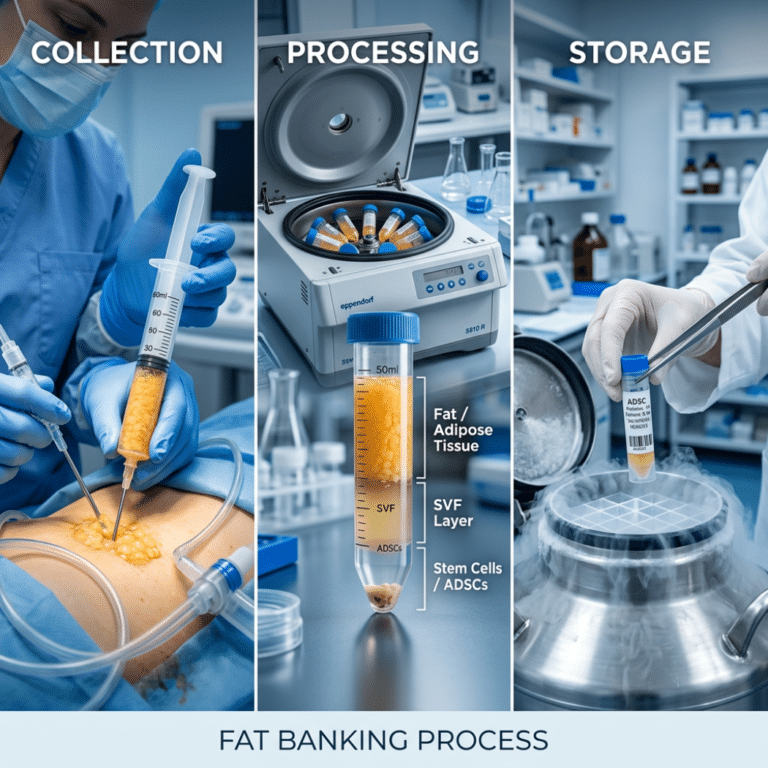
Save My Fat is not a stem cell clinic. It does not provide treatments, therapies, injections, or cures for any medical condition. Save My Fat is a tissue banking service that collects, processes, and cryopreserves intact adipose tissue under FDA 361 HCT/P regulations. You can learn more about how stem cell banking works and the scientific basis of adipose tissue banking.
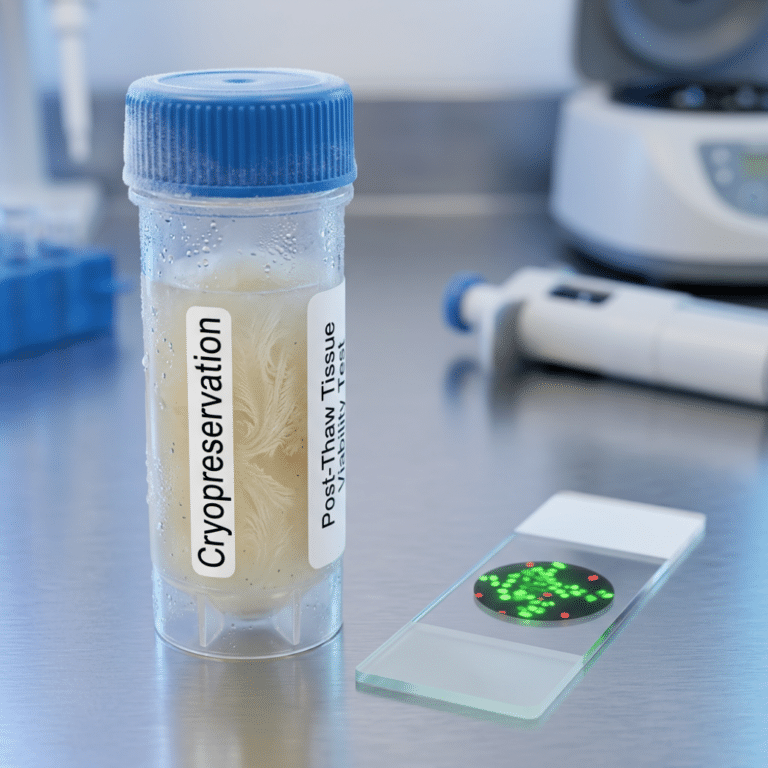
The banking process involves minimal manipulation through cryopreservation of intact tissue. This means the tissue is preserved in its natural state without enzymatic digestion, cell isolation, or culture expansion. Stored tissue remains the patient’s property and is available if a legitimate medical opportunity arises through FDA-regulated pathways, such as clinical trials, Expanded Access, or future approved therapies.
Banking adipose tissue does not guarantee access to any treatment, clinical trial, Expanded Access program, or future therapy. Any future use of banked tissue depends on the regulatory status of products or procedures at that time, the patient’s clinical situation, physician guidance, and the availability of FDA-regulated pathways.
Save My Fat operates with clear regulatory positioning, physician involvement, informed consent, and no treatment claims. The company’s role is tissue preservation for potential future opportunities, not direct treatment of any disease or condition. For more information about the banking process, visit How Stem Cell Banking Works or contact the Save My Fat team.
Frequently Asked Questions
Why are there so many stem cell clinics if most are not FDA approved? The growth resulted from strong patient demand, initially slow regulatory enforcement, and low barriers to entry. The FDA’s enforcement discretion period (ending May 31, 2021) was intended to give manufacturers time to comply, but many clinics expanded instead. Federal and state enforcement continues to increase, though the sheer number of facilities makes comprehensive oversight difficult.
What does “FDA registered” mean, and is it the same as “FDA approved”? No. FDA registration means a tissue establishment has submitted paperwork and listed its products with the agency. It is an administrative step required by law, not a quality endorsement. FDA approval means a product has undergone rigorous clinical trials and received formal authorization for specific medical uses. Many clinics use “FDA registered” language to imply a level of oversight that registration alone does not provide.
What is the difference between 361 and 351 regulation? Section 361 HCT/Ps meet strict criteria (minimal manipulation, homologous use, and other requirements) and are regulated primarily to prevent communicable disease transmission. Section 351 products do not meet all four criteria and are regulated as drugs or biologics, requiring IND applications for investigation and BLA approval for commercial marketing. Most “stem cell” products offered by clinics fail to meet 361 criteria and should be regulated as 351 products. See the FDA’s guidance document for detailed information.
What are the biggest red flags that a clinic is not legitimate? The most reliable warning signs include: promises to treat many unrelated conditions with a single product, no verifiable ClinicalTrials.gov listing, vague product descriptions, high out-of-pocket costs, lack of imaging guidance during procedures, high-pressure sales tactics, reliance on patient testimonials instead of peer-reviewed data, and defensive responses when asked for scientific evidence.
Have people been harmed by unproven stem cell treatments? Yes. The Pew Charitable Trusts documented 360 reported adverse events between 2004 and 2020, including 20 deaths. Reported harms include permanent blindness, bacterial and fungal infections, tumor formation, organ damage, respiratory distress, and sepsis. These numbers likely undercount actual harms because adverse events from unregulated products are systematically underreported.
What should I ask a clinic before paying for anything? Ask for the specific product name and contents, whether it is FDA-approved for your condition, the ClinicalTrials.gov NCT number if it is investigational, peer-reviewed publications supporting its use, whether imaging will guide the procedure, what the risks are, and how adverse events are monitored and reported. Legitimate providers will answer these questions openly and without pressure.
How do I find a legitimate clinical trial? Search ClinicalTrials.gov for your condition and relevant terms like “stem cells” or “regenerative medicine.” Focus on trials at academic medical centers or hospital systems with clear eligibility criteria and IRB oversight. Verify the NCT number independently and contact the study team before enrolling.
Is Save My Fat a stem cell clinic? No. Save My Fat is a tissue banking and cryopreservation service. It does not provide stem cell treatments, injections, or therapies for any medical condition. Save My Fat collects, processes, and stores intact adipose tissue for potential future use in FDA-regulated pathways. Banking tissue does not guarantee access to any treatment or clinical trial.
Can I use my banked adipose tissue for treatment right now? Banked adipose tissue is preserved for potential future opportunities that may arise as regenerative medicine science and FDA regulations evolve. Currently, any therapeutic use of adipose-derived cells for disease treatment would require participation in an FDA-regulated clinical trial, Expanded Access program, or use of a future FDA-approved therapy. Banking does not provide immediate treatment access. Learn more about the research areas where adipose-derived cells are being studied.
What happens if I already paid a clinic and now have concerns? If you have received an unproven stem cell or regenerative medicine product and experienced an adverse event, report it to the FDA’s MedWatch program. You can also file complaints with your state attorney general’s consumer protection division and the FTC. If you have health concerns following treatment, contact your primary care physician or go to the nearest emergency department. Document everything, including the product used, the provider, the date of treatment, and any symptoms you have experienced.
Disclaimer: This article is for educational and informational purposes only and does not constitute medical, legal, or financial advice. Save My Fat does not provide stem cell treatments, therapies, or cures for any medical condition and does not diagnose, treat, cure, or prevent any disease. Banking adipose tissue does not guarantee eligibility, access, or clinical benefit from any future therapy, clinical trial, or FDA-approved treatment. Any future use of banked tissue depends on evolving science, FDA regulatory decisions, the patient’s clinical situation, physician recommendations, and availability of approved pathways. Patients should discuss all treatment options with their own licensed healthcare professionals.
Key Takeaways
- More than 2,750 clinics across the United States sell unapproved stem cell products, and enforcement actions by the FDA and FTC continue to increase.
- Documented patient harms from unregulated treatments include permanent blindness, infections, tumor formation, organ damage, and death.
- “FDA registered” is not the same as “FDA approved.” Registration is an administrative requirement, not a safety or efficacy endorsement.
- Most clinic offerings fail to meet FDA 361 HCT/P criteria and should be regulated as 351 biologics requiring IND or BLA approval.
- Legitimate options exist through clinical trials on ClinicalTrials.gov, Expanded Access programs, and board-certified specialists at academic medical centers.
- Save My Fat is a tissue banking service, not a treatment provider. Banking preserves tissue for potential future FDA-regulated opportunities without guaranteeing access or clinical benefit.
Learn More
Before exploring tissue banking, patients should consult with their own licensed healthcare providers about all available treatment options, including established evidence-based therapies.
- Adipose Tissue Banking: A Complete Guide
- How Stem Cell Banking Works
- Adipose Tissue Banking vs. Stem Cell Treatment Clinics
- Cryopreservation Safety: What You Need to Know
- How Long Can Adipose Tissue Be Cryopreserved?
- Stem Cell Research Areas
- Emerging Research
- Joint and Orthopedic Applications
- Wellness and Healthy Aging
- For Patients
- For Providers
- About Save My Fat
- Contact Us
Last updated: March 19, 2026