
Expanded Access, sometimes called compassionate use, is the FDA’s formal pathway for certain patients with serious or immediately life-threatening diseases to access investigational products outside of clinical trials when specific criteria are met. It is a regulated, structured process governed by federal law, and it is distinct from both clinical trials and “Right-to-Try” legislation. This guide explains how Expanded Access works, who qualifies, and what patients and providers need to know.
TLDR: Expanded Access allows patients with serious conditions who cannot join a clinical trial, and who have no comparable alternative therapies, to receive an investigational drug or biologic when the manufacturer is willing to provide it and both FDA and an institutional review board (IRB) agree the potential benefit justifies the potential risks. FDA authorizes the vast majority (over 99%) of properly submitted Expanded Access requests. Expanded Access is different from both clinical trials and Right-to-Try, and it preserves important FDA and IRB safety oversight.
Important Disclaimer: This article is for educational purposes only and does not constitute legal or medical advice. It does not describe any Expanded Access program offered by Save My Fat. Save My Fat provides a tissue banking service only and does not offer treatments or Expanded Access programs. Patients should consult their treating physicians and legal counsel regarding Expanded Access eligibility and options.
Patients with serious illnesses sometimes hear terms like “compassionate use,” “Expanded Access,” and “Right-to-Try” without fully understanding what each pathway involves, who qualifies, or what protections exist. This guide provides a practical overview of the FDA’s Expanded Access framework so patients and their physicians can make informed decisions.
What Is FDA Expanded Access?
Expanded Access is the use of an investigational drug, biologic, or medical device outside of a clinical trial to diagnose, monitor, or treat a patient with a serious or immediately life-threatening disease or condition when no comparable or satisfactory alternative therapy is available (FDA Expanded Access). The term “investigational” means the product has not yet received FDA approval for the intended use.
The FDA uses the term “Expanded Access” rather than “compassionate use,” though both terms refer to the same regulatory pathway. Expanded Access is authorized under 21 CFR Part 312 Subpart I and is distinct from off-label use of already-approved drugs. The key distinction is that EA involves products that are still under investigation and have not been approved for any use, or have not been approved for the specific use being requested.
An important clarification: Expanded Access is about treatment access for individual patients, not research. Although safety data from EA use may inform the product’s development, the primary purpose is to provide treatment when no other options remain (Overview of FDA’s Expanded Access Program, PMC).
Who Can Qualify? Core Eligibility Criteria
FDA guidance establishes specific criteria that must be met before Expanded Access can be authorized (FDA Information for Physicians; FDA Guidance Q&A):
The patient must have a serious or immediately life-threatening disease or condition. There must be no comparable or satisfactory alternative therapy available to diagnose, monitor, or treat the condition. The patient must be unable to access the investigational product through a clinical trial, whether because they do not meet trial eligibility criteria, no trial is geographically accessible, or the trial is not currently enrolling. The potential benefit must justify the potential risks, and the risks must not be unreasonable in the context of the disease being treated. Providing the product via EA must not interfere with ongoing or planned clinical trials or drug development for that product. The manufacturer must be willing to provide the product. FDA cannot compel a company to offer Expanded Access.
These criteria must be met in addition to procedural requirements, including FDA application submission, IRB review, and informed consent from the patient.
The Three Types of Expanded Access
FDA recognizes three categories of Expanded Access, each sharing the same underlying eligibility criteria but differing in scale and documentation requirements.
Expanded Access Categories
| Category | When It Is Used | Typical Patient Numbers | Key Features |
| Individual patient (including emergency use) | One patient with a serious or immediately life-threatening disease | 1 | Uses FDA Form 3926; can be emergency or non-emergency; physician applies on patient’s behalf |
| Intermediate-size population | More than one patient but smaller than a treatment IND | Dozens to hundreds | For groups of patients when no treatment IND exists but need extends beyond a single individual |
| Treatment IND / Treatment protocol | Widespread use while pivotal trials are ongoing | Larger populations | Often used late in drug development when evidence of effectiveness exists but before full approval |
Individual patient requests are the most common type. They use a streamlined FDA Form 3926 that the FDA estimates takes approximately 45 minutes to complete. Intermediate-size and treatment IND applications require more extensive documentation, including more detailed safety data and manufacturing information, but follow the same fundamental eligibility criteria (FDA Guidance Q&A).
Step-by-Step: How Single-Patient Expanded Access Works
The individual patient request is the most common form of Expanded Access. Here is how the process works in practice, based on FDA guidance and the Reagan-Udall Foundation’s Expanded Access Navigator resources.
Step 1: Discuss Options with Your Physician
The process begins with the treating physician, not the patient contacting the FDA directly. The physician evaluates whether standard approved therapies have been exhausted, whether clinical trials are available and accessible, and whether Expanded Access is appropriate for the patient’s situation. If EA is considered, the physician contacts the manufacturer to ask whether the company will consider providing the investigational product (FDA Information for Physicians).
Step 2: Manufacturer Agreement
The company decides whether to make its investigational product available under Expanded Access. This decision is voluntary. FDA cannot require a manufacturer to provide its drug or biologic. The Reagan-Udall Navigator Company Directory can help physicians and patients identify whether a manufacturer has a publicly listed Expanded Access policy or program. If the company declines, EA cannot proceed with that product.
Step 3: Prepare the Application
For individual patients, the physician typically uses FDA Form 3926 (Individual Patient Expanded Access Investigational New Drug Application). The application requires: a clinical rationale and summary of the patient’s condition, a proposed treatment plan and dosing, a description of risks and monitoring plans, the manufacturer’s letter of authorization, an informed consent form, and institutional review board (IRB) review. For emergencies, IRB review can be expedited through a single-member (chair) concurrence rather than requiring full board review.
The Reagan-Udall Single-Patient EA Document Checklist provides a structured list of all required documents to help physicians assemble a complete request.
Step 4: FDA and IRB Review
FDA reviews the request and may allow it to proceed, place it on clinical hold, or request modifications. For non-emergency requests, the FDA has 30 days to respond. For emergency requests involving immediately life-threatening conditions, FDA can authorize use by telephone or other rapid communication, with written follow-up submitted afterward.
Published data show that FDA authorizes the vast majority of Expanded Access requests. According to FDA’s own reporting and published analyses, FDA has authorized approximately 99% of single patient EA applications consistently over multiple years (FDA EA Report, 2018; Expanded access to investigational drugs, PMC; Miller et al., JAMA Network Open, 2018).
For non-emergency EA, full IRB review is required before treatment begins. For emergency use, treatment may begin with concurrence from the IRB chair (or a designated member), with full IRB review completed within five working days afterward.
Step 5: Treatment and Follow-Up
If authorized, the physician administers the investigational product and closely monitors the patient. The physician must comply with safety reporting obligations, including reporting serious and unexpected adverse events to both the FDA and the manufacturer. EA treatment is not a clinical trial. Data collection focuses on safety and may inform the product’s development, but EA is not designed to answer efficacy questions in the way a controlled study would (Overview of FDA’s Expanded Access Program, PMC).
Expanded Access vs. Clinical Trials vs. Right-to-Try
Patients and families often hear these three terms used interchangeably, but they are fundamentally different pathways with different purposes, protections, and requirements.
Comparison: Expanded Access, Clinical Trials, and Right-to-Try
| Feature | Clinical Trial | Expanded Access | Right-to-Try |
| Primary purpose | Research (evaluate safety and efficacy) | Treatment access for individual or group | Treatment access for certain patients |
| Product status | Investigational | Investigational | Investigational (must have completed Phase I) |
| FDA involvement | Yes (IND, protocol review, ongoing oversight) | Yes (EA review and safety oversight) | Limited; FDA notified but does not pre-authorize |
| IRB oversight | Yes | Yes | Often not required under the statute |
| Eligibility | Defined by study protocol | Serious or immediately life-threatening condition; no alternatives; cannot join trial | Life-threatening condition; exhausted approved options; cannot join trial |
| Manufacturer participation | Voluntary | Voluntary | Voluntary |
| Data collection | Systematic, pre-specified endpoints | Primarily safety; may inform development | Variable; not structured research |
| Patient protections | Extensive (FDA, IRB, protocol safeguards) | Extensive (FDA, IRB, informed consent) | Fewer regulatory protections and less oversight |
Expanded Access preserves FDA and IRB oversight and is available for products at multiple stages of development (Phase I through Phase III). Right-to-Try, established by federal law in 2018, bypasses some of these safeguards. It applies only to products that have completed at least Phase I testing and has been used far less frequently than Expanded Access in practice.
For most clinical situations, experts recommend considering clinical trials first (where the most structured protections and data collection exist), Expanded Access second, and Right-to-Try only in limited circumstances when neither of the first two options is feasible (Expanded access to investigational drugs, PMC).
What Expanded Access Is, and Is Not, For
Expanded Access is designed for patients with serious or immediately life-threatening conditions who lack adequate alternatives and who cannot participate in a clinical trial. It is not a shortcut to avoid the clinical trial process. It is not a guarantee of benefit; investigational products may not work and may have unknown or serious risks. And it is not a mechanism to access unregulated interventions that have not gone through the FDA process.
For regenerative medicine and cell therapies: some investigational products may have Expanded Access programs in the future, but availability is entirely product-specific and company-specific. Patients and providers must check each product’s status through ClinicalTrials.gov and company EA policies.
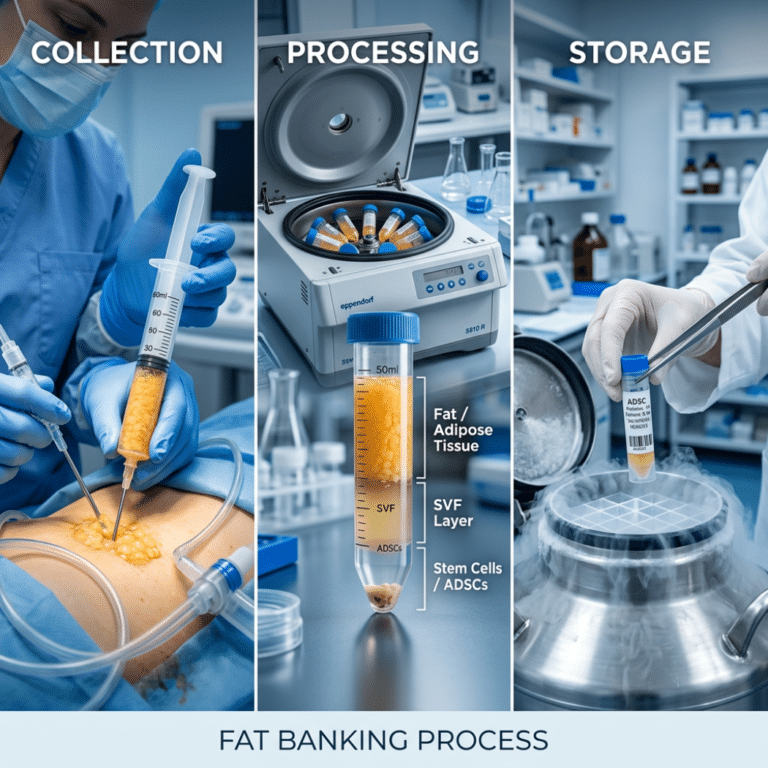
Save My Fat does not operate an Expanded Access program and does not provide any FDA-approved treatment. Save My Fat provides a tissue banking service only. Banking adipose tissue does not guarantee access to any treatment, clinical trial, or Expanded Access program. For general information about where adipose-derived cells are being studied, visit the emerging research page.
How Patients and Providers Can Use the Expanded Access Navigator
The Expanded Access Navigator, developed by the Reagan-Udall Foundation with FDA support, is a neutral resource designed to help patients understand Expanded Access, help physicians navigate the process, and help both parties find company EA policies.
The Navigator offers several practical tools. The Resources page provides background information, frequently asked questions, and educational materials about the EA process. The Company Directory allows users to search for a manufacturer and see whether it publishes an Expanded Access policy, contact details, or criteria. The Single-Patient EA Document Checklist serves as a planning tool for physicians assembling a request, listing every document and form required for submission. The Physicians and Healthcare Providers page offers step-by-step guidance and links to FDA forms.
The Navigator does not approve or deny Expanded Access requests. It is an informational resource that helps coordinate the process between patients, physicians, manufacturers, and the FDA.
Risks, Trade-offs, and Ethical Considerations
Expanded Access can provide meaningful potential benefits: access to a product that may help when no other options remain, and the psychological value of pursuing all available avenues. However, patients should understand the risks and trade-offs involved.
Investigational products have not completed the full approval process, which means their safety profile may not be fully characterized, especially for products still in early-phase development. There is a potential for serious side effects or worsening of the condition. The product may not work as hoped; there is no guarantee of benefit from an investigational therapy. Pursuing EA may also affect decisions about palliative care, hospice, or quality-of-life priorities.
From an ethical and systemic perspective, EA use must not undermine the clinical trials that are needed to determine whether a product works for broader populations. There are also equity concerns: patients with more resources, more connected physicians, or proximity to academic medical centers may have greater access to the EA process than others. Published literature has noted these disparities and called for continued efforts to make the EA process more accessible and transparent (Expanded access to investigational drugs, PMC).
Patients considering Expanded Access should discuss the decision thoroughly with their treating physicians and, when relevant, with palliative care teams, family members, and patient advocacy organizations.
Frequently Asked Questions
What is FDA Expanded Access or compassionate use? Expanded Access is the FDA’s regulated pathway that allows patients with serious or immediately life-threatening diseases to access investigational drugs or biologics outside of clinical trials when no comparable therapy is available and specific criteria are met. The FDA uses the term “Expanded Access,” though “compassionate use” is also commonly used.
Does the FDA approve or deny Expanded Access requests? FDA authorizes the vast majority of properly submitted requests. Published data and FDA reporting consistently show an authorization rate of approximately 99% for single-patient EA applications. However, FDA may request modifications to a proposed treatment plan to improve patient safety.
How long does an individual Expanded Access request usually take? For non-emergency requests, FDA has up to 30 days to respond after receiving the application. For emergency requests involving immediately life-threatening conditions, FDA can authorize use by telephone or other rapid communication, sometimes within hours. The overall timeline also depends on the manufacturer’s response time and IRB review.
Who actually applies: me or my doctor? The treating physician initiates and submits the EA request. The patient cannot apply directly to the FDA. Patients can, however, discuss EA with their physicians and use the Reagan-Udall Navigator to identify company policies and resources.
Does FDA pay for the investigational drug? No. The FDA does not provide or pay for investigational products. The manufacturer provides the product voluntarily. In some cases, manufacturers may charge for the product under certain conditions, and insurance coverage for investigational products is often limited or unavailable.
What is the difference between Expanded Access and a clinical trial? Clinical trials are research studies designed to evaluate the safety and efficacy of investigational products under controlled conditions. Expanded Access is a treatment pathway for individual patients who cannot access a product through a trial. EA focuses on providing treatment access, not generating research data, though safety information is collected and reported.
What is the difference between Expanded Access and Right-to-Try? Both allow access to investigational products, but EA includes full FDA and IRB oversight, while Right-to-Try reduces or eliminates FDA pre-authorization and IRB involvement. EA covers products at any stage of development; Right-to-Try requires that a product has completed at least Phase I testing. EA has been used far more frequently and offers more patient protections.
How can I find out if a company offers Expanded Access? The Reagan-Udall Navigator Company Directory allows patients and physicians to search for manufacturers and see whether they have publicly listed EA policies. Patients can also ask their physicians to contact manufacturers directly.
Can Expanded Access be used for stem cell or regenerative medicine products? In principle, any investigational drug or biologic that meets the EA criteria could be considered, including cell-based therapies. However, this depends entirely on the specific product, its stage of development, and whether the manufacturer is willing to provide it under EA. There is no general EA pathway for banked adipose tissue or unprocessed cell products.
Does Save My Fat offer Expanded Access? No. Save My Fat provides a tissue banking service only. It does not operate an Expanded Access program, does not offer any treatments, and banking adipose tissue does not guarantee access to any treatment, clinical trial, or EA program.
Key Takeaways
Expanded Access Is a Regulated FDA Pathway
- It provides structured treatment access for patients with serious diseases who lack adequate alternatives and cannot join clinical trials
The Process Requires Multiple Parties
- The patient’s physician initiates the request, the manufacturer must agree to provide the product, the FDA reviews and authorizes, and an IRB provides oversight
FDA Authorizes the Vast Majority of Requests
- Over 99% of properly submitted single-patient EA applications are authorized, though FDA may request protocol modifications for safety
EA Is Different from Right-to-Try
- Expanded Access preserves FDA and IRB oversight; Right-to-Try reduces these protections and has been used far less frequently
Practical Resources Exist
- The Reagan-Udall Expanded Access Navigator helps patients and physicians identify company policies, assemble applications, and navigate the process
EA Does Not Apply to Tissue Banking
- Save My Fat does not offer Expanded Access or treatments; it provides tissue banking only
Learn More
Important: This article is educational only and does not establish any entitlement to Expanded Access or any specific investigational product. All decisions about EA should be made with a treating physician and, when appropriate, legal counsel.
To learn more about Expanded Access, visit the FDA Expanded Access page and the Reagan-Udall Expanded Access Navigator.
For information about clinical trials involving adipose-derived stem cells, visit ClinicalTrials.gov.
For general information about where adipose-derived cells are being studied, visit the Save My Fat emerging research page.
Learn more about Save My Fat at the about page, or find a participating provider on the providers page.
Last updated: March 13, 2026