Hair loss affects approximately 50% of men and 40% of women by midlife, and the cosmetic effects of skin aging concern millions more. In recent years, clinics and social media have aggressively promoted “stem cell” and “exosome” treatments for hair regrowth and facial rejuvenation, often with dramatic before-and-after photos and bold promises. The reality is more complicated. Genuine clinical research into adipose-derived cells for hair and skin applications does exist, and some early results are encouraging, but the evidence base remains small, the follow-up periods are short, and no adipose-derived stem cell, stromal vascular fraction (SVF), conditioned media, or exosome product is FDA-approved for hair loss or any dermatologic condition in the United States. This article separates the published clinical data from the marketing hype.
TLDR Small randomized trials show that topical adipose-derived stem cell constituent extract and intradermal conditioned media may improve hair count and thickness in androgenetic alopecia (AGA) compared to placebo. SVF scalp injections have shown improved hair density in small studies with no serious adverse events. These results are promising but not definitive: sample sizes are small, follow-up is short, protocols vary widely, and no product has FDA approval. Exosome injections for hair and skin are entirely unapproved, and the FDA has documented serious adverse events from unregulated exosome products. Save My Fat banks intact adipose tissue for potential future use in FDA-regulated pathways. Banking does not guarantee access to any hair or skin therapy.
Important Disclaimer: Save My Fat does not provide hair restoration treatments, skin rejuvenation procedures, or any FDA-approved therapy for any condition. No adipose-derived stem cell, SVF, conditioned media, or exosome product has FDA approval for hair loss or any dermatologic disease in the United States. Exosome products marketed for therapeutic use are regulated as drugs and biologics and are currently unapproved. Banking adipose tissue does not guarantee eligibility, access, or clinical benefit from any future therapy, clinical trial, or medical program. All content is for educational purposes only. Patients must consult their own licensed healthcare professionals regarding all medical decisions.
How Adipose-Derived Cells Might Influence Hair and Skin Biology
Before reviewing the clinical data, it helps to understand the different adipose-derived products being studied and why researchers believe they may be relevant to hair and skin.
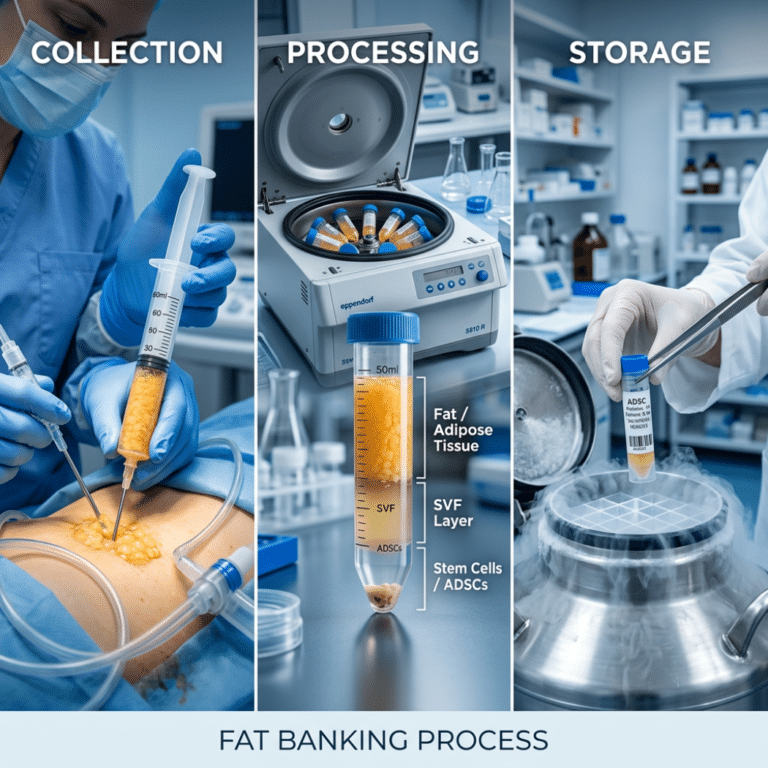
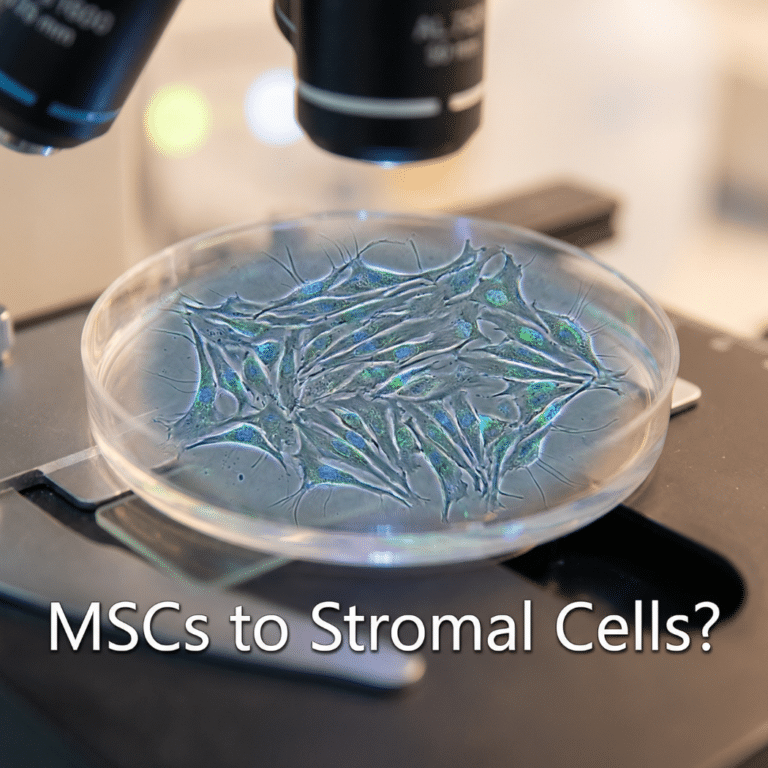
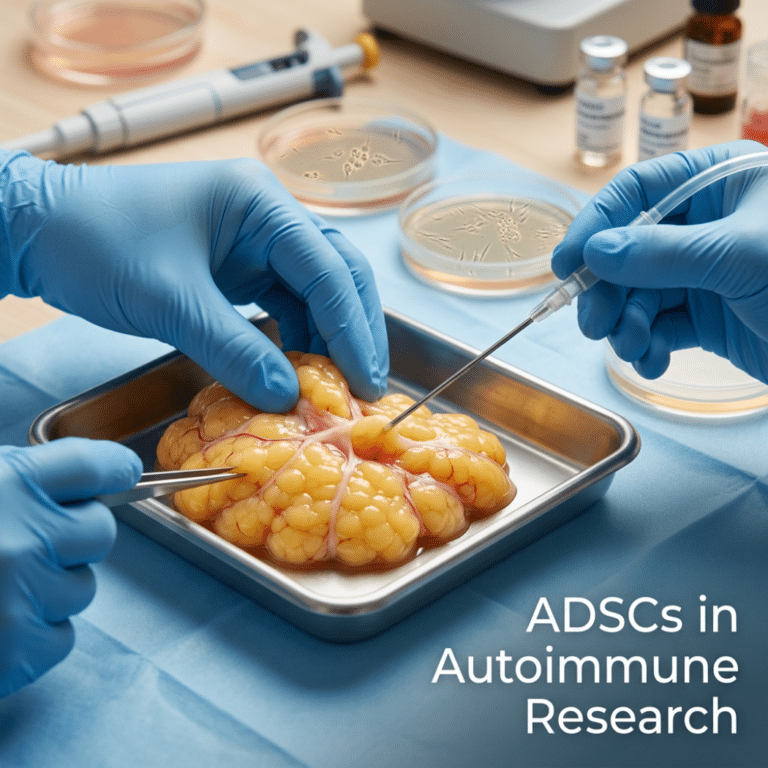
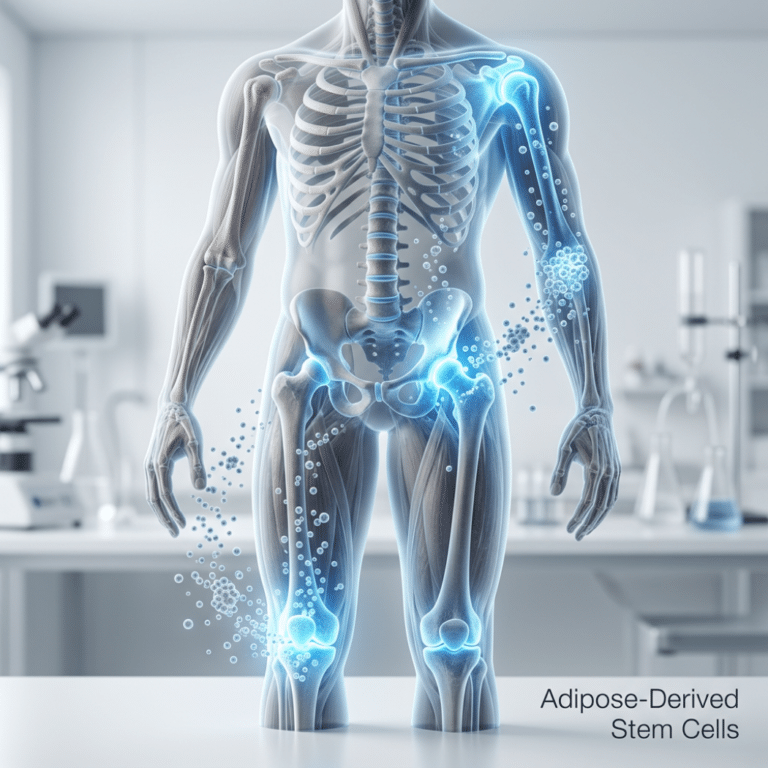
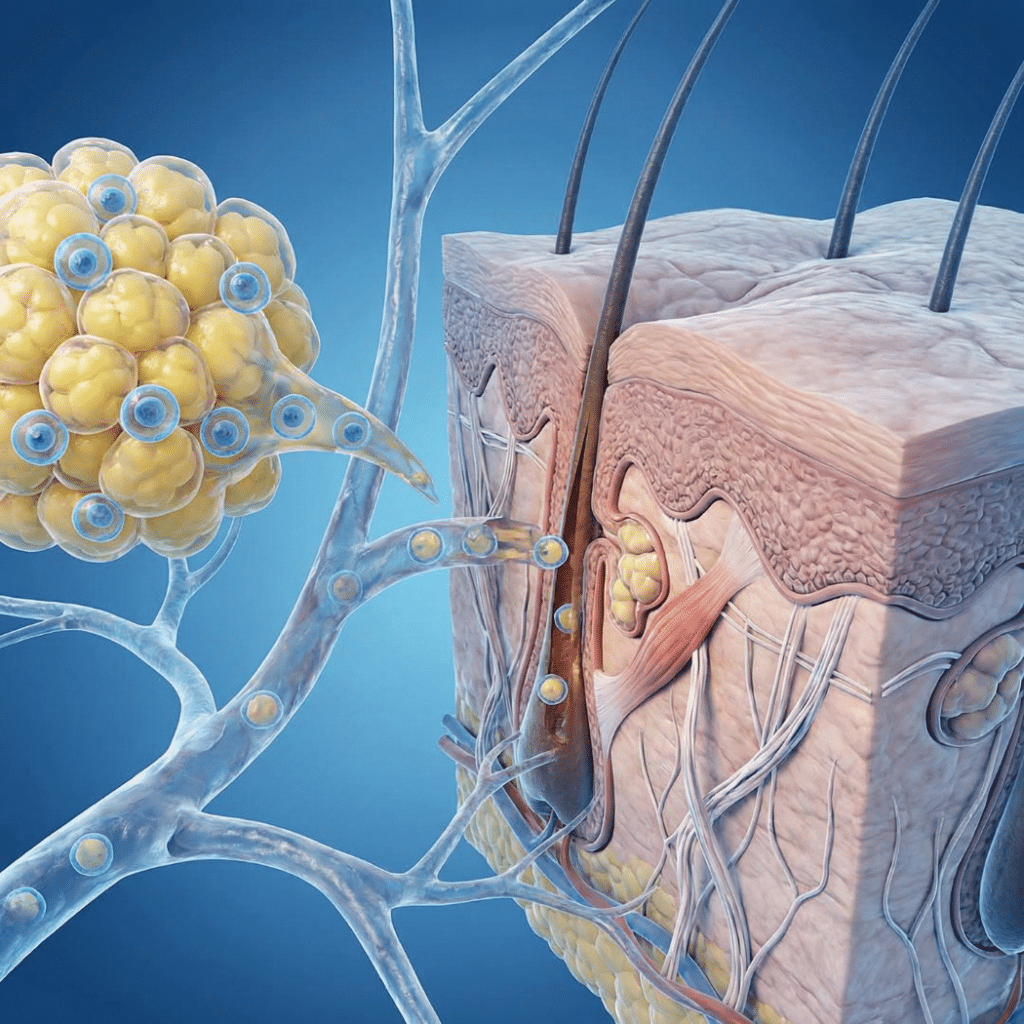
Adipose tissue (body fat) contains a rich population of mesenchymal stem cells that can be isolated and processed into several forms. Whole stromal vascular fraction (SVF) is the mixed cell population obtained after enzymatic or mechanical processing of fat tissue, containing stem cells, endothelial cells, immune cells, and growth factors. Conditioned media (CM) is the growth-factor-rich liquid collected from cultured adipose-derived stem cells after the cells themselves are removed. Exosomes are tiny vesicles (30 to 150 nanometers) secreted by stem cells that carry proteins, lipids, and genetic material capable of signaling to nearby cells.
In laboratory settings, these products secrete growth factors including vascular endothelial growth factor (VEGF), basic fibroblast growth factor (bFGF), insulin-like growth factor-1 (IGF-1), and hepatocyte growth factor (HGF) that may support hair follicle cycling, promote blood vessel formation around follicles, and reduce the inflammatory signaling that contributes to follicle miniaturization in pattern hair loss. Preclinical studies have also shown that adipose-derived MSC exosomes can activate the Wnt/beta-catenin signaling pathway, which plays a central role in hair follicle development and regeneration.
Important: Laboratory and animal model findings frequently do not translate to meaningful clinical benefit in humans. All of the mechanisms described above remain under investigation, and none has been confirmed as the basis for an FDA-approved therapy.
What Randomized Trials Show in Androgenetic Alopecia
The strongest evidence for adipose-derived products in hair loss comes from two randomized, controlled trials, both small and short-term.
Topical ADSC Constituent Extract
A randomized, double-blind, vehicle-controlled clinical trial published in Stem Cells Translational Medicine (2020) enrolled 38 patients (29 men) with AGA and assigned them to self-apply a topical ADSC constituent extract (ADSC-CE) or vehicle placebo twice daily for 16 weeks. Thirty-four patients completed the study. At 16 weeks, the ADSC-CE group showed a 28.1% increase in hair count compared to 7.1% in the placebo group, a statistically significant difference. Hair shaft diameter also improved significantly (14.2% versus 6.3%). No serious adverse events were reported (Tak et al., 2020).
Limitations: Only 38 patients, 16-week follow-up (no long-term durability data), single-center study in South Korea, and the ADSC-CE product is not commercially available as an FDA-approved treatment.
Intradermal ADSC Conditioned Media Plus Minoxidil
A randomized, double-blind trial (NCT05296863) studied intradermal ADSC conditioned media combined with 5% topical minoxidil in male AGA. Patients were divided into concentrated ADSC-CM plus minoxidil, non-concentrated ADSC-CM plus minoxidil, and placebo plus minoxidil arms. At 6 weeks, both CM groups showed significant increases in hair count, density, thickness, and terminal-to-vellus hair ratio compared to the placebo-plus-minoxidil arm. Patient satisfaction was high and tolerability was good (Sitohang et al., 2023).
Limitations: Only 6 weeks of follow-up, small sample size, and the conditioned media was used as an adjunct to minoxidil (not tested as a standalone therapy), making it difficult to isolate the CM effect.
What Systematic Reviews Conclude
A 2024 systematic review of randomized controlled trials of autologous stem-cell-derived therapies in AGA (including adipose, hair follicle, and bone marrow sources) found that these therapies improve hair density and caliber compared to controls. However, the authors emphasized that evidence remains limited by small sample sizes, short follow-up periods, heterogeneous protocols, and moderate risk of bias. They concluded that stem-cell-derived approaches are “promising but not definitive” and are not yet standard of care for hair loss (Autologous Stem Cell-derived Therapies for AGA, 2024).
SVF and Cell-Enriched Fat for Hair Loss: Research Only
Stromal vascular fraction represents a different approach from purified conditioned media, delivering the entire mixed cell population directly into the scalp.
A 2021 systematic review from Northwestern University examined the safety and efficacy of autologous adipose-derived SVF for nonscarring alopecia, identifying six studies (three RCTs, approximately 188 patients total). All studies found improved hair density with SVF compared to control or pre-treatment baseline. No serious SVF-related adverse events were reported. However, the review noted significant protocol heterogeneity, lack of long-term data, and overall low to moderate quality of evidence (Kang et al., 2022).
A 2023 systematic review published in Acta Biomedica identified nine studies of SVF for AGA and similarly reported statistically significant increases in hair density after SVF treatment, with no serious adverse events. Despite consistent positive signals, no standardized protocol exists, and no large multicenter trial has been conducted (Mantovani et al., 2023).
Several registered clinical trials continue to evaluate adipose-derived cell approaches for hair loss, including SVF scalp injections (NCT02626780, NCT02729415), cell-enriched fat grafting (NCT02865421, NCT02849470), and SVF combined with PRP (NCT04391621, NCT06066827, NCT06646146). These are investigational studies conducted under specific research protocols, not commercial treatments.
SVF scalp injections for hair loss are not FDA-approved and cannot be marketed as a treatment for alopecia in the United States.
Exosomes and Secretome: Exciting Science, Strict Caution
Exosomes have generated significant research interest because they carry signaling molecules that can influence cell behavior without transplanting live cells. Preclinical studies show that adipose-derived MSC exosomes promote dermal papilla cell proliferation, activate Wnt/beta-catenin signaling, and restore hair growth in mouse models of immune-mediated alopecia. Early uncontrolled human reports and systematic reviews from 2024 and 2025 suggest that exosome-based treatments (from various MSC sources) may increase hair density and thickness in small cohorts, but this evidence is preliminary and heterogeneous.
Critical regulatory and safety context that every patient must understand:
The FDA has issued a Public Safety Notification on Exosome Products stating that there are no FDA-approved exosome products for any use. In 2019, multiple patients in Nebraska experienced serious adverse events after receiving unapproved exosome injections at a private clinic, prompting CDC investigation and FDA enforcement action. The FDA has also issued a broader consumer alert on regenerative medicine products, reiterating that exosome products marketed to treat diseases or for cosmetic use are regulated as drugs and biologics requiring premarket review.
In addition to the systemic risks documented by the FDA, case reports in the aesthetic dermatology literature have described skin necrosis following intradermal injection of lyophilized exosome products, underscoring that even “topical” or “cosmetic” exosome applications carry real safety concerns.
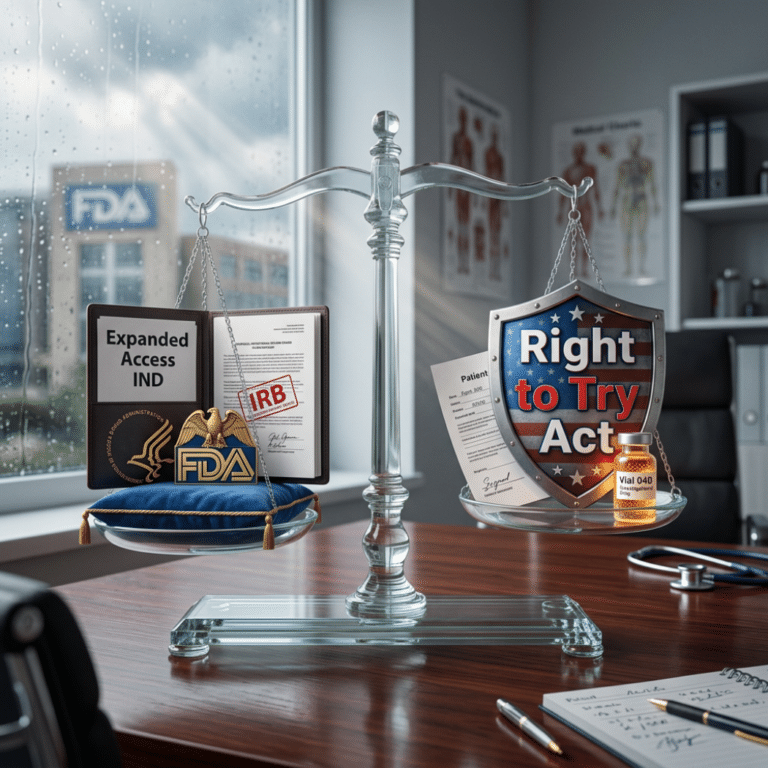
Clinics selling exosome hair or skin injections are offering unapproved products. IRB approval and “cGMP lab” marketing language do not substitute for the FDA’s Investigational New Drug (IND) and Biologics License Application (BLA) requirements.
Adipose-Based Facial Rejuvenation and Skin Quality
Beyond hair, researchers are studying adipose-derived cells for skin aging, texture improvement, and scar remodeling.
A 2025 systematic review of adipose-derived cell therapies on skin quality and aging signs in aesthetic surgery reported improvements in texture, elasticity, pigmentation, and scar quality across small studies. However, all studies used heterogeneous methods and provided limited long-term follow-up data. Registered clinical trials including NCT03189628 and NCT03887208 are investigating autologous adipose-derived SVF or ADSC-enriched fat grafts for skin laxity and scars using validated assessment scales and dermal ultrasound.
It is important to distinguish between cosmetic applications (facial volume restoration using the patient’s own fat, which is an established surgical procedure) and systemic regenerative claims (using adipose-derived cells to “reverse aging” at a biological level, which remains investigational and unapproved). Fat grafting for volume restoration is a recognized surgical technique; using adipose-derived stem cells or their secretome as anti-aging “treatments” is not FDA-approved.
Safety Profile and Regulatory Reality
Across the published clinical trials of adipose-derived products for hair and skin, reported side effects have generally been mild and self-limiting, including injection site pain, temporary erythema (redness), localized swelling, and occasional bruising. No serious adverse events directly related to adipose-derived cell or CM administration were reported in the hair loss trials reviewed above.
However, the safety data must be viewed in context. Most studies enrolled fewer than 50 patients, follow-up rarely exceeded 12 months, and long-term oncologic and immunologic safety data specific to scalp and facial applications are lacking. The exosome space carries additional risk, as noted above, with documented cases of serious systemic adverse events and localized skin necrosis from unregulated products.
The regulatory position is clear. The FDA’s regenerative medicine consumer page states that no regenerative medicine product is approved for cosmetic rejuvenation, anti-aging, hair restoration, or orthopedic conditions. Products marketed for these uses without IND/BLA approval are unapproved drugs and biologics, regardless of how they are marketed.
Red Flags: “Stem Cell” and “Exosome” Hair and Aesthetic Clinics
Hair loss is emotionally challenging, and patients searching for solutions deserve honest information. Watch for these warning signs when evaluating clinics that advertise stem cell or exosome hair or skin treatments:
Guaranteed results. No adipose-derived product has been proven effective enough for any clinic to guarantee hair regrowth or skin rejuvenation outcomes. Guarantees are a red flag.
Disease claims without FDA approval. Any clinic stating that stem cells or exosomes “treat,” “cure,” or “reverse” hair loss or skin aging is making unapproved disease claims.
No ClinicalTrials.gov registration. If a clinic presents its offering as a “clinical trial” or “study” but has no registered trial on ClinicalTrials.gov with an active IND, it is likely operating outside FDA oversight.
High out-of-pocket fees. Legitimate clinical trials do not charge patients for the investigational product. Many unregulated clinics charge $3,000 to $15,000+ per session.
“Miracle” before-and-after photos. Dramatic photos without standardized imaging conditions, patient numbers, or statistical analysis are not scientific evidence.
Treatments offered for many unrelated conditions. A single product claimed to work for hair loss, joint pain, skin aging, and sexual dysfunction is a major red flag.
“cGMP lab” or “IRB approved” as marketing terms. These phrases do not mean a product is FDA-approved. An IND is required for investigational use, and a BLA is required for marketing approval.
For additional guidance on evaluating clinics, see the Save My Fat guide on how legitimate banking compares to unregulated clinic offerings.
What This Means for Adipose Tissue Banking (and What It Does Not)
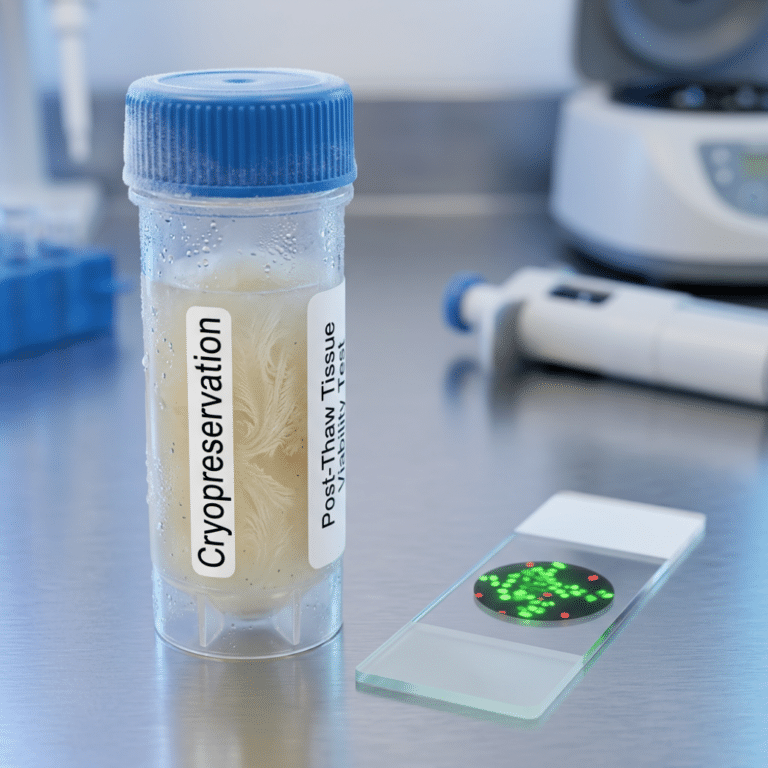
Adipose tissue is the starting material for every investigational product discussed in this article, from SVF to conditioned media to exosomes. Banking adipose tissue preserves a patient’s own biological material at a specific point in time, maintaining the cellular characteristics present at the time of collection through validated cryopreservation protocols.
As regenerative medicine research evolves, having preserved source tissue may become relevant to future FDA-regulated opportunities that do not yet exist. However, several important clarifications apply:
Banking adipose tissue does not mean you have a hair restoration or skin rejuvenation treatment on demand. No pathway currently exists to use banked adipose tissue for hair or aesthetic applications outside of a properly regulated clinical trial or future approved therapy. Save My Fat does not provide hair restoration, skin rejuvenation, or any medical treatment. Any future use of banked tissue depends on future scientific developments, FDA regulatory decisions, specific trial or product protocols, physician guidance, and individual clinical circumstances. Access, eligibility, and benefit cannot be guaranteed.
Frequently Asked Questions
Are stem cell hair treatments FDA-approved? No. No adipose-derived stem cell, SVF, conditioned media, or exosome product has FDA approval for hair loss or any dermatologic condition in the United States. Only minoxidil (topical), finasteride (oral, men only), and low-level laser therapy currently have FDA clearance or approval for androgenetic alopecia. Any clinic marketing stem cell or exosome “treatments” for hair loss is offering unapproved products.
What do randomized trials of adipose-derived products actually show? Two small randomized trials found that topical ADSC constituent extract (38 patients, 16 weeks) and intradermal ADSC conditioned media plus minoxidil (6 weeks) produced statistically significant improvements in hair count, density, and thickness compared to controls. A 2024 systematic review concluded these approaches are “promising but not definitive” and are not yet standard of care. All studies were limited by small sample sizes and short follow-up.
Are exosome injections for hair loss safe or approved? No exosome product is FDA-approved for any human use. The FDA has documented serious adverse events from unapproved exosome injections, including cases in Nebraska that required CDC investigation. Case reports have also described skin necrosis from intradermal exosome injections. Exosome products marketed for hair or skin use are regulated as drugs and biologics and are currently unapproved.
How should patients evaluate hair clinics that advertise stem cells or exosomes? Look for ClinicalTrials.gov registration and active IND status. Verify that the provider does not guarantee results or make disease claims without FDA approval. Be cautious of high out-of-pocket fees, dramatic before-and-after photos without published data, and products claimed to treat many unrelated conditions. Legitimate research occurs at accredited institutions with IRB oversight and does not charge patients for investigational products.
What is the difference between SVF, conditioned media, and exosomes for hair? SVF is the entire mixed cell population from processed fat tissue, injected directly into the scalp. Conditioned media is the cell-free, growth-factor-rich liquid from cultured adipose stem cells, applied topically or intradermally. Exosomes are tiny vesicles secreted by stem cells that carry signaling molecules. Each has a different composition, regulatory classification, and evidence base. None is FDA-approved for hair applications.
Does banked fat guarantee I can access future hair or skin treatments? No. Banking preserves biological material for potential future opportunities, but does not guarantee eligibility for any clinical trial, access to any therapy, or clinical benefit from any future product. Any future use depends on scientific progress, FDA regulatory decisions, and individual clinical circumstances.
Key Takeaways
No adipose-derived product is FDA-approved for hair loss or skin disease. This includes stem cells, SVF, conditioned media, and exosomes. All are investigational.
Small randomized trials show encouraging but preliminary results. ADSC constituent extract and conditioned media improved hair counts in controlled studies of 38 and fewer patients, with follow-up of 6 to 16 weeks. These are promising signals, not proven therapies.
SVF for hair loss shows consistent positive signals but weak evidence quality. Two systematic reviews found improved hair density with no serious adverse events, but cited small study sizes, heterogeneous protocols, and lack of long-term data.
Exosome hair and skin injections carry documented safety risks and are entirely unapproved. The FDA has issued safety alerts and taken enforcement actions against clinics offering exosome products.
Adipose tissue banking preserves future options. Save My Fat banks intact tissue under 361 HCT/P regulations, preserving biological material for potential future use in FDA-regulated pathways. Banking does not guarantee access, eligibility, or benefit from any hair or aesthetic therapy.
Learn More
Before contacting Save My Fat: Adipose tissue banking is a preservation service for potential future opportunities, not a hair restoration or skin rejuvenation treatment. Outcomes cannot be guaranteed. All medical decisions must be made with a licensed healthcare provider.
To explore the stem cell research areas where adipose-derived cells are being studied, visit the Save My Fat pages on joint and orthopedic research, wellness and healthy aging, and emerging research.
To understand the banking process, explore pricing, or learn about family eligibility, visit the Save My Fat website.
Healthcare providers can learn more on the providers page.
Patients considering hair or skin research participation should discuss options with their dermatologist or plastic surgeon and review registered studies at ClinicalTrials.gov.
Save My Fat Adipose Tissue Banking for Future Regenerative Medicine Opportunities
Last Updated: March 26, 2026.