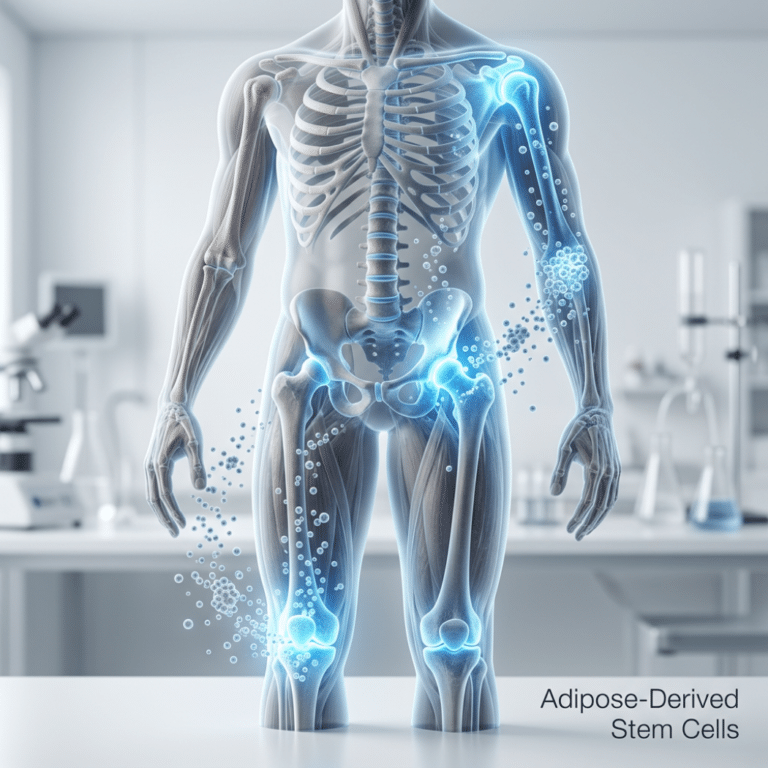
Atopic dermatitis affects roughly 30 million Americans and remains one of the most common chronic inflammatory skin conditions in the world. In recent years, FDA-approved biologics like dupilumab and JAK inhibitors have expanded treatment options for moderate-to-severe cases. At the same time, a different conversation has been building online: clinics and social media accounts promoting “stem cell facials,” “exosome skin treatments,” and “fat-derived stem cell injections” for eczema, psoriasis, and vitiligo.
Some of those claims are built on real science. Adipose-derived stem cells (ADSCs) are being studied in randomized clinical trials for atopic dermatitis, and the preclinical data on ADSC-derived exosomes show genuinely interesting mechanisms. But other claims stretch far beyond what the evidence supports, marketing unapproved products as proven therapies.
This article reviews what the research actually shows about ADSCs and their derivatives in atopic dermatitis and other immune-related skin diseases. It covers the one completed phase 2 trial, the preclinical exosome data, the regulatory reality, and how all of this relates to adipose tissue banking. The goal is to give patients and providers a clear, honest summary, not to recommend or discourage any treatment.
Important Disclaimers
Save My Fat does not provide, administer, or sell ADSC therapies, exosome products, or any treatment for skin disease. Save My Fat is an adipose tissue banking service that preserves fat for potential future use in regulated pathways. No ADSC or exosome product is FDA-approved for atopic dermatitis, psoriasis, vitiligo, or any dermatologic condition. Banking adipose tissue does not guarantee access to any treatment, clinical trial, or therapeutic product. All content on this page is for educational purposes only and does not constitute medical advice. Patients should discuss all treatment decisions with their own licensed healthcare providers, including their dermatologist.
Why ADSCs Are of Interest in Immune-Related Skin Disease
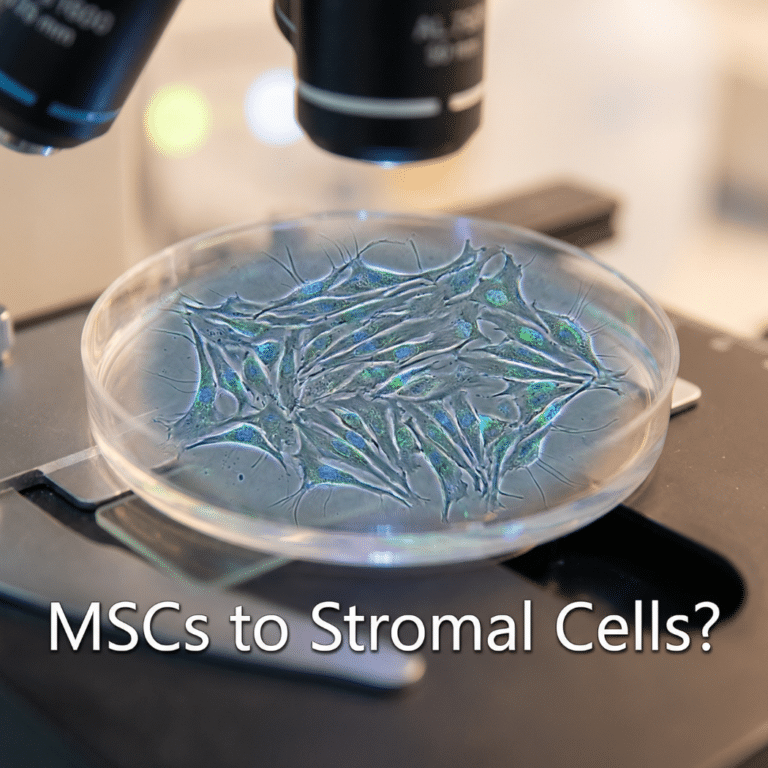
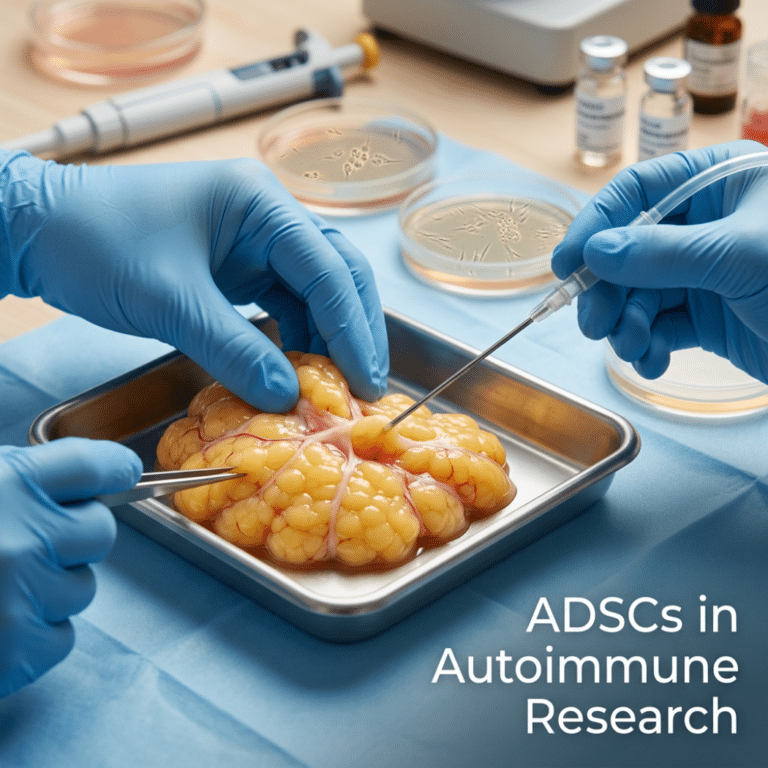
Adipose-derived stem cells are mesenchymal stem cells harvested from fat tissue. They are one of the most abundant and accessible sources of MSCs in the human body, and they can be obtained through a standard liposuction procedure. For a broader overview of adipose tissue biology, see our guide to stem cell research areas.
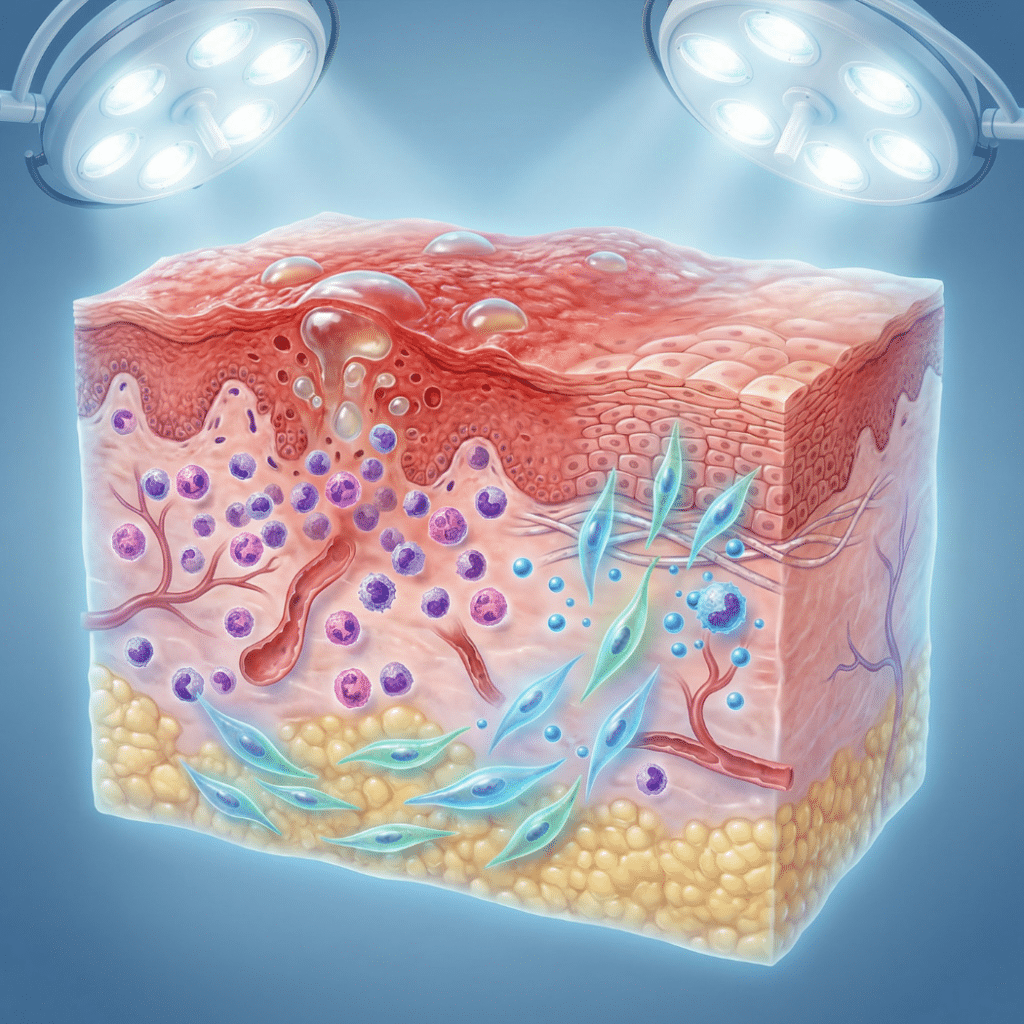
What makes ADSCs relevant to skin disease is not their ability to become skin cells, but their immunomodulatory properties. In laboratory and animal studies, ADSCs have been shown to influence several pathways involved in inflammatory skin conditions.
ADSCs produce anti-inflammatory signaling molecules that can shift the balance of immune responses away from the Th2 and Th17 pathways that drive conditions like atopic dermatitis. In preclinical models, they have been shown to increase regulatory T cell (Treg) activity, which helps suppress overactive immune responses. They also influence B-cell maturation and macrophage polarization, both of which play roles in the chronic inflammation seen in eczema, psoriasis, and other immune-mediated dermatoses.
These properties are well documented in laboratory settings. The question is whether they translate into meaningful clinical benefit in human patients, and the evidence on that front is still very early.
Human Trial Data in Atopic Dermatitis
The most significant piece of clinical evidence is a multicenter, randomized, single-blind, placebo-controlled phase 2 trial that evaluated intravenous autologous ADSCs in adults with moderate-to-severe atopic dermatitis who had not responded adequately to conventional treatments. The study enrolled approximately 114 participants across multiple sites.
Patients received two intravenous infusions of autologous adipose-derived MSCs (or placebo), given four weeks apart. The primary assessment occurred at 16 weeks after the first infusion. The key findings: roughly 23 to 24 percent of ADSC-treated patients achieved EASI-75 (a 75 percent reduction in eczema severity) compared to about 7 percent in the placebo group. SCORAD and IGA scores also improved more in the treatment group than in the placebo group. The investigators reported no treatment-related serious adverse events.
These results are meaningful, but they require careful context. This is a single phase 2 trial with a 16-week primary endpoint. Phase 2 trials are designed to assess preliminary efficacy and safety, not to provide the definitive evidence needed for regulatory approval. The sample size, while larger than most MSC skin disease studies, is still modest by the standards required for a phase 3 confirmatory trial. Long-term durability of response beyond 16 weeks has not been established.
Additional trials are in development. The ADSTEM Inj protocol, for example, is studying an autologous ADSC product in refractory moderate-to-severe AD, with EASI, SCORAD, and DLQI as outcome measures. A related trial is also registered. These protocols typically require patients to have failed or be intolerant to conventional therapies, reinforcing that this line of research targets the most difficult-to-manage cases. Work is progressing, but all of it remains investigational.
ADSCs and Exosomes in Preclinical AD Models
While human data are limited to the phase 2 trial described above, the preclinical literature is more extensive and helps explain why researchers are interested in this area.
In mouse models of atopic dermatitis, intravenous administration of human ADSCs reduced clinical AD scores, lowered serum IgE levels, and modulated B-cell maturation. A separate study in NC/Nga mice showed that both ADSCs and ADSC-conditioned medium reduced Th2-associated inflammation and interferon-gamma expression, with effects comparable to topical cortisone in some measures.
ADSC-derived exosomes, the tiny vesicles that cells release as part of their signaling activity, have generated particular interest. In one study, subcutaneous injection of ADSC exosomes in an oxazolone-induced dermatitis model reduced transepidermal water loss, improved stratum corneum hydration, and decreased levels of multiple inflammatory cytokines, including IL-4, IL-5, IL-13, IL-17, and TNF-alpha, all in a dose-dependent manner. Notably, the exosomes also induced production of ceramides, a key lipid component of the skin barrier that is deficient in atopic dermatitis.
An earlier study by the same research group demonstrated that ADSC exosomes reduced serum IgE, decreased eosinophil counts, and lowered mast cell infiltration and inflammatory cytokine expression in skin lesions of AD mice.
These are genuinely interesting findings that help explain the biological mechanisms. But mouse models do not equal proven human benefit. Dosing, delivery routes, immune system differences, and disease complexity all change when moving from mice to humans. A comprehensive review of MSC and exosome mechanisms in AD concluded that while the preclinical data are encouraging, rigorous human trials are essential before any clinical recommendations can be made.
Beyond AD: Vitiligo and Other Immune-Related Skin Diseases
ADSCs are being explored in other immune-mediated skin conditions as well, though the evidence base is even thinner than in atopic dermatitis.
In vitiligo, a review of ADSCs in major inflammatory skin diseases noted that ADSCs may support melanocyte proliferation and exert immunosuppressive effects in the skin microenvironment. Small clinical series have combined ADSCs or SVF with phototherapy or melanocyte grafting and reported early repigmentation signals. However, these are uncontrolled case reports and pilot studies, not randomized trials.
In psoriasis, the same review identified case reports in which intravenous ADSCs were associated with reduced PASI scores in individual patients with psoriasis vulgaris and psoriatic arthritis. These are anecdotal observations from two patients, not generalizable evidence.
Preclinical work has also explored ADSC-derived secretome and exosomes in psoriasis, lichen sclerosus, scleroderma, and other inflammatory dermatoses. The data consist primarily of cell-culture experiments and animal models. No randomized clinical trials have been completed for any of these conditions using ADSCs or ADSC-derived products.
All of these uses remain experimental, and none has received FDA approval. For patients with autoimmune skin conditions exploring the broader research landscape, our autoimmune disease research page provides additional context.
Safety Profile So Far
The safety data from the phase 2 AD trial are encouraging in their limited scope. No treatment-related serious adverse events were reported during the 16-week study period. Most adverse events were mild and transient, consistent with the infusion procedure itself.
This finding aligns with the broader MSC safety literature. Across multiple disease areas and hundreds of published clinical studies, autologous adipose-derived cell therapies have demonstrated an acceptable short-to-mid-term safety profile. Reported adverse events typically involve transient infusion reactions, mild injection-site symptoms, or self-resolving complaints.
However, long-term safety beyond one to two years has not been fully characterized for ADSC infusions in atopic dermatitis specifically. The phase 2 trial followed patients for 16 weeks. Larger trials with longer follow-up periods are needed to understand the full safety picture, including any rare or delayed events.
Critically, the safety data from controlled trials do not apply to unregulated clinic settings. Clinics offering unapproved ADSC or exosome “skin treatments” may not track adverse events, may use non-standardized products, and may lack the oversight that clinical trial protocols provide. The FDA has specifically warned about serious adverse events in patients treated with unapproved exosome products, including infections requiring hospitalization.
FDA and Regulatory Status
The regulatory landscape for ADSCs and exosomes in skin disease is clear, even if some clinics choose to ignore it.
No ADSC-based product is FDA-approved for atopic dermatitis, psoriasis, vitiligo, or any dermatologic indication. No exosome product is FDA-approved for any indication whatsoever. The FDA’s Public Safety Notification on exosome products explicitly states that there are no FDA-approved exosome products and that clinics marketing them are deceiving patients with unsubstantiated claims.
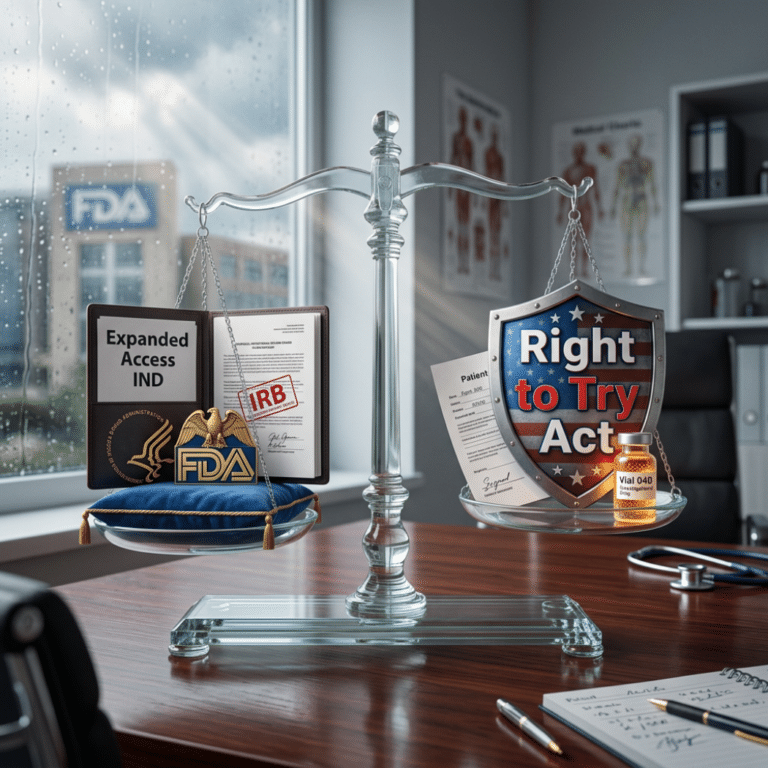
Under FDA’s HCT/P framework, cell and tissue products must meet criteria for minimal manipulation and homologous use to qualify for the simpler regulatory pathway. Using ADSCs or ADSC-derived products to modulate immune responses in skin disease does not match adipose tissue’s original biological function of cushioning and energy storage, making these uses non-homologous. Products used for non-homologous purposes are regulated as drugs and biologics, requiring IND applications for investigational use and BLA approval for marketing.
The FDA’s consumer alert on regenerative medicine applies directly here. Patients should verify that any ADSC or exosome product offered for skin disease is being administered under a registered clinical trial with proper IND authorization.
How Adipose Tissue Banking Fits (and Where It Does Not)
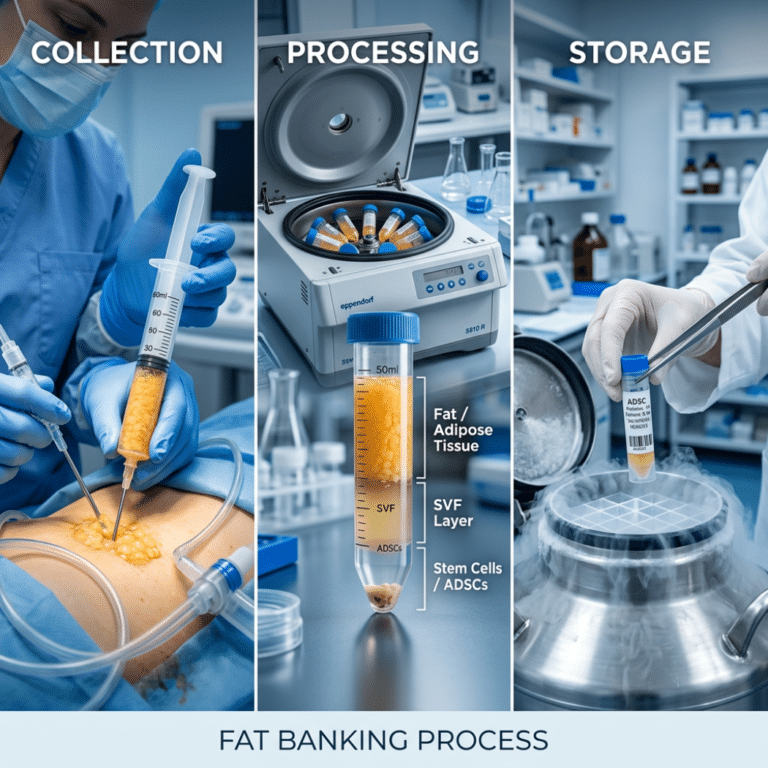
Adipose tissue is a rich source of mesenchymal stem cells, and the research described in this article shows that ADSCs may have potential roles in inflammatory skin disease. For patients interested in preserving their tissue at its current biological state, adipose banking provides a way to do that.
But the relationship between banking and these specific research areas requires honest framing.
Current AD trials use fresh autologous ADSCs harvested specifically for the trial, processed in the sponsor’s manufacturing facility, and administered under controlled conditions. They do not use previously banked tissue from consumer banking services. The phase 2 trial, for example, harvested each patient’s fat, manufactured the cell product at a licensed facility, and delivered it intravenously.
Banking adipose tissue preserves biological material for potential future use in regulated pathways. It does not guarantee access to any AD trial, ADSC product, or exosome treatment. It does not create a right to receive investigational therapies. A future sponsor could, in theory, design a product that uses banked tissue as starting material, but that is speculative and would require full IND-level development, manufacturing validation, and regulatory approval.
For details on the banking process itself, including cryopreservation protocols and long-term tissue stability, see our educational guides. For patients considering banking for themselves and eligible family members, the decision is about preserving optionality, not securing access to any specific future therapy.
Red Flags for “Stem Cell Eczema” and “Exosome Skin” Claims
The gap between published research and clinic marketing is especially wide in dermatology. Patients should watch for these warning signs.
Claiming to cure eczema, psoriasis, or vitiligo with stem cells or exosomes. No ADSC or exosome product has been proven to cure any skin disease. The strongest evidence available is a single phase 2 trial showing improvement in eczema severity scores over 16 weeks.
Asserting that treatments are “FDA-approved” or “FDA-cleared.” There are no FDA-approved ADSC or exosome products for any dermatologic condition. Any clinic making this claim is misrepresenting the product’s regulatory status.
Offering exosome injections, “exosome facials,” or topical exosome products for skin disease without IND authorization. FDA has stated clearly that exosome products marketed for therapeutic use are unapproved and that serious adverse events have occurred with their use.
No ClinicalTrials.gov registration, no IRB oversight, and high out-of-pocket costs. Legitimate clinical research is registered, independently reviewed, and typically does not charge patients for experimental products.
Marketing the treatment as both “natural” and “proven.” The fact that ADSCs come from a patient’s own fat does not exempt them from regulatory requirements or prove clinical efficacy.
For a more detailed checklist, see our guide on identifying legitimate versus unregulated stem cell offerings.
Frequently Asked Questions
Are stem cell or exosome treatments for eczema available now? Not as FDA-approved therapies. ADSCs have been studied in one completed phase 2 trial for moderate-to-severe atopic dermatitis, and additional trials are underway. Exosome products for skin disease are in the preclinical stage. No ADSC or exosome product is approved for eczema or any skin condition in the United States. Clinics offering these products outside of registered clinical trials are selling unapproved treatments.
What do the best trials show so far? The most rigorous data come from a randomized, placebo-controlled phase 2 trial of approximately 114 patients with refractory moderate-to-severe AD. At 16 weeks, about 23 to 24 percent of ADSC-treated patients achieved EASI-75 compared to roughly 7 percent on placebo. No treatment-related serious adverse events were reported. These results are encouraging but require confirmation in larger phase 3 trials.
Could these therapies eventually become approved options? Possibly. The phase 2 results are strong enough to support continued clinical development. However, the path from phase 2 to FDA approval typically requires large, multi-center phase 3 trials, long-term safety data, and a successful BLA submission. This process takes years and many promising phase 2 products do not ultimately reach approval.
How do I know if a trial is legitimate? Search ClinicalTrials.gov for the study’s NCT registration number. Verify that the trial has IRB oversight, a named sponsor, and is being conducted under an IND. Legitimate trials do not typically charge patients for the investigational product. Consult your dermatologist about whether participation is appropriate for your specific situation.
Does banking my fat today guarantee that I can receive ADSC treatment for AD? No. Banking preserves adipose tissue for potential future use, but it does not guarantee access to any specific trial, product, or treatment. Current AD trials use fresh harvest and sponsor-controlled manufacturing, not consumer-banked tissue. Banking is about preserving biological optionality, not securing access to investigational therapies.
Key Takeaways
ADSCs are being studied in atopic dermatitis based on their immunomodulatory properties, including Th2/Th17 suppression, Treg support, and effects on B-cell maturation and macrophage polarization. These mechanisms are well established in preclinical models but have limited human validation.
A single randomized, placebo-controlled phase 2 trial of approximately 114 patients showed that intravenous autologous ADSCs improved EASI-75, SCORAD, and IGA scores compared to placebo at 16 weeks, with no treatment-related serious adverse events. This is the strongest clinical evidence available, and it requires phase 3 confirmation.
ADSC-derived exosomes have shown promising effects in mouse models of AD, including improved barrier function, increased ceramide synthesis, and reduced inflammatory cytokines. These findings have not been replicated in human clinical trials.
No ADSC or exosome product is FDA-approved for atopic dermatitis, psoriasis, vitiligo, or any skin disease. Exosome products marketed for therapeutic or cosmetic skin use are unapproved, and FDA has issued safety warnings about them.
Adipose tissue banking preserves tissue for potential future regulated use but does not guarantee access to any ADSC therapy or clinical trial. Current AD trials use fresh harvest and sponsor-directed manufacturing.
Learn More
Before contacting Save My Fat: Adipose tissue banking is a preservation service that stores tissue for potential future use, not a treatment or guarantee of access to ADSC therapies, exosome products, or clinical trials. No ADSC or exosome product is FDA-approved for any skin disease. Patients should discuss any questions about investigational dermatology therapies with their own dermatologist.
To explore current research areas, see the Research Areas overview or the Emerging Research page.
For questions about logistics and costs, visit How Stem Cell Banking Works or the Pricing page.
To schedule a consultation, contact Save My Fat by visiting the Contact page.
Last Updated: March 31, 2026.