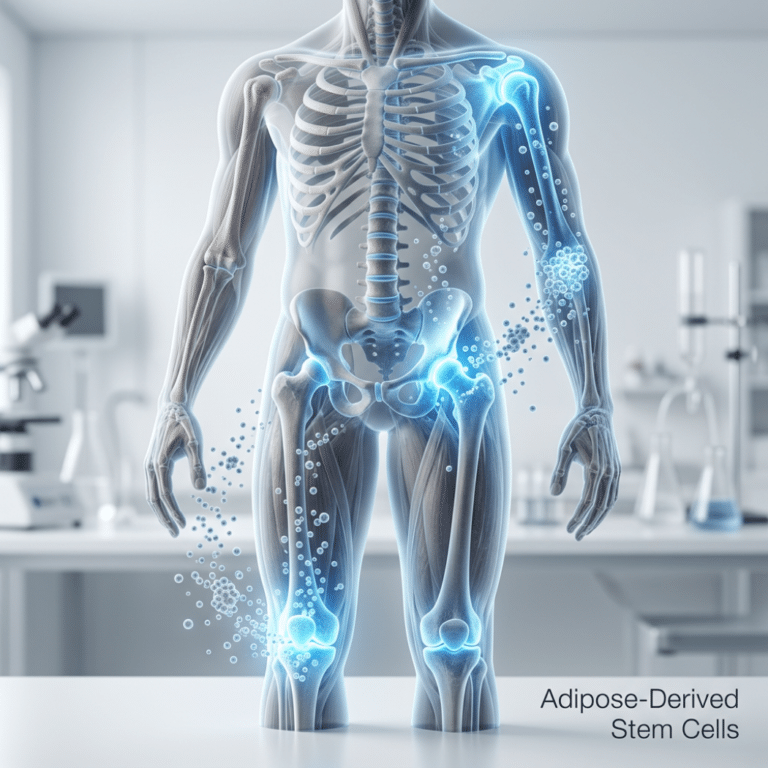
If you are exploring regenerative medicine options for osteoarthritis, understanding the current state of clinical research is essential before making any decisions. This guide provides a comprehensive, science-based overview of clinical trials studying adipose-derived stem cells for osteoarthritis, including trial phases, safety findings, regulatory context, and what this research landscape means for patients considering adipose tissue banking.
TLDR Dozens of clinical trials registered on ClinicalTrials.gov are studying adipose-derived stem cells (ADSCs) for knee osteoarthritis, including Phase 3 trials. No ADSC product has FDA approval for treating osteoarthritis or any joint condition. Early-phase research shows a generally favorable safety profile, but larger trials are needed to confirm effectiveness. Save My Fat banks intact adipose tissue under 361 HCT/P regulations for potential future use in FDA-regulated pathways. Banking does not guarantee eligibility for any clinical trial, access to any therapy, or clinical benefit.
Important Disclaimer: Save My Fat does not provide FDA-approved treatments or cures for any disease, including osteoarthritis. No adipose-derived stem cell product currently has FDA approval for any joint condition. Banking adipose tissue today does not guarantee eligibility, access, or clinical benefit from any future therapy, clinical trial, or medical program. All content is for educational purposes only. Patients must consult their own licensed healthcare professionals regarding all medical decisions.
Osteoarthritis affects more than 32.5 million adults in the United States, making it the most common form of joint disease. For millions of patients, current treatment options range from physical therapy and pain management to eventual joint replacement surgery. Researchers around the world are investigating whether adipose-derived stem cells (cells found in your own fat tissue) could offer new treatment pathways through legitimate clinical trials.
Understanding the difference between investigational clinical research and unregulated clinic marketing is critical for patient safety. This guide walks through every active ADSC trial worth knowing about, explains how to read clinical trial data, and clarifies how adipose tissue banking fits into this research landscape.
What Are Adipose-Derived Stem Cells?
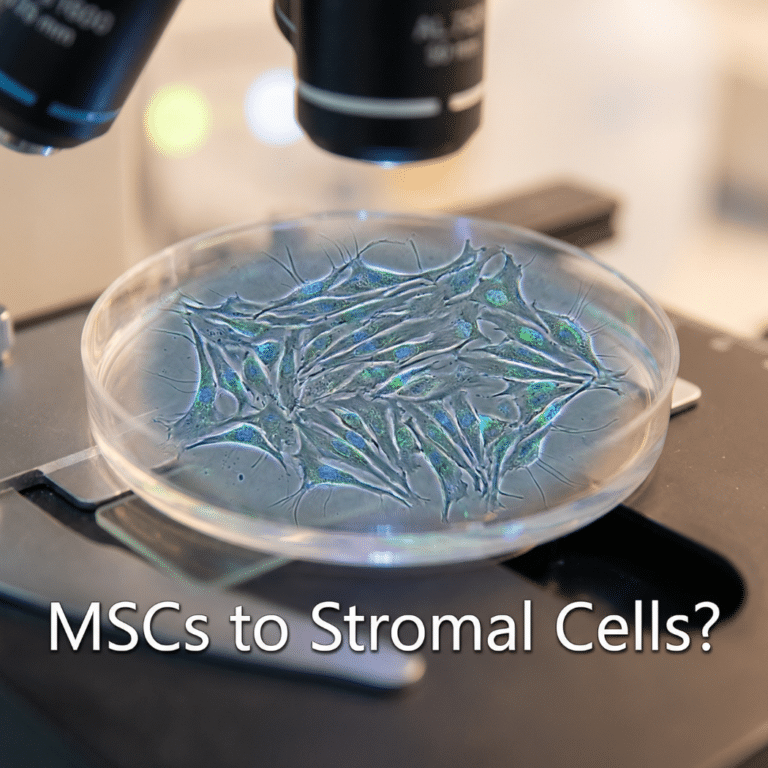
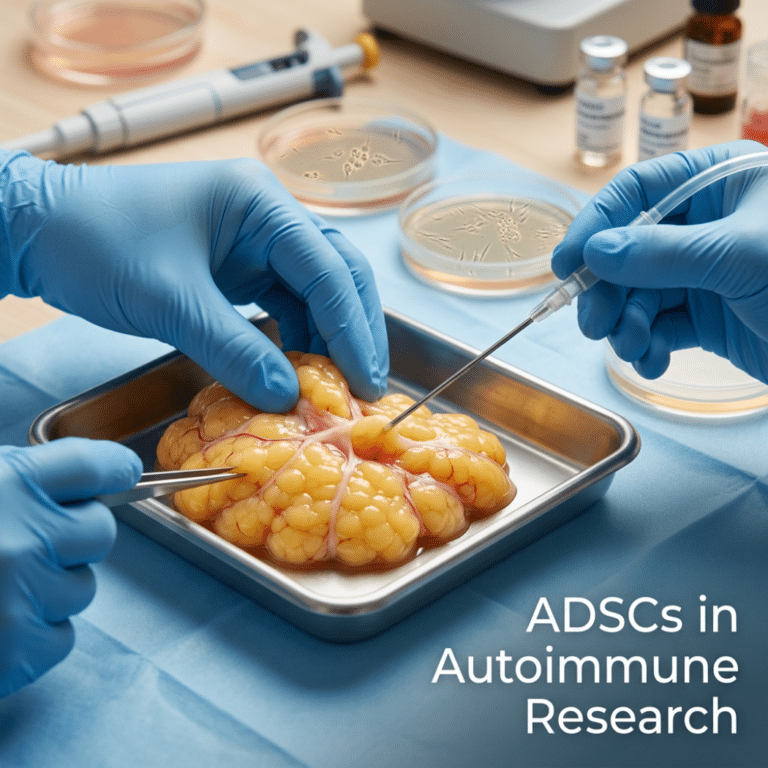
Adipose-derived stem cells (ADSCs), also called adipose-derived mesenchymal stromal cells, are multipotent cells found in the stromal vascular fraction (SVF) of fat tissue. These cells meet the International Society for Cell and Gene Therapy (ISCT) criteria for mesenchymal stromal cells, including surface marker expression (positive for CD73, CD90, CD105; negative for CD45, CD34, CD14, and HLA-DR) and the ability to differentiate into bone, cartilage, and fat cells under laboratory conditions (Bora and Majumdar, 2017).
Adipose tissue provides a significantly higher yield of mesenchymal stromal cells per gram compared to bone marrow. Published literature reports that adipose tissue yields approximately 500 times more mesenchymal stromal cells per volume than bone marrow aspirate. This higher cell yield is one reason researchers have focused on adipose-derived cells as a platform for clinical investigation (Lu et al., 2019).
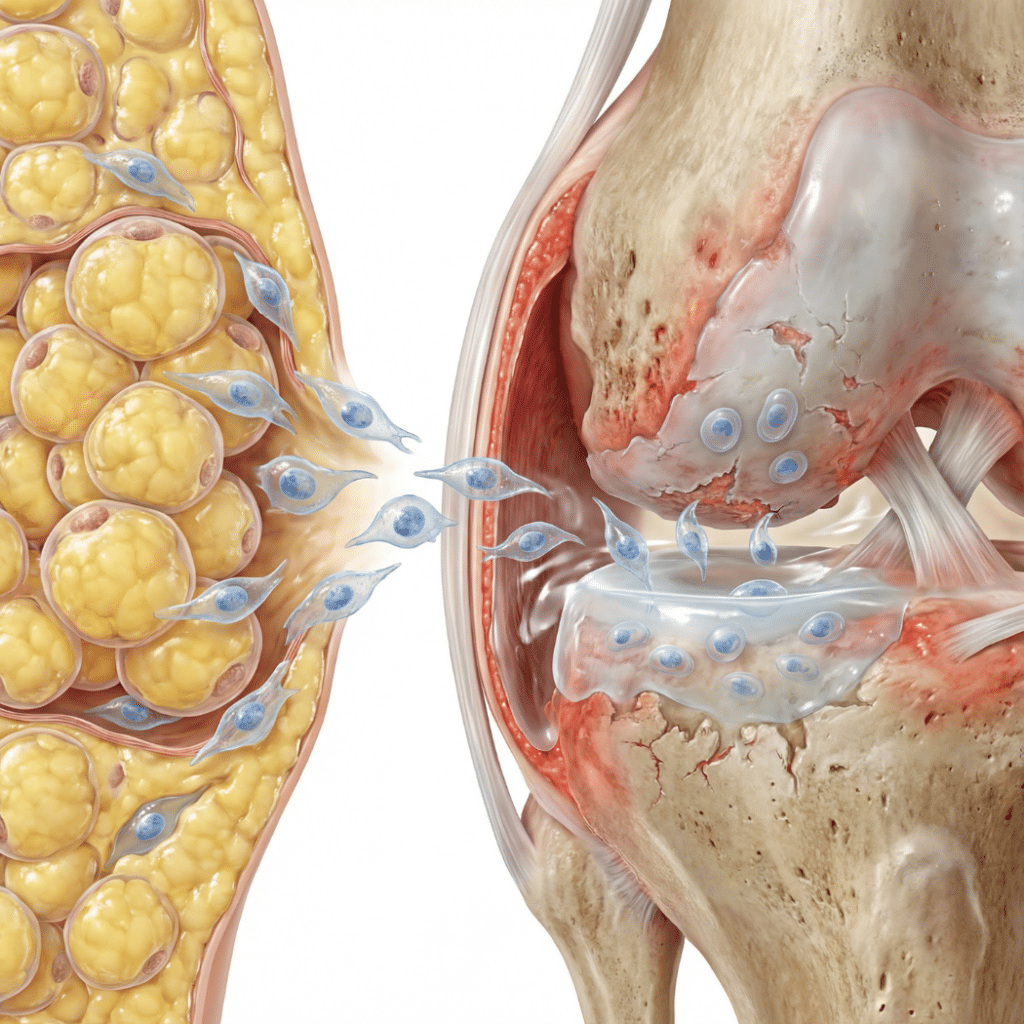
Researchers believe ADSCs may exert their effects primarily through paracrine signaling (releasing growth factors, cytokines, and other molecules that influence surrounding cells) and immunomodulatory activity, rather than through direct tissue replacement. This is an active area of scientific investigation, and the exact mechanisms are still being studied.
Regulatory note: In the United States, adipose tissue that undergoes enzymatic digestion to isolate SVF, or cells that are culture-expanded, is generally classified by the FDA as more than minimally manipulated. This means these products fall under the Section 351 regulatory pathway and require an Investigational New Drug (IND) application and Biologics License Application (BLA) before they can be legally marketed for disease treatment.
Why Is Osteoarthritis a Focus of ADSC Research?
Osteoarthritis (OA) is a degenerative joint disease characterized by progressive cartilage breakdown, inflammation, and pain. Current standard-of-care treatments focus on symptom management rather than addressing the underlying cartilage deterioration. For patients with advanced OA, total joint replacement remains the primary surgical option.
The paracrine and immunomodulatory properties of ADSCs have attracted scientific interest in osteoarthritis research. In preclinical (laboratory and animal) studies, ADSCs have been shown to secrete factors associated with reducing inflammation and potentially supporting cartilage maintenance. These preclinical findings prompted researchers to design clinical trials testing whether these properties translate to human patients.
A 2025 meta-analysis published in Stem Cell Research and Therapy examined eight randomized controlled trials involving 502 patients and found that mesenchymal stem cells (including adipose-derived sources) were associated with improvements in pain and function scores at 6 and 12 months compared to controls, with no significant difference in adverse events between treatment and control groups. The authors noted that subgroup analysis showed more significant results with adipose-derived sources and higher cell doses, while emphasizing the high heterogeneity of included studies (Cao et al., 2025).
Important: Preclinical research and early-phase clinical trials do not prove that a product is safe or effective. Only products that successfully complete the full FDA approval process (including Phase 3 trials and BLA review) can be marketed as treatments for disease.
Active Clinical Trials Investigating ADSCs for Knee Osteoarthritis
The following is an educational overview of clinical trials registered on ClinicalTrials.gov that are studying adipose-derived cells for osteoarthritis. Registration on ClinicalTrials.gov does not mean the product has been proven safe, effective, or has FDA approval. It simply means a study has been documented in a federal registry.
Phase 3 Trials
JointStem Phase 3 (NCT03990805) This double-blind, randomized, placebo-controlled Phase 3 study evaluated JointStem, an autologous (the patient’s own) adipose-derived mesenchymal stem cell product, as an intra-articular injection for knee osteoarthritis. The trial enrolled approximately 260 patients with Kellgren-Lawrence grade 3 OA. JointStem is produced from adipose tissue collected via lipoaspiration and then culture-expanded. Published results reported statistically significant improvements in pain and function scores compared to placebo at 6 months (Kim et al., 2023; ClinicalTrials.gov).
SVF and PRP Phase 3, SPOST Trial (NCT05660824) This Phase 3, prospective, randomized, controlled, multicenter study is comparing the effectiveness of stromal vascular fraction (SVF) combined with platelet-rich plasma (PRP) against PRP alone for knee osteoarthritis. The trial plans to enroll 108 patients with the primary endpoint of functional improvement measured by the WOMAC index at 6 months (Schwitzguebel et al., 2025; ClinicalTrials.gov).
Phase 2 Trials
JointStem Phase 2b/3a (NCT04368806) A multi-site U.S. trial evaluating autologous adipose-derived mesenchymal stem cells for knee OA, with follow-up visits extending to 48 weeks post-treatment. This trial is randomized and placebo-controlled (ClinicalTrials.gov).
Phase IIb Re-Join Trial A prospective, randomized, double-blind, active-controlled trial compared intra-articular injection of autologous adipose-derived mesenchymal progenitor cells (Re-Join) to hyaluronic acid in 53 patients with Kellgren-Lawrence grade 1 to 3 knee OA. Published results reported improvements in WOMAC and VAS pain scores in both groups, with greater improvement in cartilage volume measured by MRI in the Re-Join group at 12 months. The study authors noted that adverse events were comparable between the two groups (Lu et al., 2019).
Phase IIb Placebo-Controlled Trial (Lee et al.) A double-blinded, randomized, placebo-controlled Phase IIb trial administered a single intra-articular injection of autologous ADMSCs (1 x 10^8 cells) to 12 patients versus saline placebo in 12 patients. The ADMSC group showed significant improvement in WOMAC scores at 6 months. No serious adverse events were observed in either group. MRI showed no significant change in cartilage defect in the treatment group, while the control group showed increased defects (Lee et al., 2019).
Phase 1 and Early-Phase Trials
STEMJOINT (NCT05933434) A Phase I/II, double-blind, randomized, controlled trial in Denmark evaluating allogeneic adipose-derived mesenchymal stem cells versus saline for knee osteoarthritis in patients with Grade II to III Kellgren-Lawrence classification (ClinicalTrials.gov).
HYALOFAT Trial (NCT07121556) A randomized controlled double-blind trial evaluating autologous microfragmented adipose tissue injection (with and without hyaluronic acid) in 100 patients with symptomatic bilateral knee OA. Each patient serves as their own control, with one knee receiving the combined treatment and the contralateral knee receiving adipose tissue alone (ClinicalTrials.gov).
| Trial Name | Phase | Cell Source | Design | Patients | Primary Endpoint |
|---|---|---|---|---|---|
| JointStem (NCT03990805) | Phase 3 | Autologous ADMSC | RCT, placebo-controlled | ~260 | VAS pain at 6 months |
| SPOST (NCT05660824) | Phase 3 | Autologous SVF + PRP | RCT, multicenter | 108 | WOMAC at 6 months |
| JointStem US (NCT04368806) | Phase 2b/3a | Autologous ADMSC | RCT, placebo-controlled | ~140 | WOMAC at 48 weeks |
| Re-Join (Lu et al., 2019) | Phase IIb | Autologous haMPC | RCT, active-controlled | 53 | WOMAC, VAS, MRI |
| Lee et al., 2019 | Phase IIb | Autologous ADMSC | RCT, placebo-controlled | 24 | WOMAC at 6 months |
| STEMJOINT (NCT05933434) | Phase I/II | Allogeneic ADMSC | RCT, controlled | Enrolling | Safety, KOOS |
| HYALOFAT (NCT07121556) | RCT | Autologous MFAT | RCT, double-blind | 100 | Pain, function |
Regulatory reminder: All trials involve investigational products that have not received FDA marketing approval. Enrollment is controlled by investigators with specific inclusion and exclusion criteria, and participation does not guarantee clinical benefit.
ADSC Research Beyond Osteoarthritis
While knee OA represents the largest body of ADSC clinical trial activity, adipose-derived cells are also being investigated across many other conditions. This broader research landscape demonstrates the range of scientific interest in adipose tissue biology. None of the studies listed below have resulted in FDA-approved products.
| Condition Area | Example Trial | Phase | Cell Source |
|---|---|---|---|
| Connective Tissue Disease-ILD | NCT06574581 | Phase I/IIa | Allogeneic ADMSC |
| Type 2 Diabetes | NCT06789302 | Phase IIa | Autologous ADMSC |
| Chronic Traumatic Brain Injury | NCT05951777 | Phase 2a | Autologous HB-adMSC |
| Crohn’s Disease Fistulas | NCT06636032 | Phase I/IIa | Allogeneic ADMSC |
| Chronic Wounds | NCT05797688 | Not specified | Autologous ADRCs |
All listed ClinicalTrials.gov identifiers are real and verifiable on the federal registry.
How to Interpret Clinical Trial Results
Understanding clinical trial data is essential for making informed decisions. Here are key concepts patients should know.
| Phase | Primary Goal | Typical Participants | What It Tests |
|---|---|---|---|
| Phase 1 | Safety and dosing | 20 to 100 patients | Is it safe? What is the right dose? |
| Phase 2 | Preliminary effectiveness | 100 to 300 patients | Does it show signs of working? What are side effects? |
| Phase 3 | Confirm effectiveness and safety | 300 to 3,000 patients | Does it work better than current options? What are rare side effects? |
| Phase 4 | Post-market monitoring | Varies | What are long-term effects after approval? |
What Trial Registration Means (and Does Not Mean)
A study listed on ClinicalTrials.gov means the research has been documented in a public federal registry. Registration does not mean the product has been proven safe or effective, does not mean the product has FDA approval, does not guarantee that results will be positive, and does not mean patients should seek enrollment without consulting their physician.
Reading Results With Appropriate Caution
Many ADSC trials are Phase 1 or Phase 2, meaning they involve small numbers of patients and are primarily designed to assess safety rather than prove effectiveness. Published trial results should be discussed with your physician before drawing conclusions about treatment applicability. Not all completed trials publish their results, which means potential publication bias exists in the available literature.
The Safety Profile: What Research Shows So Far
Multiple published clinical trials have reported on the safety of adipose-derived cell injections for knee osteoarthritis. Across the trials discussed in this article, serious adverse events have been rare, and most reported side effects have been mild and self-resolving.
Common reported adverse events across multiple trials include pain at the injection site (mild, typically resolving within 1 to 3 days), transient swelling at the injection or harvest site, and musculoskeletal discomfort. In the Phase IIb trial by Lee et al., no serious adverse events were observed in either the treatment or placebo group over the 6-month follow-up (Lee et al., 2019). The Re-Join Phase IIb trial similarly reported comparable adverse event rates between treatment and control arms over 12 months (Lu et al., 2019).
A 2024 systematic review examining complications of stem cell injections for knee osteoarthritis (including adipose-derived, bone marrow, and umbilical cord sources) found that the most common adverse events were mild injection site reactions, and that serious complications were rare across the reviewed studies (Weinrauch et al., 2025).
However, several important limitations apply. Many studies have limited follow-up periods (6 to 12 months). Long-term tumor surveillance data remain limited. Safety profiles may differ in larger trials, longer follow-up periods, or different patient populations. Culture-expanded cells carry different risk profiles than uncultured SVF.
This safety data describes investigational research settings with controlled conditions. It does not predict outcomes for individual patients.
What This Means for Adipose Tissue Banking
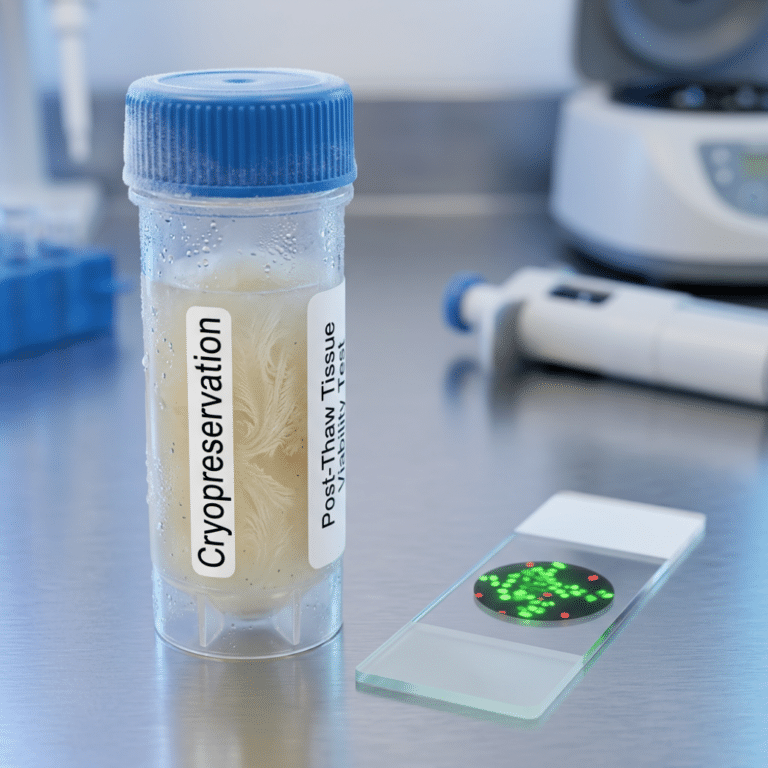
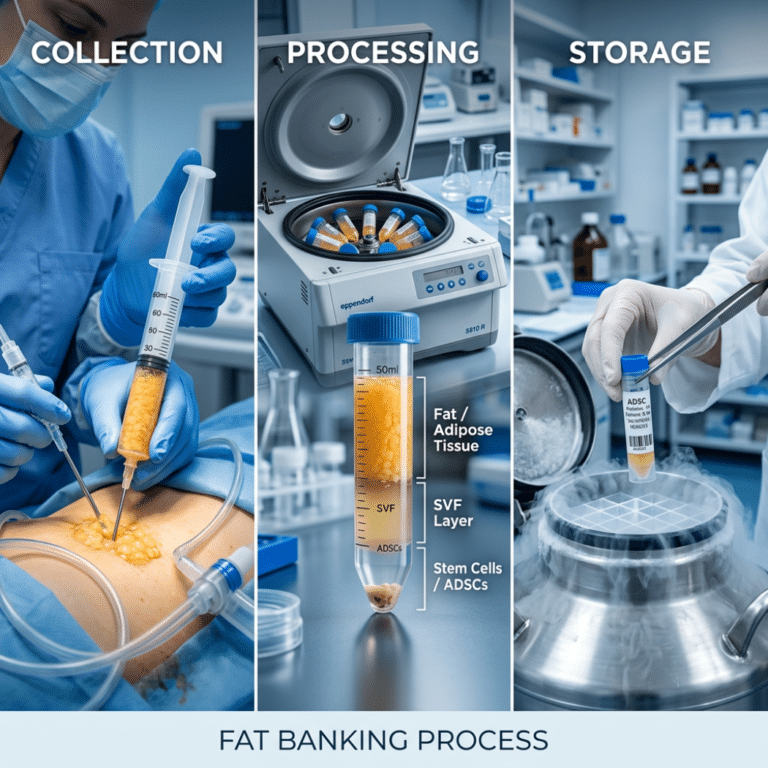
Adipose tissue banking is a preservation service, not a therapeutic product. Save My Fat helps individuals preserve their own adipose tissue through validated cryopreservation protocols for potential future opportunities that may arise as regenerative medicine science and FDA regulations evolve.
The clinical trial landscape described above shows that researchers worldwide are actively investigating adipose-derived cells across multiple conditions through legitimate, FDA-regulated pathways. These trials require adipose tissue as their starting material.
Banking adipose tissue today does not guarantee eligibility for any specific clinical trial, access to any investigational product, that banked tissue will be compatible with future research protocols, or clinical benefit from any future therapy.
What banking provides is the preservation of your own biological material at its current state. Adipose tissue harvested and cryopreserved today retains the cellular characteristics present at the time of collection. Some research suggests that adipose tissue may maintain higher MSC yield and functional capacity compared to bone marrow with age, although obesity, diabetes, and other metabolic conditions can affect cell quality.
Any future use of banked tissue depends on the regulatory status of products or procedures at that time, the patient’s clinical situation, physician guidance, and availability of FDA-regulated pathways including clinical trials, Expanded Access programs, or future approved therapies.
How Patients Can Explore Legitimate Clinical Trials
If you are interested in clinical trial participation for osteoarthritis or another condition, start by searching ClinicalTrials.gov using condition and intervention keywords. Review eligibility criteria to determine if you might qualify. Consult your physician about whether trial participation is appropriate. Contact study coordinators listed on the trial registry for information. Verify registration and institutional affiliation before providing personal information. Legitimate clinical trials cover research costs and often compensate participants; be cautious if asked to pay significant fees.
Red Flags for Questionable Trials
Be cautious of clinics that charge patients significant fees to “participate” in a trial, provide no ClinicalTrials.gov registration number, have no institutional affiliation or Institutional Review Board (IRB) oversight, market enrollment directly to consumers with disease-cure promises, have no informed consent process or eligibility screening, or repackage standard clinic treatment as research. For more about distinguishing compliant preservation services from unregulated clinic offerings, see our comparison guide.
The FDA consumer alert on regenerative medicine products provides additional guidance on recognizing unproven therapies.
Frequently Asked Questions
Are adipose-derived stem cells FDA-approved for treating osteoarthritis? No. No adipose-derived stem cell product has FDA approval for treating osteoarthritis or any other joint condition in the United States. The only FDA-approved stem cell products are certain cord blood-derived hematopoietic progenitor cell products for specified blood disorders. Any clinic claiming otherwise is misrepresenting the product’s regulatory status.
What is the difference between Phase 2 and Phase 3 clinical trials for ADSCs? Phase 2 trials primarily evaluate whether a product shows preliminary signs of effectiveness and continue to assess safety, typically in 100 to 300 patients. Phase 3 trials are larger (300 to 3,000 patients) and designed to confirm effectiveness and monitor side effects compared to existing treatments or placebo. FDA approval generally requires successful Phase 3 data.
Can I use banked adipose tissue to participate in a clinical trial? Participation depends entirely on the specific trial’s protocol, eligibility criteria, and whether the study accepts previously banked tissue versus requiring fresh collection. Each trial has its own requirements. Banking tissue does not guarantee eligibility for any trial.
How is legitimate ADSC clinical research different from what unregulated clinics advertise? Many clinics market adipose-derived cell injections directly to patients as available treatments for pain, arthritis, and other conditions. The FDA has determined that most of these products are unapproved biologics requiring an IND and BLA before marketing. Legitimate clinical research occurs under FDA oversight with registered clinical trials, IRB review, and informed consent processes. Save My Fat does not provide stem cell treatments or therapies.
What does “investigational” mean? An investigational product is a drug, biologic, or device that has not yet received FDA approval, clearance, or licensure for commercial distribution. Investigational products can only be accessed through clinical trials, the FDA’s Expanded Access Program, or the federal Right to Try pathway.
How long do ADSC clinical trials typically take to complete? Timelines vary significantly. Phase 1 trials may take several months, Phase 2 trials can run several months to two years, and Phase 3 trials typically require one to four years. After successful Phase 3 completion, the FDA review process for a BLA adds additional time. The full path from Phase 1 to marketing approval often takes 10 or more years.
Does donor age affect the quality of adipose-derived stem cells? Research shows that ADSC proliferative and differentiation capacities can decline with increasing age, and that obesity and metabolic conditions can negatively affect cell quality. This supports the rationale for preserving adipose tissue earlier in life when cell quality may be higher, though individual variation is significant. Learn more about age-related factors on our wellness and healthy aging page.
Does Save My Fat provide ADSC injections or stem cell treatments? No. Save My Fat banks whole, intact adipose tissue under 361 HCT/P regulations. Save My Fat does not isolate SVF, culture-expand ADSCs, provide stem cell treatments, or offer therapies for any disease or condition. If banked tissue is needed in the future for use in an FDA-regulated clinical trial or Expanded Access program, it can be thawed and processed at that time through the appropriate regulatory pathway.
Key Takeaways
- No ADSC product has FDA approval for osteoarthritis. All adipose-derived stem cell research for joint conditions remains investigational and unapproved. Only products that successfully complete the full approval process can be legally marketed for disease treatment.
- Multiple Phase 2 and Phase 3 trials are underway. Registered clinical trials on ClinicalTrials.gov are studying autologous and allogeneic ADMSCs for knee OA, including the JointStem Phase 3 trial and the SPOST SVF+PRP Phase 3 trial.
- Early safety data is generally favorable but limited. Published Phase IIb trials report rare serious adverse events and mild, self-resolving injection site reactions. Long-term safety data and larger trial populations are still needed.
- Trial registration does not equal proof of safety or efficacy. Being listed on ClinicalTrials.gov means a study has been documented, not that it has been proven beneficial.
- Adipose tissue banking preserves future options. Save My Fat banks intact tissue under 361 HCT/P regulations, preserving biological material that could potentially be used in future FDA-regulated pathways. Banking does not guarantee access, eligibility, or benefit.
- Always verify before participating. Patients should confirm ClinicalTrials.gov registration, IRB oversight, and IND status before enrolling in any regenerative medicine study. Consult your physician about all medical decisions.
Ready to Learn More About Adipose Tissue Banking?
You now understand the current state of clinical research investigating adipose-derived stem cells for osteoarthritis and other conditions. Researchers around the world are conducting legitimate, FDA-regulated clinical trials to determine whether these cells may eventually offer new options for patients. These studies require years of rigorous scientific evaluation before any product can receive marketing approval.
Save My Fat helps individuals preserve adipose tissue through validated cryopreservation protocols for potential future use in FDA-regulated pathways. We focus on education, honesty about limitations, and positioning patients for legitimate opportunities, not making disease-cure promises.
Here is what we offer:
- Comprehensive consultation to discuss your goals and answer questions
- Transparent information about the banking process, costs, and realistic expectations
- Validated cryopreservation protocols supported by peer-reviewed research
- Long-term storage in controlled facilities with proper documentation
- Educational resources about FDA pathways, clinical trials, and patient safety
- Honest communication about what tissue banking is, and what it is not
Ready to learn more?
Contact Save My Fat today.
Schedule a consultation to discuss whether adipose tissue banking aligns with your health planning goals.
- What Is Adipose Tissue Banking? A Complete Guide
- How Stem Cell Banking Works
- Pricing
- For Providers
- Family Eligibility
Save My Fat Adipose Tissue Banking for Future Regenerative Medicine Opportunities
Last Updated: March 20, 2026.