
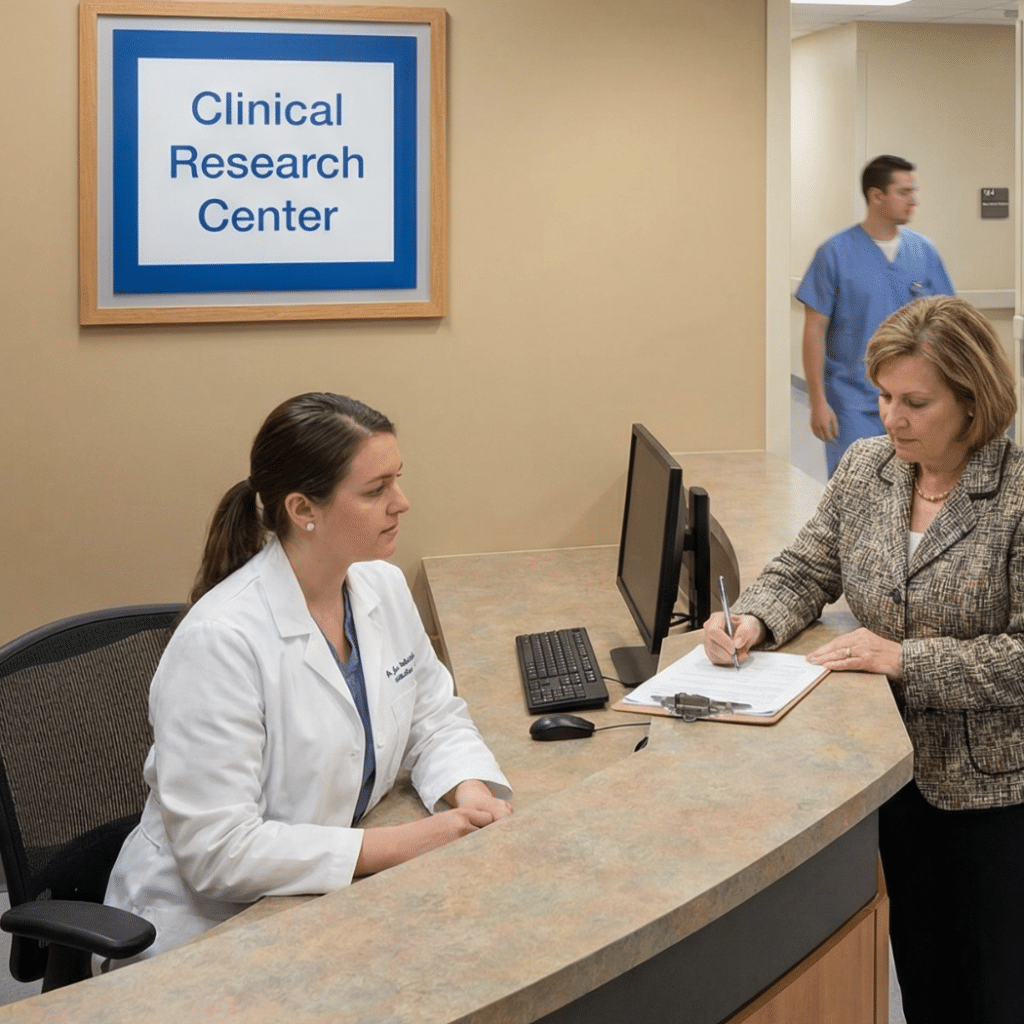
Clinical trials are the primary way new therapies are tested and the only pathway to FDA approval for new drugs and biologics. Many patients with serious or chronic conditions now search for trials on their own, and the volume of information online, especially around stem cell therapies, can make it difficult to distinguish legitimate research from misleading marketing. This guide shows how to use trusted registries, understand trial phases and listings, and avoid unregulated offerings that pretend to be research.
TLDR: Legitimate clinical trials are registered in public databases like ClinicalTrials.gov, have defined phases and eligibility criteria, are overseen by the FDA and institutional review boards (IRBs), and do not ask patients to pay for the investigational product itself. Patients should learn how to search, read, and evaluate trial listings before discussing any trial with their treating physician. Red flags include clinics that charge large fees for unapproved interventions, promise cures for multiple unrelated conditions, and have no verifiable registration on ClinicalTrials.gov.
Important Disclaimer: This article is for educational purposes only and does not constitute medical advice. It does not recommend or endorse any specific clinical trial. Save My Fat does not operate clinical trials, does not enroll patients in trials, and does not provide investigational treatments. All decisions about clinical trial participation must be made between patients and their treating physicians.
When patients search for “stem cell clinical trials” or “adipose stem cell studies,” they encounter a mix of legitimate academic research, properly registered industry trials, and pay-to-participate clinics using the language of research without its protections. Knowing how to tell the difference is one of the most important skills a patient can develop.
What Clinical Trials Are and Why They Matter
An interventional clinical trial is a research study in which people are assigned to one or more interventions (such as a drug, biologic, device, or procedure) so researchers can evaluate the effects on health outcomes. Unlike observational studies, where researchers simply monitor participants, interventional trials actively test whether a treatment works and whether it is safe (NCI: How Do Clinical Trials Work).
Trials are staged in phases that progress from small safety studies to large comparisons against standard-of-care treatments. Each phase must produce sufficient evidence before the next phase can begin. This phased approach is the scientific standard for determining whether a new therapy is safe and effective before the FDA will consider it for approval.
For context: many adipose-derived stem cell and other regenerative medicine programs are still in the trial stage. They are being studied, not offered as approved treatments. Understanding this distinction is essential for patients researching their options. For background on what these cells are, see What Are Adipose-Derived Stem Cells?.
Understanding Trial Phases in Plain Language
Clinical trials follow a phased structure, where each phase asks a different question and involves a different number of participants.
Phases of Clinical Trials
| Phase | Main Question | Typical Size | Key Features |
|---|---|---|---|
| Phase 1 | Is it safe and what dose can people tolerate? | Dozens of participants | Focuses on safety, side effects, and dosing; may include healthy volunteers or patients with the condition |
| Phase 2 | Does it seem to work and remain reasonably safe in people with the condition? | Dozens to a few hundred | Tests effectiveness signals and short-term side effects in the target disease |
| Phase 3 | How does it compare with standard treatment? | Hundreds to thousands | Randomized and often blinded; compares the new treatment to current standard of care |
| Phase 4 | What are the long-term effects after approval? | Large, real-world populations | Safety and effectiveness monitoring once a product is on the market |
Source: NCI: How Do Clinical Trials Work
For many regenerative medicine and stem cell approaches, trials are in early or mid-phase. Phase 1 and Phase 2 studies are evaluating safety and looking for initial signals of benefit. Very few adipose-derived cell therapies have reached Phase 3. This means results are still developing, and it is too early to draw conclusions about effectiveness for most conditions.
How to Search ClinicalTrials.gov the Right Way
ClinicalTrials.gov is the primary public registry of clinical studies worldwide. It is maintained by the U.S. National Library of Medicine (part of NIH) and contains records for studies conducted in all 50 states and in over 200 countries. It is free, publicly accessible, and updated daily.
Step 1: Go to the Official Registry
Start at ClinicalTrials.gov. This is the authoritative source. Do not rely on third-party websites that aggregate trial information, as they may be outdated, incomplete, or designed to steer patients toward specific clinics.
Step 2: Basic Search by Condition
In the “Condition or disease” search box, enter the condition you are researching (for example, “knee osteoarthritis,” “type 2 diabetes,” “spinal cord injury,” or “chronic heart failure”). If you are specifically looking for stem cell or adipose-derived approaches, you can add terms like “stem cells” or “adipose” in the “Other terms” field. This narrows results but may also miss broader studies that use different terminology, so starting with just the condition and then refining is often the better approach (ClinicalTrials.gov: How to Search).
Step 3: Use Filters Wisely
After running a search, use the filters on the results page to narrow by study status (select “Recruiting” and “Not yet recruiting” to find trials currently looking for participants), by location or distance radius to find trials near you, and by age group and sex to match basic eligibility criteria. Be careful not to filter too aggressively at first. Starting broad and then narrowing helps ensure you do not miss relevant trials that use slightly different terminology or categorization.
Step 4: Open Individual Study Records
Click on a study title to open its full record. Each record contains a structured set of fields that provide everything you need to evaluate the trial: a brief summary, detailed description, the specific interventions being tested, eligibility criteria, contact information, study locations, and the current status (recruiting, completed, terminated, and so on).
How to Read a Clinical Trial Listing
Once you open a study record on ClinicalTrials.gov, focus on the following fields to evaluate whether the trial is relevant and potentially appropriate for you.
Key Fields to Focus On
Condition/Disease should clearly match your diagnosis. If a trial lists a condition you do not have, it is not relevant regardless of what the intervention is.
Intervention/Treatment describes what is being tested. For stem cell work, look for specific terms like “autologous adipose-derived mesenchymal stem cells,” “stromal vascular fraction,” or “allogeneic mesenchymal stromal cells,” along with the delivery route (intra-articular injection, intravenous infusion, and so on). Vague terms like “stem cell therapy” without specifics are a potential concern.
Phase tells you where in development the trial sits (refer to the phases table above). A Phase 1 trial is primarily about safety; a Phase 3 trial is comparing the treatment to existing options.
Study Status indicates whether the trial is currently enrolling. “Recruiting” or “Not yet recruiting” are the statuses relevant for patients seeking to participate.
Sponsor/Collaborators identifies who is running and funding the trial. An academic medical center, NIH, or established pharmaceutical/biotech company provides more assurance than a small clinic with no track record.
Study Design describes whether the trial is randomized (participants assigned by chance to different groups), single-arm (everyone gets the same treatment), blinded (participants and/or researchers do not know who gets which treatment), or open-label (everyone knows). Randomized, controlled, blinded designs provide the strongest evidence.
Inclusion/Exclusion Criteria specify the characteristics a patient must have (inclusion) and must not have (exclusion) to participate. These typically include age ranges, specific diagnosis confirmation, lab values, prior treatments, and comorbidities that would disqualify participation.
Contacts and Locations lists names, phone numbers, and email addresses for study coordinators or investigators, along with site addresses. This is how you reach the study team if you are interested.
Understanding Inclusion and Exclusion Criteria
Inclusion criteria are the characteristics you must have. For example: age 40 to 70, diagnosed with Kellgren-Lawrence grade 2-3 knee osteoarthritis, failed at least 3 months of conservative treatment. Exclusion criteria are the characteristics that would prevent participation. For example: active infection, autoimmune disease, prior knee surgery within the last 6 months, current use of immunosuppressive medications.
Even if you appear to meet the listed criteria, the study team must confirm eligibility through a formal screening process that typically includes medical history review, physical examination, and laboratory tests. Matching the written criteria is the first step, not the final determination.
How to Contact a Study Team and What to Expect
If you find a trial that seems relevant, the process has several steps. First, write down the NCT number (the ClinicalTrials.gov identifier, which begins with “NCT” followed by a series of numbers). Bring this to your treating physician and discuss whether participation is appropriate given your overall health, current treatments, and other available options.
If you and your physician agree to explore the trial, contact the study coordinator using the phone number or email listed in the Contacts and Locations section of the study record. Typical next steps include a prescreening phone call to review basic eligibility, scheduling a formal screening visit at the study site, a detailed informed consent discussion where the study team explains the risks and benefits and answers your questions, and then enrollment if all criteria are confirmed.
Informed consent is required for every clinical trial. It must be given voluntarily, and patients can withdraw from a trial at any time for any reason without penalty (ClinicalTrials.gov: For Patients).
Spotting Red Flags: When It Is Not a Real Clinical Trial
This is one of the most important sections in this guide. Some clinics use the language of research, including phrases like “clinical study,” “patient-funded trial,” “stem cell registry,” or “investigational protocol,” while operating outside the regulatory framework that protects patients.
The FDA has taken enforcement action against clinics that illegally market unapproved stem cell products, including those derived from adipose tissue, to treat conditions ranging from Parkinson’s disease and ALS to COPD and multiple sclerosis (FDA Public Safety Alert: Unapproved Stem Cell and Exosome Products).
Red Flags That Suggest an Offering Is Not a Legitimate Clinical Trial
No NCT number and no listing on ClinicalTrials.gov. If a clinic claims to be conducting a “clinical study” but the study does not appear in the registry, that is a significant warning sign. Federal law requires registration of most clinical trials.
Patients are charged large fees for the investigational product itself. In legitimate trials, the investigational product is provided at no cost. Patients may sometimes be responsible for travel or standard-of-care costs, but being asked to pay thousands of dollars for an unapproved “stem cell treatment” is not how regulated research works.
Marketing language promises cures or broad benefits for many unrelated conditions. A single product claiming to treat arthritis, diabetes, heart disease, neurological conditions, and autoimmune diseases simultaneously, without separate registered trials for each indication, is not consistent with how regulated research operates.
No mention of IRB oversight, informed consent process, or safety monitoring. Legitimate trials are reviewed by an independent IRB, require documented informed consent, and have structured safety reporting obligations.
The clinic has been subject to FDA warning letters or injunctions. The FDA has issued warning letters and pursued court action against clinics marketing unapproved adipose-derived and other stem cell products (FDA Press Announcement: US Stem Cell Clinic Injunction).
Patients and providers should confirm any claimed trial on ClinicalTrials.gov and be skeptical of pay-to-participate offerings that bypass FDA pathways. For more context on the regulatory distinction between tissue banking and unregulated clinic offerings, see Adipose Tissue Banking vs. Stem Cell Treatment Clinics.
Where Adipose-Derived Cell Trials Fit In
Dozens of registered studies worldwide involve adipose-derived cells for conditions including knee osteoarthritis, critical limb ischemia, stroke, autoimmune diseases, wound healing, and more. These studies can be found by searching ClinicalTrials.gov using terms like “adipose-derived stem cells” or “adipose mesenchymal” combined with the condition of interest.
Several important points apply to all of these trials. They are research studies, not approved treatments. Many are early-phase (Phase 1 or Phase 2) and are still evaluating safety and looking for initial signals of effectiveness. Participation is governed by strict eligibility criteria and oversight by both the FDA and institutional review boards. Results from any individual trial cannot be assumed to apply broadly until confirmed in larger, later-phase studies.
Patients can use ClinicalTrials.gov to search for relevant trials, note the NCT numbers, and bring them to their physicians for discussion. For an overview of the research landscape, see the emerging research page and the joint and orthopedic page.
Save My Fat does not run clinical trials, does not enroll patients in trials, and does not provide investigational treatments. Save My Fat provides a tissue banking service only. Banking adipose tissue may support future participation in FDA-regulated pathways if and when appropriate opportunities exist, but banking does not guarantee eligibility for or access to any specific clinical trial. For general information about adipose tissue banking, see the complete guide.
Frequently Asked Questions
How do I know if a clinical trial is legitimate? A legitimate trial will be registered on ClinicalTrials.gov with an NCT number, will have an identified sponsor and principal investigator, will describe IRB oversight in its record, and will not charge patients for the investigational product. If a clinic claims to be running a trial but you cannot find it in the registry, that is a significant red flag.
What does it mean when a trial is Phase 1, 2, or 3? Phase 1 focuses on safety and dosing in a small group. Phase 2 tests whether the treatment shows signs of effectiveness in a larger group with the condition. Phase 3 compares the treatment to standard care in a large, randomized study. Each phase builds on the results of the previous one.
Where should I start if I want to look for trials for my condition? Go to ClinicalTrials.gov, enter your condition in the search box, and filter for “Recruiting” studies. You can narrow by location, age, and other terms. Write down the NCT numbers of any relevant trials and discuss them with your physician.
Do I have to pay to be in a legitimate clinical trial? In legitimate interventional trials, the investigational product is provided at no charge. Patients may be responsible for travel expenses or costs associated with standard medical care. If a clinic asks you to pay thousands of dollars for an unapproved “stem cell treatment” and calls it a trial, that is a warning sign.
What questions should I ask the study team before enrolling? Key questions include: What is the purpose of the study? What phase is it? What are the known risks and potential benefits? Is there a placebo group? What happens if I experience side effects? Will I have to pay for anything? Can I continue seeing my regular doctor? Can I leave the study at any time?
Are there real clinical trials using adipose-derived or other stem cells? Yes. Dozens of registered trials worldwide are studying adipose-derived cells for various conditions. These can be found on ClinicalTrials.gov. However, these are research studies, not approved treatments, and most are in early phases. Results are still developing for nearly all conditions being studied.
What are the main risks of joining a trial? Risks vary by the specific intervention and phase. Early-phase trials carry more uncertainty because less is known about the product’s safety profile. Possible risks include side effects (known and unknown), the possibility that the treatment does not work, assignment to a control group that does not receive the experimental therapy, and the time commitment of additional clinic visits and monitoring.
Can I still see my regular doctor while I am in a clinical trial? Yes. Clinical trial participation does not replace your regular medical care. Your treating physician should be informed that you are in a trial, and study teams typically coordinate with the patient’s existing healthcare providers.
How does clinical trial participation differ from Expanded Access? Clinical trials are structured research studies designed to evaluate whether a treatment is safe and effective. Expanded Access is a separate FDA pathway that allows individual patients with serious conditions to access investigational products outside of trials when specific criteria are met. For a detailed comparison, see Expanded Access Programs: How Patients Can Legally Access Investigational Therapies.
Does Save My Fat run or sponsor any clinical trials? No. Save My Fat provides a tissue banking service only. It does not operate, sponsor, or enroll patients in clinical trials, and it does not provide investigational treatments.
Key Takeaways
Clinical Trials Are the Gold Standard for Testing New Therapies
- They follow a phased structure with increasing rigor, from safety testing to large-scale comparisons with standard care
ClinicalTrials.gov Is the Authoritative Resource
- All legitimate U.S. trials should be registered there; if a claimed study is not in the registry, be cautious
Red Flags Can Help Patients Avoid Exploitation
- No registry listing, large patient fees, cure-all marketing, and lack of IRB oversight all suggest an offering is not legitimate research
Adipose-Derived Cell Research Is Active but Early
- Many registered trials exist, but most are in early phases; results are still developing and no adipose-derived cell therapy is FDA-approved
Always Discuss Trials with Your Physician
- Bring NCT numbers to your doctor; do not enroll in any study without informed, voluntary consent and your physician’s input
Save My Fat Does Not Run Trials
- The service is tissue banking only; banking does not guarantee access to any clinical trial
Learn More
Important: This article is educational only and does not recommend or endorse any specific clinical trial. All trial decisions should be made with a treating physician.
To search for clinical trials, visit ClinicalTrials.gov.
For cancer-specific trials, visit the NCI clinical trials page.
For context on where adipose-derived cells are being studied, visit the Save My Fat emerging research page.
To learn more about adipose tissue banking, visit the complete guide.
To understand how the banking process works, visit the how stem cell banking works page.
For providers, visit the providers page.
Last updated: March 16, 2026
Related guide: the adipose stem cell clinical trials directory.